Lawn Care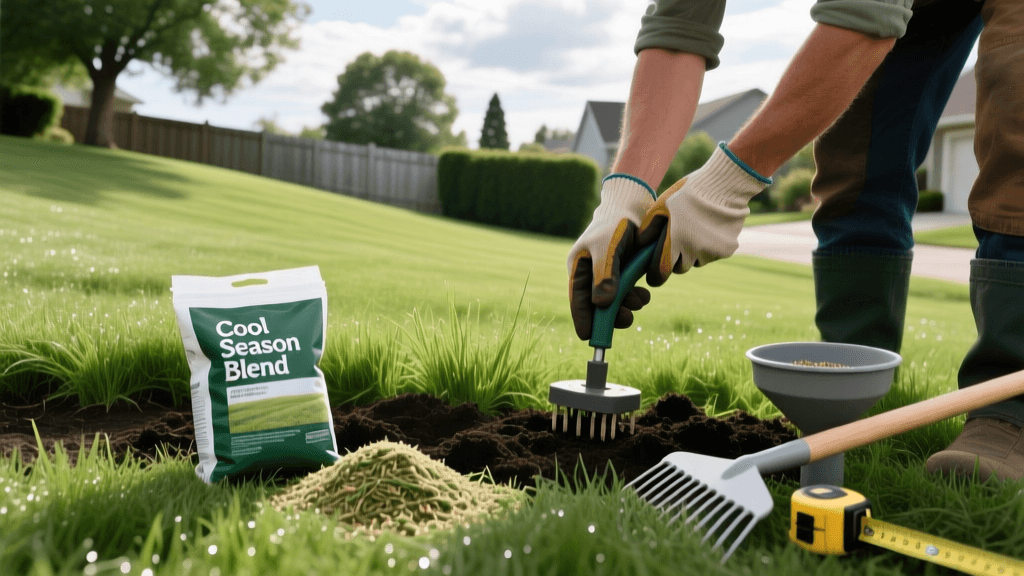
How to Core Aerate and Overseed Cool-Season Lawns
The Secret to a Thick, Resilient Cool-Season Lawn
A thick, vibrant, and resilient cool-season lawn does not happen by accident. Whether you are managing Kentucky Bluegrass, Tall Fescue, or Perennial Ryegrass, environmental stressors, heavy foot traffic, and natural aging will eventually cause your turf to thin out. The most effective, scientifically backed method to rejuvenate a tired lawn is the combination of core aeration and overseeding. This practical how-to guide will walk you through the exact steps, timing, product recommendations, and measurements needed to transform your turf into the envy of the neighborhood.
Why Core Aeration and Overseeding are Essential
Soil compaction is the silent killer of turfgrass. Over time, soil particles are pressed together, reducing the pore space necessary for air, water, and nutrients to reach the root zone. When roots cannot breathe, the lawn becomes vulnerable to drought, disease, and weed invasion. Core aeration solves this by physically removing small plugs of soil and thatch, allowing the root system to expand and absorb vital resources.
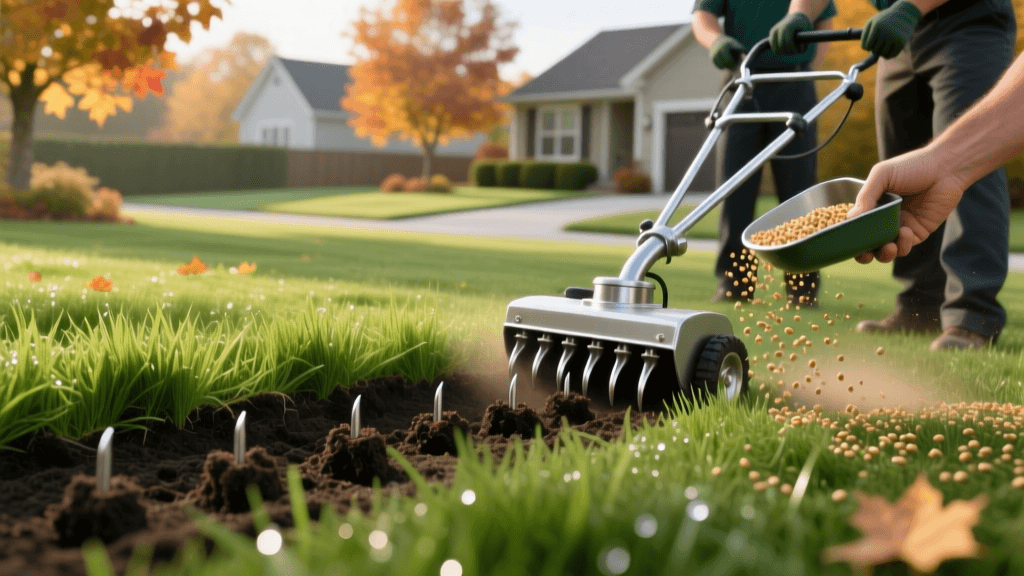
Overseeding, the process of planting new grass seed directly into existing turf without tearing up the soil, introduces modern, disease-resistant grass cultivars to your lawn. When paired with aeration, the seed falls directly into the aeration holes, ensuring perfect seed-to-soil contact, which is the most critical factor for successful germination.
When to Aerate and Overseed: Timing is Everything
For cool-season grasses, timing is the difference between a lush lawn and a weed-infested mess. The optimal window for core aeration and overseeding is late summer to early fall, typically between mid-August and mid-October, depending on your USDA hardiness zone.
- Soil Temperature: Aim for soil temperatures between 60°F and 75°F at a depth of 2 inches.
- Air Temperature: Daytime highs should be cooling down into the 70s and low 80s, reducing heat stress on delicate new seedlings.
- Weed Competition: Fall seeding minimizes competition from aggressive summer annual weeds like crabgrass, which die off as frost approaches.
Avoid spring aeration and overseeding unless absolutely necessary. Spring soils are often too wet, leading to severe compaction from heavy machinery, and the impending summer heat will likely kill young, shallow-rooted seedlings.
Tools and Materials You Will Need
Before heading to the hardware store or rental center, gather the following tools and materials. Budget approximately $150 to $300 for a standard 5,000 sq. ft. lawn, depending on whether you already own a spreader.
- Core Aerator (Rental): Rent a walk-behind gas-powered core aerator ($80–$150 for a half-day). Avoid spike aerators or aerator shoes, as they actually increase compaction by pushing soil outward.
- Broadcast or Drop Spreader: For even seed and fertilizer distribution.
- Premium Grass Seed: Purchase certified, weed-free seed. Brands like Jonathan Green Black Beauty, Scotts Turf Builder, or Barenbrug offer excellent cool-season mixes.
- Starter Fertilizer: A high-phosphorus starter fertilizer (e.g., N-P-K ratio of 10-18-10 or 24-25-4) to promote rapid root development.
- Organic Compost: 1 to 2 cubic yards of finely screened compost for topdressing (optional but highly recommended).
- Stiff Broom or Drag Mat: To work seed and compost into the aeration holes.
Step-by-Step Guide to Aerating and Overseeding
Step 1: Prepare the Lawn
Two days before you plan to aerate, water your lawn deeply. The soil needs to be moist but not soggy. If the soil is too dry, the aerator tines will not penetrate deeply enough; if it is too wet, the machine will tear up the turf and leave muddy ruts. On the day of aeration, mow your lawn shorter than usual, aiming for a height of 1.5 to 2 inches. This reduces resistance for the aerator and ensures the new seed receives adequate sunlight.
Step 2: Core Aerate the Soil
Run the core aerator over your lawn in at least two different directions (e.g., horizontally and then vertically) to create a crisscross pattern. Your goal is to pull plugs that are 2 to 3 inches deep and spaced about 3 inches apart. Leave the extracted soil plugs on the lawn; they will break down naturally over the next few weeks, depositing beneficial microbes back onto the surface to help decompose thatch.
Step 3: Select and Apply the Right Seed
Check the seed tag for the specific overseeding rate. Do not guess. Calibrate your spreader according to the manufacturer's instructions on the seed bag. Apply half of the seed while walking in a north-south direction, and the other half in an east-west direction to ensure uniform coverage. Pay special attention to bare spots, applying a slightly heavier concentration of seed in those areas.
Step 4: Topdress and Fertilize
If using compost, apply a thin layer (about 1/4 inch) over the entire lawn. Use a stiff push broom or a drag mat to sweep the compost and seed down into the aeration holes. Next, apply your starter fertilizer. Phosphorus is heavily restricted in many states for established lawns due to environmental runoff concerns, but it is legally permitted and highly recommended when seeding or overseeding. Follow the bag's coverage instructions precisely to avoid burning the new seedlings.
Step 5: The Critical Watering Schedule
Grass seed must remain consistently moist to germinate. If the seed dries out even once during the first two weeks, the germplasm will die. Set your irrigation system or sprinklers to water lightly 2 to 3 times per day for 10 to 15 minutes. You want to keep the top 1/2 inch of soil damp. Once the seedlings reach 2 inches tall, gradually reduce the frequency of watering but increase the duration to encourage deep root growth.
Cool-Season Grass Seed Rate Comparison
Using the correct seeding rate is vital. Too little seed results in sparse turf, while too much seed causes seedlings to compete for limited nutrients and water, leading to disease. Refer to the table below for precise measurements.
| Grass Type | Overseed Rate (lbs / 1,000 sq ft) | New Lawn Rate (lbs / 1,000 sq ft) | Germination Time (Days) |
|---|---|---|---|
| Tall Fescue | 4.0 - 6.0 | 8.0 - 10.0 | 7 - 14 |
| Kentucky Bluegrass | 1.0 - 2.0 | 2.0 - 3.0 | 14 - 28 |
| Perennial Ryegrass | 3.0 - 5.0 | 6.0 - 8.0 | 5 - 10 |
| Fine Fescue | 3.0 - 5.0 | 5.0 - 7.0 | 7 - 14 |
Common Mistakes to Avoid
- Applying Pre-Emergent Herbicides: Pre-emergents create a chemical barrier in the soil that prevents seeds from germinating. This barrier does not distinguish between crabgrass seeds and your expensive turfgrass seed. Never apply a pre-emergent in the same season you plan to overseed.
- Using a Spike Aerator: Spike aerators simply punch holes in the ground, which actually compacts the surrounding soil laterally. Always rent a core (plug) aerator.
- Mowing Too Early: Wait until the new grass has been mowed at least two or three times before applying any broadleaf weed control (like 2,4-D). Young turf is highly susceptible to chemical damage.
- Ignoring Soil Tests: A soil test from your local university extension will reveal your exact pH and nutrient deficiencies. Grass struggles to absorb nutrients if the pH is below 6.0 or above 7.5. Apply pelletized lime if your soil is too acidic.
Expert Insights and Authoritative Guidance
Proper lawn renovation requires patience and adherence to agronomic best practices. According to turfgrass specialists at the Penn State Extension, core aeration is the most effective method for alleviating soil compaction and improving water infiltration in turfgrass ecosystems. They emphasize that combining aeration with overseeding not only improves the physical soil environment but also upgrades the genetic makeup of the lawn, introducing modern cultivars that require less water and fertilizer while resisting common turf diseases.
'Core aeration is the most effective method for alleviating soil compaction... When combined with overseeding, it provides an ideal environment for seed germination and establishment, leading to a denser, more competitive turf.' — Penn State Extension, Turfgrass Management Guidelines
By following this comprehensive, step-by-step guide, you are investing in the long-term health and beauty of your landscape. Stick to the schedule, monitor your watering closely, and prepare to enjoy a dramatically thicker, greener cool-season lawn by the time the following spring arrives.