Lawn Care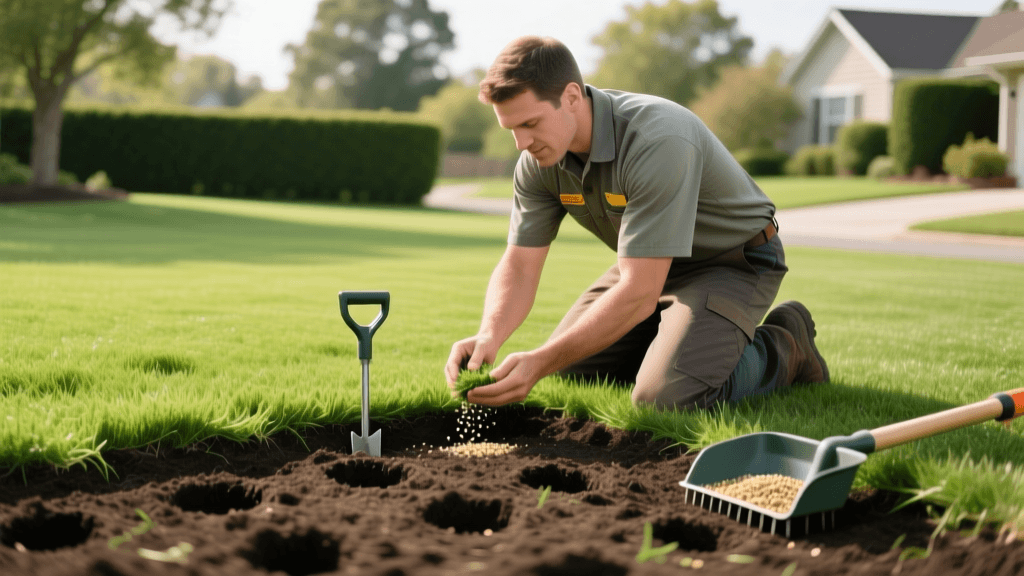
Expert Core Aeration and Overseeding Guide for Lawns
The Ultimate Lawn Renovation: Core Aeration and Overseeding
Achieving a dense, vibrant, and weed-resistant cool-season lawn requires more than just regular mowing and watering. Over time, soil becomes compacted, thatch accumulates, and turfgrass thins out due to environmental stress, disease, and heavy foot traffic. The most effective, scientifically backed method to reverse this decline is the combination of core aeration and overseeding. When executed with precision, this dual-practice approach revitalizes the soil ecosystem and introduces superior grass cultivars to your existing turf.
In this comprehensive guide, we break down the expert best practices for core aeration and overseeding, providing you with exact measurements, product recommendations, and timing protocols used by professional turfgrass managers.
Why Combine Core Aeration with Overseeding?
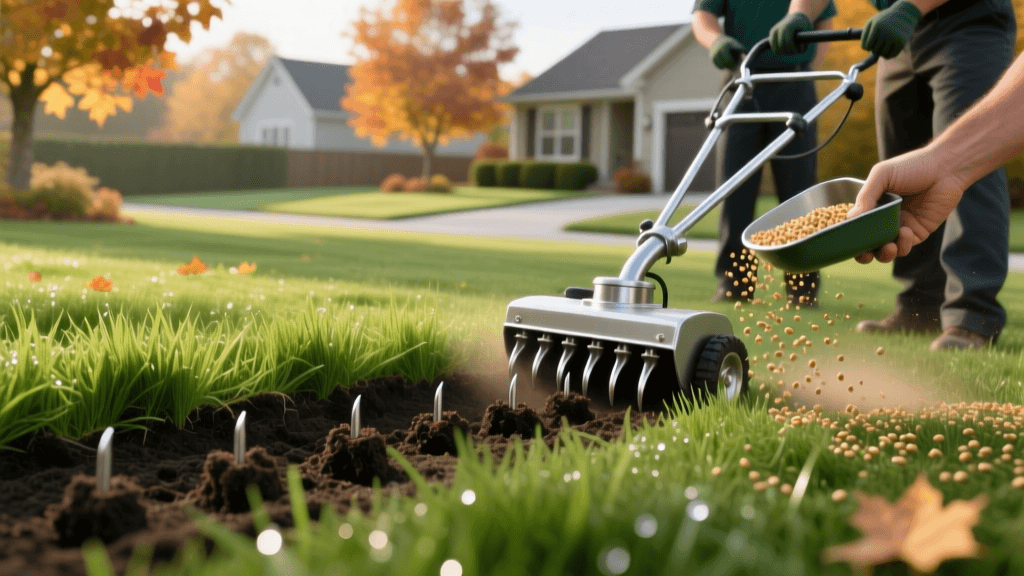
Core aeration involves the mechanical removal of small soil plugs, typically 2 to 3 inches deep and 0.5 to 0.75 inches in diameter, from the lawn. This process physically alleviates soil compaction, allowing oxygen, water, and nutrients to penetrate the root zone. However, aeration alone leaves the lawn vulnerable to weed invasion in the open holes. This is where overseeding becomes critical.
By overseeding immediately after aeration, grass seeds fall directly into the aeration holes, achieving perfect seed-to-soil contact. According to the Penn State Extension, seed-to-soil contact is the single most important factor in turfgrass germination and establishment. The micro-environment within an aeration core hole retains moisture longer and protects the delicate seedling from being washed away or eaten by birds, resulting in significantly higher germination rates compared to broadcasting seed over an untreated lawn.
The Optimal Window: Timing Your Lawn Renovation
Timing is the most common point of failure for DIY lawn care. For cool-season grasses like Tall Fescue, Kentucky Bluegrass, and Perennial Ryegrass, early fall is the undisputed best time to aerate and overseed. Specifically, you should target the window between late August and mid-October, depending on your hardiness zone.
The goal is to seed when soil temperatures are consistently between 50°F and 65°F. At these temperatures, cool-season seeds germinate rapidly, and the young grass has several weeks to establish a deep root system before the ground freezes. Furthermore, fall provides fewer competing weeds, and the cooler air temperatures reduce heat stress on new seedlings. Avoid spring overseeding unless absolutely necessary, as spring-germinated grass rarely survives the stress of summer heat and requires heavy irrigation.
The 6-Step Expert Protocol for Aeration and Overseeding
Step 1: Preparation and Mowing
Before aerating, mow your lawn shorter than your usual maintenance height. For Tall Fescue, mow down to 2 inches; for Kentucky Bluegrass, mow to 1.5 inches. Bag the clippings to expose the soil surface. This allows the aerator tines to penetrate the soil cleanly and ensures that broadcasted seed can reach the soil rather than getting trapped in the thatch layer.
Step 2: Deep Core Aeration
Rent a heavy-duty walk-behind core aerator from a local equipment rental center (expect to pay between $80 and $120 for a half-day rental). Avoid tractor attachments or spike aerators, as spike aerators actually increase compaction by pushing soil sideways. Run the core aerator over the lawn in two perpendicular directions (a crisscross pattern) to ensure maximum hole density. Aim for 20 to 40 holes per square foot. Leave the extracted soil cores on the lawn; they will break down naturally over the next two weeks, depositing beneficial soil microbes back onto the thatch layer to aid in decomposition.
Step 3: Soil Amendment Based on Testing
If you have not conducted a soil test in the last two years, do so immediately. If your soil pH is below 6.0, apply pelletized limestone at the rate recommended by your local university extension. If your soil is highly compacted clay, applying a liquid humic acid or gypsum soil softener immediately after aeration can help improve soil structure and nutrient uptake.
Step 4: Selecting and Sowing the Seed
Choose high-quality, NTEP (National Turfgrass Evaluation Program) rated seed. Avoid cheap box-store mixes that contain agricultural forage grasses or annual ryegrass filler. Use a broadcast spreader to apply the seed at the proper overseeding rate. To ensure even coverage, split your seed in half and apply it in two perpendicular passes.
Step 5: Starter Fertilizer Application
New seedlings require immediate access to phosphorus for root development. Apply a high-quality starter fertilizer, such as Scotts Turf Builder Starter Food for New Grass (24-25-4), immediately after seeding. Phosphorus is often restricted in standard lawn fertilizers due to environmental runoff concerns, but most states allow its use when establishing new grass or overseeding. Apply at a rate of 1.5 lbs of nitrogen per 1,000 square feet.
Step 6: The Germination Watering Schedule
Seed must remain consistently moist to germinate. If the seed dries out even once during the germination process, the embryo will die. Water the lawn 2 to 3 times a day for 5 to 10 minutes per zone. The goal is not to soak the soil deeply, but to keep the top quarter-inch of soil damp. Once the grass reaches 1 inch in height, reduce watering frequency to once a day, but increase the duration to encourage deeper root growth.
Cool-Season Grass Overseeding Data Table
Selecting the right grass type and applying the correct seed rate is vital for a thick lawn. The table below outlines the best practices for the three most common cool-season turfgrasses.
| Grass Type | Primary Use & Traits | Overseed Rate (lbs / 1,000 sq ft) | Germination Window | Avg. Seed Cost (per 10 lbs) |
|---|---|---|---|---|
| Tall Fescue (TTTF) | High traffic, drought tolerant, deep roots | 5.0 - 7.0 lbs | 7 - 12 Days | $45 - $75 |
| Kentucky Bluegrass (KBG) | Lush appearance, spreads via rhizomes, self-repairing | 1.5 - 2.5 lbs | 14 - 28 Days | $60 - $95 |
| Perennial Ryegrass | Fast germination, nurse grass, high wear tolerance | 4.0 - 6.0 lbs | 5 - 7 Days | $40 - $65 |
Note: When overseeding an existing lawn, use roughly half the seed rate required for establishing a brand-new lawn from bare dirt. The existing turf will help hold the soil and protect the new seedlings.
Advanced Pro Tips for Maximum Germination
Professional turf managers utilize a few advanced techniques to guarantee overseeding success. First, consider dragging a heavy steel mat or a piece of chain-link fence across the lawn after seeding. This practice, known as 'dragging,' works the seed deep into the aeration holes and cracks in the soil, drastically improving seed-to-soil contact.
Second, apply a thin layer of peat moss or specialized compost top-dressing over the seeded areas. A layer no thicker than 1/8 inch will act as a moisture-retaining blanket, protecting the seed from the sun and wind while preventing it from washing away during heavy rainstorms.
'The success of overseeding is directly proportional to the quality of seed-to-soil contact and the consistency of moisture during the first 21 days. Aeration holes provide the ideal microclimate for seedling survival.' - University of Minnesota Extension Turfgrass Science Department.
Weed Control and Post-Germination Maintenance
One of the greatest challenges of fall overseeding is managing weeds without killing the new grass. Standard broadleaf herbicides like 2,4-D and Dicamba will severely damage or kill young grass seedlings. You must wait until the new grass has been mowed at least three times before applying traditional post-emergent herbicides.
However, if you are battling annual grassy weeds like Poa Annua or Crabgrass during the fall, you can safely apply a herbicide containing Mesotrione (commonly sold under the brand name Tenacity) at the time of seeding. Mesotrione is unique because it inhibits photosynthesis in target weeds, bleaching them white, while remaining completely safe for germinating Tall Fescue, Kentucky Bluegrass, and Perennial Ryegrass. Apply at a rate of 5 ml per gallon of water per 1,000 square feet, using a non-ionic surfactant to ensure proper leaf adhesion on existing weeds.
Finally, adjust your mowing schedule. Once the new grass reaches 3.5 to 4 inches tall, mow it down to 3 inches. Never remove more than one-third of the grass blade in a single mowing session. Keep your mower blades razor-sharp; dull blades will tear the delicate new seedlings, opening them up to fungal diseases like Dollar Spot and Brown Patch. By following these expert protocols, your cool-season lawn will emerge from winter thicker, greener, and more resilient than ever before.