Lawn Care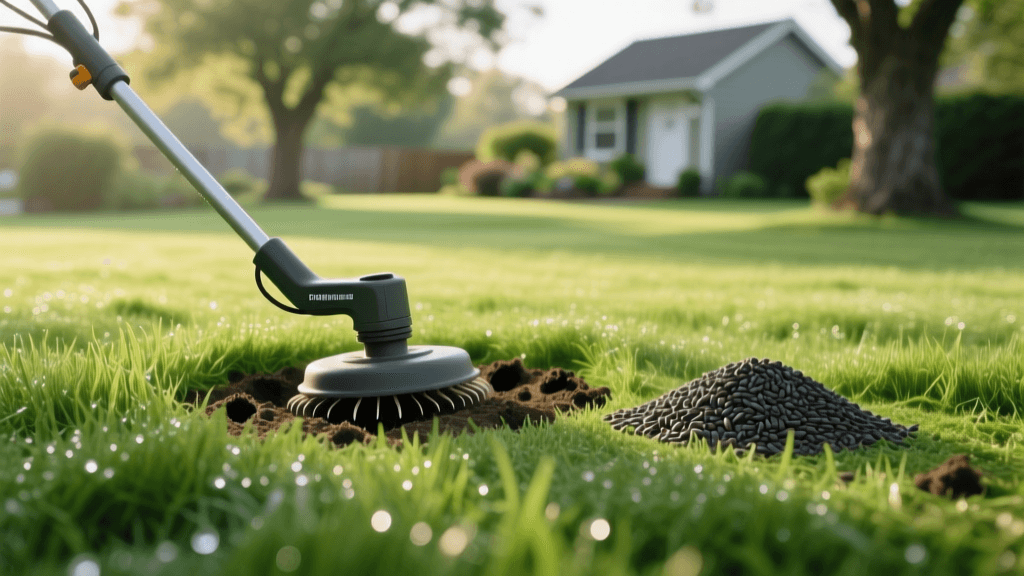
Expert Core Aeration and Overseeding for Cool Grasses
The Synergy of Core Aeration and Overseeding
For homeowners cultivating cool-season grasses such as Kentucky Bluegrass, Tall Fescue, Perennial Ryegrass, and Fine Fescue, the combination of core aeration and overseeding is the single most impactful cultural practice you can perform. Over time, foot traffic, heavy mowing equipment, and natural soil settling lead to severe soil compaction. This compaction restricts the flow of oxygen, water, and essential nutrients to the root zone, resulting in thinning turf, shallow root systems, and increased vulnerability to drought and disease.
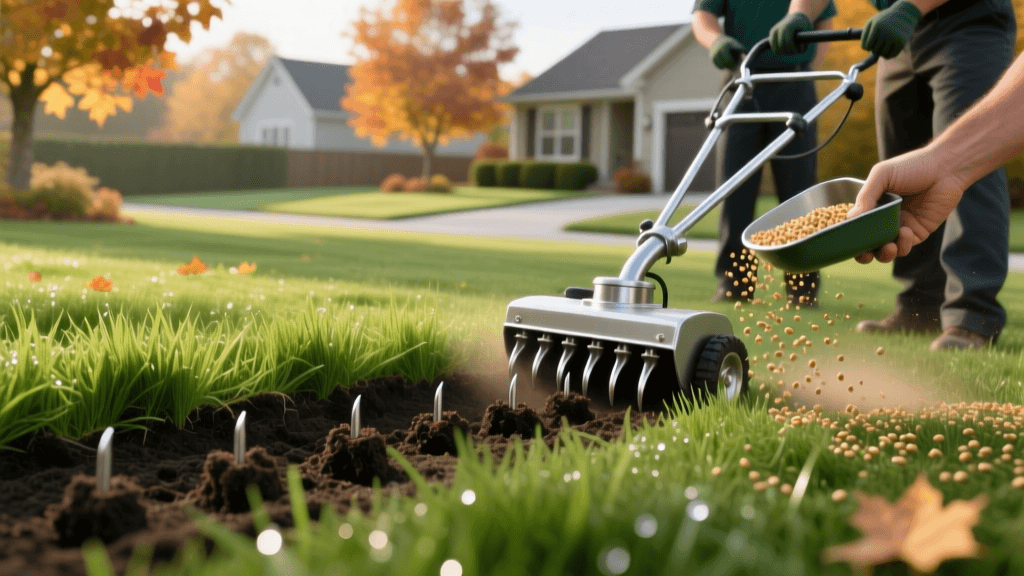
Core aeration mechanically alleviates this compaction by extracting small plugs of soil and thatch, creating vital macropores in the earth. When paired immediately with overseeding, these aeration holes serve as protected micro-environments for grass seed. The seeds fall into the holes, making direct contact with the soil, which dramatically improves germination rates and protects the tender seedlings from drying out or being eaten by birds. In this comprehensive expert guide, we will break down the precise timing, equipment requirements, seed rates, and post-care routines necessary to transform a tired, thinning lawn into a dense, resilient carpet of green.
The Science of Soil Compaction and Timing
Understanding why and when to aerate is crucial for cool-season turfgrasses. Cool-season grasses experience their most vigorous growth periods during the cooler months of spring and fall. However, spring aeration is generally discouraged by turfgrass scientists because the open holes created by the aerator can become prime real estate for aggressive annual weeds like crabgrass and goosegrass to germinate.
Therefore, the undisputed best time to core aerate and overseed cool-season lawns is during the late summer to early fall window, typically from late August through mid-October, depending on your specific hardiness zone. During this period, soil temperatures are ideally hovering between 50°F and 65°F, which is the exact thermal range required for optimal cool-season seed germination. Furthermore, the cooler air temperatures (60°F to 75°F) reduce heat stress on the new seedlings, while the existing mature grass is entering its aggressive fall growth phase, allowing it to quickly recover from the mechanical stress of the aeration process.
Step-by-Step Expert Preparation
Proper preparation is the difference between a mediocre overseeding job and a professional-grade lawn renovation. Do not skip these critical preparatory steps:
- Mow Low: Lower your mower deck to cut the existing grass to a height of 1.5 to 2 inches. This reduces the canopy, allowing the new grass seed to reach the soil surface and ensuring the aerator tines can penetrate deeply without being clogged by excessive leaf tissue.
- Flag Obstacles: Use bright marking flags to identify all shallow irrigation heads, valve boxes, and invisible dog fence lines. Aerator tines can easily destroy plastic irrigation components, leading to costly repairs.
- Moisture Calibration: Aerate when the soil is moist, but not saturated. Water your lawn deeply (about 1 inch) 24 to 48 hours before the scheduled aeration. If the soil is too dry, the tines will not penetrate deeply enough; if it is too wet, the machine will pull out muddy, heavy cores that smear the sides of the hole, inadvertently creating new compaction layers.
The Aeration Process: Depth and Pattern
When it comes to equipment, always rent a core aerator (also known as a plug aerator), never a spike aerator. Spike aerators simply punch holes into the ground, which can actually worsen compaction by pressing the surrounding soil tighter together. A core aerator physically removes the soil mass.
For optimal results, configure the machine to pull cores that are 3 to 4 inches deep. The spacing between the holes should be no more than 2 to 3 inches apart. To achieve this density, you must make at least two passes over the entire lawn. Make your first pass in a linear direction (e.g., north to south), and your second pass perpendicular to the first (e.g., east to west). This cross-hatching pattern ensures uniform soil fracture and maximum seed-to-soil contact opportunities. Leave the extracted soil plugs on the lawn; they will break down naturally over the next few weeks, returning beneficial microbes and topdressing the thatch layer.
Overseeding: Cultivar Selection and Application Rates
Selecting the right seed is paramount. Avoid cheap, generic seed mixes found at big-box stores, which often contain high percentages of annual ryegrass or undesirable weed seeds. Invest in certified, turf-type cultivars that are bred for disease resistance and drought tolerance. For example, look for NTEP (National Turfgrass Evaluation Program) rated Tall Fescue varieties like 'Titan Ultra' or 'Rhizomatous Tall Fescue' (RTF), which spread via underground rhizomes to self-repair damaged areas.
Applying the correct amount of seed ensures you achieve a dense lawn without causing overcrowding, which leads to competition for nutrients and increased fungal disease pressure. Refer to the table below for precise overseeding application rates:
| Grass Species | Overseeding Rate (lbs per 1,000 sq ft) | Full Renovation Rate (lbs per 1,000 sq ft) | Germination Timeline |
|---|---|---|---|
| Tall Fescue (Turf-Type) | 4.0 - 6.0 lbs | 8.0 - 10.0 lbs | 7 - 14 days |
| Kentucky Bluegrass | 1.0 - 1.5 lbs | 2.0 - 3.0 lbs | 14 - 28 days |
| Perennial Ryegrass | 4.0 - 5.0 lbs | 8.0 - 10.0 lbs | 5 - 10 days |
| Fine Fescue (Creeping Red) | 3.0 - 4.0 lbs | 5.0 - 7.0 lbs | 7 - 14 days |
Expert Tip: For a resilient, multi-species lawn, consider a mix of 80% Turf-Type Tall Fescue and 20% Kentucky Bluegrass. The fescue provides deep drought resistance, while the bluegrass provides lateral spreading and a finer texture.
Fertilization and Weed Control Nuances
Immediately after spreading your seed, apply a high-quality starter fertilizer. Starter fertilizers are uniquely formulated with elevated levels of Phosphorus (the middle number in the N-P-K ratio), which is critical for stimulating rapid root development in seedlings. A ratio such as 10-18-10 or 18-24-12 is ideal. Apply it at a rate of 1.0 lb of actual nitrogen per 1,000 square feet.
Crucial Weed Control Warning: Standard pre-emergent herbicides (like prodiamine or dithiopyr) work by creating a chemical barrier that stops all seeds from germinating, including your expensive new grass seed. If you must control fall weeds like Poa annua (annual bluegrass) while overseeding, you must use a specialized active ingredient called Mesotrione (commonly sold under the brand name Tenacity). Mesotrione is safe to use at the time of seeding for most cool-season grasses and will bleach out competing weeds without harming your new turf.
Post-Service Watering and Mowing Schedule
The most common point of failure in overseeding is improper watering. Grass seed must remain consistently moist until the root system establishes. If the seed dries out even once during the initial germination phase, the embryo will die. Follow this strict watering protocol:
| Timeframe | Watering Frequency | Duration per Zone | Objective |
|---|---|---|---|
| Days 1 to 14 | 2 to 3 times daily | 5 - 10 minutes | Keep top 1 inch of soil constantly moist; prevent seed desiccation. |
| Days 15 to 28 | 1 time daily | 15 - 20 minutes | Encourage deeper root growth as seedlings establish. |
| Days 29 and Beyond | 2 to 3 times per week | 30 - 45 minutes | Deep, infrequent watering to promote drought-tolerant deep roots. |
Mowing Rule: Do not mow the new seedlings until they have reached at least 3.5 to 4 inches in height. When you do make the first cut, ensure your mower blade is razor-sharp to avoid tearing the tender, shallow-rooted grass out of the ground. Adhere strictly to the '1/3 Rule'—never remove more than one-third of the grass blade in a single mowing session.
Cost Breakdown: DIY vs. Professional Services
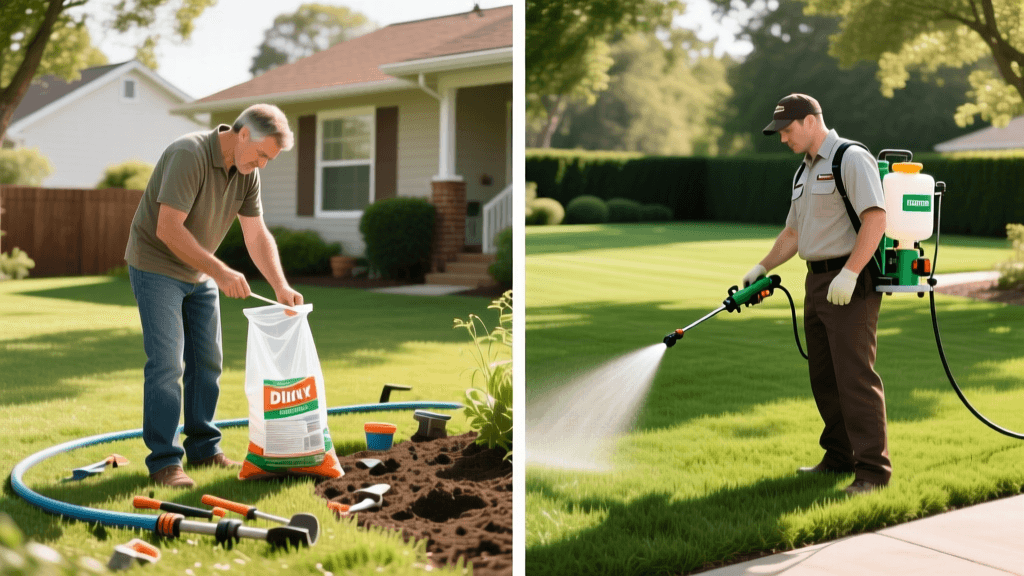
Deciding whether to tackle this project yourself or hire a licensed lawn care professional depends on your budget, physical capability, and lot size. Core aerators are heavy, cumbersome machines that can be difficult to transport and maneuver. Below is a comparative cost analysis for an average 5,000 square foot lawn:
| Expense Category | DIY Approach (Estimated) | Professional Service (Estimated) |
|---|---|---|
| Equipment Rental (Core Aerator) | $85 - $120 (Half-day) | Included in service fee |
| Premium Grass Seed (5k sq ft) | $60 - $90 | Included in service fee |
| Starter Fertilizer | $25 - $40 | Included in service fee |
| Labor & Transport | 4-6 hours of heavy labor + truck rental | Zero physical effort required |
| Total Estimated Cost | $170 - $250+ | $250 - $400 |
Authoritative Insights and Best Practices
The methodologies outlined in this guide are heavily supported by leading agricultural and turfgrass research institutions. According to the Penn State Extension turfgrass management team, 'Core cultivation is the most effective method for relieving soil compaction and improving water infiltration in established lawns. When combined with fall overseeding, it significantly enhances turf density and competitive ability against weeds.' Similarly, Purdue University Turfgrass Science emphasizes that the success of fall seeding relies heavily on seed-to-soil contact, noting that broadcasting seed directly over an aerated lawn yields vastly superior results compared to seeding over compacted, undisturbed soil.
By adhering to these expert best practices—focusing on precise fall timing, utilizing core extraction over spiking, selecting NTEP-rated cultivars, and maintaining rigorous moisture control—you will successfully engineer a thicker, deeper-rooted, and vastly more resilient cool-season lawn capable of withstanding the rigors of the following summer.