Lawn Care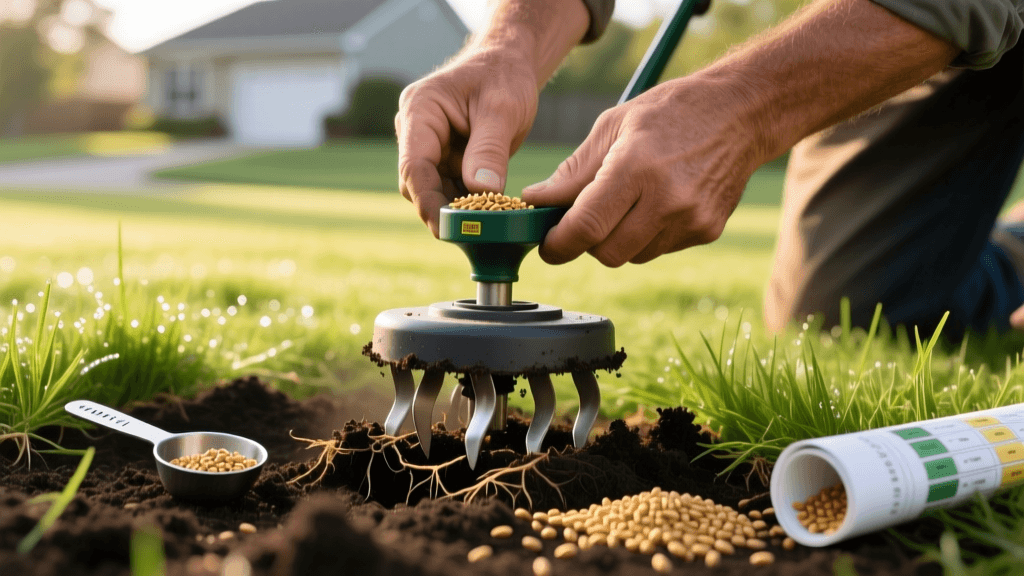
Core Aeration and Overseeding: Expert Timing and Techniques
The Agronomic Science of Soil Compaction and Thatch
Over time, foot traffic, heavy mowing equipment, and natural settling cause soil particles to compress. This compaction increases soil bulk density, effectively choking off the macropores necessary for oxygen exchange, water infiltration, and root expansion. For cool-season grasses like Kentucky Bluegrass, Tall Fescue, and Perennial Ryegrass, compacted soil is the primary catalyst for shallow root systems and summer dormancy. Furthermore, compaction accelerates thatch accumulation. Thatch is a tightly intermingled layer of living and dead stems and roots that develops between the zone of green vegetation and the soil surface. While a thin layer of thatch (under 0.5 inches) provides insulation, excessive thatch harbors fungal pathogens and prevents water from reaching the root zone. Core aeration physically removes small plugs of soil, alleviating compaction and introducing thatch-decomposing soil microbes to the surface.
Pre-Aeration Soil Testing and pH Adjustment
Before renting an aerator, expert lawn care professionals always conduct a comprehensive soil test. Grasses thrive in a pH range of 6.0 to 7.0. If your soil test reveals a pH below 6.0, you must apply pelletized calcitic or dolomitic lime. For every 0.5 pH point increase needed, apply approximately 25 to 50 pounds of lime per 1,000 square feet. Conversely, if your soil is too alkaline (pH above 7.5), elemental sulfur is required. Aeration is the absolute best time to apply these amendments, as the open holes allow the lime or sulfur to bypass the thatch layer and react directly with the subsoil. Skipping this step means your expensive seed and fertilizer will be locked out by chemical imbalances.
Pinpointing the Perfect Timing for Cool-Season Grasses
The success of your overseeding project hinges entirely on timing. Cool-season grasses experience their peak growth cycles during the cooler temperatures of autumn. The optimal window for core aeration and overseeding is late August through mid-October, depending on your specific hardiness zone. The goal is to seed when soil temperatures are consistently between 50°F and 65°F. You can measure this accurately using a standard soil thermometer inserted two inches into the ground. During this window, air temperatures typically range from the 60s to 70s, providing the perfect environment for seedling establishment. More importantly, fall seeding drastically reduces competition from aggressive summer annual weeds like crabgrass, which begin to die off as soil temperatures drop. Spring aeration and overseeding are generally discouraged by turfgrass experts because the newly germinated seedlings lack the deep root mass required to survive the impending summer heat stress, and pre-emergent crabgrass preventers will inhibit the germination of your desired grass seed.
The Expert Step-by-Step Renovation Protocol
Step 1: Preparation and Mowing
Begin by mowing your existing lawn shorter than usual, dropping the deck to a height of 1.5 to 2 inches. This scalping process reduces the canopy, allowing sunlight to reach the soil surface and ensuring the new seed makes direct contact with the dirt. Rake the lawn thoroughly to remove dead grass clippings, leaves, and debris. If your thatch layer exceeds 0.75 inches, you may need to rent a power dethatcher before proceeding to aeration.
Step 2: Deep Core Aeration
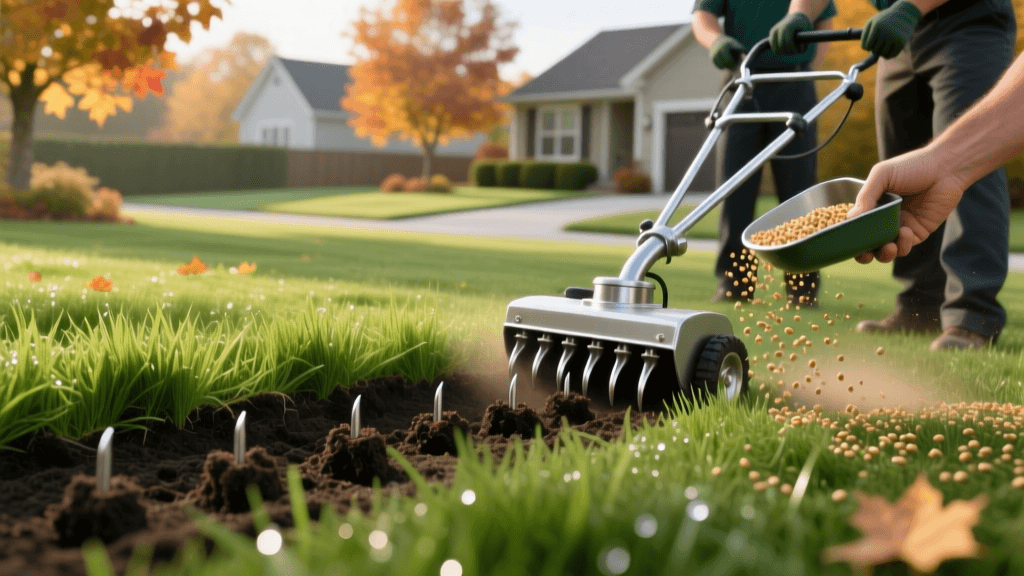
Rent a heavy-duty, walk-behind core aerator from a local equipment rental center. Avoid spike aerators or aerator shoes, as these merely punch holes and can actually worsen compaction by compressing the soil laterally. Water the lawn deeply 24 hours before aerating to soften the ground. The aerator should pull plugs that are 2 to 3 inches deep and 0.5 to 0.75 inches in diameter. For heavily compacted areas, make two passes in perpendicular directions, creating a grid pattern that ensures maximum soil fracture and oxygen exposure.
Step 3: Selecting the Right Seed and Seeding Rates
Choosing certified seed with a germination rate of 90% or higher and zero weed seed content is non-negotiable for professional results. Avoid cheap, big-box store blends that contain annual ryegrass or excessive filler. Below is the expert-recommended overseeding rate chart for common cool-season grasses.
| Grass Type | Overseeding Rate (lbs/1,000 sq ft) | Germination Time | Best Use Case |
|---|---|---|---|
| Tall Fescue | 6 - 8 lbs | 7 - 14 days | High traffic, heat tolerance |
| Kentucky Bluegrass | 2 - 3 lbs | 14 - 28 days | Rhizome spread, premium look |
| Perennial Ryegrass | 4 - 6 lbs | 5 - 10 days | Quick germination, erosion control |
| Fine Fescue | 4 - 5 lbs | 7 - 14 days | Heavy shade, low fertility |
Step 4: Fertilization and Soil Amendment
Immediately after seeding, apply a high-phosphorus starter fertilizer to promote rapid root development. A formulation like 10-18-10 or 18-24-12 is ideal. Phosphorus is critical for early seedling vigor but is often restricted in standard lawn fertilizers due to environmental runoff concerns; however, most states allow starter fertilizers on newly seeded lawns. Apply the fertilizer using a broadcast spreader at the rate specified on the packaging, typically around 4 pounds per 1,000 square feet. Follow this with a thin layer of peat moss or compost topdressing to retain moisture around the seed.
Post-Overseeding Irrigation Mastery
Watering is where most homeowners fail, resulting in dead seedlings and wasted money. Grass seed must remain consistently moist until it germinates and establishes a root system. Follow this strict irrigation schedule:
- Days 1 to 14 (Germination Phase): Water lightly 2 to 3 times per day for 5 to 10 minutes per zone. The goal is to keep the top 1 inch of soil damp, not saturated. If the seed dries out even once during germination, it will die.
- Days 15 to 28 (Establishment Phase): As seedlings reach 1 inch tall, reduce watering frequency to once daily, but increase the duration to 15 to 20 minutes. This encourages roots to grow deeper into the aeration holes.
- Days 28 and Beyond (Maturation Phase): Transition to a standard deep-watering schedule of 1 to 1.5 inches of water per week, applied in two or three heavy sessions to promote drought tolerance.
Common Pitfalls and Expert Warnings
One of the most catastrophic mistakes a homeowner can make is applying a pre-emergent herbicide in the spring or early summer and expecting to overseed in the fall. Pre-emergents create a chemical barrier that prevents all seeds from germinating, including your expensive turfgrass seed. You must wait at least 8 to 12 weeks after a pre-emergent application before overseeding. Additionally, never bury grass seed under thick layers of topsoil. Grass seed requires light to germinate and should never be covered with more than 1/4 inch of soil or compost.
According to turfgrass specialists at Penn State Extension, 'Core aeration is most effective when the soil is moist but not saturated. Attempting to aerate dry, hard soil will result in shallow plug extraction, negating the benefits of the process. Furthermore, leaving the extracted cores on the lawn surface allows them to break down and return valuable microorganisms to the thatch layer.'
Cost Breakdown: DIY vs. Professional Hiring
Deciding whether to tackle this project yourself or hire a licensed lawn care professional depends on your budget, physical capability, and access to equipment. Below is a comparative cost analysis for an average 5,000 square foot lawn.
| Service / Material | DIY Cost (per 5,000 sq ft) | Professional Cost (per 5,000 sq ft) |
|---|---|---|
| Core Aeration (Rental vs Labor) | $75 - $100 (Rental) | $150 - $250 |
| Premium Tall Fescue Seed (25 lbs) | $90 - $130 | Included |
| Starter Fertilizer | $35 - $50 | Included |
| Total Estimated Cost | $200 - $280 | $350 - $550 |
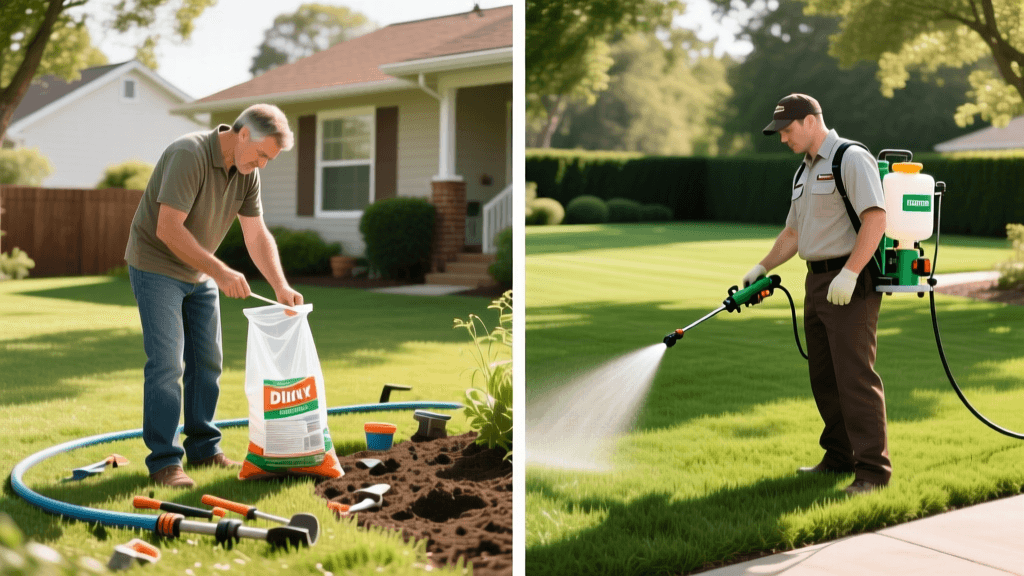
While the DIY route saves money upfront, professional services utilize commercial-grade slit-seeders and tow-behind aerators that provide vastly superior seed-to-soil contact compared to consumer-grade rental equipment. If your lawn is severely damaged or heavily sloped, investing in professional renovation is highly recommended to ensure long-term turf density and resilience.