Lawn Care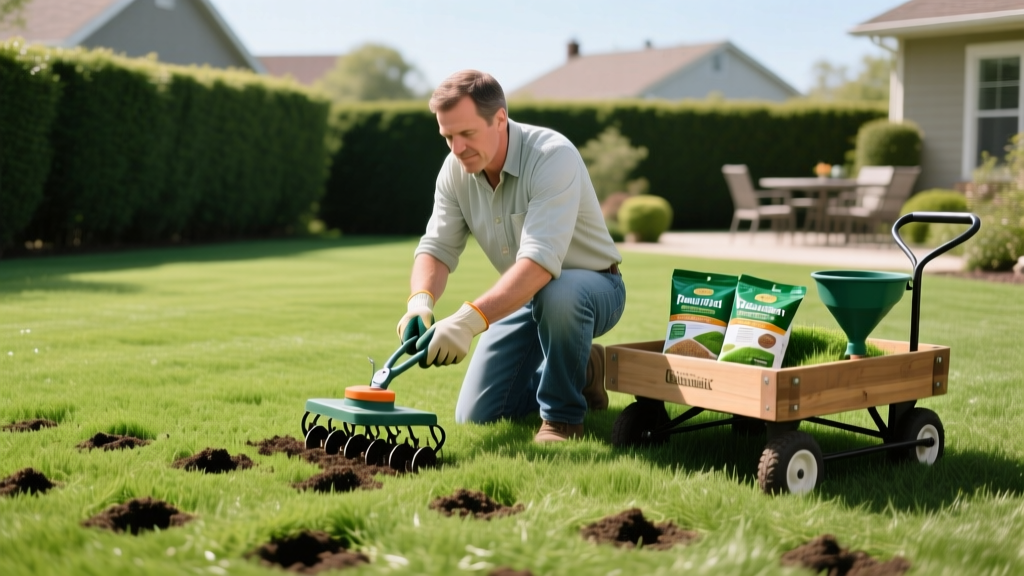
Core Aeration and Overseeding: The Complete Lawn Guide
Sarah ChenPublished
The Science Behind Core Aeration and Overseeding
Over time, even the most meticulously maintained lawns fall victim to soil compaction and thatch buildup. Foot traffic, heavy mowing equipment, and relentless rainfall compress the soil particles, squeezing out the vital oxygen and pore space that grassroots need to thrive. When soil becomes compacted, water runs off the surface rather than penetrating the root zone, and nutrients remain locked away from the turf. Core aeration is the mechanical process of removing small plugs of soil and thatch from the lawn, effectively relieving this compaction and allowing air, water, and fertilizer to reach the roots.
Overseeding, the process of sowing new grass seed directly into existing turf, is the perfect companion to aeration. The holes left behind by the core aerator provide an ideal, protected microenvironment for seed-to-soil contact, which is the single most critical factor in seed germination. By combining these two techniques, you not only improve the soil structure but also introduce modern, disease-resistant, and drought-tolerant turfgrass cultivars to your lawn. This dual approach thickens the turf canopy, naturally crowding out opportunistic weeds like crabgrass and dandelions.
Optimal Timing: When to Execute
Timing is everything when it comes to lawn renovation. The goal is to perform aeration and overseeding when the existing grass is actively growing and environmental conditions favor rapid seed germination.
Cool-Season Grasses
For cool-season grasses such as Tall Fescue, Kentucky Bluegrass, and Perennial Ryegrass, early fall (late August through mid-October) is the absolute best time to aerate and overseed. During this window, soil temperatures are ideally between 50°F and 65°F, which triggers rapid germination. Furthermore, the cool autumn air reduces heat stress on young seedlings, while falling leaves and reduced weed competition give the new grass a head start before winter dormancy.
Warm-Season Grasses
If you maintain a warm-season lawn featuring Bermudagrass, Zoysiagrass, or Centipedegrass, you must shift your schedule to late spring or early summer (May through June). Warm-season grasses require hot soil temperatures (above 70°F) to establish properly. Aerating during their peak growing season ensures the turf can quickly recover from the mechanical stress and heal the aeration holes before the intense heat and drought of late summer set in.
Essential Equipment and Estimated Costs
To do the job correctly, you must use a core aerator (also known as a plug aerator). Avoid spike aerators or aerator sandals; these merely punch solid holes into the ground, which actually increases lateral soil compaction in heavy clay soils.
- Walk-Behind Core Aerator Rental: Typically costs between $80 and $120 for a half-day rental from local hardware stores or equipment rental yards.
- Quality Grass Seed: Expect to spend $40 to $70 for a 25-lb bag of premium, weed-free seed. Always check the seed tag for a germination rate of 85% or higher and ensure it contains 0% weed seed.
- Starter Fertilizer: A 40-lb bag of high-phosphorus starter fertilizer (such as Lesco 18-24-12 or Scotts Turf Builder Starter Food) costs around $35 to $50. Phosphorus is crucial for early root development.
- Broadcast Spreader: If you do not own one, a reliable drop or broadcast spreader (like the Scotts EdgeGuard Mini) costs about $30 to $45.
Step-by-Step Execution Guide
Step 1: Mow Low and Hydrate
Two days before you plan to aerate, mow your lawn slightly lower than your normal maintenance height (around 1.5 to 2 inches). This prevents the existing grass from shading out the new seedlings and allows the aerator tines to penetrate the soil more easily. After mowing, water the lawn deeply, applying about 1 inch of water. The soil should be moist but not muddy. If the soil is too dry, the aerator tines will bounce off the surface; if it is too wet, the machine will clog and tear the turf.
Step 2: Double-Pass Core Aeration
Run the core aerator over the entire lawn in one direction, and then make a second pass in a perpendicular direction (creating a cross-hatch pattern). This ensures you are pulling enough plugs to adequately relieve compaction. Aim to extract soil plugs that are 2 to 3 inches deep and spaced about 2 to 3 inches apart. Do not rake up the soil plugs. Leave them on the surface; they will break down naturally over the next few weeks with rain and mowing, depositing beneficial soil microbes back onto the thatch layer to accelerate decomposition.
Step 3: Precision Overseeding
When selecting seed, consult the National Turfgrass Evaluation Program (NTEP) to find top-rated cultivars for your specific region that offer superior resistance to local diseases and pests. Set your broadcast spreader to the setting recommended on the seed bag for overseeding (which is typically half the rate used for establishing a brand-new lawn). Apply half of the seed while walking in a North-South direction, and the remaining half while walking East-West. This crisscross method guarantees even distribution and prevents streaking.
Step 4: Apply Starter Fertilizer
Immediately after seeding, apply a dedicated starter fertilizer. New seedlings have high phosphorus requirements to develop a robust root system before winter. Look for an N-P-K ratio where the middle number (Phosphorus) is elevated, such as 10-18-10 or 18-24-12. Avoid using standard "Weed and Feed" products, as the herbicides (particularly pre-emergents like mesotrione or prodiamine) will inhibit the germination of your new grass seed or kill young seedlings.
Step 5: The 21-Day Watering Protocol
Grass seed must remain consistently moist to germinate. If the seed dries out even once during the germination process, the embryo will die. For the first 14 to 21 days, water the lawn lightly 2 to 3 times per day for about 5 to 10 minutes per zone. The goal is to keep the top 1 inch of soil damp. Once the seedlings reach about 2 inches in height and begin to establish roots, gradually reduce the frequency of watering but increase the duration to encourage deep root growth.
Seed Rates and Aeration Specifications
The following table outlines the recommended overseeding rates and aeration depths based on your specific turfgrass type. Always adjust rates based on the current density of your existing lawn; thinner lawns require the higher end of the spectrum.
| Grass Type | Season | Overseeding Rate (lbs / 1,000 sq ft) | Ideal Aeration Depth |
|---|---|---|---|
| Tall Fescue | Cool | 5.0 - 8.0 lbs | 2 - 3 inches |
| Kentucky Bluegrass | Cool | 2.0 - 3.0 lbs | 2 - 3 inches |
| Perennial Ryegrass | Cool | 4.0 - 6.0 lbs | 2 - 3 inches |
| Bermudagrass | Warm | 0.5 - 1.0 lbs | 1 - 2 inches |
| Zoysiagrass | Warm | 1.0 - 2.0 lbs (plugs/sprigs preferred) | 1 - 2 inches |
Common Mistakes to Avoid
"Never use a spike aerator on heavy clay soils. The lateral pressure of the spike actually increases compaction around the hole, defeating the entire purpose of the aeration. Always use a machine that physically removes a core of soil."
Another frequent error is mowing the lawn too soon after overseeding. Wait until the new grass has reached at least 3 to 3.5 inches in height before making your first mowing pass. When you do mow, ensure your mower blades are razor-sharp; dull blades will tear the tender young seedlings out of the ground by the roots. Additionally, avoid heavy foot traffic on the newly seeded areas for at least three weeks to prevent soil re-compaction and seed displacement.
Authoritative Resources and Further Reading
Successful lawn care relies on ongoing education and adapting to local microclimates. For detailed, region-specific data on soil compaction and turfgrass recovery, the Colorado State University Extension provides excellent fact sheets detailing the mechanics of lawn aeration and thatch management.
Furthermore, if you are managing a lawn in the northern tier of the United States, the University of Minnesota Turfgrass Science Program offers invaluable, research-backed insights into cool-season grass dormancy, fall fertilization schedules, and winterization techniques that perfectly complement your fall aeration efforts. By combining proper mechanical aeration with high-quality seed and precise watering, you can transform a tired, thinning lawn into a dense, vibrant carpet of turf that will be the envy of the neighborhood.