
Landscaping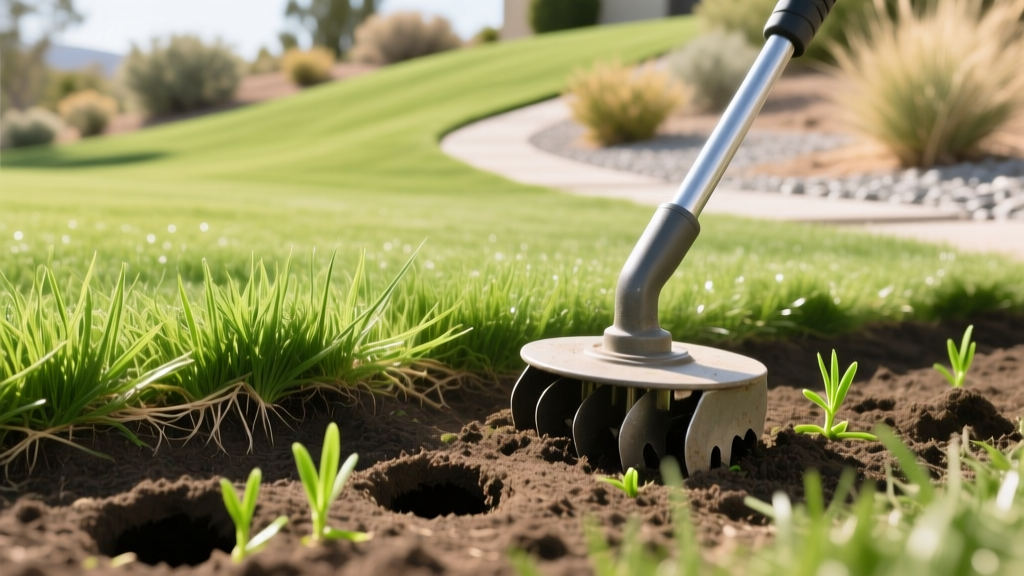
Core Aeration and Overseeding for a Resilient Landscape
Sarah ChenPublished
The Foundation of Landscape Design: Healthy Turf
When homeowners and landscape architects envision a stunning outdoor living space, they often focus on hardscaping elements like patios, retaining walls, and pergolas. However, the most expansive 'plant' in almost any residential landscape is the turfgrass lawn. A dense, vibrant lawn acts as the unifying canvas that makes garden beds, water features, and architectural elements pop. Yet, this foundational element is frequently compromised by an invisible enemy: soil compaction. To achieve a truly resilient and sustainable landscape, integrating professional-grade core aeration and strategic overseeding techniques into your annual maintenance calendar is non-negotiable.
Understanding Soil Compaction in Landscaped Yards
Soil compaction occurs when soil particles are pressed together, reducing the pore space between them. In a landscaped environment, this is caused by routine foot traffic, the heavy wheels of zero-turn mowers, children playing, and even the initial construction process where heavy machinery compresses the subsoil. According to the USDA Natural Resources Conservation Service, healthy soil requires a balance of minerals, organic matter, water, and air. When pore space is crushed out, water cannot infiltrate, roots cannot expand, and beneficial soil microbes suffocate. The result is a thinning lawn that is highly susceptible to drought stress, weed invasion, and disease. Spike aeration, which merely pokes holes into the ground, often exacerbates this issue by further compressing the soil laterally. True landscape restoration requires core aeration.
Core Aeration Techniques: Breaking the Barrier
Core aeration involves the mechanical removal of small soil plugs, or 'cores,' from the lawn. This process physically relieves compaction, creates pathways for oxygen and water to reach the root zone, and stimulates the breakdown of thatch by exposing soil microorganisms to organic debris. For optimal results in a residential landscape, you must use a heavy-duty core aerator—such as a Billy Goat or Ryan Ren-O-Thin walk-behind aerator—that extracts cores measuring 0.5 to 0.75 inches in diameter and 2 to 3 inches deep.
Preparation and Execution
- Irrigation: Water the lawn deeply 24 to 48 hours before aerating. The soil must be moist enough for the tines to penetrate fully, but not so saturated that the cores turn into muddy clods.
- Utility Marking: Always call your local utility marking service (like 811 in the US) and use irrigation flags to mark shallow sprinkler heads, valve boxes, and invisible dog fences to prevent catastrophic damage to your landscape infrastructure.
- Pattern Overlap: Make one pass over the lawn in a north-south direction, and a second pass in an east-west direction. This crisscross pattern ensures that cores are extracted every 2 to 3 inches, providing uniform relief across the entire landscape.
- Leave the Plugs: Do not rake up the extracted soil cores. Allow them to dry and break apart naturally over the next few weeks. As they decompose, they deposit valuable soil microorganisms onto the thatch layer, accelerating its breakdown.
Strategic Overseeding: Choosing the Right Cultivars
Overseeding is the process of introducing new turfgrass seed into an existing lawn without tearing up the soil. When paired with core aeration, the seeds fall directly into the aeration holes, creating perfect micro-environments for germination. This technique is vital for landscape design because it allows you to introduce modern, drought-tolerant, and disease-resistant grass cultivars into an aging lawn, effectively upgrading your landscape's resilience without a full renovation.
When selecting seed, avoid cheap 'contractor mixes' found at big-box stores, which often contain annual ryegrass or weed seeds. Instead, invest in certified, turf-type tall fescue blends for transition zones, or improved Kentucky bluegrass and perennial ryegrass mixes for northern climates. In heavily shaded areas beneath mature landscape trees, select fine fescue blends specifically bred for low-light tolerance.
Overseeding Rates and Germination Data
Applying the correct seed rate is critical. Too little seed results in patchy establishment, while too much seed leads to intense competition for water and nutrients, causing seedling die-off. Refer to the table below for precise application rates:
| Grass Type | Overseeding Rate (lbs / 1,000 sq ft) | Germination Time (Days) | Best Aeration Season |
|---|---|---|---|
| Turf-Type Tall Fescue | 6.0 - 8.0 | 7 - 14 | Early Fall |
| Kentucky Bluegrass | 1.5 - 2.5 | 14 - 28 | Early Fall |
| Perennial Ryegrass | 4.0 - 6.0 | 5 - 10 | Early Fall / Spring |
| Bermudagrass (Warm-Season) | 1.0 - 2.0 | 10 - 14 | Early Summer |
Timing Your Aeration and Overseeding
Timing is the most common point of failure for DIY landscapers. Cool-season grasses must be aerated and overseeded in the early fall, typically between late August and mid-October, depending on your hardiness zone. During this window, soil temperatures hover between 50°F and 65°F, which is the biological sweet spot for cool-season seed germination. Furthermore, fall overseeding allows the new grass to establish deep root systems during the cool autumn and winter months before facing the brutal heat and drought stress of the following summer.
Warm-season grasses, such as Bermudagrass and Zoysia, should be aerated and overseeded (if thinning) in late spring to early summer when soil temperatures consistently exceed 70°F and the grass is actively growing. Never aerate warm-season lawns in the fall, as this opens the soil to winter weed invasion and weakens the turf before dormancy.
Execution and Post-Care Protocols
Once the seed is down, the landscape enters a critical establishment phase. Seed-to-soil contact is paramount; the aeration holes provide this, but dragging a piece of chain-link fence or a specialized lawn drag mat over the surface can further work the seed into the soil profile.
Fertilization and Watering
Apply a high-quality starter fertilizer immediately after overseeding. Look for a formulation with a higher middle number (Phosphorus), such as a 10-18-10 or 18-24-12 N-P-K ratio. Phosphorus is essential for rapid root development in young seedlings. Apply at a rate that delivers exactly 1.0 pound of actual nitrogen per 1,000 square feet.
Watering must be managed meticulously. For the first 14 to 21 days, the top inch of soil must remain constantly moist. This requires light, frequent irrigation—typically 5 to 10 minutes, two to three times a day, depending on evaporation rates. As the EPA WaterSense Landscaping Guidelines suggest, utilizing smart irrigation controllers or soil moisture sensors can prevent overwatering while ensuring seeds do not dry out. Once seedlings reach two inches tall, gradually transition to deeper, less frequent watering to encourage roots to chase moisture down into the aeration channels.
Mowing Resumption
Do not mow the lawn until the new seedlings have reached approximately 3.5 to 4 inches in height. When you do resume mowing, ensure your mower blades are razor-sharp. Dull blades will rip the tender, shallow-rooted seedlings out of the aeration holes, undoing weeks of careful cultivation. Never remove more than the top one-third of the grass blade during any single mowing session.
Integrating Turf Care into Sustainable Landscaping
Aerating and overseeding are not just about curb appeal; they are core tenets of sustainable landscape management. A thick, deeply rooted lawn acts as a massive bio-filter, trapping dust, absorbing runoff, and cooling the ambient air temperature around your home. According to the USGA Green Section Course Care resources, routine aeration is the single most effective cultural practice for reducing the need for chemical interventions and supplemental irrigation in turf management.
By alleviating compaction, you drastically improve the soil's water infiltration rate. This means that when heavy rains occur, water is absorbed into the aquifer rather than sheeting off the compacted surface, carrying synthetic fertilizers and herbicides into local storm drains and waterways. Furthermore, introducing modern, endophyte-enhanced turfgrass cultivars through overseeding naturally deters surface-feeding insects like chinch bugs and sod webworms, reducing the need for broad-spectrum insecticides that can harm beneficial pollinators visiting your adjacent garden beds.
Conclusion
Treating your lawn as a vital, living component of your overall landscape design elevates the entire property. By mastering the techniques of core aeration and strategic overseeding, you transform a tired, compacted yard into a resilient, drought-tolerant, and visually stunning outdoor space. Invest in the right equipment, respect the biological timing of your turfgrass species, and commit to the post-care protocols required to ensure your landscape thrives for decades to come.

