
Landscaping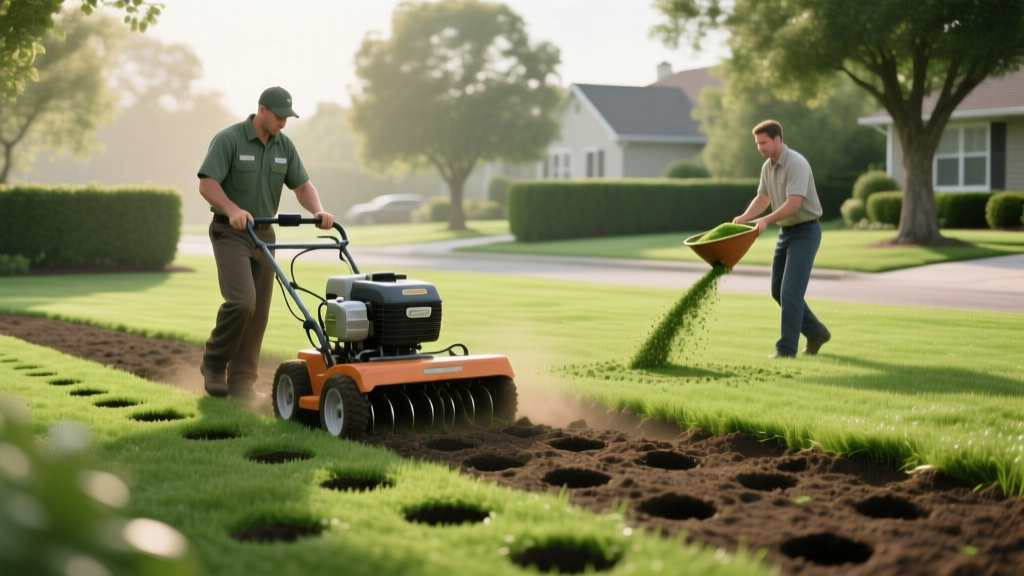
Core Aeration and Overseeding for Sustainable Landscapes
Anna KowalskiPublished
The Foundation of Curb Appeal: Aeration and Overseeding
When homeowners think of landscape design, they often envision striking hardscaping, vibrant perennial garden beds, or elegant outdoor living spaces. However, the most critical element of curb appeal is often the canvas itself: a lush, healthy lawn. Over time, foot traffic, heavy landscaping equipment, and natural weather patterns cause soil compaction, choking grass roots and creating a barren landscape. Integrating core aeration and overseeding techniques into your annual landscape maintenance plan is essential for sustaining a vibrant lawn that complements your broader property design.
According to turfgrass experts at Penn State Extension, core aeration is the premier mechanical method for alleviating soil compaction, improving water infiltration, and enhancing the overall resilience of your turf. When paired with overseeding, this technique not only repairs thinning areas but also introduces modern, drought-tolerant grass cultivars to your existing landscape.
Core Aeration vs. Spike Aeration: A Technical Comparison
Before renting equipment or hiring a landscape contractor, it is vital to understand the difference between core (plug) aeration and spike aeration. While spike aerators simply punch holes into the ground, core aerators use hollow tines to extract plugs of soil and thatch. For landscapes with heavy clay soil or severe compaction from recent hardscaping projects, core aeration is the undisputed standard.
| Feature | Core Aeration (Plug) | Spike Aeration |
|---|---|---|
| Mechanism | Removes 2-3 inch soil cores | Punches solid holes into soil |
| Compaction Relief | Excellent; creates space for expansion | Poor; can worsen lateral compaction |
| Thatch Management | Brings soil microbes to surface to digest thatch | No impact on thatch layer |
| Ideal Soil Type | Heavy clay, compacted loam | Sandy, already loose soils |
| Landscape Impact | Temporary mess (plugs), long-term health | Clean, but short-term benefits |
Strategic Timing for Overseeding and Aeration
Timing is everything in landscape management. The optimal window for aeration and overseeding depends entirely on the dominant grass species in your lawn, which is generally dictated by your regional climate.
Cool-Season Grasses (Northern Landscapes)
For lawns featuring Kentucky Bluegrass, Tall Fescue, or Perennial Ryegrass, early fall (late August to mid-October) is the golden window. Soil temperatures are still warm enough to encourage rapid seed germination, while cooler air temperatures reduce heat stress on young seedlings. Furthermore, fall weed competition is minimal, allowing new turf to establish before winter dormancy.
Warm-Season Grasses (Southern Landscapes)
Landscapes dominated by Bermuda, Zoysia, or Centipede grass should be aerated and overseeded (often with a cool-season ryegrass for winter color, or the same warm-season species for thickening) in late spring to early summer (May through June). This coincides with the grass's peak active growth phase, ensuring rapid recovery from the mechanical stress of aeration.
Step-by-Step Execution: The Professional Technique
To achieve professional-grade results that elevate your property's curb appeal, follow this precise, actionable protocol.
Step 1: Preparation and Safety Marking
One to two days before aerating, water your lawn deeply to soften the soil, ensuring the aerator tines can penetrate to a depth of 2 to 3 inches. Crucially, call your local utility marking service (like 811 in the US) and flag all shallow irrigation heads, landscape lighting wires, and drainage pipes with bright marking paint. Hitting an irrigation line can cause thousands of dollars in landscape damage.
Step 2: The Aeration Passes
Use a gas-powered walk-behind core aerator. Make one pass across the lawn in a single direction, and a second pass perpendicular to the first. The goal is to achieve a hole density of 20 to 40 holes per square foot. As noted by researchers at Rutgers University, leaving the extracted soil cores on the lawn surface is highly beneficial; they will break down over the next few weeks, depositing thatch-degrading microbes back into the turf canopy.
Step 3: Overseeding and Fertilization
Immediately after aeration, apply your grass seed using a broadcast spreader. The open aeration holes provide perfect seed-to-soil contact, which is the primary driver of germination success. Follow the seed application with a starter fertilizer high in phosphorus (such as a 10-18-10 NPK ratio) to stimulate aggressive root development.
Step 4: Moisture Management
For the first 14 to 21 days, the seedbed must remain consistently moist. Water lightly 2 to 3 times a day for 5-10 minutes. Once seedlings reach 2 inches in height, transition to deep, infrequent watering (about 1 inch per week) to encourage deep root growth, which is vital for sustainable landscape drainage and drought resistance.
Choosing the Right Seed Cultivars for Your Landscape
Selecting the appropriate grass seed is paramount to the long-term success of your overseeding efforts. Not all seeds are created equal, and using a cheap, generic mix from a big-box store can introduce undesirable weed species and weak grass strains to your carefully curated landscape. Look for NTEP (National Turfgrass Evaluation Program) rated seeds that are certified weed-free.
For shaded landscapes beneath mature canopy trees, opt for Fine Fescue blends or shade-tolerant Tall Fescue varieties. These cultivars require less sunlight and have finer leaf textures that blend beautifully with woodland-style garden beds. For high-traffic areas, such as pathways leading to patios or play zones near outdoor kitchens, a mix of Kentucky Bluegrass and Perennial Ryegrass offers rapid establishment and rhizomatous spreading that repairs itself from foot traffic damage. Investing $50 extra in premium, coated seed (which often includes fungicides and moisture-retaining polymers) can increase germination rates by up to 30 percent, ensuring your landscape investment yields a dense, uniform turf.
Material Requirements and Cost Breakdown
Budgeting is a key component of any landscaping project. Below is a cost analysis for a standard 5,000-square-foot lawn, comparing the DIY approach against hiring a professional landscape contractor.
- Equipment Rental (DIY): Walk-behind core aerator rental averages $75 to $100 per day.
- Grass Seed: High-quality Tall Fescue blend costs roughly $6 to $9 per pound. At an overseeding rate of 5 lbs per 1,000 sq ft, you need 25 lbs, totaling $150 to $225.
- Starter Fertilizer: A 50lb bag covering 10,000 sq ft costs approximately $40 to $60.
- Professional Service: Landscape companies typically charge $0.15 to $0.25 per square foot for combined aeration and overseeding, totaling $750 to $1,250 for a 5,000 sq ft property.
While the DIY route saves significant capital, it requires heavy physical labor. Aerators weigh upwards of 250 pounds and can be difficult to maneuver around delicate garden beds, retaining walls, and tight landscape corridors.
Sustainable Landscaping Benefits
Integrating aeration and overseeding into your landscape management plan extends far beyond simple aesthetics. Compacted soil is a primary culprit for poor yard drainage, leading to water runoff that can erode garden beds and overwhelm municipal storm systems. By opening the soil profile, aeration dramatically increases water infiltration rates. Furthermore, overseeding with modern, endophyte-enhanced turfgrass varieties naturally deters common lawn pests, reducing the need for synthetic chemical pesticides and aligning your property with eco-friendly, sustainable landscaping principles.
Ultimately, a thick, deeply rooted lawn acts as a living filter for your landscape, trapping dust, cooling the ambient air temperature around your outdoor living spaces, and providing a flawless, emerald-green foundation that makes your hardscaping and garden designs truly pop.

