Lawn Care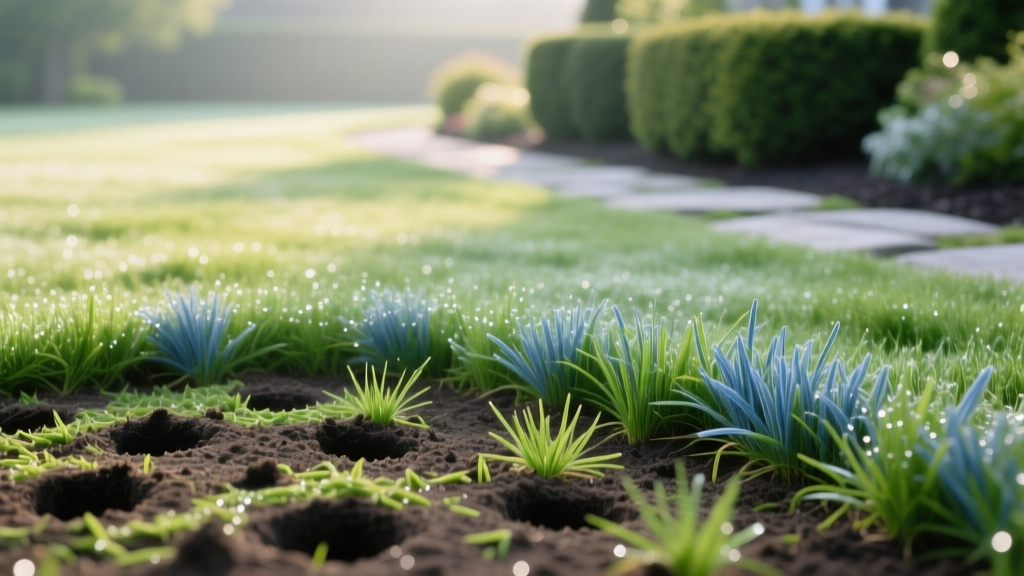
Core Aeration and Overseeding Guide for Cool-Season Lawns
Anna KowalskiPublished
The Hidden Enemy: Soil Compaction and Thatch
Every homeowner dreams of a lush, carpet-like lawn, but beneath the surface, two silent enemies are often working against your turf: soil compaction and thatch buildup. Over time, foot traffic, heavy mowing equipment, and driving rain compress the soil particles, drastically reducing the pore space needed for oxygen, water, and nutrients to reach the root zone. When soil bulk density increases, grass roots suffocate, leading to thin, weak turf that is highly susceptible to drought stress, disease, and weed invasion.
Simultaneously, a thick layer of thatch—a tangled mat of dead and living grass stems and roots—can form at the soil surface. While a half-inch of thatch is beneficial for insulation and moisture retention, anything thicker acts like a waterproof barrier, preventing fertilizers and water from penetrating the soil. The ultimate solution to combat both of these issues and rejuvenate a tired lawn is the powerful combination of core aeration and overseeding.
Core Aeration vs. Spike Aeration: Understanding the Difference
Before renting an aerator, it is crucial to understand the mechanical differences between the two main types of aeration. While spike aeration is cheaper and easier, it is rarely recommended by turfgrass professionals for severely compacted lawns.
| Feature | Core Aeration | Spike Aeration |
|---|---|---|
| Mechanism | Hollow tines extract 2-3 inch soil plugs (cores) | Solid tines punch holes into the soil |
| Compaction Relief | Excellent; physically removes soil mass, allowing surrounding soil to expand | Poor; can actually increase compaction by pressing soil outward and downward |
| Thatch Management | Brings soil microbes to the surface to accelerate thatch decomposition | No impact on thatch decomposition |
| Seed-to-Soil Contact | Creates perfect, deep micro-environments for overseeded grass seed | Seed tends to wash away or dry out in narrow, compacted holes |
| Best Soil Type | Heavy clay and highly compacted soils | Sandy, non-compacted soils (temporary relief only) |
For cool-season lawns, NC State Extension TurfFiles strongly recommends core aeration. The physical removal of soil cores fractures the compacted layers and provides the ideal cradle for new grass seedlings.
Timing is Everything: When to Aerate and Overseed
Timing is arguably the most critical factor in the success of your overseeding project. Cool-season grasses—such as Kentucky Bluegrass, Tall Fescue, Fine Fescue, and Perennial Ryegrass—experience their most vigorous root and shoot growth during the cooler temperatures of autumn.
The ideal window for core aeration and overseeding cool-season lawns is late summer to early fall (August 15th through September 15th). During this period, soil temperatures are still warm enough (between 50°F and 65°F) to trigger rapid seed germination, while the cooling air temperatures reduce heat stress on young seedlings. Furthermore, fall overseeding gives the new grass roughly eight months to establish a deep root system before facing the brutal heat and drought stress of the following summer.
A secondary, less ideal window exists in early spring (March to April). However, spring overseeding is fraught with challenges: you will face intense competition from spring-germinating weeds like crabgrass, and the young grass will have a very shallow root system when summer heat arrives. As noted by the University of Minnesota Extension, fall is unequivocally the superior season for cool-season turf renovation.
Step-by-Step Aeration and Overseeding Technique
To achieve professional-level results, follow this meticulous, step-by-step protocol.
Step 1: Lawn Preparation
Mow your existing lawn slightly lower than your normal maintenance height (around 1.5 to 2 inches) and bag the clippings. This removes the thatch canopy, allowing sunlight to reach the soil and ensuring the new seed makes direct contact with the dirt. Next, water the lawn deeply 24 to 48 hours before aerating. The soil should be moist but not muddy; if it is too dry, the aerator tines will not penetrate, and if it is too wet, the machine will clog and tear the turf.
Step 2: Mark Utilities and Irrigation
Always call your local utility locating service (like 811 in the US) a few days prior to mark underground lines. Additionally, use brightly colored landscaping flags to mark all sprinkler heads, shallow irrigation lines, and invisible dog fences to prevent costly damage.
Step 3: Execute the Core Aeration
Rent a heavy-duty, walk-behind core aerator. Make one pass over the entire lawn in a single direction, and then make a second pass perpendicular to the first (creating a cross-hatch pattern). Aim for 20 to 40 holes per square foot. Leave the extracted soil plugs on the lawn; they will break apart over the next few weeks and rain down into the turf canopy, depositing beneficial soil microbes that help digest thatch.
Step 4: Overseed the Lawn
Immediately after aerating, while the holes are open and the soil is exposed, apply your grass seed. Use a broadcast spreader for even coverage, splitting your seed rate in half and applying it in two perpendicular directions. Focus heavily on bare spots and high-traffic areas.
Step 5: Apply Starter Fertilizer and Topdress
Apply a high-quality starter fertilizer immediately after seeding. Starter fertilizers are uniquely formulated with higher levels of phosphorus (the middle number in the N-P-K ratio), which is essential for rapid root development in seedlings. For an extra boost, spread a thin layer (1/8 to 1/4 inch) of compost or topsoil over the lawn. This topdressing protects the seed from birds, retains moisture, and provides a nutrient-rich medium for germination.
Seed Selection and Application Rates
Choosing the right seed and applying it at the correct rate is vital. Overseeding requires a lower rate than establishing a lawn from scratch, as you are working within an existing turf canopy.
| Grass Species | Overseeding Rate (per 1,000 sq ft) | Characteristics & Best Use |
|---|---|---|
| Tall Fescue | 6 to 8 lbs | Deep-rooted, drought-tolerant, excellent for high-traffic and transition zones. |
| Kentucky Bluegrass | 1 to 2 lbs | Spreads via rhizomes to repair damage, requires full sun and higher maintenance. |
| Perennial Ryegrass | 4 to 6 lbs | Germinates extremely fast (5-7 days), great for quick erosion control and patching. |
| Fine Fescue | 3 to 5 lbs | Shade-tolerant, fine texture, struggles in high heat or heavy foot traffic. |
According to Penn State Extension, blending different cultivars of the same species (e.g., mixing three different types of Tall Fescue) provides genetic diversity, making your lawn more resilient to localized diseases and environmental stressors.
Post-Overseeding Recovery and Irrigation
The success of your overseeding effort hinges entirely on the first 21 days of irrigation. Grass seed must remain consistently moist to germinate; if the seed dries out even once during the germination phase, the embryo will die.
- Weeks 1 and 2 (Germination Phase): Water lightly 2 to 3 times per day for 5 to 10 minutes each session. The goal is to keep the top half-inch of soil constantly damp without creating standing water or runoff.
- Weeks 3 and 4 (Establishment Phase): As seedlings emerge and grow, reduce the frequency to once a day, but increase the duration to 15 to 20 minutes to encourage deeper root growth.
- Week 5 and Beyond (Transition to Normal): Gradually transition to a standard deep-and-infrequent watering schedule, providing about 1 to 1.5 inches of water per week, including rainfall.
Pro Tip: Resist the urge to mow! Wait until the new grass reaches at least 3 to 3.5 inches in height before the first mow. Ensure your mower blade is razor-sharp to avoid tearing the delicate, unanchored seedlings out of the soil.
Long-Term Lawn Maintenance
Aeration and overseeding are not one-time miracles; they are components of a holistic, long-term lawn care strategy. To maintain the results of your hard work, implement a regular fertilization schedule tailored to cool-season grasses, focusing on heavy nitrogen applications in the fall and lighter applications in the spring. Additionally, maintain a high mowing height (3 to 4 inches) during the summer months to shade the soil, conserve moisture, and naturally suppress crabgrass germination.
By understanding the science of soil compaction, executing precise aeration techniques, and committing to a rigorous post-seeding watering schedule, you can transform a thin, weedy, and compacted lawn into a thick, vibrant, and resilient turf that will be the envy of the neighborhood.