
Landscaping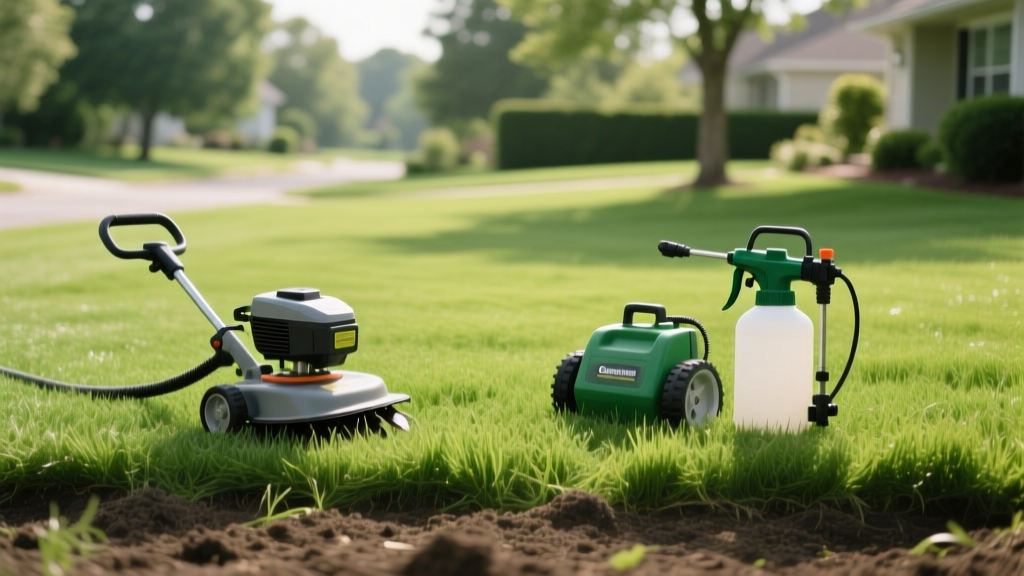
Core vs Liquid Aeration: Best Prep for Overseeding
Lisa ThompsonPublished
Anchoring Your Landscape Design with a Healthy Lawn
When planning a comprehensive landscape design, it is easy to become captivated by the aesthetics of hardscaping projects, intricate garden bed planning, and luxurious outdoor living spaces. However, the true foundation of any breathtaking yard is a vibrant, thick, and healthy lawn. A lush turf acts as the green canvas that makes your patio pavers pop and your perennial borders stand out. Over time, however, foot traffic, heavy landscaping equipment, and natural soil settling can lead to severe compaction, choking your grass and ruining your curb appeal. To combat this, professional landscapers rely on the powerful combination of aeration and overseeding. But with new products entering the market, homeowners are often left wondering: should you use traditional mechanical core aeration or the newer liquid aeration techniques before dropping seed?
Understanding Soil Compaction in Landscaped Yards
Soil compaction occurs when soil particles are pressed together, reducing the pore space between them. Healthy soil should contain roughly 50% solid material and 50% pore space for air and water. When heavy machinery is used to install retaining walls or drainage solutions, or when high-clay soils endure heavy foot traffic, that pore space collapses. Without oxygen and water penetration, grass roots suffocate, thatch builds up, and weed invasion becomes inevitable. Aeration is the process of artificially opening the soil to restore these vital pathways, setting the stage for successful overseeding.
The Mechanics of Core Aeration
Core aeration is the industry standard for physical soil relief. This method uses a mechanical aerator equipped with hollow tines that penetrate the soil, extracting plugs of earth and thatch that are typically 2 to 3 inches long and 0.5 inches in diameter. These plugs are left on the surface to break down naturally, redistributing beneficial soil microbes back into the turf canopy. According to turfgrass specialists at the University of Minnesota Extension, core aeration is the most effective way to physically relieve deep soil compaction and prepare the seedbed for overseeding. The physical holes created by the tines provide direct, sheltered contact points for grass seed to fall into, protecting them from birds and washing away during heavy rains.
The Chemistry of Liquid Aeration
Liquid aeration, often marketed as a soil conditioner, utilizes chemical surfactants—most commonly ammonium lauryl sulfate—to break the surface tension of water and soil particles. When applied via a hose-end sprayer, the solution penetrates the soil profile and causes microscopic particles to separate, theoretically creating space for water and nutrients. While liquid aeration is incredibly easy to apply and covers the entire lawn evenly without the risk of damaging shallow irrigation lines or landscape lighting wires, it does not physically remove soil cores. Therefore, it is less effective at relieving severe, deep-set mechanical compaction or physically breaking up thick thatch layers.
Comparison Chart: Core vs. Liquid Aeration
| Feature | Mechanical Core Aeration | Liquid Aeration (Surfactants) |
|---|---|---|
| Compaction Relief | Excellent (Physical removal of soil) | Mild to Moderate (Chemical separation) |
| Thatch Reduction | High (Brings microbes to the surface) | Low (No physical disruption) |
| Seed-to-Soil Contact | Superior (Seed falls into core holes) | Poor (Seed remains on surface) |
| Equipment Needed | Heavy gas-powered walk-behind machine | Standard garden hose and sprayer |
| Average Cost | $80-$100/day rental or $15-$17/1,000 sq ft pro | $30-$40 per 3,200 sq ft bottle |
| Best Use Case | Severe compaction, pre-overseeding prep | Maintenance, hard-to-reach slopes, sandy soils |
Step-by-Step Overseeding Technique
If your goal is to introduce new grass varieties to improve drought resistance, shade tolerance, or simply to thicken a thinning lawn, core aeration is the undisputed champion for pre-seeding preparation. Here is a comprehensive, actionable guide to executing a professional-grade aeration and overseeding project.
Step 1: Mowing and Debris Removal
Before the aerator touches the soil, you must prepare the canvas. Mow your existing lawn to a height of 1.5 to 2 inches—significantly lower than your standard summer mowing height of 3 inches. Bag the clippings to expose the soil surface. Rake the lawn vigorously to remove dead thatch, fallen leaves, and twigs. This ensures the aerator tines can penetrate the soil directly and that your new seed will not be trapped above the soil line.
Step 2: Executing the Aeration
Rent a walk-behind core aerator from a local equipment supply store. For best results, make two passes over the entire lawn: the first pass in a horizontal direction, and the second pass perpendicular to the first (vertical). Aim for 20 to 40 holes per square foot. Water the lawn lightly the day before aerating; the soil should be moist but not muddy. If the soil is too dry, the tines will not penetrate; if it is too wet, the machine will sink and tear the turf.
Step 3: Seed Selection and Application
Choose a high-quality seed blend suited to your specific microclimates and landscaping goals. For cool-season lawns, a mix of Tall Fescue, Kentucky Bluegrass, and Perennial Ryegrass is ideal. Use a broadcast or drop spreader to apply the seed. Follow the manufacturer's rates strictly: typically 3 to 5 pounds per 1,000 square feet for Tall Fescue, and 1 to 2 pounds for Kentucky Bluegrass. The seed will naturally fall into the aeration holes, creating perfect micro-environments for germination.
Step 4: Fertilization and Topdressing
Immediately after seeding, apply a high-phosphorus starter fertilizer, such as a 10-18-10 NPK ratio, to promote rapid root development. For an added landscaping boost, consider topdressing the lawn with a thin layer (about 1/4 inch) of screened compost. This adds organic matter, retains moisture, and further protects the seed. As noted by researchers at Michigan State University Extension, combining core aeration with topdressing and overseeding is one of the most effective cultural practices for renovating tired, compacted lawns without resorting to complete tilling and replanting.
Step 5: The Watering Regimen
Seed germination relies entirely on consistent moisture. For the first 14 to 21 days, water the lawn lightly 2 to 3 times per day for about 5 to 10 minutes per zone. The goal is to keep the top inch of soil consistently damp without creating puddles that will wash the seed away. Once the new grass reaches 2 inches in height, transition to deeper, less frequent watering to encourage deep root growth.
Expert Landscaping Tips for Germination
'The success of an overseeding project is rarely determined by the brand of seed you buy, but rather by the intimacy of the seed-to-soil contact and the consistency of your watering schedule in the first three weeks.'
- Avoid Pre-Emergent Herbicides: Never apply a crabgrass pre-emergent in the spring or fall if you plan to overseed. These chemicals cannot distinguish between weed seeds and expensive turfgrass seeds, and they will halt germination entirely.
- Timing is Everything: For cool-season grasses, the optimal window is late August through mid-October when soil temperatures are warm, but air temperatures are cooling, reducing weed competition. For warm-season grasses like Bermuda or Zoysia, aim for late May through early July.
- Protect the Seed: If your yard is prone to heavy bird activity or steep slopes where seed washout is a concern, consider applying a light layer of weed-free straw or a specialized seed accelerator mulch that expands when wet to hold the seed in place.
- Hold Off on Mowing: Do not mow the new grass until it has reached at least 3.5 inches in height. When you do mow, ensure your mower blades are razor-sharp to prevent tearing the tender young grass blades out by the roots.
Conclusion
Integrating aeration and overseeding into your annual landscaping maintenance schedule is a transformative practice. While liquid aeration has its place as a supplemental soil conditioner for sandy soils or between mechanical treatments, mechanical core aeration remains the gold standard for preparing a compacted yard for overseeding. By physically opening the soil profile, you not only relieve the suffocating effects of compaction but also create the perfect, sheltered nursery for new grass seed to thrive. When paired with strategic garden bed borders and well-maintained hardscaping, a thick, aggressively overseeded lawn will elevate your entire property's curb appeal and provide a lush, durable surface for outdoor living for years to come.

