Lawn Care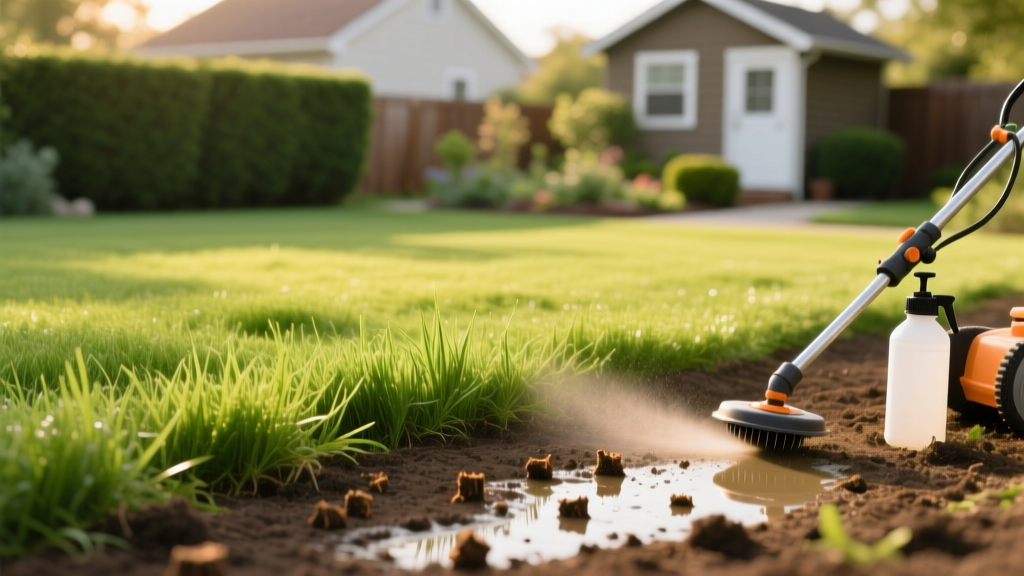
Core vs Liquid Aeration: Best Overseeding Techniques
Robert HayesPublished
The Critical Role of Aeration in Overseeding
For homeowners managing cool-season grasses like Tall Fescue, Kentucky Bluegrass, and Perennial Ryegrass, early fall is the undisputed championship window for lawn renovation. As soil temperatures drop to the optimal 50°F to 65°F range, grass seed germinates rapidly, and young seedlings establish deep root systems before winter dormancy. However, simply broadcasting seed over an existing lawn is a recipe for disappointment. The missing link between a patchy lawn and a lush, carpet-like turf is proper aeration. Aeration alleviates soil compaction, manages thatch, and most importantly, creates the essential seed-to-soil contact required for germination. In recent years, the debate between traditional mechanical core aeration and modern liquid aeration has intensified. Understanding the nuances of both techniques is vital for maximizing your overseeding investment.
Understanding Soil Compaction and Thatch
Before diving into the techniques, it is crucial to understand why aeration is non-negotiable. Over time, foot traffic, heavy mowing equipment, and natural settling cause soil particles to compress. This compaction restricts the flow of oxygen, water, and nutrients to the root zone. Furthermore, a layer of thatch—a dense mat of living and dead organic matter—often forms at the soil surface. According to the Clemson University Home & Garden Information Center, when thatch exceeds half an inch in thickness, it acts as a physical barrier, preventing water penetration and harboring turf diseases. When you overseed without addressing compaction and thatch, seeds become trapped in the thatch layer. They may germinate, but their delicate roots will dry out and die before they ever reach the nutrient-rich soil below.
Core Aeration: The Mechanical Standard
Core aeration, also known as plug aeration, is the gold standard for lawn renovation. This mechanical process involves using a heavy, gas-powered machine equipped with hollow tines to physically extract plugs of soil and thatch from the lawn. These plugs are typically 0.5 to 0.75 inches in diameter and 2 to 3 inches deep. By removing these cores, you instantly relieve soil compaction and create microscopic channels for air, water, and fertilizer to penetrate the root zone.
Why Core Aeration Excels for Overseeding
When the goal is overseeding, core aeration provides a massive advantage: the holes left behind act as perfect, protected micro-environments for grass seed. Seeds that fall into these aeration holes are shielded from wind, birds, and surface drying. They rest directly against loose, aerated soil, ensuring the intimate seed-to-soil contact necessary for the imbibition phase of germination. The soil plugs left on the surface also break down over the next few weeks, acting as a natural topdressing that introduces beneficial soil microbes into the thatch layer, accelerating its decomposition.
Logistics and Costs of Core Aeration
Renting a core aerator from a local hardware store typically costs between $80 and $120 per day. However, these machines are incredibly heavy (often exceeding 250 pounds) and can be physically demanding to operate, especially on slopes or tight corners. Hiring a professional lawn care service to perform core aeration generally costs between $15 and $25 per 1,000 square feet. For a standard 5,000-square-foot lawn, expect to pay $75 to $125 for professional service, which often includes the labor of making multiple passes in different directions to maximize hole density.
Liquid Aeration: The Chemical Alternative
Liquid aeration has surged in popularity as a less labor-intensive alternative to mechanical coring. Instead of physically removing soil, liquid aeration relies on chemical compounds to alter the soil structure at a molecular level. The primary active ingredients in most commercial liquid aerators are surfactants (such as ammonium lauryl sulfate) combined with organic acids like humic acid and fulvic acid.
How Liquid Aeration Works
Surfactants reduce the surface tension of water, allowing it to penetrate deeply into hard, hydrophobic soils. Simultaneously, the humic and fulvic acids work to chelate minerals and loosen the bonds between tightly packed clay particles. This process creates microscopic fissures in the soil profile, improving drainage and oxygen flow without the need for heavy machinery. Research and field trials documented by NC State University TurfFiles highlight that while liquid aeration does not physically remove thatch or create macro-pores like core aeration, it significantly improves soil moisture retention and root penetration in heavily compacted clay soils over time.
Application and Costs
Liquid aeration is incredibly easy to apply. Products like Aerify Liquid Lawn Aerator or N-Ext Air-8 are mixed with water and applied using a standard hose-end sprayer or a battery-powered pump sprayer. A typical application rate is 3 to 4 ounces of concentrate per 1,000 square feet. A 32-ounce bottle usually costs between $30 and $50 and can cover up to 10,000 square feet, making it highly cost-effective for large properties. However, because it does not create physical holes, it relies heavily on raking or dethatching beforehand to ensure seed-to-soil contact during overseeding.
Core vs. Liquid Aeration: Data Comparison
To help you decide which method is best for your specific lawn renovation project, review the structured comparison below:
| Feature | Core Aeration (Mechanical) | Liquid Aeration (Chemical) |
|---|---|---|
| Primary Mechanism | Physical extraction of soil plugs | Chemical reduction of surface tension and clay bonding |
| Seed-to-Soil Contact | Excellent (seeds fall into holes) | Poor (requires aggressive raking or dethatching first) |
| Thatch Management | High (brings soil microbes to the surface) | Low (does not physically disrupt the thatch layer) |
| Labor Intensity | Very High (heavy machinery operation) | Very Low (simple spraying application) |
| Cost per 5,000 sq ft | $75 - $125 (Professional) or ~$90 (Rental) | $15 - $25 (DIY Concentrate) |
| Best Soil Type | Heavy clay, severely compacted soils | Moderately compacted soils, sandy loams |
| Immediate Results | Visible holes, immediate water infiltration | Gradual improvement over 2 to 4 weeks |
Step-by-Step Overseeding Protocol
Whether you choose core or liquid aeration, the subsequent overseeding steps dictate your success. Follow this actionable protocol for optimal results.
Step 1: Mow Low and Clean Up
Before aerating, lower your mower deck to cut the existing grass to a height of 1.5 to 2 inches. This scalp mowing reduces competition for sunlight and allows the seed to reach the soil. Bag the clippings and thoroughly rake the lawn to remove dead grass, leaves, and debris. If your thatch layer is thicker than 0.5 inches, you must use a mechanical dethatcher or power rake before proceeding.
Step 2: Execute the Aeration
If using a core aerator, run the machine over the lawn in two perpendicular directions (e.g., North-South, then East-West). The goal is to achieve 15 to 20 holes per square foot. If using liquid aeration, apply the surfactant solution evenly across the lawn using a hose-end sprayer, ensuring you do not miss any strips. Water the lawn immediately after liquid application to push the chemicals into the root zone.
Step 3: Select and Spread the Seed
Choose a premium, weed-free seed blend suited to your microclimate. Avoid cheap contractor mixes that contain high percentages of annual ryegrass or weed seeds. According to guidelines from Penn State Extension, proper seeding rates are critical to prevent overcrowding, which leads to disease and weak seedlings. Use a broadcast spreader for even distribution.
- Tall Fescue: Apply 4 to 5 pounds per 1,000 square feet for overseeding.
- Kentucky Bluegrass: Apply 1 to 2 pounds per 1,000 square feet (KBG seeds are much smaller and spread further).
- Perennial Ryegrass: Apply 3 to 4 pounds per 1,000 square feet.
Step 4: Apply Starter Fertilizer and Topdressing
New grass seedlings require a specific nutrient profile to develop strong roots. Apply a high-phosphorus starter fertilizer immediately after seeding. Look for an N-P-K ratio similar to 10-18-10 or 12-24-12. Phosphorus (the middle number) is the engine of root development. Apply at a rate of 1.0 pound of nitrogen per 1,000 square feet. For an organic alternative, Milorganite (5-4-0) can be used, though you may need to supplement with bone meal to achieve adequate phosphorus levels. Finally, lightly drag the back of a landscape rake or a piece of chain-link fence over the lawn to gently work the seed into the top 1/8 inch of soil. If you have bare spots, topdress them with a thin layer (1/4 inch) of compost or peat moss to retain moisture.
Post-Overseeding Irrigation and Care
The most common point of failure in overseeding is improper watering. Grass seed must remain consistently moist until it germinates and establishes a primary root system. If the seed dries out even once during the first 14 days, the embryo will die, and your investment is lost.
The 14-Day Watering Schedule
For the first two weeks, you must water lightly and frequently. Set your irrigation system or hose sprinklers to run 3 to 4 times a day for 5 to 10 minutes per zone. The goal is not to deeply soak the soil, but to keep the top inch of soil and the seed constantly damp. Avoid heavy watering that causes pooling or washes the seed away into low spots. As the seedlings emerge and reach a height of 1 inch (usually around day 10 to 14), begin to reduce the frequency of watering to once a day, but increase the duration to 20 minutes to encourage deeper root growth.
The First Mow
Wait to mow the new grass until it reaches about 3.5 to 4 inches in height. Ensure your mower blade is razor-sharp; a dull blade will rip the tender seedlings out of the ground by the roots. Mow the lawn back down to 2.5 or 3 inches, and never remove more than one-third of the grass blade in a single cutting. Hold off on applying broadleaf weed control herbicides until you have mowed the new grass at least three times, as young seedlings are highly susceptible to chemical damage.
Pro Tip: Keep a detailed log of your aeration dates, seed varieties, and fertilizer N-P-K ratios. Over a few seasons, this data will help you fine-tune your specific lawn's response to different overseeding techniques and soil amendments.
By carefully selecting the right aeration method for your soil type and following a disciplined overseeding and irrigation protocol, you can transform a tired, thin lawn into a dense, resilient turf that naturally resists weeds and drought for years to come.