
Landscaping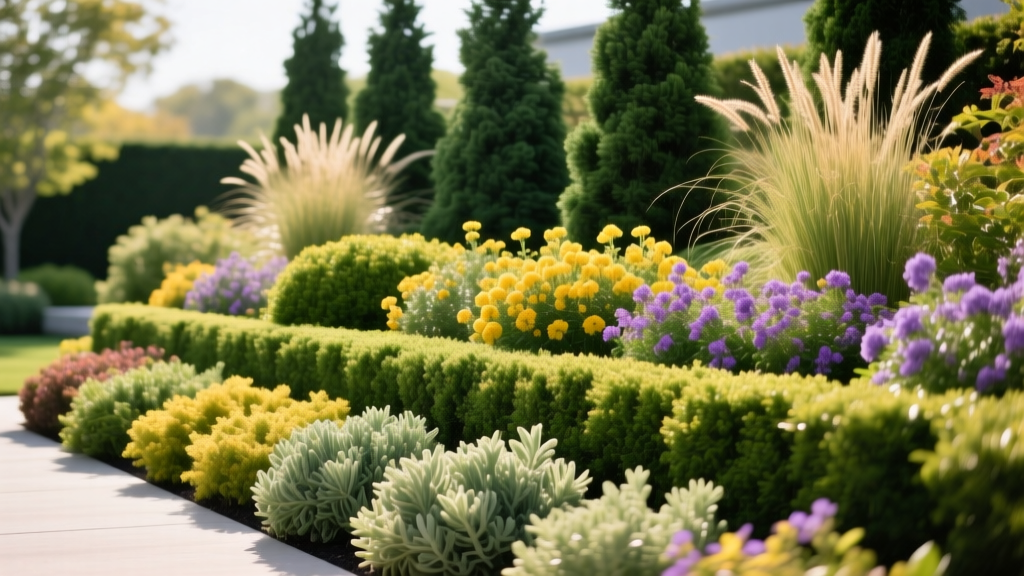
Creating Layered Planting Beds For Year Round Visual...
Understanding Vertical Layering in Residential Landscapes
Layered planting beds—also known as “planting matrices” or “structural planting schemes”—are foundational to modern residential landscape architecture. They replicate natural plant communities by organizing vegetation into distinct strata: canopy, understory, shrub, perennial, groundcover, and vine layers. This approach enhances ecological function while delivering consistent visual appeal across seasons. According to the American Society of Landscape Architects (ASLA) 2022 Design Guidelines, layered beds increase biodiversity by 40–60% compared to monocultural beds and reduce irrigation demand by up to 35% through microclimate buffering and soil moisture retention.
Selecting Plants for Seasonal Continuity
Successful layering hinges on intentional species selection—not just for bloom time but for foliage texture, fruit persistence, bark interest, and structural form. A well-designed bed in USDA Hardiness Zone 6b (e.g., Chicago’s Morton Arboretum campus) might include Amelanchier laevis (serviceberry) as a small understory tree with white spring flowers, coppery fall foliage, and persistent dark berries into December. Beneath it, Viburnum dentatum (arrowwood viburnum) provides summer clusters of creamy flowers and cobalt-blue fruit that persist until February. For herbaceous continuity, Echinacea pallida offers pale pink coneflowers from June to September, while its seed heads remain upright and textural through winter.
Structural Anchors and Their Spacing Requirements
Canopy and understory trees require precise spacing to avoid future crown conflict and ensure light penetration. At the University of California, Berkeley’s Living Roof Project, Quercus agrifolia (coast live oak) specimens are spaced at 18-foot centers to allow mature canopies (average spread: 45 feet) to interlock without crowding. Similarly, Cornus kousa (Kousa dogwood), used extensively at Longwood Gardens in Kennett Square, PA, is planted at 12-foot intervals to accommodate its 25-foot mature width while permitting filtered light for lower layers.
Groundcover Integration and Erosion Control
Low-growing species stabilize soil and suppress weeds while contributing year-round presence. Pachysandra terminalis forms dense evergreen mats ideal for shaded slopes; it spreads at ~6 inches per year and reaches full coverage in 3–4 years when installed at 9-inch spacing. In sunnier exposures, Thymus vulgaris (common thyme) tolerates light foot traffic and blooms lavender-purple from May through August. Both species reduce surface runoff by 22% on 5:1 slopes, per ASLA’s 2021 Stormwater Management Report.
Integrating Hardscape for Functional Framing
Hardscape elements—such as low limestone walls, decomposed granite paths, or corten steel edging—define bed boundaries and support layered composition. At the High Line in New York City, 18-inch-tall precast concrete curbs separate planting zones from walkways, allowing root zones to extend uninterrupted beneath the path edge. These curbs also serve as thermal mass, moderating soil temperature fluctuations by ±4°F during extreme summer and winter events. When designing beds adjacent to patios or driveways, embed hardscape 4–6 inches below grade to prevent heaving and maintain clean lines over time.
Cost-Effective Implementation Strategies
Initial investment varies widely based on scale and material choices. For a 120-square-foot residential bed (10 ft × 12 ft), typical costs break down as follows:
- Soil amendment (composted pine bark + native topsoil blend): $180–$240
- Woody plants (3 × Amelanchier laevis, 5 × Viburnum dentatum): $420–$680
- Perennials and groundcovers (12 × Echinacea pallida, 24 × Pachysandra terminalis): $210–$330
- Hardscape edging (corten steel, 30 linear ft): $360–$450
- Labor (design consultation + installation): $1,200–$1,800
Total estimated range: $2,370–$3,500. Note that labor accounts for 52–60% of total cost, underscoring the value of phased installation—e.g., installing structural trees and shrubs in Year 1, then adding perennials and groundcovers in Year 2 to spread expense.
Measuring Success Through Ecological Metrics
Long-term viability depends on measurable outcomes beyond aesthetics. The Morton Arboretum’s 2023 Urban Planting Monitoring Initiative tracked 47 layered beds across Chicago’s South Side and found:
- Annual maintenance labor decreased by 28% after Year 3 as plant communities stabilized
- Bird species diversity increased from 4.2 to 9.7 species per site within two growing seasons
- Soil organic matter rose from 2.1% to 4.6% over five years in beds incorporating mycorrhizal inoculants
- Peak summer surface temperatures were 11.3°F cooler than adjacent turf areas
- Water use dropped 31% relative to non-layered perennial beds of equal area
“Layered planting is not ornamental indulgence—it’s infrastructure. It manages water, cools air, supports pollinators, and buffers wind—all while meeting human needs for beauty and legibility.” — American Society of Landscape Architects, Climate-Resilient Design Framework, 2023
At Longwood Gardens, layered beds along the Peirce’s Park Trail demonstrate how design intent translates to public experience: visitors encounter sequential sensory shifts—from the rustle of Chasmanthium latifolium (river oats) leaves overhead, to the fragrance of Calycanthus floridus (Carolina allspice) at eye level, to the tactile softness of Gaultheria procumbens (wintergreen) underfoot. Each layer operates at a different height and tempo, creating spatial rhythm without visual clutter.
Soil preparation remains non-negotiable. Beds should be tilled to 12 inches depth and amended with 3 inches of compost blended at 70:30 volume ratio (soil:compost). Avoid synthetic fertilizers; instead, apply 1 inch of leaf mold annually in late fall to feed soil biology and mimic forest floor processes. This practice aligns with ASLA’s 2022 Soils Stewardship Protocol, which recommends organic inputs to sustain microbial biomass above 500 mg C/kg soil.
Light mapping is essential before planting. Use a lux meter to record readings at 9 a.m., 1 p.m., and 4 p.m. across the bed footprint. Species like Hydrangea arborescens ‘Annabelle’ require ≥4,000 lux at noon for optimal flowering, while Polygonatum biflorum (Solomon’s seal) thrives at ≤1,200 lux. Mismatches cause weak growth, sparse flowering, or premature dieback—especially problematic in layered systems where upper-canopy density changes over time.
Pruning strategy must respect layer hierarchy. Canopy trees receive structural pruning only in dormancy (late fall to early spring); understory shrubs are thinned annually to preserve multi-stem character; perennials are cut back in late winter, not fall, to protect overwintering beneficial insects. At the High Line, staff follow a strict “no-fall-cutback” policy for all herbaceous layers—a decision validated by Cornell University’s 2022 Pollinator Habitat Study showing 3.7× higher overwintering success for native bees in uncut stems.
Winter interest isn’t accidental—it’s engineered. Incorporate at least three species with persistent structure: Ilex verticillata (winterberry holly), whose bright red drupes last until March; Stewartia pseudocamellia, whose exfoliating cinnamon bark reveals intricate patterns against gray skies; and Pennisetum alopecuroides, whose feathery inflorescences catch snow and sway in January winds. These features satisfy ASLA’s Visual Continuity Standard, which requires ≥3 visually active elements per 100 sq ft during December–February.
Drainage must be addressed prior to planting. Install 4-inch perforated PVC pipe wrapped in geotextile fabric at the bed’s lowest elevation, sloping 1/8 inch per foot toward a dry well or bioswale. In clay-heavy soils (common in Boston’s Back Bay neighborhood), add 2 inches of ¾-inch crushed stone beneath the pipe to prevent silt clogging. Without this, layered beds risk root rot in Viburnum dentatum and Echinacea pallida, both highly susceptible to saturated conditions longer than 48 hours.
Mulch selection affects layer performance. Use shredded hardwood mulch—never dyed or rubber-based—at 2-inch depth for woody layers, and fine pine straw at 1-inch depth for perennials and groundcovers. Pine straw allows seedling emergence and decomposes rapidly, feeding shallow roots. Hardwood mulch lasts 18–24 months and inhibits weed germination more effectively. Replenish mulch every 12–14 months, timing applications for mid-spring after soil warms to 50°F at 2-inch depth.
Monitoring should occur quarterly. Record phenological markers: first leaf-out date, peak bloom duration, fruit set percentage, and stem dieback incidence. Compare data against regional USDA NRCS phenology calendars to detect climate-driven shifts. At the University of California, Berkeley, such tracking revealed that Amelanchier laevis now leafs out 11 days earlier than its 2005 baseline—information used to adjust companion planting schedules and irrigation timing.
| Layer | Minimum Height (ft) | Spacing (ft) | Key Species Example | Seasonal Highlight |
|---|---|---|---|---|
| Canopy Tree | 25+ | 20–30 | Quercus agrifolia | Evergreen foliage, acorn mast |
| Understory Tree | 12–25 | 12–18 | Amelanchier laevis | Spring bloom, fall color, winter berries |
| Shrub | 4–12 | 5–8 | Viburnum dentatum | Summer flowers, persistent fruit |
| Perennial | 2–4 | 1.5–3 | Echinacea pallida | Long-blooming, sculptural seed heads |
| Groundcover | 0.1–1 | 0.75–1.5 | Pachysandra terminalis | Evergreen texture, erosion control |
Layered planting beds succeed when they reflect both ecological logic and human perception. They ask designers to think in time—not just space—and to honor the quiet work of roots, fungi, and seasonal change. Whether implemented at the scale of a 400-square-foot urban courtyard or a 5,000-square-foot suburban lot, these beds deliver measurable environmental benefits while fulfilling deep-seated human needs for coherence, rhythm, and connection to natural cycles.

