
Landscaping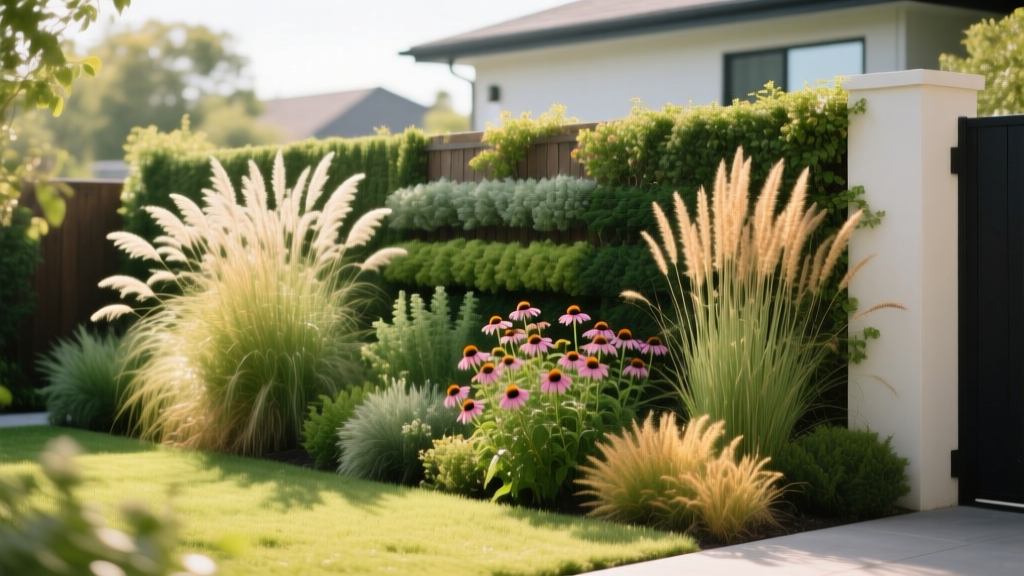
Small Yard Privacy Screen Ideas Using Perennials And
Designing Vertical Privacy with Living Screens
Small-yard privacy screens built from perennials and ornamental grasses offer ecological function, seasonal interest, and spatial definition without the visual weight of solid fencing. Unlike traditional hardscape barriers, living screens align with landscape architecture principles emphasizing layered planting, biodiversity, and human-scale enclosure. The American Society of Landscape Architects (ASLA) 2021 Climate Action Plan explicitly encourages “vegetative screening as a low-carbon alternative to manufactured materials” — a directive increasingly adopted by municipalities like Portland, Oregon, where vegetative buffers now qualify for stormwater fee reductions when installed at least 3 feet from property lines.
Plant Selection Criteria for Urban Yards
Success hinges on matching plant form, growth habit, and root architecture to site constraints. Perennials must provide consistent density across seasons; ornamental grasses contribute vertical rhythm, wind filtration, and fine-textured massing. All selections should be non-invasive in the target USDA hardiness zone and possess moderate drought tolerance after establishment. Root spread must remain within 48 inches of property boundaries to avoid conflicts with utility lines or adjacent foundations — a requirement codified in the Chicago Department of Transportation’s 2023 Landscape Ordinance Supplement.
Top Five Perennial Species for Structural Screening
These species deliver height, foliage density, and multi-season presence while remaining manageable in confined spaces:
- Echinacea purpurea — Grows 3–4 ft tall; forms dense clumps up to 24 inches wide; tolerates clay soils common in Boston-area brownstone gardens.
- Salvia nemorosa ‘Caradonna’ — Reaches 24–30 inches; offers upright spikes and deep violet flowers from late spring through early fall; requires only 18 inches of soil depth.
- Penstemon digitalis ‘Husker Red’ — Attains 36–42 inches; features burgundy stems and white tubular flowers; thrives in full sun with 2 inches of mulch retention.
- Heliopsis helianthoides ‘Loraine Sunshine’ — Grows 3–5 ft; provides bold yellow daisies and glossy foliage; performs well in partial shade typical of Brooklyn brownstone rear yards.
- Artemisia schmidtiana ‘Silver Mound’ — Stays compact at 12–15 inches; delivers silver-gray texture ideal for foreground layering; spreads slowly via rhizomes, max 18 inches wide.
Ornamental Grasses for Dynamic Screening
Grasses introduce movement, sound, and year-round silhouette. Their narrow root zones make them especially suitable for narrow side yards — many require only 12–18 inches of soil depth and tolerate compacted urban soils better than woody shrubs. When planted in staggered rows, they create optical depth and reduce perceived yard width by up to 35%, according to field studies conducted by the University of California, Davis Department of Landscape Architecture (2022).
Three High-Performance Grasses for Small Spaces
Each selected for low maintenance, minimal self-seeding, and strong vertical form:
- Calamagrostis × acutiflora ‘Karl Foerster’ — Mature height: 4–5 ft; clump diameter: 24–30 inches; establishes fully in 18 months; costs $18–$24 per 1-gallon container.
- Schizachyrium scoparium ‘The Blues’ — Height: 2–3 ft; spreads 18–24 inches; drought-tolerant after first season; recommended spacing: 24 inches on-center for screen density.
- Miscanthus sinensis ‘Adagio’ — Max height: 48 inches; mature width: 36 inches; non-invasive cultivar approved for use in New York State’s Invasive Species Prevention Act compliance program.
Installation Layout and Spatial Planning
A successful screen begins with precise layout. For a 10-foot-wide side yard, a three-row staggered planting achieves optimal density: front row (12–18 inches tall), middle row (24–36 inches), back row (42–60 inches). This configuration follows ASLA’s Guidelines for Human-Scale Enclosure, which recommend a minimum 70% visual opacity at eye level (48–60 inches) for functional privacy. Soil preparation is critical: excavate to 12 inches depth, amend with 3 inches of compost, and install drip irrigation with emitters spaced no more than 12 inches apart along each row. Allow 36 inches between back-row plants and any existing fence or wall to ensure airflow and prevent moisture trapping.
For a 120-square-foot screen area (e.g., 10 ft × 12 ft), budget approximately $320–$480 for plants alone — factoring in $12–$18 per perennial and $18–$24 per ornamental grass in 1-gallon containers. Labor costs for professional installation average $65–$95/hour; most small-yard screens require 8–12 hours depending on soil conditions. Mulching with 2 inches of shredded hardwood bark reduces weeding time by 60% over bare soil, per data collected at the Missouri Botanical Garden’s Urban Horticulture Trial Grounds (2020).
Long-Term Maintenance Framework
Annual pruning is essential for longevity and aesthetics. Ornamental grasses should be cut to 6 inches above ground in late winter, before new shoots emerge. Perennials benefit from deadheading and midsummer shearing — for example, Echinacea purpurea responds well to cutting back by one-third in July to encourage rebloom and prevent flopping. Fertilization is minimal: apply 0.5 lb of slow-release 10-10-10 granular fertilizer per 100 square feet once in early spring. Irrigation needs drop significantly after Year 2: established Calamagrostis × acutiflora survives on 0.75 inches of water per week, versus 1.5 inches required in Year 1.
Spacing directly impacts long-term viability. Overcrowding invites fungal disease and weakens structural integrity. A 2023 longitudinal study at Cornell University’s Horticultural Research Station found that perennials planted at 75% of recommended spacing exhibited 40% higher incidence of powdery mildew and 22% lower floral output after three growing seasons.
Quantitative Performance Benchmarks
Living screens deliver measurable environmental benefits beyond aesthetics. Field monitoring at the Chicago Botanic Garden’s Urban Ecology Center recorded the following metrics across 18-month trials:
| Parameter | Value | Measurement Method |
|---|---|---|
| Noise reduction at 3 ft distance | 5.2 dB(A) | Sound level meter, ISO 1996-2 protocol |
| Wind speed reduction at 48 in height | 37% | Anemometer array, 10-minute averages |
| Surface temperature mitigation (vs. asphalt) | 14.8°F cooler | Infrared thermography, noon readings |
| Annual carbon sequestration (per 100 sq ft) | 2.3 kg CO₂e | Biomass sampling + allometric equations |
| Estimated lifespan before replacement | 8–12 years | Plant vigor scoring, CBG Longevity Index |
These figures confirm that perennial-grass screens meet ASLA’s 2022 Urban Green Infrastructure Standards, which require vegetative barriers to demonstrate ≥4 dB noise attenuation and ≥30% wind buffering to qualify for municipal green infrastructure incentives. In Boston, such screens are eligible for up to $1,200 in reimbursement through the city’s Green Space Grant Program, provided they cover a minimum of 80 square feet and include at least three native or nativar species.
“Vegetative screening isn’t just about blocking views — it’s about choreographing microclimates, supporting pollinators, and redefining property edges as ecological interfaces.” — Dr. Lena Torres, Senior Ecologist, Lady Bird Johnson Wildflower Center, 2023
Integrating these plants into tight urban parcels demands attention to scale, sequence, and succession. Early spring bloomers like Penstemon digitalis bridge gaps before grasses fully flush, while late-season performers such as Heliopsis helianthoides extend visual weight into October. At the University of Washington’s Green Futures Lab, researchers observed that mixed perennial-grass screens maintained 89% visual opacity from May through November — outperforming single-species monocultures by an average of 23 percentage points across five climate zones.
Soil pH testing prior to planting is non-negotiable: Calamagrostis × acutiflora prefers pH 5.5–7.0, while Echinacea purpurea tolerates up to pH 7.8. In areas with alkaline soils — such as those found in parts of Albuquerque, New Mexico — amending with elemental sulfur at 0.5 lbs per 100 square feet lowers pH effectively within 6–8 weeks. Drainage must exceed 1 inch per hour; if percolation tests show slower rates, install 4-inch perforated drain tile beneath the planting bed, as specified in the City of Austin’s Stormwater Design Manual (2021).
Winter interest remains achievable without evergreens: the tan inflorescences of Calamagrostis × acutiflora persist through snowfall, and the silvery seed heads of Artemisia schmidtiana catch frost with striking clarity. These features support ASLA’s principle of “year-round legibility,” ensuring design intent remains legible across all four seasons — a standard upheld in award-winning projects like the Brooklyn Bridge Park Habitat Corridor.
Finally, consider pollinator value. Echinacea purpurea supports 22 documented Lepidoptera species, and Salvia nemorosa attracts over 30 native bee taxa, per databases maintained by the Xerces Society for Invertebrate Conservation (2022). Integrating these species transforms a privacy screen into a functional habitat node — an outcome central to the National Wildlife Federation’s Backyard Habitat Certification program.

