
Landscaping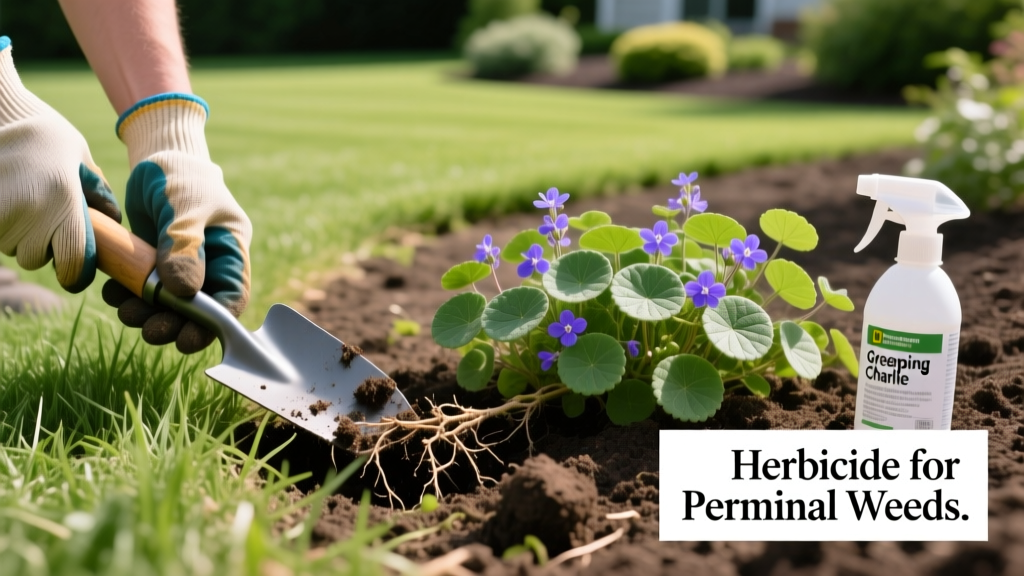
How to Identify and Eradicate Creeping Charlie Weed
David ParkPublished
Understanding the Enemy: What is Creeping Charlie?
Creeping Charlie, scientifically known as Glechoma hederacea and often referred to as ground ivy, is one of the most frustrating perennial weeds that homeowners and landscape professionals face. Unlike annual weeds that die off with the first frost, this aggressive broadleaf perennial returns year after year, spreading rapidly through both seeds and an extensive network of above-ground stems called stolons. These stolons creep along the soil surface, rooting at every node they touch, which is how the plant earned its common name. When left unchecked, Creeping Charlie can completely smother your carefully manicured lawn, invade your meticulously designed garden beds, and choke out desirable ornamental plants. According to weed scientists at Penn State Extension, ground ivy thrives in the exact conditions that many landscape shade gardens and turfgrass areas struggle with, making it a formidable opponent in landscape maintenance. Eradicating this weed requires a multi-faceted approach that combines accurate identification, strategic manual removal, targeted chemical applications, and long-term cultural prevention.
Accurate Identification: Spotting Ground Ivy in Your Landscape
Before you can effectively remove Creeping Charlie, you must be able to confidently identify it. Misidentifying the weed can lead to the application of ineffective treatments, wasting both time and money. Creeping Charlie is a member of the mint family (Lamiaceae), which provides several distinct clues for identification:
- Stem Structure: Like most mint family plants, Creeping Charlie features distinctly square-shaped stems. If you roll the stem between your fingers, you will feel the four sharp edges.
- Leaf Shape and Texture: The leaves are typically round to kidney-shaped with scalloped or crenated edges. They are relatively small, usually measuring between half an inch to an inch and a half in diameter, and have a slightly puckered texture with prominent veins.
- Odor: One of the most foolproof identification methods is the smell. When you crush the leaves or stems between your fingers, Creeping Charlie releases a strong, distinct, minty or medicinal odor.
- Flowers: In the spring (typically April to June), the plant produces small, funnel-shaped flowers that range in color from pale blue to violet. These flowers grow in clusters in the axils of the leaves (where the leaf meets the stem).
- Growth Habit: It forms a dense, low-growing mat that hugs the soil surface, often creeping over the top of desirable turfgrass or spreading aggressively through the mulch in garden beds.
Why Creeping Charlie Invades Your Landscape
Creeping Charlie is an opportunistic weed that exploits weaknesses in your landscape design and turfgrass health. It is particularly notorious for invading areas where traditional lawn grass struggles to grow. The primary environmental triggers for a ground ivy invasion include excessive shade, poor soil drainage, and compacted soil. In landscape beds, it often takes hold when the mulch layer is too thin (less than two inches) or when landscape fabric has degraded, allowing the stolons to root directly into the topsoil. Furthermore, Creeping Charlie thrives in moist, nitrogen-rich soils. If your lawn or garden beds remain constantly damp due to poor grading, broken irrigation lines, or heavy clay soil, you are essentially rolling out a welcome mat for this invasive perennial.
Manual and Organic Removal Techniques
For small infestations, or for gardeners who prefer to maintain an organic landscape free from synthetic herbicides, manual removal is a viable option. However, it requires immense patience and thoroughness. Because Creeping Charlie spreads via stolons that root at every node, leaving even a small fragment of the stem or root system behind will result in rapid regrowth.
Hand-Pulling and Tool-Assisted Removal
The best time to manually pull Creeping Charlie is after a heavy rain or a deep watering session, when the soil is soft and the roots release more easily. Use a specialized tool like a hori hori knife or a Fiskars stand-up weeder (typically costing between $20 and $40) to pry the roots out of the earth. You must trace the stolon and ensure every single node is extracted. In lawn areas, a dethatching rake can be used in early spring to physically tear the stolons away from the turf, though this method is labor-intensive and can damage healthy grass if done too aggressively.
Smothering in Garden Beds
If Creeping Charlie has overtaken an unplanted garden bed or a walkway border, solarization or smothering is highly effective. Cover the affected area with overlapping layers of heavy cardboard or black plastic sheeting, and weigh it down with rocks or a thick layer of wood chips. Leave the barrier in place for at least four to six weeks during the heat of summer. This blocks sunlight and raises the soil temperature, effectively cooking the weed and its root system. Once the weed is dead, you can plant through the cardboard and cover it with three to four inches of premium hardwood mulch.
Chemical Control: Herbicide Strategies and Timing
When manual removal is impractical due to the sheer scale of the infestation, post-emergent broadleaf herbicides become necessary. It is crucial to understand that standard glyphosate (Roundup) is generally a poor choice for Creeping Charlie in lawn settings, as it is a non-selective herbicide that will kill your desirable turfgrass along with the weed. Furthermore, according to guidelines outlined by the Environmental Protection Agency (EPA), you must always read and follow the product label instructions regarding personal protective equipment (PPE), application rates, and environmental safety, particularly near water sources.
The Importance of Fall Applications
The most critical mistake homeowners make is applying herbicides in the spring when the plant is flowering. During spring, the plant's energy is focused on upward growth and seed production. The optimal time to apply herbicides is in the fall (from mid-September to early November). During autumn, Creeping Charlie is actively pulling nutrients down into its root system to prepare for winter dormancy. An herbicide applied during this window will be drawn deep into the roots, ensuring a complete kill rather than just burning off the top growth.
Selecting the Right Active Ingredients
To effectively kill ground ivy without harming your lawn, you need a selective broadleaf herbicide. Products containing Triclopyr are widely considered the gold standard for Creeping Charlie control. Often, Triclopyr is combined with 2,4-D and Dicamba in three-way herbicide formulations (such as Ortho WeedClear or BioAdvanced Weed Killer). For severe infestations, a liquid concentrate mixed in a pump sprayer is far more effective than granular weed-and-feed products. A standard mixing ratio for a liquid Triclopyr concentrate is roughly 1 to 2 fluid ounces per gallon of water, which will cover approximately 1,000 square feet. Always add a non-ionic surfactant (about 1 teaspoon per gallon) to the mix; this breaks the surface tension of the water and allows the herbicide to stick to the waxy leaves of the weed.
Active Ingredient Comparison Chart
Choosing the right chemical formulation is vital for landscape safety and weed efficacy. Below is a comparison of common herbicide active ingredients used against Creeping Charlie:
| Active Ingredient | Efficacy on Creeping Charlie | Lawn Safety | Best Application Timing |
|---|---|---|---|
| Triclopyr | Excellent (Gold Standard) | Safe for most cool/warm season turf | Early to Mid-Fall |
| 2,4-D Amine | Moderate (Needs multiple apps) | Safe for most turfgrass | Fall or Early Spring |
| Dicamba | Moderate to High (When mixed) | Safe for turf; toxic to tree roots | Fall |
| Glyphosate | High (Non-selective) | Kills all grass and plants | Any active growth period |
Long-Term Prevention in Lawns and Garden Beds
Eradicating Creeping Charlie is only half the battle; preventing its return is the ultimate goal. Because this weed thrives in weak, thin turf and poorly maintained beds, your primary defense is cultural landscape management.
- Improve Turf Density: A thick, healthy lawn is the best natural weed barrier. Overseed thin lawn areas in the fall with a shade-tolerant turfgrass blend, such as fine fescue, if your yard lacks direct sunlight.
- Adjust Irrigation: Creeping Charlie loves constant moisture. Adjust your sprinkler system to water deeply but infrequently (about 1 to 1.5 inches of water per week), allowing the top layer of soil to dry out between waterings.
- Prune for Sunlight: If shade is the primary issue, hire an arborist to selectively prune the lower branches of your trees (crown raising) to allow more dappled sunlight to reach the turf below.
- Maintain Mulch Depth: In landscape beds, ensure you maintain a consistent 3-inch layer of organic mulch. Keep the mulch pulled back about two inches from the base of shrubs and tree trunks to prevent rot, but ensure the soil is fully covered to block weed seeds and stolons from taking root.
- Aerate Compacted Soil: Core aeration in the fall relieves soil compaction, improves drainage, and encourages deep turfgrass root growth, allowing your lawn to outcompete invading weeds.
By combining vigilant identification, strategic fall herbicide applications, and robust landscape maintenance practices, you can reclaim your yard from Creeping Charlie and enjoy a pristine, weed-free outdoor living space for years to come.

