Tree Care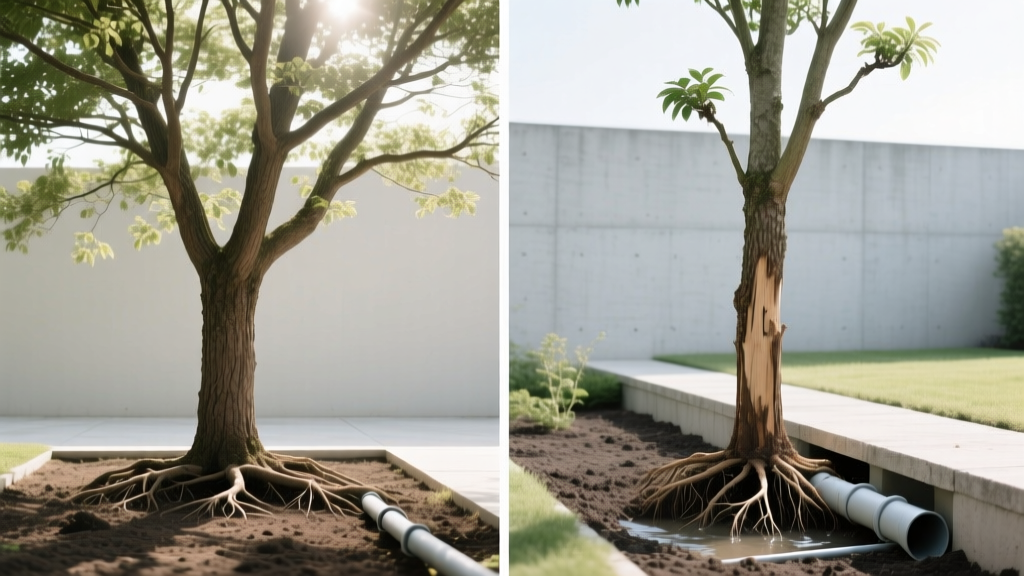
Crown Thinning vs Raising 2026: Protect Drainage Pipes
Robert HayesPublished
The Hidden Link Between Canopy Pruning and Subsurface Drainage
As we navigate the advanced landscaping and arboriculture standards of 2026, property owners and landscape architects are increasingly recognizing the vital connection between above-ground tree care and below-ground water management. When discussing tree health, the debate of crown thinning vs crown raising pruning technique comparison usually centers on aesthetics, light penetration, and structural integrity. However, from the perspective of landscape drainage pipe installation and maintenance, these two pruning methods have profoundly different impacts on soil moisture gradients, root foraging behavior, and the long-term viability of subsurface drainage systems.
Whether you are managing a complex French drain network, maintaining NDS 4-inch corrugated catch basin lines, or protecting perforated ADS Single Wall pipes from root intrusion, understanding how canopy manipulation alters the microclimate and hydrology of the root zone is critical. In this comprehensive 2026 guide, we will explore how crown thinning and crown raising affect your landscape drainage infrastructure and provide actionable strategies to protect your pipes while maintaining optimal tree health.
Defining the Techniques: Crown Thinning vs. Crown Raising
Before analyzing the subterranean impacts, we must clearly define these two distinct pruning methodologies as outlined by modern arboricultural standards. According to the Arbor Day Foundation's Pruning Guide, proper technique is essential for preventing long-term tree stress, which in turn dictates how aggressively roots will seek out alternative water sources like your drainage trenches.
What is Crown Thinning?
Crown thinning is the selective removal of smaller, tertiary branches (typically 1 to 4 inches in diameter) throughout the entire canopy of a tree. The goal is to increase light penetration and air movement through the crown while reducing weight on heavy limbs. Crucially, proper thinning maintains the tree's natural shape and does not alter the overall size or height of the canopy. It is essentially an internal 'cleaning out' of the foliage density.
What is Crown Raising?
Crown raising involves the targeted removal of the lower branches of a tree to provide vertical clearance for buildings, vehicles, pedestrians, or sightlines. This technique shifts the visual and physical weight of the canopy upward. Unlike thinning, raising directly alters the microclimate at the soil level by removing the low-hanging 'umbrella' effect that the lower branches provide to the root flare and surrounding topsoil.
The Hydrotropic Threat: Why Drainage Pipes Attract Roots
To understand why pruning matters to your drainage system, you must understand tree root biology. Roots are hydrotropic—they grow toward moisture. Subsurface landscape drainage pipes, particularly perforated French drains and corrugated flexible pipes, are essentially artificial aquifers. They collect surface runoff, hold moisture in the surrounding gravel envelope, and emit water vapor through the soil profile.
When a tree experiences stress or a sudden shift in its transpiration rate due to canopy alteration, its root system reacts. If the soil surface dries out, or if the tree requires more water to support a stressed canopy, the roots will aggressively target the moisture-rich gravel trenches surrounding your 4-inch or 6-inch drainage pipes. Once a single root hair penetrates a 1/8-inch perforation in a corrugated pipe, it expands, eventually causing catastrophic blockages, pipe crushing, and system failure.
Crown Thinning: Impact on Soil Moisture and Drainage Flow
When you perform crown thinning, you are opening up the canopy. This has two immediate effects on the soil hydrology surrounding your drainage pipes:
- Increased Rainfall Penetration: A dense canopy intercepts a significant amount of rainfall, which then evaporates from the leaves. Thinning allows more rain to strike the soil directly. If your landscape drainage pipes are already at capacity during heavy 2026 spring storms, this sudden increase in surface water can overwhelm the catch basins and saturate the soil around the pipe, creating a massive moisture beacon for roots.
- Increased Solar Exposure and Evaporation: More sunlight reaches the soil, increasing surface evaporation. While this might seem like it dries the soil, it actually creates a steep moisture gradient. The surface dries out, but the subsurface drainage trench remains wet. This gradient actively encourages roots to dive deep, directly toward your perforated pipes, to find stable moisture.
Therefore, while crown thinning is excellent for tree health and wind resistance, it must be paired with robust root barriers (such as the DeepRoot UB 24-2) if the tree is located within 15 feet of a primary landscape drainage line.
Crown Raising: Root Flare Exposure and Pipe Protection
Crown raising dramatically changes the environment at the base of the tree. By removing the lower limbs, you expose the root flare and the immediate surrounding soil to direct wind and sun. How does this impact the drainage pipe?
- Soil Compaction Risks: Often, crown raising is done to clear space for human activity (parking, patios, or heavy foot traffic). This newly cleared space frequently leads to soil compaction over the root zone. Compacted soil lacks oxygen and repels water. Consequently, the tree's roots will abandon the compacted surface zone and migrate toward the loose, aerated, and moisture-rich backfill of your landscape drainage pipe trenches.
- Reduced Leaf Litter in Catch Basins: From a maintenance perspective, crown raising can be beneficial for surface drainage. By elevating the canopy, you reduce the volume of low-hanging leaves and twigs that drop directly into surface drain grates and catch basin inlets, reducing the frequency of surface clogs.
- Transpiration Stress: Removing too many lower branches (over-raising) shocks the tree. The University of Florida IFAS Extension warns against removing more than 25% of a tree's live canopy in a single season. Over-raising forces the tree to rapidly generate epicormic shoots (water sprouts) to replace lost photosynthetic tissue. This rapid growth requires massive amounts of water, driving roots aggressively into nearby drainage infrastructure to sustain the new growth.
Comparison Chart: Thinning vs. Raising for Drainage Health
The following table summarizes how these two techniques interact with subsurface landscape drainage pipes in the 2026 landscaping environment.
| Feature | Crown Thinning | Crown Raising | Impact on Landscape Drainage Pipes |
|---|---|---|---|
| Canopy Density | Reduced (Internal) | Unchanged (Shifted Upward) | Thinning increases soil water penetration; Raising maintains interception but shifts drip line. |
| Soil Surface Evaporation | Increases Significantly | Increases at Root Flare | Higher evaporation drives roots deeper toward perforated pipe moisture. |
| Surface Catch Basin Debris | Slight Reduction | Significant Reduction | Raising prevents low-branch leaf drop from clogging surface drain grates. |
| Root Intrusion Risk | Moderate to High | High (if soil compacted below) | Both techniques can trigger hydrotropic root foraging into French drain gravel envelopes. |
| Transpiration Shift | Balanced (if <25% removed) | Stress-Induced (if over-raised) | Stress from over-raising causes aggressive root growth toward subsurface water sources. |
2026 Best Practices for Pruning Near Drainage Systems
To maintain healthy trees and protect your investment in landscape drainage pipes, follow these integrated arboricultural and hardscaping protocols recommended by the International Society of Arboriculture:
1. Install Physical Root Barriers Before Pruning
If you plan to heavily thin or raise a mature tree (like an Oak or Maple) situated near a critical drainage line, install a mechanical root barrier first. Trenching a 24-inch deep High-Density Polyethylene (HDPE) root barrier between the tree's drip line and the drainage pipe severs existing foraging roots and prevents future intrusion into the pipe's perforations.
2. Adhere to the 25% Rule
Never remove more than 25% of the live canopy in a single year, whether thinning or raising. Severe pruning shocks the tree, altering its water demand and causing erratic, aggressive root growth that will easily crush 4-inch corrugated drainage pipes as they expand in search of resources.
3. Time Your Pruning with the Drainage Cycle
The best time to prune most deciduous trees is during late winter dormancy. During this period, the tree's transpiration rate is at its lowest, and the roots are largely inactive. Pruning during dormancy prevents the immediate hydrotropic panic-response that occurs if you prune during the peak of the summer dry season or the heavy spring runoff season when your drainage pipes are working at maximum capacity.
4. Upgrade to Root-Resistant Drainage Materials
If you are retrofitting a landscape in 2026 and must prune heavily around existing trees, consider replacing standard perforated corrugated pipes with rigid PVC Schedule 40 pipe wrapped in a geotextile sock and surrounded by a coarse, washed stone envelope. The rigid PVC cannot be crushed by expanding roots, and the coarse stone creates an air gap that naturally prunes root tips (air-pruning) before they can reach the pipe joints.
Conclusion
The crown thinning vs crown raising pruning technique comparison goes far beyond simple aesthetics. As a landscape professional or diligent homeowner, you must view the tree and the drainage system as a single, interconnected hydrological engine. Crown thinning alters how water enters the soil, while crown raising changes how the soil environment behaves at the root flare. By understanding these dynamics, timing your pruning correctly, and utilizing modern root-barrier technologies, you can ensure your trees thrive above ground while your landscape drainage pipes remain clear, intact, and fully functional below ground for decades to come.
