Tree Care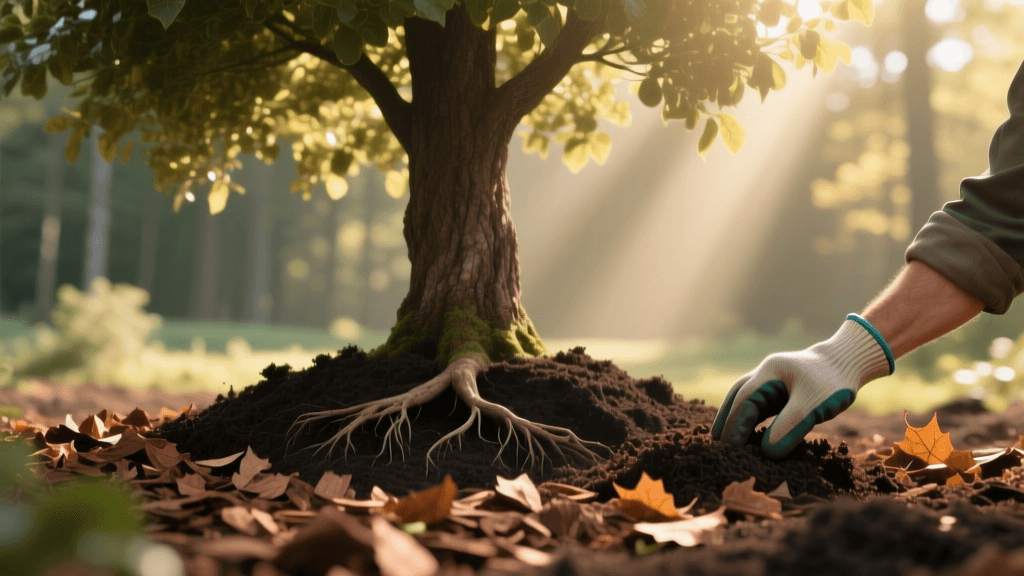
Expert Deep Root Watering and Mulching Tips for Trees
Understanding Drought Stress and Root Architecture
When it comes to maintaining mature landscapes, surface-level sprinklers are largely ineffective for tree health. Trees possess complex root architectures that demand targeted hydration, particularly during periods of prolonged drought. According to the Colorado State University Extension, the majority of a tree's fine, water-absorbing roots are located in the top 12 to 24 inches of soil, often extending well beyond the tree's canopy drip line. Relying on quick, shallow watering sessions encourages surface rooting, making trees highly susceptible to environmental stress, windthrow, and fatal diseases like Armillaria root rot.
As a senior arborist and lawn care specialist, I have seen countless mature oaks, maples, and pines decline simply because homeowners treated them like turfgrass. Turf requires frequent, shallow watering; trees require infrequent, deep soaking. This comprehensive guide details expert tips and best practices for deep root watering and proper mulching to safeguard your most valuable landscape assets.
The Science and Strategy of Deep Root Watering
Deep root watering involves delivering water directly to the subsoil layers where the root mass is most active. This practice not only sustains the tree during dry spells but also trains the root system to grow deeper, enhancing overall structural stability and drought tolerance. To execute this properly, you must understand the concept of the critical root zone (CRZ). The CRZ is typically defined as a circular area extending from the trunk outward to the drip line—the outer edge of the tree's canopy—and sometimes beyond.
Calculating Water Volume and Frequency
A general rule of thumb endorsed by the University of Florida IFAS Extension is to provide 10 to 15 gallons of water per inch of trunk diameter (measured at 4.5 feet above ground level, known as Diameter at Breast Height or DBH) every week during a severe drought. For a mature tree with a 20-inch DBH, this translates to 200 to 300 gallons per week. However, this should not be applied all at once. Splitting the volume into two or three deep watering sessions allows the clay or compacted soils to absorb the moisture without excessive runoff.
Tool Comparison: Selecting the Right Deep Watering Equipment
Choosing the correct tool depends on your soil type, the size of your tree, and your budget. Below is a structured comparison of the most effective deep watering tools utilized by landscape professionals.
| Tool Type | Best Application | Delivery Rate | Estimated Cost | Expert Verdict |
|---|---|---|---|---|
| Soaker Hose | Large canopy areas, hedges, multiple trees | 1-2 gallons per minute (total) | $25 - $45 | Excellent for broad coverage along the drip line. Requires monitoring to ensure even distribution. |
| Deep Root Waterer Probe | Compacted clay soils, targeted root zone injection | Varies by water pressure (approx. 5-10 GPM) | $30 - $60 | Highly effective for breaking up soil compaction and delivering water 12+ inches deep. Labor intensive. |
| Tree Watering Bag | Newly planted trees, young saplings (up to 8 inch DBH) | 15-20 gallons over 5-9 hours | $20 - $35 per bag | Perfect for slow, steady release on slopes. Not suitable for mature trees with wide root zones. |
| Drip Irrigation Emitters | Permanent landscape installations, water conservation | 1-4 gallons per hour per emitter | $50 - $150 (system) | The gold standard for automated, long-term tree care. Requires professional design and seasonal flushing. |
Best Practices for Mulching: The 3-3-3 Rule
Watering is only half the battle. Without an adequate mulch layer, summer heat and wind will rapidly evaporate soil moisture, rendering your deep watering efforts futile. Mulch acts as an insulating blanket, regulating soil temperature, suppressing water-stealing weeds, and gradually adding organic matter to the soil profile as it decomposes.
Landscape professionals strictly adhere to the 3-3-3 Rule for mulching trees:
- 3 Inches Deep: Apply a uniform layer of organic mulch no deeper than 3 to 4 inches. Piling mulch too thick restricts oxygen exchange to the roots and creates an anaerobic environment that breeds harmful fungi.
- 3 Feet Wide: The mulch ring should extend at least 3 feet from the trunk in all directions, though extending it to the drip line is the ultimate best practice for mature trees.
- 3 Inches Away from the Trunk: This is the most critical and frequently violated rule. Mulch must never touch the tree bark. Leaving a 3-inch gap around the root flare prevents bark decay, deters rodent damage, and stops the formation of secondary girdling roots.
The Dangers of Volcano Mulching
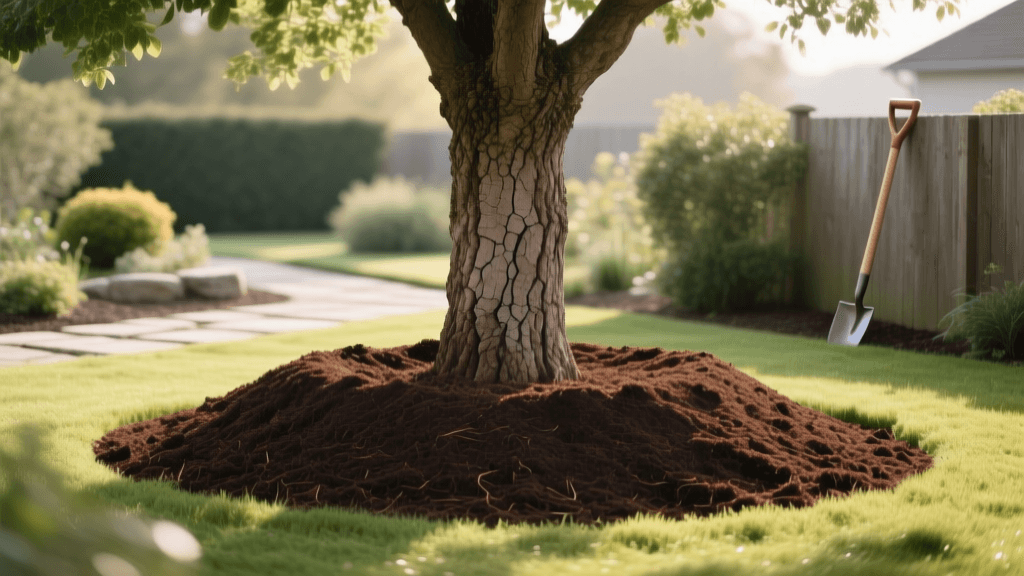
Piling mulch high against the trunk in a volcano shape is a pervasive landscaping error. According to the University of Massachusetts Amherst Extension, volcano mulching keeps the bark constantly moist, leading to phloem tissue death and inviting opportunistic pathogens like Phytophthora. Furthermore, roots will often grow upward into the moist mulch mound, eventually wrapping around the trunk and girdling the tree, choking off its own vascular system over a period of 5 to 10 years.
Selecting the Right Mulch Material
Not all mulches are created equal. For deep root moisture retention and long-term soil health, organic materials are vastly superior to inorganic options like river rock or rubber mulch, which do not retain moisture well and can severely overheat the root zone.
"Coarse, woody mulches such as arborist wood chips, pine bark nuggets, and shredded hardwood are ideal. They allow water infiltration while resisting compaction and wind displacement." — International Society of Arboriculture (ISA) Best Management Practices
Avoid using finely shredded mulches or double-hammered hardwood, as these tend to mat together when wet, forming a hydrophobic crust that actively repels water away from the root zone. Always source mulch from reputable suppliers to ensure it is free from invasive pests, such as the Emerald Ash Borer or Asian Longhorned Beetle, which can be transported in untreated wood chips.
Expert Mistakes to Avoid During Drought Conditions
Even with the best watering and mulching intentions, certain landscape maintenance practices can inadvertently accelerate a tree's decline during environmental stress. Avoid the following common mistakes:
- Fertilizing During Drought: Applying high-nitrogen fertilizers forces the tree to push new vegetative growth. This new growth demands massive amounts of water that the root system cannot supply, leading to severe scorch and dieback. Hold off on fertilization until fall rains return or soil moisture is fully restored.
- Heavy Pruning: Removing live canopy tissue creates open wounds that require water and energy to compartmentalize and heal. Furthermore, heavy pruning can expose previously shaded bark to direct sunlight, causing sunscald and bark splitting. Limit pruning strictly to the removal of dead, diseased, or hazardous limbs.
- Tilling the Root Zone: Rototilling around a mature tree to incorporate compost or fertilizer severs thousands of vital feeder roots. Instead, rely on top-dressing with compost and allowing earthworms and natural soil biology to incorporate the organic matter over time.
- Ignoring Soil Hydrophobia: Extremely dry, organic-rich soils can become hydrophobic, meaning they repel water. If you notice water pooling or running off the mulch bed, use a soil surfactant (wetting agent) to break the surface tension and allow deep penetration.
Seasonal Monitoring and Soil Moisture Testing
Do not rely on a fixed calendar schedule for deep root watering. Environmental variables such as wind, humidity, and sudden heat domes drastically alter evapotranspiration rates. Instead, utilize a simple soil probe or a long screwdriver to test soil moisture. If you cannot easily push a 12-inch metal rod into the soil within the critical root zone, the soil is too dry, and it is time to initiate a deep watering cycle. Conversely, if the soil smells sour or remains saturated for days, you are overwatering, which can lead to fatal root asphyxiation.
Conclusion
Mastering deep root watering and proper mulching techniques is the cornerstone of proactive tree care. By moving away from superficial turf-watering habits and embracing targeted, science-backed hydration strategies, you ensure your trees remain resilient, structurally sound, and visually stunning for decades. Invest in the right tools, respect the critical root zone, and remember the 3-3-3 mulching rule to protect your landscape from the devastating impacts of drought stress.