Tree Care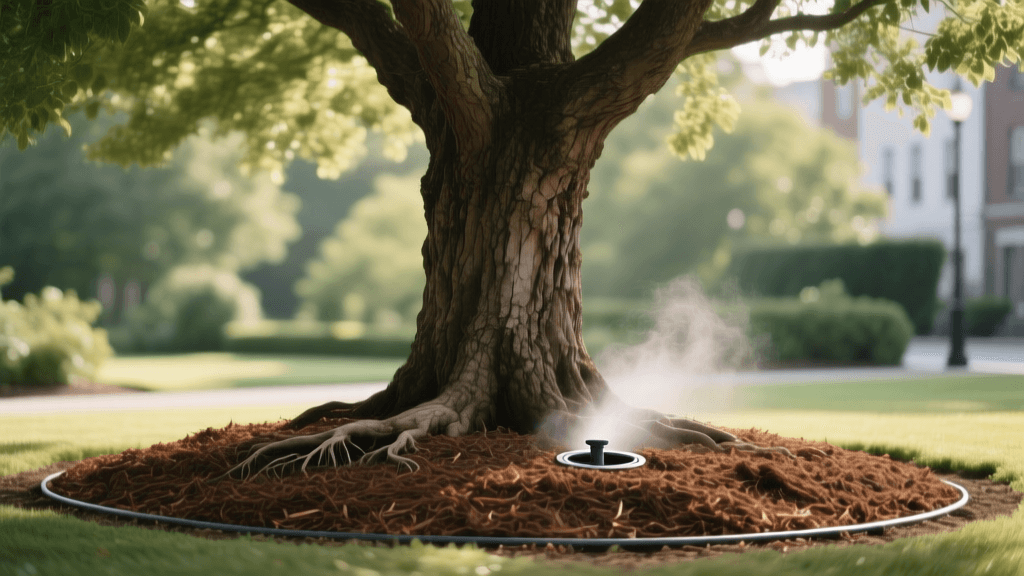
Expert Guide to Deep Root Watering and Mulching Mature Trees
The Hidden Crisis: Surface Watering vs. Deep Root Hydration
When it comes to maintaining the health of mature landscape trees, the most common mistake homeowners make is relying on standard lawn irrigation systems. Turfgrass requires frequent, shallow watering to maintain its vibrant green appearance, but this approach is fundamentally detrimental to mature trees. Shallow watering encourages tree roots to grow upward toward the surface in search of moisture, making them highly susceptible to drought stress, temperature fluctuations, and physical damage from lawnmowers. To cultivate robust, storm-resistant trees, arborists universally advocate for deep root watering combined with strategic mulching. This comprehensive guide outlines the precise measurements, tools, and seasonal timing required to implement expert-level tree care in your own landscape.
Understanding the Architecture of Tree Roots
To water effectively, you must first understand where the roots actually reside. A common myth is that a tree's root system mirrors its canopy, plunging deep into the earth like a taproot. In reality, the vast majority of a mature tree's absorbing roots are located in the top 12 to 18 inches of soil, extending well beyond the drip line (the outer edge of the canopy). These fine, hair-like feeder roots are responsible for absorbing water and essential nutrients. Because they reside in the upper soil horizons, they are the first to suffer when topsoil moisture evaporates during summer heatwaves. Deep root watering targets this specific zone, delivering moisture directly to the feeder roots while encouraging them to establish a deeper, more resilient network.
Expert Best Practices for Deep Root Watering
Deep root watering is defined as the slow, targeted application of water that penetrates the soil to a depth of at least 12 inches. This cannot be achieved with a quick blast from a garden hose or a standard oscillating sprinkler. Instead, it requires specialized tools and patience to allow the soil matrix to absorb the water without creating destructive surface runoff.
Tools of the Trade
- Soaker Hoses: The most cost-effective method. Coil the hose in concentric circles starting 2 feet from the trunk and extending just past the drip line. Run at low pressure for 2 to 4 hours.
- Deep Root Watering Wands (Root Feeders):strong> Metal probes that attach to your hose and inject water 12 to 18 inches directly into the soil. Ideal for compacted clay soils where surface penetration is poor.
- Drip Irrigation Systems: For newly planted or high-value specimen trees, a dedicated drip line with emitters spaced every 18 inches provides consistent, measurable hydration.
Calculating Exact Water Volumes
As a general rule of thumb endorsed by certified arborists, a mature tree requires approximately 10 to 15 gallons of water per inch of trunk diameter (measured at chest height) during a standard watering session. The frequency depends on soil type and weather conditions, but a deep soaking every 7 to 14 days during peak summer is typically sufficient.
| Trunk Diameter (inches) | Target Water Volume (Gallons) | Soaker Hose Time (Low Pressure) | Root Feeder Probes Needed |
|---|---|---|---|
| 10 - 15 inches | 100 - 150 gallons | 2.5 - 3.5 hours | 10 - 15 insertions |
| 16 - 25 inches | 160 - 250 gallons | 4 - 6 hours | 16 - 25 insertions |
| 26+ inches | 260+ gallons | 6+ hours (split over 2 days) | 26+ insertions |
The 3-3-3 Rule of Expert Mulching
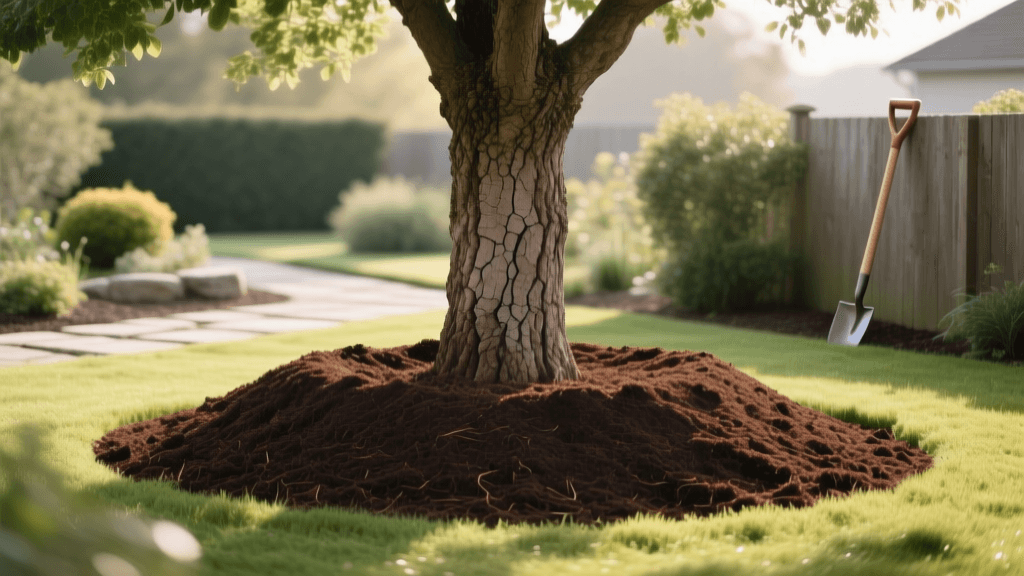
Mulch is a tree's best friend, but only when applied correctly. Improper mulching, often referred to as 'volcano mulching,' is a leading cause of urban tree decline. Piling mulch against the trunk traps moisture against the bark, leading to fungal rot, inviting boring insects, and causing girdling roots that eventually strangle the tree. Expert arborists follow the strict 3-3-3 Rule for mulching mature trees.
Applying the 3-3-3 Rule
- 3 Inches Deep: Maintain a mulch layer no deeper than 3 inches. Anything thicker prevents oxygen from reaching the soil and suffocates the feeder roots.
- 3 Feet Wide (Minimum): The mulch ring should extend at least 3 feet from the trunk in all directions, though extending it to the drip line is vastly superior for mature trees.
- 3 Inches Away from the Trunk: Keep the mulch exactly 3 inches away from the base of the trunk. The root flare (where the trunk widens and meets the roots) must remain completely exposed to the air.
Mulch Material Comparison Chart
Not all mulch is created equal. Organic mulches are preferred because they decompose over time, adding vital organic matter and beneficial microbes to the soil food web.
| Mulch Type | Decomposition Rate | Moisture Retention | Best Use Case |
|---|---|---|---|
| Shredded Hardwood Bark | Slow (1-2 years) | Excellent | General landscape beds, slopes |
| Arborist Wood Chips | Medium (1 year) | Good | Large trees, naturalized areas |
| Pine Needles (Straw) | Fast (6-9 months) | Moderate | Acid-loving trees (Pines, Oaks) |
| Composted Leaf Mold | Very Fast (3-6 months) | High | Soil amendment, delicate root zones |
Assessing Soil Moisture: The Probe Test
Never water on a rigid calendar schedule without first checking the soil. Different soil types hold water differently. Clay soils retain moisture for extended periods and are prone to waterlogging, which destroys roots just as effectively as drought. Sandy soils drain rapidly and may require more frequent hydration. To assess moisture, use a 12-inch soil probe or a long screwdriver. Push the tool into the soil within the drip line. If it slides in easily to a depth of 8-12 inches, the soil has adequate moisture. If it meets heavy resistance before reaching 6 inches, it is time to initiate a deep watering cycle.
Winter Deep Watering: The Forgotten Necessity
Many homeowners turn off their irrigation systems in late autumn and forget about their trees until spring. This is a critical error, particularly for evergreens and in regions with low winter snowfall. Trees continue to transpire and lose moisture through their bark and needles during the winter, especially on windy, sunny days when the ground is frozen and roots cannot extract replacement water. This phenomenon, known as 'winter desiccation,' causes severe browning and dieback. Experts recommend deep watering mature trees once a month during the winter when the air temperature is above 40°F and the ground is not frozen, applying water mid-day so it can absorb before nightfall freezes.
'The majority of a tree's absorbing roots are located in the top 12 to 18 inches of soil, and often extend two to three times the width of the tree's canopy. Watering should be directed to this critical root zone to ensure maximum uptake and tree vigor.'
— Colorado State University Extension, Forest & Tree Care Guidelines
Conclusion
Transitioning from superficial lawn watering to targeted deep root hydration is one of the most impactful investments you can make in your landscape's longevity. By calculating precise water volumes based on trunk diameter, utilizing slow-delivery tools like soaker hoses, and adhering strictly to the 3-3-3 mulching rule, you protect your trees from drought stress, soil compaction, and root rot. Implement these expert best practices today to ensure your mature trees remain healthy, structurally sound, and beautiful for generations to come.