Tree Care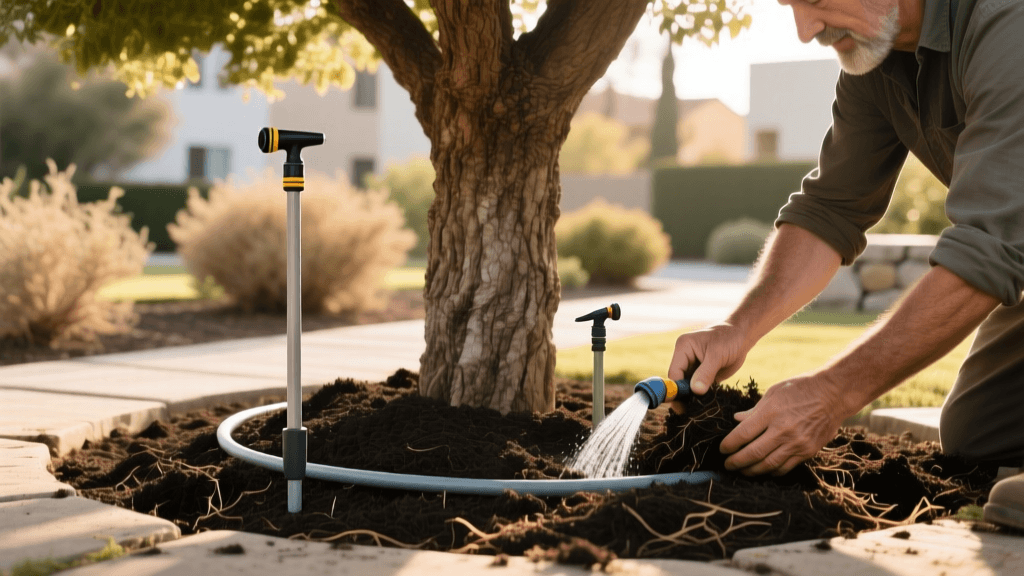
Expert Deep Root Watering and Mulching Guide for Trees
The Hidden Threat of Drought on Mature Trees
When the summer sun beats down and rainfall becomes scarce, homeowners often focus on saving their lawns — and end up overlooking the most valuable trees in their yard. Mature trees are expensive to replace, and they don’t bounce back like grass does. A brown lawn greens up after a few good rains, but a stressed tree can’t recover so easily. When water runs short, trees close their stomata to hold onto moisture. That shuts down photosynthesis, and over time, the tree runs low on energy. Its natural defenses weaken, leaving it open to pests like the emerald ash borer, pine beetles, and fungi that normally wouldn’t stand a chance.
Keeping your trees healthy during dry spells means watering them the way their roots actually need — not the way your sprinkler system was designed for grass. This guide covers practical deep root watering methods and the straightforward 3-3-3 mulching rule used by arborists.
Why Surface Watering Fails: The Science of Deep Roots
Many homeowners use their lawn sprinklers to water trees. That’s understandable, but it doesn’t work well. A typical sprinkler cycle puts down about 0.5 to 1 inch of water — enough to wet the top 1 to 2 inches of soil. But most of a tree’s fine, water-absorbing roots sit between 6 and 18 inches down, often spreading beyond the edge of the canopy.
Grass roots grab that shallow water first, leaving little for the tree. Worse, frequent light watering encourages tree roots to stay near the surface, where they’re more likely to circle the trunk or push up against walkways and driveways. Deep watering sends moisture where the roots are — encouraging them to grow down and out, which helps the tree handle dry spells better.
Expert Deep Root Watering Techniques
Tools of the Trade
Getting water to the right depth usually means using something more targeted than a garden hose. Here are the most common tools and what they cost:
- Deep Root Watering Wands (Root Feeders): Tools like the Gilmour Deep Root Waterer or Ross Deep Root Feeder attach to your hose and have a metal spike that pushes water straight into the soil — 12 to 18 inches deep. Cost: $30 - $50. Best for: Newly planted trees or dry spots under the canopy.
- Soaker Hoses: A high-quality porous hose, such as the Dramm ColorStorm Soaker Hose, releases water slowly along its length. Lay it in circles starting 2 feet from the trunk and working out to the drip line. Cost: $25 - $45 per 50 feet. Best for: mature trees with wide canopies.
- Soil Moisture Probes: A stainless steel probe (like the Luster Leaf Rapitest) lets you check moisture at an 8-inch depth before and after watering. No guesswork needed. Cost: $15 - $25.
The 10-Gallon Rule and Trunk Caliper Measurement
How much water does a tree need? Arborists often start with trunk diameter — measured at 4.5 feet above ground (called DBH). The common guideline is the 10-Gallon Rule: give the tree 10 gallons of water for every inch of trunk diameter, each time you water during drought.
So a mature oak with a 15-inch trunk needs about 150 gallons per session. That sounds like a lot, but a standard garden hose delivers roughly 15 gallons per minute. Run a deep root wand or soaker hose for 10 minutes in several spots around the tree, and you’ll hit that target. In peak summer heat, water every 10 to 14 days — just enough time for the top layer of soil to dry slightly, so roots get some air.
The 3-3-3 Rule of Professional Mulching
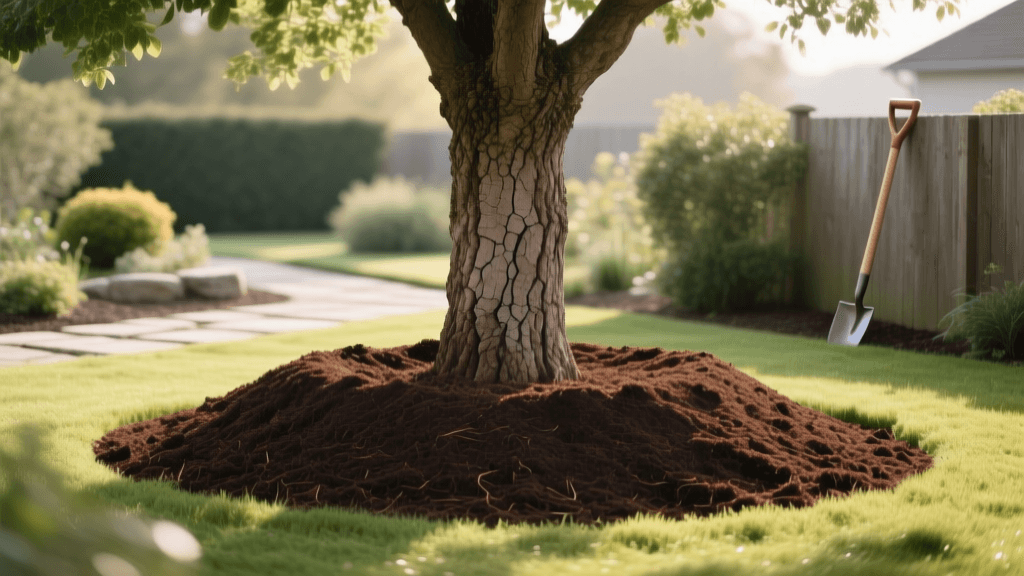
Mulch helps keep soil moist, eases compaction, and buffers temperature swings. But piling it on wrong does more harm than good. Arborists follow the 3-3-3 Rule:
- 3 Inches Deep: Keep mulch no more than 2 to 3 inches thick. Too much smothers roots and traps gases.
- 3 Feet Radius (Minimum): Spread mulch at least 3 feet from the trunk — farther is better. Extending it to the drip line cuts out competition from grass.
- 3 Inches Away from the Trunk: Leave bare soil around the base — no mulch touching the bark. Piling mulch against the trunk keeps the bark damp, inviting rot, mice, and roots that wrap around the trunk.
Best Mulch Materials for Moisture Retention
Some mulches work better than others. Skip dyed mulches (they sometimes carry chemical residues) and rubber mulch (it heats up and can leach toxins). Stick with organic options that break down and feed the soil:
- Arborist Wood Chips: Often free from local tree services. A mix of wood and leaves, they hold moisture well and release nutrients slowly.
- Shredded Hardwood Bark: Holds together on slopes and resists washing away. Costs about $30–$40 per cubic yard.
- Pine Bark Nuggets: Long-lasting and good for acid-loving trees like pines and oaks — though they can float off in heavy rain.
Comparison Chart: Surface Watering vs. Deep Root Watering
| Watering Method | Water Penetration Depth | Evaporation Loss | Root Development Impact | Estimated Equipment Cost |
|---|---|---|---|---|
| Lawn Sprinkler System | 1 - 2 inches | High (Up to 40%) | Promotes shallow, weak roots | Included in system |
| Oscillating Garden Hose | 2 - 4 inches | Moderate (20-30%) | Encourages surface roots | $15 - $30 |
| Soaker Hose (Drip Line) | 6 - 12 inches | Very Low (< 5%) | Encourages deep, stable roots | $25 - $45 |
| Deep Root Injection Wand | 12 - 18 inches | Zero (Subsurface) | Forces roots deep into subsoil | $30 - $60 |
Signs Your Tree is Suffering from Hydrological Stress
Trees don’t show drought stress right away. What you see now may reflect dry conditions from months ago. Watch for these signs:
- Leaf Scorch: Browning or curling at leaf edges — especially on the south and west sides of the tree.
- Premature Autumn Coloration: Leaves turning yellow or red in mid-summer, as the tree drops them early to save water.
- Crown Dieback: Twigs and branches dying, starting at the top and moving down.
- Increased Pest Activity: Borers and other insects are drawn to chemicals trees release when they’re stressed.
Expert Citations and Final Thoughts
A healthy mature tree adds real value — both to your property and your energy bills. Shade from a big tree can cut summer cooling costs, and replacing one isn’t cheap.
"During prolonged drought, trees should be watered deeply and infrequently. A general rule of thumb is to apply 10 gallons of water for every diameter inch of the tree. For example, a tree with a 4-inch diameter trunk requires 40 gallons of water per watering session. Water should be applied slowly to allow it to percolate into the soil rather than running off."
— Colorado State University Extension, Drought Care for Trees (Fact Sheet No. 7.211)
Switching from sprinklers to deep-root tools — and following the 3-3-3 mulch rule — makes a real difference. Grab your soil probe, measure your trunk, and give your trees the steady, deep water they rely on.