Tree Care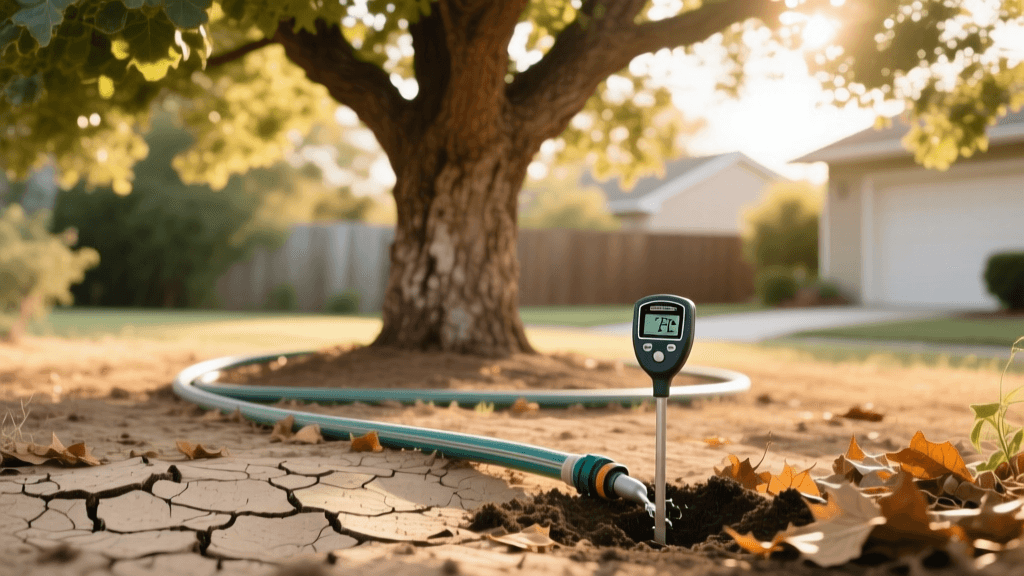
Step-by-Step Guide to Deep Watering Trees During Drought
Why Shallow Watering Fails Mature Trees
When summer droughts hit, many homeowners turn on their lawn sprinklers for 20 minutes and assume their trees are getting enough water. But that kind of light, frequent watering keeps the grass green while doing little for mature trees. Turfgrass roots sit in the top two inches of soil, but tree roots need slow, deep soaks to stay healthy. Without it, you might see branches thinning out in the canopy, more wood-boring insects showing up, and eventually, the tree may not recover.
Understanding the Root Zone
A lot of people water right at the base of the trunk, thinking that’s where the tree drinks. In fact, most of the roots that absorb water aren’t near the trunk at all. They’re in the top 12 to 18 inches of soil, spreading out to the dripline—the edge of the canopy—and sometimes even farther. Watering at the trunk doesn’t reach those roots, and it can trap moisture against the bark, encouraging rot and fungal problems. For best results, aim your water from halfway between the trunk and the dripline, all the way out a few feet past it.
Tools That Work for Deep Watering
A standard oscillating sprinkler or handheld nozzle won’t cut it. You need something that delivers water slowly, so it sinks in instead of running off. Here are the tools that get the job done:
- Soaker Hoses: Porous hoses (like the Gilmour Flat Soaker) that release water evenly along their length—great for covering wide root zones.
- Tree Watering Bags: Heavy-duty plastic bags (such as the Treegator Original) that wrap around the trunk and let out 15 to 20 gallons over 5 to 9 hours.
- Deep Root Watering Probes: Metal spikes that attach to your garden hose and push water down into the soil, working around surface crusts.
- Soil Moisture Probes: A simple 12-inch metal probe helps you check whether water is actually reaching the deeper roots.
Comparison of Deep Watering Methods
| Method | Approx Cost | Setup Time | Best Use Case | Water Efficiency |
|---|---|---|---|---|
| Soaker Hose | $25 - $40 | 15 mins | Mature trees, large hedges | High |
| Tree Watering Bag | $30 - $45 | 5 mins | Newly planted, young trees | Very High |
| Root Watering Probe | $35 - $60 | 20 mins | Compacted soils, heavy clay | Moderate |
| Automated Drip Line | $100+ | 2 hours | Orchards, high-value specimens | Maximum |
How Much Water Does Your Tree Need?
Start with the University of Arizona Cooperative Extension’s guideline: 10 to 15 gallons per inch of trunk diameter. Measure the trunk at about chest height—4.5 feet above ground. A 20-inch oak, for example, needs 200 to 300 gallons per session during hot, dry weather. It sounds like a lot, but spread over 12 hours, the soil absorbs it without runoff or puddling.
Step-by-Step Deep Watering
- Test Existing Moisture: Before watering, push a 12-inch soil probe into the ground near the dripline. If it slides in easily and comes out damp and dark, hold off for a few days. If it’s hard to push in and comes out dry and dusty, it’s time to water.
- Position Your Equipment: Lay your soaker hose in a spiral, starting 3 feet from the trunk and winding out to the dripline. For younger trees using a watering bag, zip it snugly around the base, making sure the bottom emitters rest flat on the soil.
- Set the Flow Rate: Turn the spigot just a quarter-turn. You want a steady, gentle trickle—not a rush. If water starts pooling or running off, dial it back.
- Time the Session: Let the soaker hose run for 8 to 12 hours. A smart timer like the Orbit B-hyve can handle this overnight, when less water evaporates.
- Verify Penetration: The next day, use your soil probe again. You should be able to push it 8 to 12 inches deep into the wetted area without much resistance.
Adjusting for Soil Composition
Your soil type changes how water moves—and how you should water. Skipping this step is why so many attempts at deep watering fall short.
- Clay Soils: Clay holds onto water but takes forever to soak it up. Pour too fast and it runs off. Try shorter bursts—2 hours on, 2 hours off, repeated three times—to let it sink in gradually.
- Sandy Soils: Sand drains quickly and doesn’t hold moisture well. You’ll likely need to water twice a week during a serious drought, and a thick layer of mulch helps keep the surface from drying out.
- Loam Soils: This is the sweet spot—absorbs water at a steady pace and holds it nicely. One 10-hour soaker hose session usually does the trick.
Mulch Helps Hold the Water
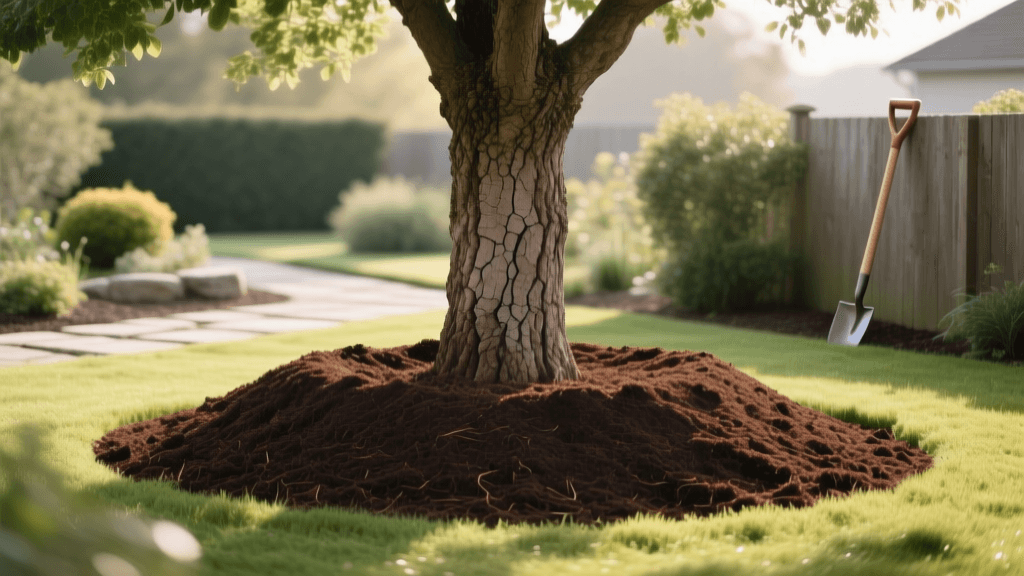
Getting water deep into the soil is only half the work—keeping it there matters just as much. According to the Texas A&M Forest Service, a proper layer of organic mulch can cut soil moisture loss by up to 70%. But mulch has to be applied right. Follow the 3-3-3 rule: 3 inches deep, spread 3 feet out from the trunk (or wider for older trees), and kept 3 inches away from the trunk itself. Piling mulch against the bark—the “mulch volcano”—holds too much moisture there and invites rot and rodents.
"During prolonged droughts, trees prioritize their inner canopy and root systems, often dropping leaves or sacrificing outer branches to survive. Deep, slow watering at the dripline is the single most effective intervention a homeowner can make to preserve the tree's structural integrity and long-term health." — Urban Forestry Guidelines, Texas A&M Forest Service
What Not to Do During a Drought
When trees look stressed, it’s tempting to try quick fixes—but some common actions backfire.
First, don’t fertilize a drought-stressed tree. Fertilizers, especially high-nitrogen types, push new growth that demands more water, adding stress instead of relief. Wait until rain returns and the soil feels moist before resuming feedings.
Second, skip heavy pruning. Removing deadwood is fine, but cutting live branches reduces the tree’s ability to make food through photosynthesis—exactly what it needs to get through dry weather.
Third, keep herbicides away from the dripline. Stressed roots absorb chemicals more easily, and even small amounts can cause serious damage.
When to Water Through the Year
- Spring: Check soil moisture weekly as trees wake up. Spring rains often cover it, but if the season stays dry, be ready to step in.
- Summer (Peak Drought): Mature trees usually need a deep soak every 10 to 14 days. Young trees—those planted within the last three years—may need it every 3 to 5 days.
- Fall: Keep watering until the ground freezes. Evergreens especially benefit from a good soak in fall to help them handle winter winds and avoid needle burn.
Switching from shallow lawn watering to deep root hydration makes a real difference. Stick with it, use the right tools, and pay attention to your soil—and your trees will stay strong, safe, and healthy for years.