
Landscaping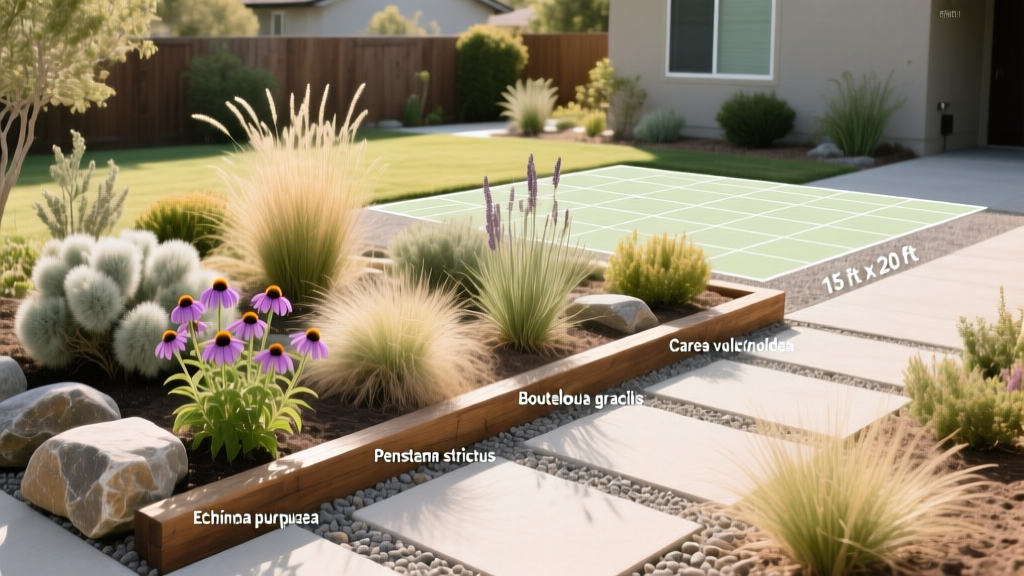
Design Low Maintenance Native Plant Borders
Foundations of Ecologically Informed Border Design
Low-maintenance native plant borders are not merely aesthetic choices—they are functional ecological infrastructure. Rooted in landscape architecture principles that prioritize site-specific hydrology, soil biology, and pollinator support, these borders reduce long-term irrigation, fertilization, and labor inputs while enhancing biodiversity. The American Society of Landscape Architects (ASLA) emphasizes “designing with nature” as a core tenet of resilient outdoor spaces, urging practitioners to select species adapted to local climate zones and historic soil conditions rather than importing non-native cultivars requiring intensive upkeep (ASLA, 2022). This approach aligns with the ecological restoration framework pioneered at the Lady Bird Johnson Wildflower Center in Austin, Texas, where decades of field trials demonstrate that regionally appropriate natives establish deeper root systems—up to 12 feet deep in prairie grasses—improving stormwater infiltration and reducing erosion.
Site Preparation and Soil Integration
Effective installation begins before planting. Conduct a soil test to determine pH, organic matter content, and compaction level; native plants thrive in undisturbed or minimally amended soils. For example, in the Mid-Atlantic region, Eutrochium fistulosum (Joe-Pye weed) performs best in loamy, well-drained soils with pH 5.8–7.2. Avoid tilling deeply—limit disturbance to the top 4 inches—to preserve mycorrhizal networks critical for nutrient exchange. At the Brooklyn Botanic Garden’s Native Flora Garden, designers used no-till sheet mulching with 3 inches of composted leaf litter over cardboard to suppress weeds while feeding soil microbiota during establishment.
When integrating hardscaping elements like flagstone paths or dry-laid bluestone edging, maintain a minimum 12-inch buffer between hardscape and planting zone to prevent heat radiating onto roots and allow for natural root expansion. This spacing also facilitates access for seasonal maintenance without compacting soil.
Grading and Drainage Considerations
Ensure gentle slope—no more than 2% grade—away from structures to direct runoff into the border rather than across impervious surfaces. A 100-square-foot border installed on a 1.5% grade will capture approximately 1,200 gallons of rainwater annually in USDA Zone 6, according to modeling by the University of Vermont’s Stormwater Management Program (2021).
Plant Selection by Functional Layering
Native borders achieve resilience through vertical layering: groundcover, herbaceous perennials, structural grasses, and occasional understory shrubs. This mimics natural plant communities and maximizes resource use efficiency. Each layer serves distinct ecological roles—groundcovers stabilize soil, mid-height perennials attract pollinators, tall grasses provide winter habitat and wind buffering.
For sun-exposed, well-drained sites in the Northeast, consider this proven combination:
- Schizachyrium scoparium (little bluestem): 2–3 ft tall, drought-tolerant, $8–$12 per 1-gallon container
- Asclepias tuberosa (butterfly weed): 1.5–2 ft, supports monarch larvae, $9–$14 per plant
- Coreopsis lanceolata: 1–2 ft, blooms May–September, $6–$10 per 1-gallon pot
- Chasmanthium latifolium (river oats): 2–4 ft, tolerates partial shade and clay, $11–$16 per division
- Leucothoe fontanesiana (drooping leucothoe): evergreen shrub, 3–5 ft, $22–$34 per 3-gallon container
Spacing is critical: plant at 12–18 inches apart for perennials, 24–36 inches for grasses, and 4–6 feet for shrubs. A 120-square-foot border requires approximately 45–60 individual plants for full coverage within two growing seasons.
Regional Adaptation Guidelines
Select species verified for your ecoregion using resources like the USDA PLANTS Database or the Native Plant Trust’s regional checklists. In California’s coastal fog belt, Eriophyllum staechadifolium (coastal woolly sunflower) and Lupinus albifrons (silver lupine) outperform inland species due to salt tolerance and fog-drip utilization. Conversely, in the Great Plains, Bouteloua curtipendula (sideoats grama) and Ratibida columnifera (prairie coneflower) dominate low-water borders with minimal supplemental irrigation after year one.
Hardscaping Integration Strategies
Hardscape should frame—not dominate—the planting. Use locally sourced, porous materials such as decomposed granite or reclaimed brick pavers set in sand bedding. These allow water infiltration and root penetration beneath edges. At the Chicago Botanic Garden’s Regenstein Learning Campus, designers embedded 4-inch-wide bluestone strips at 36-inch intervals within borders to define circulation while permitting uninterrupted rhizome spread between segments.
Edging height matters: install metal or stone edging no more than 2 inches above grade to avoid trapping debris or inhibiting mulch replenishment. Taller edging impedes natural leaf litter accumulation—a key nutrient source for native soil food webs.
Maintenance Protocols and Long-Term Stewardship
Year-one care focuses on weeding and monitoring moisture; thereafter, maintenance drops dramatically. Prune perennials in late winter (not fall) to retain seed heads for birds and insulating structure. Mow warm-season grasses once annually in early spring at 6 inches height. Avoid synthetic fertilizers—native plants evolved in nutrient-poor soils and respond poorly to excess nitrogen.
Cost analysis for a 150-square-foot border installed professionally averages $8.50–$12.50 per square foot, including soil prep, 1-gallon plants, and porous edging. DIY installation reduces cost to $4.20–$7.80 per square foot, though labor time increases by 40–60 hours depending on terrain complexity. Post-installation annual upkeep costs average $0.35–$0.65 per square foot—less than 15% of conventional perennial border expenses.
“Native plant borders function as living infrastructure—reducing runoff, sequestering carbon, and supporting 3–5x more native insect biomass than non-native landscapes.” —University of Delaware Department of Entomology & Wildlife Ecology, 2020
Monitoring and Adaptive Management
Track success using simple metrics: percent ground cover at 12 months (target ≥85%), number of observed pollinator visits per 10-minute observation (baseline ≥12/hour), and irrigation frequency (should decline to zero after 18 months in most temperate zones). Adjust species composition based on performance—replace underperforming taxa with locally proven alternatives from institutions like the North Carolina Botanical Garden’s Piedmont Native Plant List.
A 200-square-foot border designed for full sun in USDA Zone 7 requires 8–10 inches of shredded hardwood mulch applied at installation, renewed every 3 years at 2-inch depth. This suppresses invasive species such as Polygonum cuspidatum (Japanese knotweed) while moderating soil temperature fluctuations by up to 14°F compared to bare soil.
At the Missouri Botanical Garden’s Shaw Nature Reserve, researchers documented that borders planted with >70% native species reduced herbicide applications by 92% over five years versus adjacent non-native beds. Similarly, the ASLA’s 2023 Climate Positive Design initiative identifies native borders as high-impact strategies for achieving net-zero carbon landscapes by year 10.
Initial plant density directly affects establishment speed: planting at 100% recommended spacing achieves canopy closure in 18–24 months; planting at 75% spacing shortens that to 12–16 months but increases upfront material cost by ~22%. For a 10-ft × 25-ft border (250 sq ft), this translates to an additional $190–$280 in plant costs—but saves ~35 labor hours over the first growing season.
Soil amendment volume should be limited: incorporate no more than 1 cubic yard of compost per 1,000 square feet of planting area. Excess organic matter encourages weed germination and destabilizes native soil microbial balance.
| Species | Max Height (ft) | Water Needs (in/yr) | USDA Zone Range | Price per 1-Gal Container |
|---|---|---|---|---|
| Andropogon gerardii | 4–6 | 20–25 | 3–9 | $13.50 |
| Phlox maculata | 2–3 | 30–36 | 4–8 | $9.25 |
| Ceanothus americanus | 3–4 | 24–30 | 4–8 | $26.00 |
Designers at the Arnold Arboretum in Boston routinely specify Amelanchier laevis (Allegheny serviceberry) as a small understory tree within larger borders—its 15–25 ft mature height provides vertical diversity without shading out herbaceous layers. Its fruit supports 32+ bird species, reinforcing avian habitat connectivity across fragmented urban landscapes.
Replace failed specimens only with genetically local ecotypes—never cultivars labeled “nativar”—to preserve co-evolved relationships with local pollinators and soil microbes. The Native Plant Society of New Jersey maintains a certified seed source registry to ensure provenance integrity.
Document planting dates, initial survival rates, and first-year bloom timing to inform future refinements. This data contributes to broader regional knowledge-sharing networks coordinated by the Ecological Landscape Alliance (ELA), which aggregates practitioner reports from over 140 U.S. municipalities.
A properly designed native border reaches ecological maturity—defined as self-sustaining reproduction and minimal external input—at year seven. By that point, root biomass exceeds above-ground biomass by 4:1, anchoring soil and storing carbon at rates comparable to young forest stands.

