Lawn Care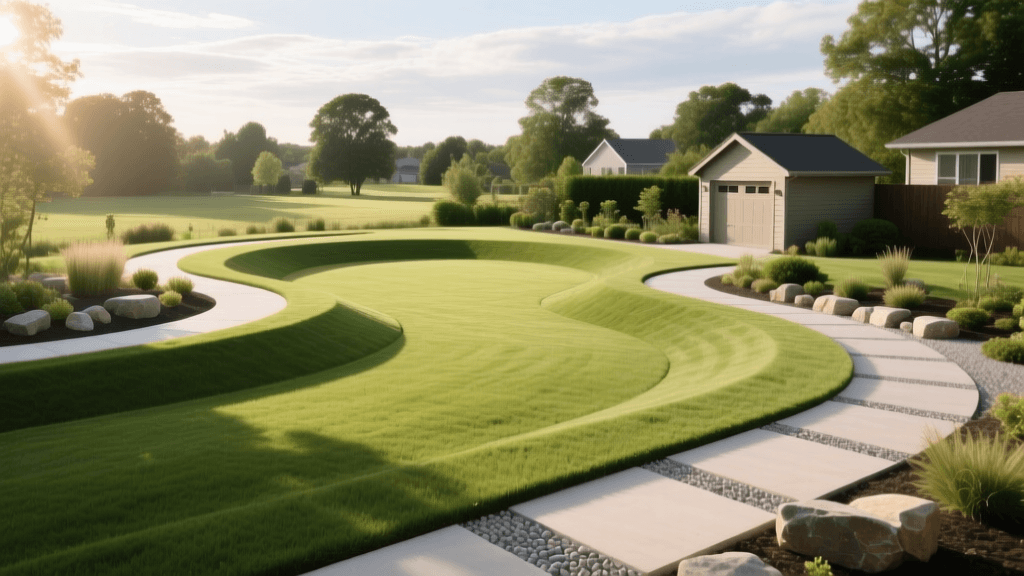
Designing Lawn Borders and Shapes for Efficient Mowing
The Intersection of Landscape Design and Lawn Care
When homeowners envision their dream yard, they often focus on vibrant flower beds, majestic shade trees, and pristine turfgrass. However, a critical element frequently overlooked during the planning phase is the practical reality of weekly lawn maintenance. Designing a lawn without considering the mechanics of mowing, edging, and string trimming can transform a relaxing weekend chore into a frustrating, time-consuming ordeal. By approaching lawn care from a design and planning perspective, you can create a landscape that is not only visually stunning but also inherently optimized for efficient maintenance.
A well-planned lawn shape reduces the need for constant string trimming, prevents turf scalping, and minimizes the wear and tear on your mowing equipment. In this comprehensive guide, we will explore how to design lawn borders, curves, and hardscape transitions that save you hours of labor each season while elevating the overall aesthetic of your property.
The Hidden Cost of Complex Lawn Shapes
It is estimated that up to 30% of total lawn care time is spent not on mowing the open turf, but on navigating edges, obstacles, and tight corners. Complex lawn shapes with sharp angles, narrow corridors, and scattered planting islands force the operator to constantly stop, reverse, and maneuver. Furthermore, every obstacle that a mower cannot reach requires manual string trimming and edging. Over the course of a single growing season, a poorly designed lawn can add dozens of hours of unnecessary manual labor to your maintenance schedule.
From a turf health perspective, constantly turning a heavy riding mower or zero-turn mower on tight, acute angles causes severe soil compaction and tears the grass roots, leading to thin, bare spots that are highly susceptible to weed invasion and disease. Designing with the mower in mind protects both your schedule and your soil structure.
Core Principles of Mowing-Friendly Lawn Design
To create a low-maintenance landscape, you must adopt the "mower’s eye" view. This means visualizing the path of your widest piece of equipment and designing the lawn’s perimeter to accommodate its natural flow.
1. Consolidating Planting Beds and Eliminating Islands
Scattered tree rings and isolated shrub islands scattered across a lawn are the enemies of efficient mowing. Instead of maintaining five separate circular mulch beds, consolidate your plantings into unified, sweeping perimeter beds. This creates large, uninterrupted expanses of turfgrass that allow for long, continuous mowing passes. Grouping plants together also improves irrigation efficiency and creates a more cohesive, professional landscape design.
2. The Art of the Sweeping Curve
When designing the boundary between your lawn and garden beds, avoid wavy, scalloped, or jagged edges. These "cookie-cutter" edges are notoriously difficult to maintain and look messy as grass grows over them. Instead, utilize long, sweeping curves. A good rule of thumb is to ensure that any inward curve has a radius of at least 6 to 8 feet. This allows a standard riding mower to glide through the turn without requiring a multi-point turnaround or leaving uncut patches of grass.
3. Eliminating Acute Angles
Sharp, 90-degree (or tighter) corners in garden beds force the mower to perform a three-point turn, which damages the turf and wastes time. Soften all corners with obtuse angles or gentle arcs. If two beds meet, ensure the pass-through width is at least 5 feet wide to allow the mower deck to pass through without the wheels dropping into the mulch or garden soil.
Designing the "Mowing Strip" for Seamless Transitions
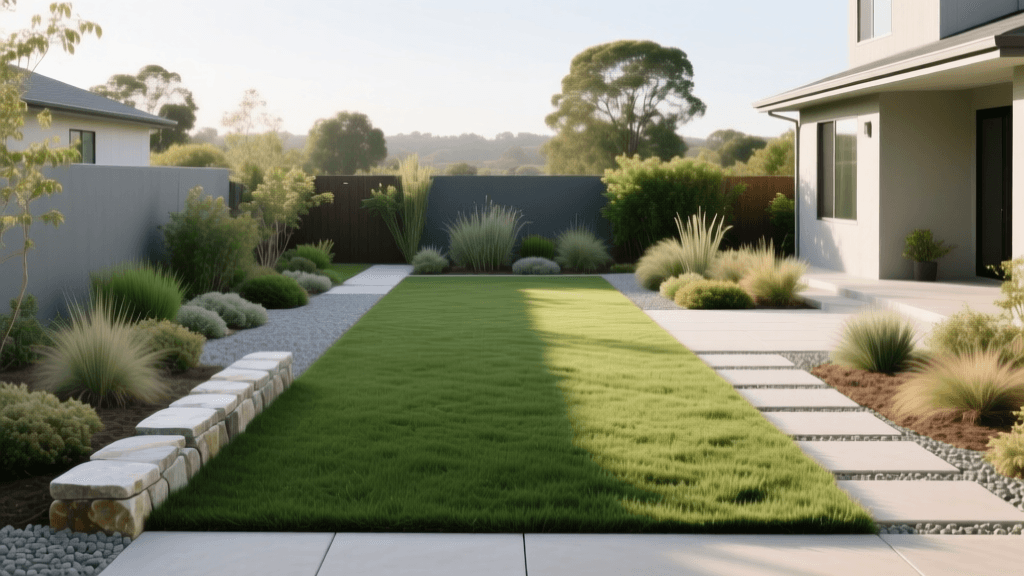
One of the most effective design strategies for reducing lawn maintenance is the installation of a flush mowing strip (also known as an edge strip or mower strip). This is a hardscape border installed at the exact same height as the turfgrass canopy. It allows the mower’s wheels to ride partially on the grass and partially on the hardscape, eliminating the need for string trimming along fences, walls, and garden beds entirely.
Below is a comparison chart of the most common materials used for mowing strips, including estimated costs and durability.
| Material | Cost per Linear Foot | Durability | Mower Deck Friendliness | Installation Effort |
|---|---|---|---|---|
| Concrete Pavers (Brick) | $4.00 - $8.00 | High | Excellent (Flush surface) | Moderate (Requires sand base) |
| Poured Concrete | $6.00 - $12.00 | Very High | Excellent (Seamless) | High (Requires forms and mixing) |
| Steel Landscape Edging | $2.50 - $4.50 | High | Poor (Risk of scalping) | Low (Trench and hammer) |
| Natural Flagstone | $5.00 - $10.00 | Very High | Good (Uneven joints) | High (Custom fitting required) |
| Decorative Gravel Trench | $1.50 - $3.00 | Medium | Good (Requires depth management) | Low (Trench and fill) |
Note: When installing pavers or flagstone, ensure the base is compacted crusher run or stone dust, and the final surface sits exactly 0.5 inches below the desired mowing height to account for seasonal turf thatch buildup.
Planning for Equipment Turnaround Radii
Every piece of lawn care equipment has a specific turning radius. Designing your lawn’s dead-ends and boundaries to accommodate these radii prevents the need for manual trimming in tight spots.
- Push Mowers: Require a minimum turnaround radius of 2 to 3 feet. Ideal for small, urban yards with intricate garden beds.
- Standard Riding Mowers: Require a turning radius of 6 to 8 feet. Dead-ends in fencing or planting beds must be widened into a "bulb" or cul-de-sac shape to allow the tractor to turn around without backing up.
- Zero-Turn Mowers: While they boast a zero-inch turning radius, the mower deck extends beyond the wheels. A practical design radius of 4 feet is necessary to prevent the deck from scalping the turf or striking hardscape edges during a pivot turn.
Tree Rings and Obstacle Management
Trees present a unique challenge in lawn planning. Mowing too close to a tree trunk risks damaging the bark with the mower deck, which can introduce fatal diseases and pests to the tree. Furthermore, surface roots often protrude, creating scalping hazards.
The Planning Solution: Design mulch rings that extend at least 3 feet from the trunk of the tree in all directions. This 6-foot diameter circle provides ample clearance for a standard 42-inch mower deck to navigate around the tree without the blades extending into the trunk zone. For clusters of trees, merge the individual rings into a single, kidney-shaped or amoeba-like planting bed, maintaining a minimum 4-foot width for any grass corridors between the trees to ensure the mower can pass through cleanly.
Expert Guidelines on Lawn Zoning and Maintenance
According to the University of Minnesota Extension, designing landscapes for easy maintenance involves "right-sizing" the turfgrass area. Their guidelines emphasize that turf should be limited to areas where it serves a functional purpose, such as recreation or visual framing, while difficult-to-mow areas like steep slopes, narrow strips between sidewalks and foundations, and deep shade zones should be converted to groundcovers, ornamental grasses, or mulch beds.
"Reducing the total square footage of high-maintenance turfgrass through strategic landscape zoning not only conserves water and reduces chemical inputs, but significantly cuts down the labor hours required for weekly mowing and edging." — University of Minnesota Extension, Landscape Design Principles
By applying these academic principles to your own yard, you transition from fighting your landscape to working in harmony with it.
Step-by-Step Implementation Guide
Ready to redesign your lawn for efficiency? Follow this actionable planning sequence:
- Map the Current State: Walk your yard with a measuring tape and sketch the current lawn boundaries, noting all trees, utility boxes, and garden beds.
- The Hose Test: Use a standard garden hose to lay out new, sweeping curves for your planting beds. Leave the hose in place for three days. Observe it from different windows in your house and walk the path with your mower (turned off) to test the flow and turnaround points.
- Trench and Edge: Once satisfied with the hose layout, use a half-moon edger to cut the new turf line. Remove the sod and install your chosen flush mowing strip material.
- Expand the Beds: Fill the newly created bed space with a 3-inch layer of premium hardwood mulch, ensuring it does not spill over the mowing strip.
- Adjust Irrigation: Cap off any sprinkler heads that are now located inside the new planting beds and convert them to drip irrigation zones to conserve water and prevent overspray onto hardscapes.
Conclusion
Efficient lawn care begins long before you pull the starter cord on your mower. By thoughtfully designing your lawn borders, consolidating planting zones, and installing flush hardscape transitions, you can reclaim your weekends. A mowing-friendly landscape design is an investment in both the health of your turf and the longevity of your equipment, proving that smart planning is the ultimate lawn care tool.