Lawn Care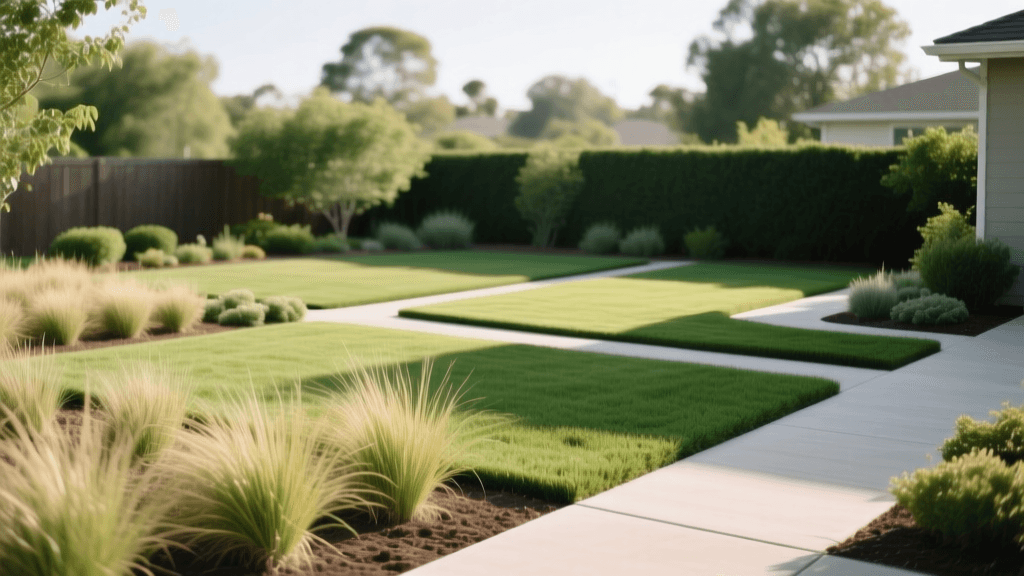
Designing Lawn Zones: Hydrozoning and Turf Placement
Introduction to Strategic Lawn Zoning
Most homeowners treat their lawn as a single, uniform carpet of grass, applying the same amount of water, fertilizer, and mowing effort to every square foot. However, this monoculture approach is not only inefficient but also costly and environmentally taxing. By adopting a strategic planning mindset, you can transform your yard into a highly efficient landscape through strategic lawn zoning. This approach involves dividing your yard into distinct management zones based on sunlight exposure, foot traffic, and functional use. When paired with hydrozoning, you can drastically reduce your water bill, minimize fertilizer runoff, and cut down on weekend mowing time.
What is Hydrozoning?
Hydrozoning is a foundational principle of sustainable landscape design. According to the University of California Agriculture and Natural Resources (UC ANR), hydrozoning involves grouping plants and turf with similar water, sun, and soil needs together, and placing them on dedicated irrigation valves. In the context of lawn care, this means recognizing that the strip of grass next to your sun-baked driveway has vastly different needs than the shaded turf beneath your oak trees. By designing your lawn with hydrozoning in mind, you prevent the common dilemma of overwatering shade-tolerant areas just to keep sun-exposed areas alive.
The Three-Tier Lawn Zone Design
When planning your lawn layout, divide your property into three primary zones. This structured approach ensures you are planting the right grass in the right place and allocating your lawn care budget effectively.
Zone 1: The Showcase (High Visibility, Moderate Traffic)
Zone 1 is the front yard or the primary focal point visible from the street. This area demands the highest aesthetic standard but usually endures only moderate foot traffic. Because it is the face of your home, this zone justifies higher inputs of water and premium fertilizers. Cool-season grasses like Kentucky Bluegrass (KBG) or high-end Turf-Type Tall Fescue are ideal here, as they provide a dense, dark-green carpet. Plan to irrigate this zone with high-efficiency rotary nozzles, such as the Hunter MP Rotator, which deliver water evenly at a rate of 0.4 to 0.6 inches per hour, minimizing runoff and allowing for deep soil penetration.
Zone 2: The Utility Area (High Traffic, Functional)
Zone 2 typically encompasses the backyard play area, pet runs, or spaces used for entertaining. The grass here must withstand heavy compaction, tearing, and frequent use. Durability and deep root systems are more important than a manicured, golf-course appearance. For cool-season climates, a robust blend of Tall Fescue and Perennial Ryegrass offers excellent wear tolerance and rapid recovery. In warm-season regions, Zoysia or Bermudagrass are virtually indestructible. Mowing this zone slightly higher (e.g., 3.5 to 4 inches for fescue) promotes deeper roots, shades out weeds, and cushions foot traffic.
Zone 3: The Eco-Perimeter (Low Traffic, Low Input)
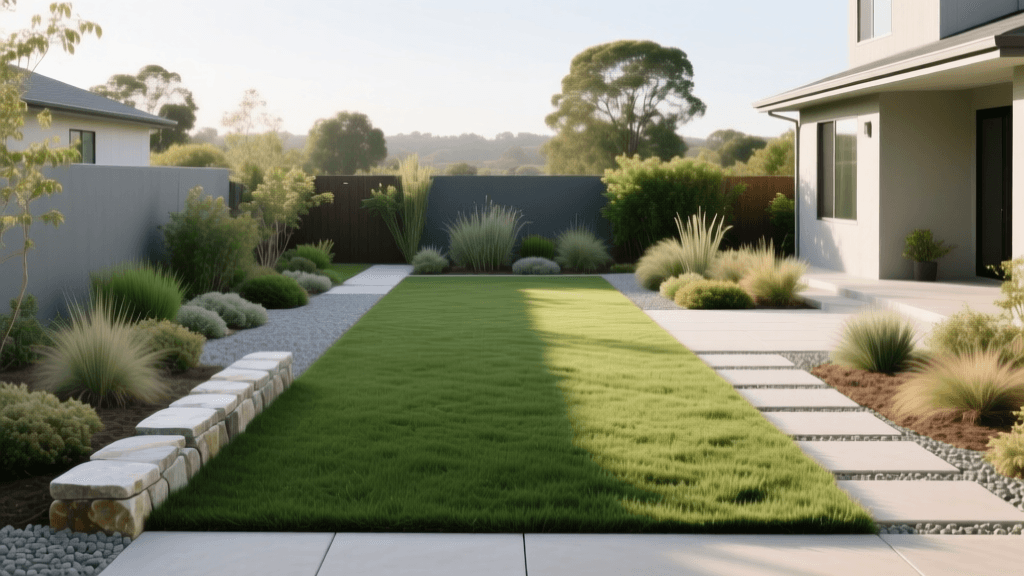
Zone 3 includes the perimeters of your property, steep slopes, narrow side yards, or areas under large trees where turfgrass naturally struggles. Instead of fighting nature with excessive shade-tolerant fertilizers and constant reseeding, design these areas as low-input eco-zones. Transition these spaces to drought-tolerant groundcovers, micro-clover (Trifolium repens), or native warm-season grasses like Buffalograss. Buffalograss requires only 1 to 2 inches of water per month and needs mowing just once or twice a season. Furthermore, leaving grass clippings in these eco-zones acts as a natural nitrogen fertilizer, reducing the need for synthetic inputs.
Turfgrass Selection Matrix for Lawn Zones
Selecting the correct seed or sod is critical to making your zoned design work. The table below outlines optimal turf choices based on your designated lawn zones.
| Lawn Zone | Recommended Cool-Season Grass | Recommended Warm-Season Grass | Target Mowing Height | Weekly Water Requirement |
|---|---|---|---|---|
| Zone 1 (Showcase) | Kentucky Bluegrass | St. Augustine | 2.0 - 2.5 inches | 1.0 - 1.5 inches |
| Zone 2 (Utility) | Tall Fescue Blend | Bermudagrass / Zoysia | 3.0 - 4.0 inches | 1.0 - 1.25 inches |
| Zone 3 (Eco) | Micro-Clover / Fine Fescue | Buffalograss / Centipede | 4.0+ or Uncut | 0.25 - 0.5 inches |
Irrigation Planning and Valve Zoning
A zoned lawn design is only as effective as its irrigation infrastructure. If your front yard (Zone 1) and side yard (Zone 3) are connected to the same sprinkler valve, hydrozoning fails. When planning your irrigation system, allocate a budget to split your manifold into at least three or four distinct valves. According to the EPA WaterSense program, upgrading to a Weather-Based Irrigation Controller (WBIC) can save the average home nearly 7,600 gallons of water annually. Expect to pay between $150 and $250 for a premium smart controller like the Rachio 3 or B-hyve, which automatically adjusts watering schedules based on local micro-climate data. Trenching and adding new PVC lines and valves to separate your eco-zones from your showcase zones typically costs between $5 and $10 per linear foot when hiring a professional, or roughly $200 in materials for a DIY weekend project.
Mowing Efficiency: Designing for the Machine
Landscape planning must also account for the physical act of mowing. A beautifully designed lawn with sharp, 90-degree corners and narrow, winding pathways might look great on paper, but it will double your mowing time. To maximize mowing efficiency, design your lawn borders and garden beds with the turning radius of your mower in mind. A standard 21-inch push mower requires at least a 3-foot wide path to turn around without trampling adjacent beds. For riding mowers or zero-turns, plan for 5-foot to 8-foot wide corridors and sweeping, curved borders rather than sharp angles. Furthermore, install flush mowing strips using pavers or flat stones along the edges of your garden beds. This eliminates the need for string trimming and allows you to run one mower wheel on the strip, creating a perfect edge every time you mow.
Cost and ROI Analysis of Zoned Lawn Care
While establishing a zoned lawn requires upfront planning and potential irrigation adjustments, the long-term return on investment is substantial. Below is a comparative cost analysis of maintaining a traditional monoculture lawn versus a strategically zoned landscape over a single growing season (approx. 6 months).
| Maintenance Category | Traditional Monoculture Lawn | Strategically Zoned Lawn | Estimated Seasonal Savings |
|---|---|---|---|
| Water Usage | $450 | $280 | $170 |
| Fertilizer and Herbicides | $180 | $110 | $70 |
| Mowing Labor and Fuel | 45 Hours | 30 Hours | 15 Hours |
| Reseeding and Patching | $90 | $30 | $60 |
By restricting high-input grasses to only the areas where they are truly needed, and utilizing drought-tolerant alternatives in Zone 3, homeowners can easily save over $300 a season in water and chemical costs, while reclaiming hours of their weekend.
Conclusion
Transitioning from a generic lawn to a strategically zoned landscape is one of the smartest design and planning decisions a homeowner can make. By embracing hydrozoning, matching turfgrass to functional zones, and designing for mowing efficiency, you create a resilient, beautiful yard that works with your local environment rather than against it. Start by mapping your property's sun and traffic patterns today, and take the first step toward a smarter, more sustainable lawn care routine.