Tree Care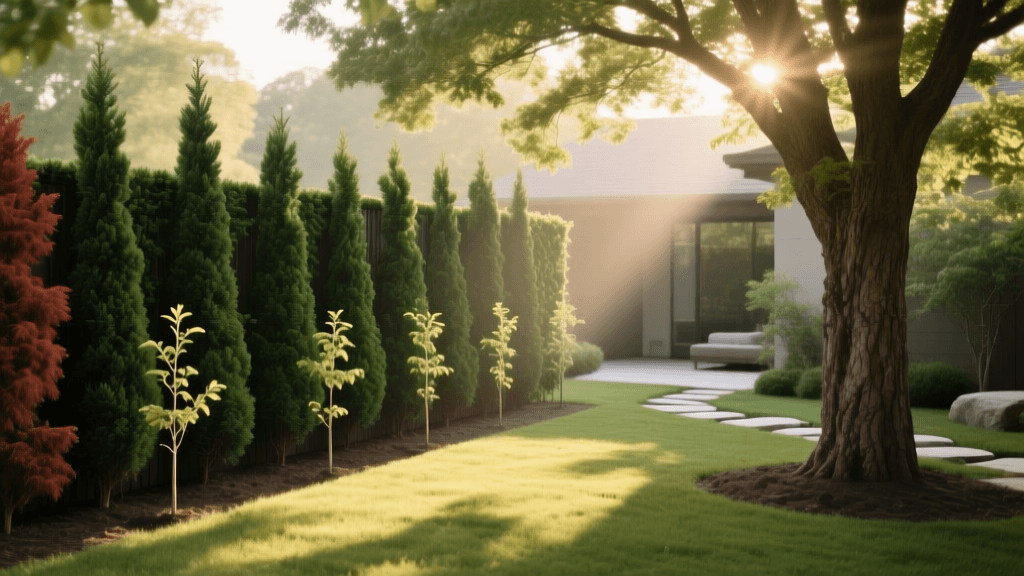
Designing a Living Privacy Screen: Tree Selection Guide
Why Choose a Living Tree Privacy Screen?
When planning your landscape design, establishing privacy is often a top priority. While a wooden or vinyl fence offers immediate seclusion, the costs can be staggering—often ranging from $40 to $80 per linear foot installed. A living tree privacy screen, on the other hand, provides a dynamic, eco-friendly, and highly cost-effective alternative. Beyond the financial savings, living screens act as natural windbreaks, reduce noise pollution, absorb carbon dioxide, and provide critical habitat for local songbirds and pollinators.
According to the University of Minnesota Extension, well-designed tree windbreaks and privacy screens can reduce winter heating costs by up to 15% and summer cooling costs by blocking harsh afternoon sun. However, designing a successful living screen requires careful planning regarding species selection, spatial layout, and long-term maintenance. Unlike a static fence, trees are living organisms that will grow, expand, and interact with their environment over decades.
Planning Your Layout: Straight vs. Staggered Rows
The most common mistake homeowners make when planting a privacy screen is digging a single, narrow trench and planting trees too closely together. Overcrowding leads to intense competition for water, nutrients, and sunlight, ultimately resulting in thin, spindly growth and increased susceptibility to fungal diseases.
For a dense, impenetrable screen, utilize a staggered (or zig-zag) planting layout. Instead of planting in a single straight line, plant two parallel rows offset from one another. If your chosen tree species has a mature width of 15 feet, space the trees 10 to 12 feet apart within each row, and space the two rows 8 to 10 feet apart. This triangular spacing allows the branches to interlock seamlessly, creating a solid visual barrier while ensuring each tree receives adequate airflow and sunlight.
Always verify your local property lines before digging. Plant your screen at least 5 to 8 feet inside your property boundary to accommodate the mature width of the trees and prevent encroachment onto your neighbor's land or public sidewalks.
Top Evergreen Species for Privacy Screens
Selecting the right tree is the most critical step in your design plan. You must consider your USDA Hardiness Zone, soil drainage, and the mature dimensions of the tree. Below is a comparison chart of four premier evergreen species commonly used for privacy screens.
| Tree Species | Mature Height | Mature Width | Growth Rate | Est. Cost (6ft B&B) |
|---|---|---|---|---|
| Green Giant Arborvitae | 40-60 ft | 12-18 ft | Fast (3-5 ft/yr) | $90 - $140 |
| Leyland Cypress | 50-70 ft | 15-20 ft | Very Fast (4-6 ft/yr) | $110 - $160 |
| Nellie Stevens Holly | 20-30 ft | 10-15 ft | Moderate (1-2 ft/yr) | $120 - $180 |
| Eastern Redcedar | 40-50 ft | 8-20 ft | Moderate (1-3 ft/yr) | $80 - $130 |
Species Deep Dive
Green Giant Arborvitae (Thuja standishii x plicata 'Green Giant'): This is widely considered the gold standard for privacy screens in zones 5-8. It is highly resistant to deer browsing and bagworms, which frequently plague other arborvitae varieties. It thrives in full sun and adapts to a wide variety of soil types.
Leyland Cypress (x Cuprocyparis leylandii): While it offers the fastest growth rate, it requires careful consideration. The Clemson University Home & Garden Information Center notes that Leyland Cypress is highly susceptible to Seiridium canker and root rot in poorly drained soils or humid climates. It is best suited for large properties with excellent air circulation and well-draining soil.
Nellie Stevens Holly (Ilex 'Nellie R. Stevens'): If you prefer a broadleaf evergreen with seasonal interest, this holly is an exceptional choice. It produces vibrant red berries in winter and tolerates heavy pruning, making it ideal for formal, tailored screens in zones 6-9.
Soil Preparation and Planting Instructions
Proper planting technique dictates the long-term survival of your privacy screen. The ideal time to plant evergreens is in early fall (September to October) or early spring (March to April), allowing the root system to establish before extreme summer heat or winter freezes.
- Test Your Soil: Before purchasing trees, conduct a soil test to determine pH and nutrient levels. Evergreens generally prefer a slightly acidic soil pH between 5.5 and 6.5.
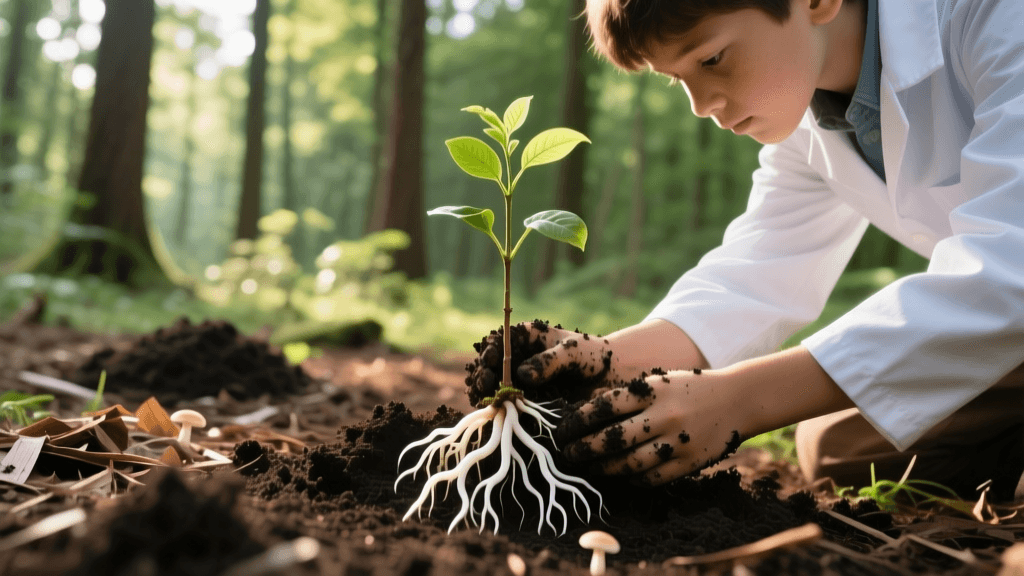
- Dig the Hole: Following guidelines from the Morton Arboretum, dig a hole that is 2 to 3 times wider than the root ball, but no deeper than the root ball itself. The root flare (where the trunk expands at the base) must sit slightly above the surrounding grade to prevent stem girdling and rot.
- Amend and Backfill: Break up the glazing on the sides of the hole to encourage root penetration. Backfill with the native soil, mixing in a high-quality organic compost. Avoid heavy synthetic fertilizers at planting time.
- Apply Root Stimulator: Incorporate an organic starter fertilizer like Espoma Bio-tone Starter Plus (4-3-3 NPK), which contains beneficial mycorrhizae to promote rapid root expansion and reduce transplant shock.
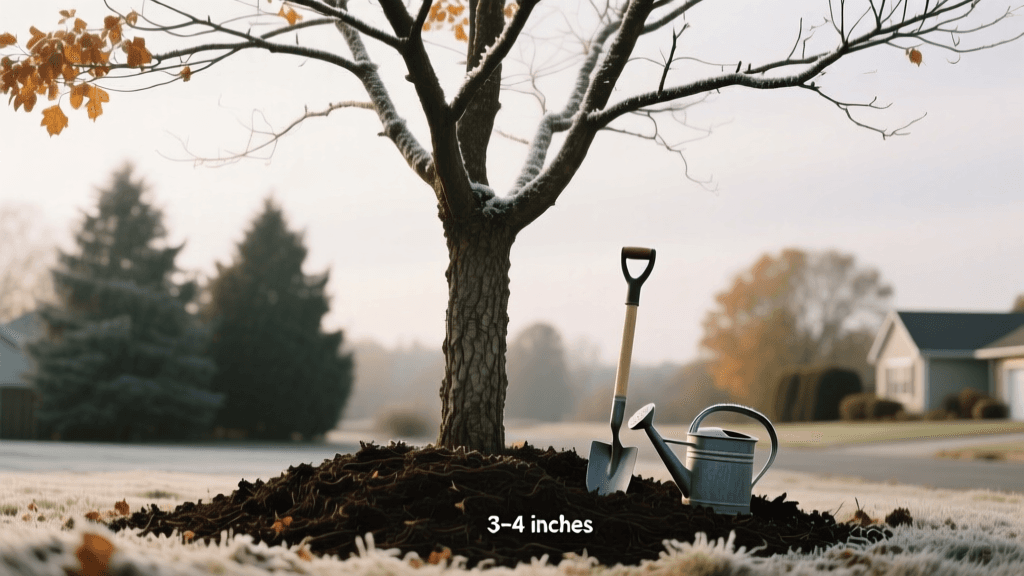
- Mulch Properly: Apply a 2 to 3-inch layer of shredded hardwood mulch over the planting area to retain moisture and suppress weeds. Keep the mulch at least 3 inches away from the trunk to prevent vole damage and bark rot.
Pro Design Tip: To create a softer, more naturalistic landscape design, avoid planting a rigid, monolithic line of a single species. Instead, plant a primary backbone of Green Giant Arborvitae, and intersperse deciduous understory trees like Serviceberry or Dogwood on the yard-facing side. This adds seasonal color, texture, and ecological diversity to your screen.
Watering and Long-Term Maintenance
Establishing a living privacy screen requires a dedicated watering regimen during the first two years. Evergreens do not show drought stress immediately; by the time the needles turn brown, the damage is often irreversible. Plan to provide 15 to 20 gallons of water per tree, per week, during the growing season. Utilizing products like Treegater Jr. watering bags (which hold 15 gallons and slowly drip over 5-8 hours) ensures deep soil penetration and saves hours of manual labor.
Pruning is rarely required for natural privacy screens, but if you need to control width or encourage denser lower branching, perform selective pruning in late spring after the first flush of new growth. Never prune back into old, brown wood on conifers like Arborvitae or Cypress, as they lack latent buds and will not regenerate foliage. With careful planning, precise spacing, and proactive maintenance, your living privacy screen will provide a lush, green sanctuary for decades to come.