Lawn Care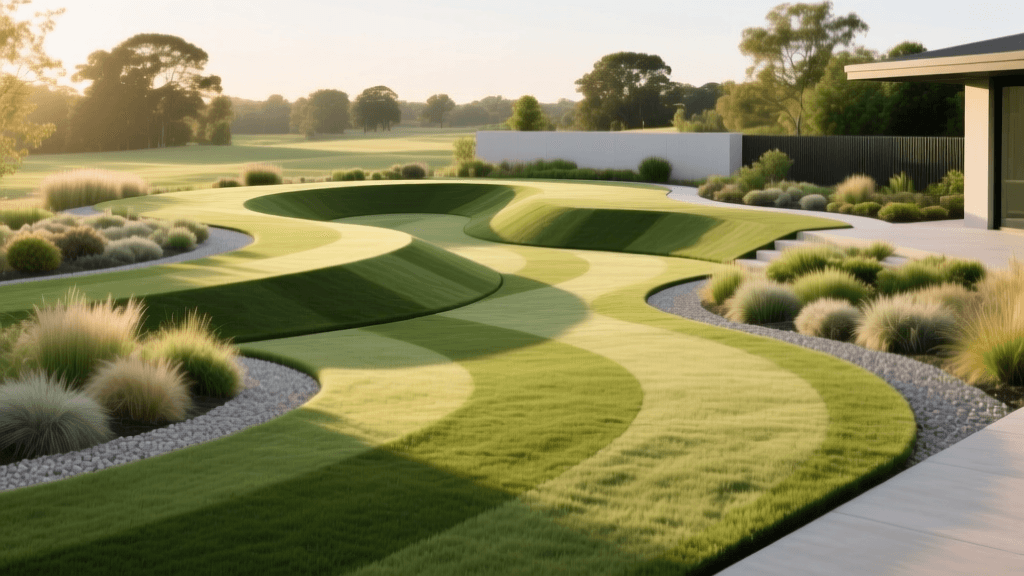
Designing A Low-Maintenance Lawn: Shape, Grass, And Hydrozoning
The Philosophy of Low-Maintenance Lawn Design
For decades, the American landscape ideal has been dominated by the 'carpet lawn'—a vast, unbroken expanse of high-maintenance turfgrass that demands constant mowing, heavy fertilization, and frequent irrigation. However, modern lawn care planning is shifting toward sustainable, low-maintenance designs that work with nature rather than against it. Designing a low-maintenance lawn is not about letting your yard go wild; it is about strategic planning, intelligent grass selection, and implementing structural elements that drastically reduce the time and money you spend on weekly lawn care routines.
By rethinking the shape of your lawn, incorporating hydrozoning principles, and selecting drought-tolerant or slow-growing grass species, you can reclaim your weekends. This comprehensive guide will walk you through the design ideas and planning phases required to transform your outdoor space into an eco-friendly, easily manageable landscape that still provides lush, usable green space for your family.
Strategic Lawn Shaping: Curves, Angles, and Mowing Strips
One of the most time-consuming aspects of lawn care is edging and string trimming around obstacles, tight corners, and garden beds. When planning your lawn layout, the physical shape of your turf dictates your weekly mowing efficiency. Avoid complex, jagged edges or narrow 'grass corridors' between trees and fences that require maneuvering a mower at awkward angles.
The Mowing Strip Solution
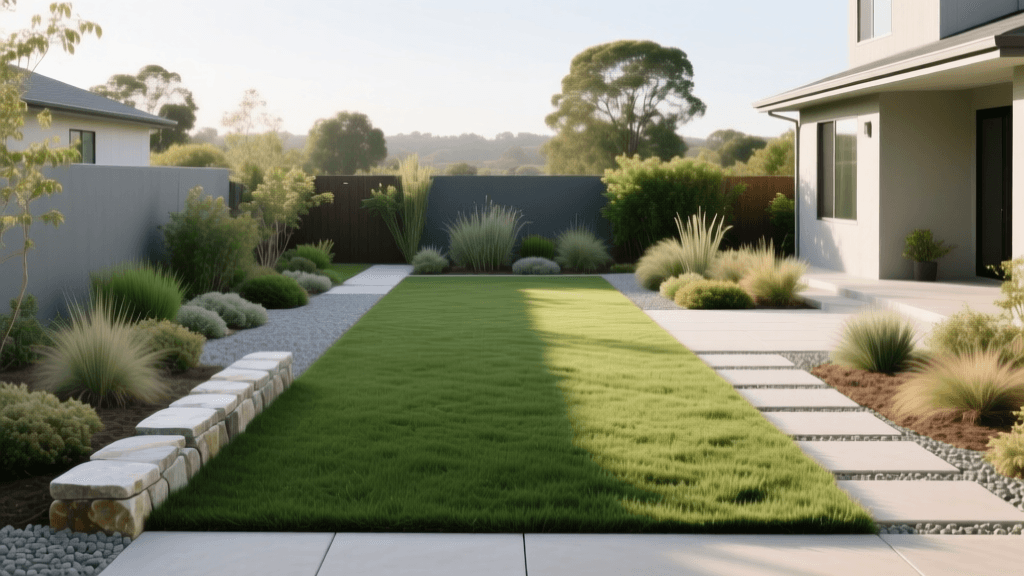
To eliminate the need for a string trimmer entirely, incorporate a 'mowing strip' into your design. A mowing strip is a flush, 6-inch to 12-inch wide border of hardscape material—such as brick, concrete pavers, or flagstone—installed at the same height as the soil line along the edges of your lawn and garden beds. When mowing, you simply run one wheel of the lawnmower on the strip, allowing the deck to overhang the edge and cut the grass cleanly without the blade hitting the soil or mulch.
- Material Cost: Concrete pavers typically cost $2 to $4 per linear foot, while natural flagstone can range from $5 to $8 per linear foot.
- Installation Timing: Install mowing strips in early spring or late fall when the ground is workable but turfgrass is dormant or easily managed.
- Design Tip: Use a garden hose to lay out sweeping, gentle curves for your garden beds. Wide, gradual arcs are much easier to mow than tight, S-shaped serpentine curves.
Hydrozoning: Planning Your Lawn by Water Needs
Hydrozoning is a foundational landscape design principle that involves grouping plants and turfgrass with similar water, sunlight, and soil requirements into distinct zones. According to the University of California Agriculture and Natural Resources (UC ANR), implementing hydrozoning can reduce landscape water use by 20 to 50 percent while preventing the overwatering of drought-tolerant plants and the underwatering of thirsty turf.
'By grouping plants with similar water needs, homeowners can reduce landscape water use significantly, minimize runoff, and maintain a vibrant, healthy yard without wasting municipal water resources.' — University of California Agriculture and Natural Resources (UC ANR)
When designing your lawn, reserve the most water-intensive turfgrass for high-traffic 'Oasis Zones' (like a central play area for children or pets) and transition to low-water groundcovers or hardscapes in the peripheral zones.
| Hydrozone | Water Requirement | Recommended Turf / Plant | Irrigation Strategy |
|---|---|---|---|
| Zone 1: Oasis (High Traffic) | High (1-1.5 inches/week) | Kentucky Bluegrass, Tall Fescue | Targeted rotor sprinklers |
| Zone 2: Transition | Moderate (0.5-1 inch/week) | Fine Fescue, Zoysia, Perennial Ryegrass | Smart drip or low-volume spray |
| Zone 3: Natural / Low Use | Low (Rainfall + occasional deep soak) | Buffalograss, Microclover, Creeping Thyme | Manual watering during extreme drought |
| Zone 4: Non-Irrigated | None (Survives on natural rainfall) | Native shrubs, Mulch, Gravel Hardscape | None |
Selecting the Right Turf for Your Design
The cornerstone of any low-maintenance lawn care plan is selecting a grass species that naturally resists drought, disease, and heavy weed pressure. Traditional turf requires 3 to 5 pounds of nitrogen per 1,000 square feet annually. Modern low-maintenance alternatives require a fraction of that input.
Top Low-Maintenance Grass Seed Products
- Cool-Season Lawns (Fine Fescue Blends): Fine fescues (Creeping Red, Chewings, Hard, and Sheep fescue) require less mowing, thrive in shade, and need minimal fertilization. Product Recommendation: Jonathan Green Black Beauty Ultra or specialized shade/drought blends from Pennington Smart Seed. Apply at a rate of 4 to 5 lbs per 1,000 sq ft in early fall.
- Warm-Season Lawns (Zoysia & Buffalograss): Buffalograss is a native prairie grass that requires mowing only once a month and thrives on natural rainfall. Product Recommendation: Todd Valley Farms Legacy Buffalograss plugs. Plant plugs 12 inches apart in late spring when soil temperatures consistently exceed 60°F.
- The Clover Alternative: Microclover fixes its own nitrogen from the atmosphere, eliminating the need for synthetic fertilizers, and stays green during mild droughts. Product Recommendation: Outsidepride Miniclover Seed. Overseed into existing thin lawns at 1 lb per 1,000 sq ft in early spring.
Integrating Hardscapes and Alternative Groundcovers
Reducing the total square footage of your turfgrass is the most effective way to lower your lawn care burden. Identify areas of your yard where grass struggles to grow—such as deep shade under mature oak trees, steep slopes prone to erosion, or narrow strips between the sidewalk and the street (often called 'hellstrips').
Instead of fighting a losing battle with soil testing, aeration, and overseeding in these problem zones, transition them into designed hardscape or groundcover zones. For steep slopes, install terraced retaining walls using natural stone and plant deep-rooted native groundcovers like Juniperus horizontalis (Creeping Juniper) or Pachysandra terminalis. For hellstrips, consider replacing the turf with permeable pavers, decorative river rock, and drought-tolerant ornamental grasses like Muhlenbergia capillaris (Pink Muhly Grass). According to the EPA WaterSense program, replacing just 25% of your traditional turf with water-wise landscaping can save the average household thousands of gallons of water annually.
Step-by-Step Implementation Plan
Transitioning to a designed, low-maintenance lawn requires upfront planning and labor, but the long-term dividends are immense. Follow this phased approach to execute your design:
- Phase 1: Mapping and Soil Testing (Weeks 1-2): Use marking paint to outline your new sweeping curves and hydrozones. Order a comprehensive soil test from your local university extension office to determine baseline pH and organic matter levels. Aim for a pH between 6.0 and 7.0 for most turfgrasses.
- Phase 2: Turf Removal and Hardscaping (Weeks 3-8): Remove existing high-maintenance turf in Zones 3 and 4 using the solarization method (covering the grass with clear 4-mil plastic sheeting for 4 to 6 weeks during peak summer heat) or by renting a sod cutter. Install your 6-inch paver mowing strips along the newly defined edges.
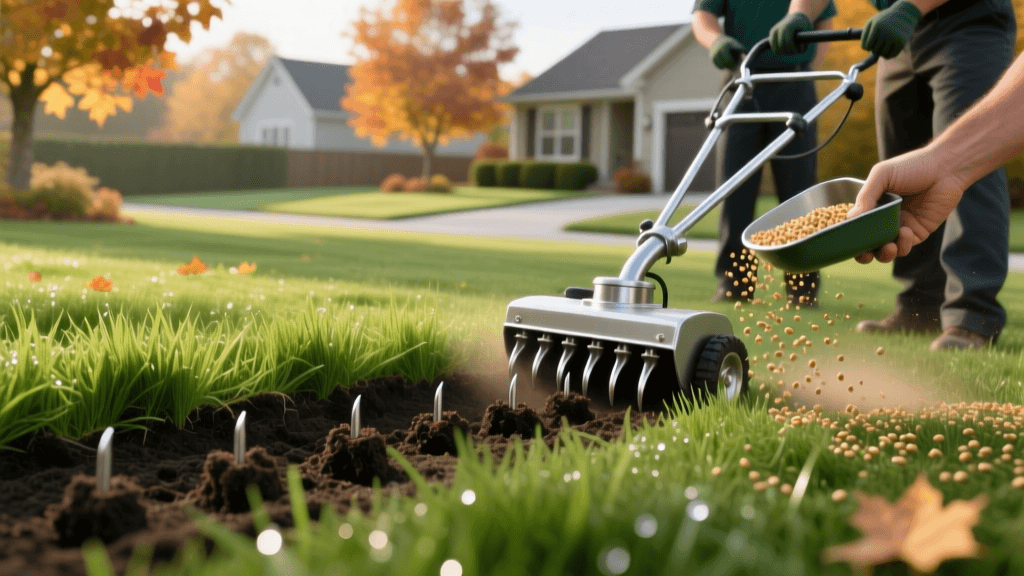
- Phase 3: Soil Amendment and Seeding (Weeks 9-10): Based on your soil test, incorporate 1 to 2 inches of organic compost into the topsoil of your designated turf zones. Sow your selected low-maintenance seed blend. For Fine Fescue, this is best done in early fall (mid-August to late September) when weed competition is low and soil moisture is retained longer.
- Phase 4: Mulching and Irrigation Setup (Week 11): Apply a 3-inch layer of shredded hardwood mulch to all non-turf hydrozones to suppress weeds and retain soil moisture. Install a smart Wi-Fi irrigation controller (like the Rachio 3 or B-hyve) that adjusts watering schedules based on local weather data, ensuring your Oasis Zone receives water only when necessary.
Conclusion: Design for Your Lifestyle
A beautifully designed lawn should serve your lifestyle, not dictate it. By embracing strategic lawn shaping, implementing hydrozoning, and selecting resilient grass varieties, you shift the paradigm of lawn care from a weekly chore to a seasonal joy. The initial investment in mowing strips, smart irrigation, and premium low-input seeds will pay for itself within the first two years through reduced water bills, lower fertilizer costs, and the invaluable return of your free time.