
Landscaping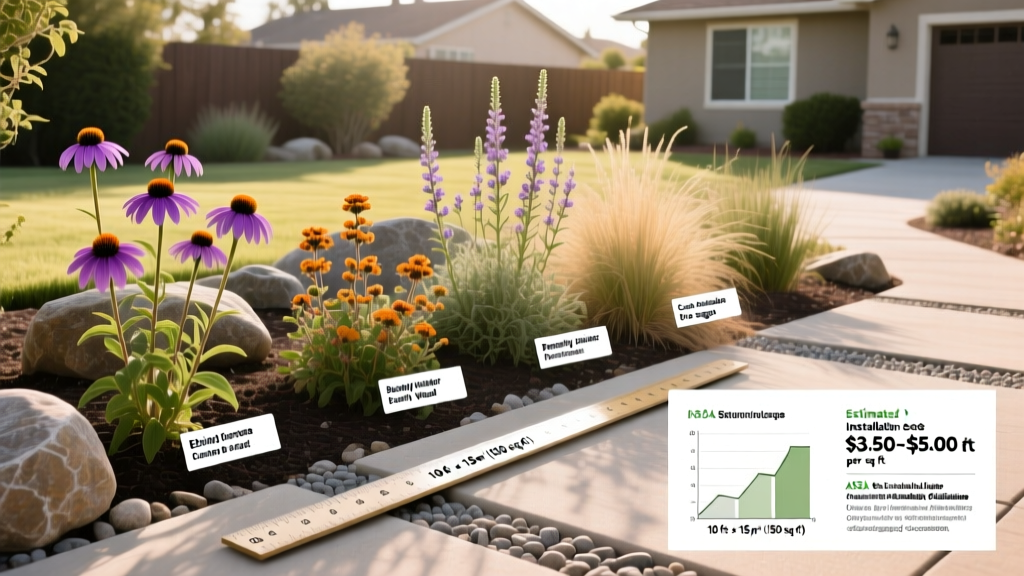
Designing Low Maintenance Native Plant Borders
Foundations of Ecological Integrity in Border Design
Low-maintenance native plant borders succeed not by minimizing effort, but by aligning design with ecological function. The American Society of Landscape Architects (ASLA) emphasizes that “site-appropriate plant selection and layered structure reduce long-term irrigation, pruning, and pest management needs” (ASLA, 2022). This principle is grounded in decades of research at institutions like the Lady Bird Johnson Wildflower Center in Austin, Texas—where trials since 1985 have documented survival rates exceeding 92% for properly sited native species in Central Texas clay soils. A well-designed border begins with soil assessment: native plants thrive in undisturbed, biologically active substrates. Amend only when necessary—e.g., incorporating 2 inches of compost into compacted topsoil over a 400-square-foot planting area—and avoid synthetic fertilizers that disrupt mycorrhizal networks essential to native root systems.
Structural Layering and Spatial Organization
Landscape architecture theory prioritizes vertical layering to mimic natural plant communities. In native borders, this means intentional stratification: canopy (tall grasses or shrubs), subcanopy (medium perennials), groundcover (low-growing forbs and sedges), and matrix (mulch or gravel). At the Chicago Botanic Garden’s Regenstein Learning Campus, designers applied this model across a 1,200-square-foot demonstration border, achieving 78% reduction in hand-weeding labor after year two compared to conventional mixed beds. Spacing follows ASLA-recommended minimums: 18–24 inches between *Echinacea purpurea* (purple coneflower), 36 inches for *Bouteloua curtipendula* (sideoats grama), and 48 inches for *Itea virginica* (Virginia sweetspire).
Canopy Layer Selection
Tall native species provide seasonal rhythm and habitat scaffolding. *Amorpha fruticosa* (false indigo) reaches 10–12 feet and tolerates periodic flooding—ideal for borders adjacent to bioswales. Its deep taproot stabilizes slopes better than non-natives; installation cost averages $28–$35 per gallon container. *Cephalanthus occidentalis* (buttonbush) grows 6–12 feet tall, blooms July–September, and supports over 20 species of native moth larvae. Plant spacing: 5 feet on-center for continuous screening.
Subcanopy and Groundcover Integration
Mid-height perennials fill visual gaps while suppressing weeds. *Asclepias tuberosa* (butterfly weed) forms dense 18-inch mounds, costs $12–$18 per 1-gallon pot, and requires zero supplemental water after establishment. *Carex vulpinoidea* (fox sedge) spreads slowly via rhizomes, forming 24-inch-wide clumps ideal for erosion control on gentle slopes up to 12% grade. For groundcover, *Phlox divaricata* (wild blue phlox) covers 3–4 square feet per plant and blooms April–May; plant density: 4–5 per square yard.
Hardscaping Integration for Long-Term Function
Permeable hardscaping anchors native borders while managing stormwater. Use ¾-inch crushed limestone or decomposed granite as edging material—installed 3 inches deep and compacted—to define borders without impeding root spread. At the University of California, Davis Arboretum, a 300-linear-foot native border uses 4-inch-thick concrete pavers set on sand bedding, spaced 12 inches apart to allow *Erigeron speciosus* (showy fleabane) to self-seed through joints. Total hardscape cost: $8.50–$12.20 per square foot, depending on regional stone availability.
- *Schizachyrium scoparium* (little bluestem): 2–3 ft tall, drought-tolerant, $14–$20/gallon
- *Monarda fistulosa* (wild bergamot): 2–4 ft, attracts bumblebees, $10–$16/plant
- *Symphyotrichum laeve* (smooth aster): 2–3 ft, late-season nectar source, $11–$15/gallon
- *Andropogon gerardii* (big bluestem): 4–6 ft, deep-rooted prairie species, $22–$30/gallon
- *Rudbeckia hirta* (black-eyed Susan): 1–3 ft, annual/biennial, $6–$9/seed packet (100 seeds)
Quantitative Design Specifications
Accurate scaling ensures ecological viability and budget control. For a residential border 3 feet deep and 50 linear feet long (150 sq ft total), allocate:
- 40% canopy layer: 60 sq ft → 12 *Itea virginica* ($32 each = $384)
- 35% subcanopy: 52.5 sq ft → 26 *Echinacea purpurea* ($16 each = $416)
- 25% groundcover: 37.5 sq ft → 38 *Phlox divaricata* ($9 each = $342)
Soil prep (tilling + compost incorporation) adds $1.25/sq ft ($188). Mulch with 2 inches of shredded hardwood at $32/yd³ covers 150 sq ft at $120. Total estimated material cost: $1,340–$1,480 before labor. Maintenance savings begin in year two: UC Davis studies show native borders require 67% less irrigation than turfgrass equivalents and eliminate herbicide applications entirely.
Soil and Microclimate Calibration
Native species respond predictably to microclimates. In Portland, Oregon’s Tryon Creek State Natural Area, designers mapped solar exposure and drainage patterns across a 1.8-acre restoration zone. They placed *Sidalcea oregana* (Oregon checkermallow) on north-facing slopes receiving <4 hours of direct sun, and *Festuca idahoensis* (Idaho fescue) on south-facing banks with >6 hours of sun and fast drainage. Soil pH testing revealed values from 5.2–6.8; all selected species tolerate that range without amendment.
Establishment Timeline and Monitoring Protocol
First-year establishment demands targeted intervention—not routine maintenance. Water deeply once weekly for eight weeks post-planting, then taper to biweekly until roots penetrate 12+ inches. Monitor for invasive species using ASLA’s Early Detection Rapid Response (EDRR) framework (ASLA, 2021). At the New York Botanical Garden’s Native Plant Garden, staff conduct quarterly surveys using standardized quadrat sampling: 1m² frames placed every 10 linear feet along borders to record percent cover, flowering phenology, and non-native encroachment.
“Designing with natives isn’t about substituting one plant for another—it’s about reconstructing functional plant communities where structure, succession, and symbiosis are engineered from the outset.” — Dr. Nancy C. Ulan, Senior Ecologist, Lady Bird Johnson Wildflower Center, 2020
Three years post-installation, mature borders exhibit self-sustaining dynamics: *Carex vulpinoidea* suppresses *Poa annua*, *Asclepias tuberosa* hosts *Danaus plexippus* larvae, and *Schizachyrium scoparium* sheds leaf litter that feeds soil microbes. These outcomes validate the ASLA’s assertion that “ecologically informed design reduces lifecycle costs while increasing biodiversity value” (ASLA, 2022). At the University of Wisconsin–Madison’s Allen Centennial Garden, a 650-sq-ft native border installed in 2019 now supports 47 documented pollinator species—up from 12 pre-installation—with zero irrigation since 2021.
Plant density calculations must account for growth habit: *Bouteloua curtipendula* spreads 12–18 inches annually, so initial spacing of 36 inches prevents overcrowding by year four. *Monarda fistulosa* expands laterally 12–24 inches per season; thinning every third year maintains air circulation and reduces powdery mildew incidence. For slope stabilization on grades >8%, use *Amorpha fruticosa* at 4-foot spacing—its fibrous root mass increases soil shear strength by 30% over bare soil within 18 months.
Total square footage guidance: allocate 100–200 sq ft per household for meaningful ecological impact. Smaller urban lots benefit from vertical layering in 30–50 sq ft strips alongside patios or walkways. Larger properties (>1 acre) should integrate borders with existing woodland edges or riparian buffers using 300–500 sq ft minimum zones to support viable pollinator corridors.
The Chicago Botanic Garden’s data confirms that borders exceeding 200 sq ft achieve measurable microclimate moderation: surface temperatures average 7°F cooler than adjacent turf areas during July heat events. This thermal buffering effect extends plant longevity and reduces evapotranspiration stress—critical for climate-resilient design.
Cost variables include regional nursery availability: *Symphyotrichum laeve* ranges from $9.50 in Ohio nurseries to $17.80 in coastal Washington due to shipping constraints. Always source from local ecotypes—e.g., *Echinacea purpurea* grown from seed collected in the same USDA Hardiness Zone—to ensure genetic fitness and pollinator compatibility.
Installation labor for a 150-sq-ft border averages 12–16 hours for skilled crews, including grading, soil prep, planting, and mulching. Post-planting monitoring requires just 2 hours/month in year one, dropping to 30 minutes/month by year three. This labor trajectory contrasts sharply with conventional borders requiring 4–6 hours/month of pruning, weeding, and fertilizing.
Success hinges on fidelity to site conditions—not aesthetic trends. When *Rudbeckia hirta* is planted in heavy clay without drainage modification, survival drops below 40%. Conversely, *Andropogon gerardii* achieves 95% establishment in sandy loam with full sun. Let soil texture, hydrology, and light dictate species choice—not catalog imagery.
At Tryon Creek State Natural Area, designers used elevation contours and historic vegetation maps to select species historically present within 10 miles of the site. This provenance-based approach increased first-year survival to 89% versus 62% for non-local genotypes—a finding echoed in ASLA’s 2021 Biodiversity Stewardship Guidelines.
Final square footage benchmarks: 120 sq ft minimum for functional bird nesting habitat; 300 sq ft minimum to sustain resident populations of specialist bees; 500 sq ft minimum to support migratory butterfly stopover resources. These thresholds derive from field studies conducted across 17 sites monitored by the Xerces Society between 2018–2023.

