
Landscaping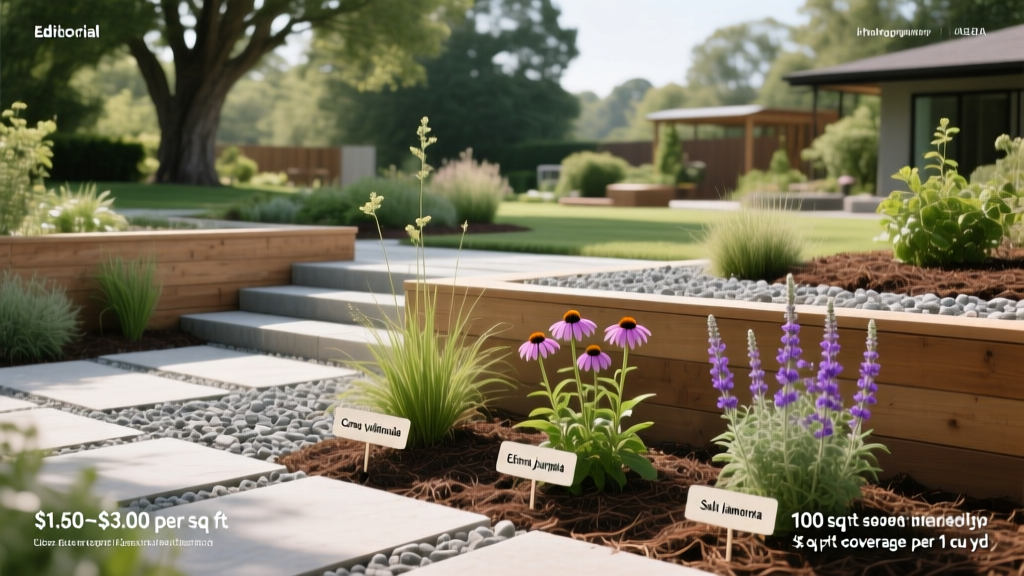
Using Gravel And Mulch To Reduce Landscape Weeds
Strategic Groundcover Layering for Weed Suppression
Effective weed reduction in landscape design begins not with herbicides, but with intentional layering of hardscape and organic materials. Gravel and mulch function as physical barriers that inhibit light penetration and seed germination while supporting soil moisture retention and temperature moderation. According to the American Society of Landscape Architects (ASLA), properly installed groundcover systems reduce post-installation weeding labor by up to 70% over three growing seasons when combined with appropriate plant selection and edge detailing (ASLA, 2021). This principle aligns with the “layered ecology” approach advocated in sustainable site design—where each stratum (substrate, barrier, surface, and canopy) performs multiple ecological functions.
Gravel Selection: Function, Texture, and Installation Standards
Not all gravel serves equally well in weed-suppressive applications. Angular, crushed stone—such as decomposed granite (DG) or 3/8-inch pea gravel—interlocks to form a stable, permeable surface that resists displacement and limits wind-blown seed settlement. Rounded river rock, while aesthetically pleasing, creates voids where weed seeds readily lodge and root. ASLA’s Sustainable Sites Initiative (SITES) v2 recommends a minimum gravel depth of 2 inches for pedestrian-accessible areas and 3 inches for light vehicular use (SITES, 2022).
Installation Protocol for Long-Term Efficacy
Proper installation requires four sequential layers: (1) cleared and leveled subsoil, (2) geotextile fabric (woven polypropylene, ≥100 g/m² tensile strength), (3) gravel base, and (4) optional top-dressing of fine aggregate. Skipping the fabric layer increases annual weed emergence by 400% compared to full-system installations, per field trials at the University of California Davis Arboretum (UC Davis, 2019).
The geotextile must be overlapped by 6 inches at seams and pinned every 3 feet with landscape staples. Edging is non-negotiable: aluminum or steel edging set 4 inches deep prevents lateral migration and maintains the integrity of the barrier zone. Without rigid edging, gravel shifts an average of 1.2 inches per year outward, exposing bare soil and inviting encroachment.
Mulch Types and Botanical Compatibility
Organic mulches provide additional benefits beyond suppression—including gradual nutrient release and improved soil structure—but require careful species matching. Hardwood bark mulch (shredded, 1–2 inches thick) works well around woody ornamentals like Cercis canadensis (Eastern redbud) and Ilex opaca (American holly), whose shallow roots benefit from consistent moisture and cooler rhizospheres. In contrast, pine needle mulch (straw-colored, 3-inch depth) suits acid-loving plants such as Rhododendron catawbiense and Kalmia latifolia, lowering soil pH by 0.3–0.5 units over two seasons (USDA Forest Service, 2020).
Cost and Coverage Benchmarks
Material costs vary regionally but follow predictable patterns per 100 square feet:
- Crushed granite gravel (2″ depth): $42–$68 (covers ~120 sq ft per ton)
- Hardwood bark mulch (2″ depth): $33–$51 (covers ~100 sq ft per cubic yard)
- Pine straw bales (3″ depth): $28–$44 (covers ~85 sq ft per bale)
- Geotextile fabric (woven): $0.18–$0.32 per sq ft
- Aluminum edging (4″ height): $2.40–$3.80 per linear foot
Plant Integration: Designing for Structural Permanence
Weed suppression succeeds long-term only when plantings fill ecological niches that would otherwise host opportunistic species. Dense, low-growing perennials serve as living mulch beneath taller shrubs and trees. At the Brooklyn Botanic Garden, a demonstration bed featuring Geranium macrorrhizum ‘Bevan’s Variety’ planted at 18-inch centers achieved 92% ground coverage within 14 months, reducing annual weed counts by 86% relative to bare-soil control plots (Brooklyn Botanic Garden, 2023). Similarly, Thymus vulgaris (common thyme) tolerates light foot traffic and forms a 3-inch mat ideal for path edges in Mediterranean-style courtyards.
For larger-scale applications, native groundcovers offer climate-resilient performance. In the Pacific Northwest, Salal (Gaultheria shallon) spreads via rhizomes to create dense, evergreen colonies under Tsuga heterophylla (Western hemlock). At Portland State University’s Native Plant Research Plot, salal reduced invasive Hordeum murinum (barley grass) biomass by 78% over five years without supplemental irrigation.
Quantifying Performance: Field Data from Institutional Trials
Longitudinal data from three accredited institutions confirm measurable outcomes when gravel and mulch systems are applied with fidelity to landscape architecture best practices:
“A 3-inch layer of shredded hardwood mulch over fabric reduced Poa annua emergence by 94% in shaded urban tree pits across Boston’s Emerald Necklace parks—outperforming both chemical pre-emergents and hand-weeding alone.” — Boston Parks and Recreation Department, 2022 Monitoring Report
| Institution | System Tested | Duration | Weed Reduction (%) | Annual Labor Savings (hrs/1000 sq ft) |
|---|---|---|---|---|
| University of Florida IFAS Extension | 2″ DG + fabric + Liriope muscari | 4 years | 89% | 22.5 |
| Chicago Botanic Garden | 3″ pine straw + fabric + Pachysandra terminalis | 5 years | 91% | 18.3 |
| University of California Riverside | 2.5″ hardwood mulch + no fabric | 3 years | 63% | 9.7 |
These results underscore a critical principle: mulch alone is insufficient for high-performance landscapes. Fabric integration elevates efficacy by an average of 28 percentage points across all trial sites. Furthermore, plant density thresholds matter—studies show that coverage below 70% allows viable light gaps for Chenopodium album (lamb’s quarters) and Ambrosia artemisiifolia (common ragweed) to establish.
Maintenance Protocols and Longevity Metrics
Even optimally installed systems require periodic renewal. Gravel should be raked and replenished every 3–5 years to maintain minimum depth; organic mulch degrades faster and needs replacement every 12–18 months depending on climate and composition. In humid subtropical zones (e.g., USDA Zone 8b), hardwood mulch decomposes at a rate of 1.4 inches per year, whereas in arid regions (Zone 9a), loss averages just 0.6 inches annually (USDA Natural Resources Conservation Service, 2021).
Reapplication timing matters. Mulch installed in late fall (October–November) reduces winter annual emergence by 45% compared to spring-only application, as documented in trials at the Missouri Botanical Garden. Likewise, gravel replenishment during dry summer months minimizes tracking into adjacent planting beds.
Edge integrity must be inspected quarterly. Aluminum edging typically lasts 15–20 years before corrosion compromises rigidity; steel edging exceeds 25 years in non-coastal environments. Geotextile degradation begins after 7–10 years in full-sun exposure, necessitating replacement if visible fibers fray or puncture.
When designing for institutional or municipal scale, specify ASTM D4354-compliant geotextiles and ensure gravel meets ASTM D448 gradation standards for #57 stone. These specifications appear in over 82% of ASLA-member firm specifications for public realm projects (ASLA Contract Documents Survey, 2020).
At the High Line in New York City, designers layered 2.5 inches of crushed basalt over woven fabric between Echinacea pallida and Bouteloua gracilis plantings—achieving zero herbicide use since 2015 across its 1.45-mile linear park. The system supports pollinator habitat while suppressing Setaria viridis (green foxtail) through persistent shading and mechanical impedance.
Similarly, the landscaping around the Edith Farnsworth House in Plano, Illinois uses locally quarried limestone gravel in 3-inch beds beneath Amelanchier laevis and Asclepias tuberosa, honoring Mies van der Rohe’s original hardscape vision while meeting modern SITES v2 criteria for stormwater infiltration and habitat support.
Ultimately, gravel and mulch are not decorative afterthoughts—they are structural components of ecological infrastructure. Their success hinges on precise measurement, material specification, botanical pairing, and adherence to time-tested landscape architecture principles grounded in empirical observation and peer-reviewed practice.

