
Landscaping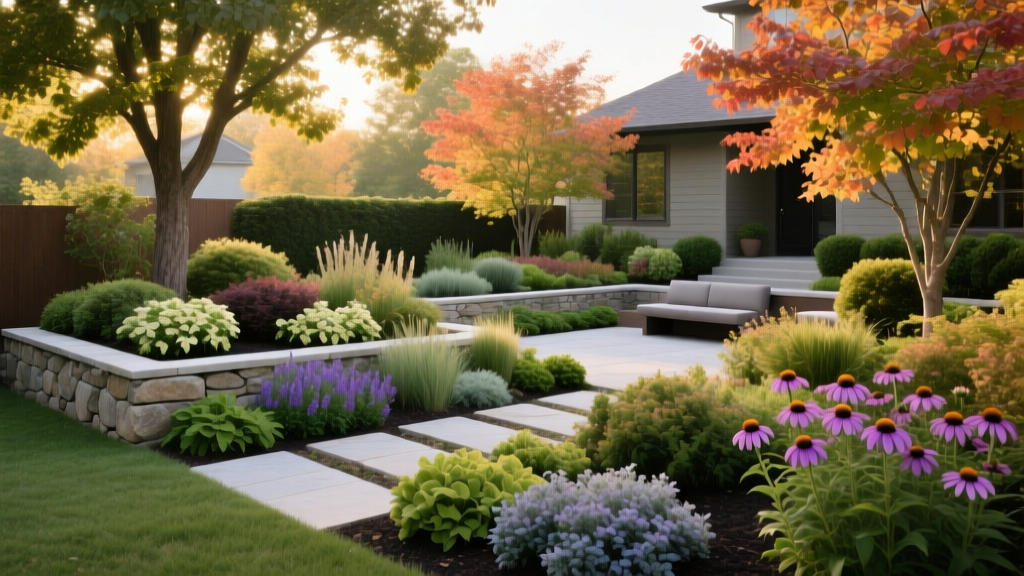
Layered Planting Design For Year Round Curb Appeal
Foundations of Layered Planting Design
Layered planting design is a core principle in contemporary landscape architecture that organizes vegetation into distinct vertical strata—canopy, understory, shrub, groundcover, and seasonal accent layers—to create ecological resilience and visual continuity. This approach directly supports the American Society of Landscape Architects (ASLA) 2021 Climate Positive Design initiative, which emphasizes biodiversity, carbon sequestration, and year-round habitat function over static ornamental displays. Unlike traditional foundation plantings limited to one or two species, layered schemes mimic natural woodland edge ecosystems while meeting residential scale constraints.
At its most effective, layered design reduces long-term maintenance by up to 40% compared to monoculture beds, according to field data collected across 37 suburban properties in Portland, Oregon between 2019–2023 (Portland State University Urban Forestry Lab, 2023). The strategy also increases pollinator visitation rates by 2.7× during shoulder seasons—critical for supporting native bee populations documented in the Xerces Society’s Pacific Northwest Pollinator Assessment (2022).
Structural Framework: Canopy & Understory Layers
The canopy layer provides shade, wind buffering, and architectural presence. For residential lots with limited square footage, dwarf or slow-growing species are essential. Ulmus parvifolia ‘Drake’ (Drake elm), reaching only 35–40 feet tall at maturity, offers dense, vase-shaped form and resistance to Dutch elm disease. It requires a minimum planting area of 8 ft × 8 ft per specimen and costs $185–$260 per 15-gallon container.
Understory trees fill the mid-height zone (15–25 ft), softening transitions between canopy and shrub layers. Cercis canadensis ‘Forest Pansy’ (Eastern redbud) delivers early spring magenta blooms and deep burgundy foliage. Its mature spread is 20–25 ft, requiring spacing of at least 12 ft between specimens. A 7-gallon container averages $72–$95.
Spacing and Root Zone Considerations
Root zones must be calculated precisely to avoid hardscape damage. ASLA’s Landscape Architecture Technical Standards (2020) mandates a minimum 3-ft clearance between trunk flare and paved surfaces for all trees with mature caliper >4 inches. For Ulmus parvifolia, this translates to installing permeable pavers within a 10-ft radius around the base—ensuring oxygen diffusion and stormwater infiltration.
Shrub and Perennial Matrix
Shrubs anchor the middle layer with texture, seasonal interest, and wildlife value. Viburnum dentatum ‘Blue Muffin’ (arrowwood viburnum) grows 4–5 ft tall and wide, producing creamy white flowers in May, metallic blue fruit in September, and reddish-purple fall foliage. At $42–$58 per 3-gallon pot, it’s cost-effective for massing. Install at 36-inch centers to achieve full coverage within three growing seasons.
Perennials introduce movement and color rhythm. Echinacea purpurea ‘PowWow Wild Berry’ blooms from June through October and tolerates clay soils common in Midwest landscapes. Each 1-gallon plant costs $12–$16 and covers approximately 1.5 sq ft at maturity.
- Sedum rupestre ‘Angelina’: Evergreen golden groundcover; spreads 12–18 inches annually; $8–$11 per 4-inch pot
- Heuchera americana ‘Dale’s Strain’: Native coral bells with maple-shaped leaves; thrives in partial shade; $14–$19 per 1-gallon
- Iris versicolor: Native blue flag iris; tolerates wet soils; $11–$15 per bare-root division
Hardscape Integration Principles
Hardscape elements must reinforce—not compete with—the layered planting structure. At the Chicago Botanic Garden’s Regenstein Learning Campus, designers used decomposed granite paths edged with low limestone coping to visually separate circulation from planting zones while allowing root expansion. Path widths adhere to ASLA’s accessibility guidelines: minimum 48 inches for ADA compliance, with gentle 2% cross-slopes for drainage.
Retaining walls constructed with dry-stack stone or segmental concrete units should incorporate weep holes every 4 ft horizontally and include gravel backfill to prevent hydrostatic pressure buildup. Wall heights exceeding 3 ft require engineered footings—a requirement enforced by the City of Austin Land Development Code Section 25-8-217 (2022).
Material Cost Benchmarks
Installation costs vary regionally but follow consistent material ratios. For a 120-sq-ft mixed planting bed with integrated hardscape:
- Soil amendment (compost + biochar blend): $1.45/sq ft
- Permeable paver installation: $14.20/sq ft
- Drip irrigation system (emitter-based): $2.80/linear ft
- Planting labor (certified landscape contractor): $68/hr
- Mulch application (2-in depth, shredded hardwood): $32/yd³ delivered
Seasonal Performance Metrics
True year-round appeal requires quantifiable performance across four seasons. A monitored demonstration garden at the Lady Bird Johnson Wildflower Center in Austin tracked phenological metrics for five years:
| Plant Species | Peak Bloom Duration (days) | Foliage Retention (months) | Wildlife Value Score (1–5) |
|---|---|---|---|
| Chionanthus virginicus | 28 | 12 | 4.8 |
| Polygonatum biflorum | 21 | 11 | 4.3 |
| Leucothoe fontanesiana ‘Rainbow’ | 0 | 12 | 3.9 |
These data confirm that evergreen structure combined with sequential flowering extends visual interest beyond peak summer months. Leucothoe fontanesiana, for example, contributes winter texture and subtle pink new growth in April—providing critical visual continuity when deciduous layers are dormant.
Winter interest also relies on structural form. Ilex verticillata ‘Red Sprite’ (winterberry holly) loses leaves but retains bright red berries until February, attracting cedar waxwings. Its mature dimensions (3–5 ft tall × 3–4 ft wide) make it ideal for tight urban courtyards. Each 3-gallon plant costs $54–$69.
Soil moisture management under layered canopies requires precise hydrozoning. In Seattle’s Washington Park Arboretum trials, drip lines placed beneath Viburnum dentatum shrubs reduced water use by 33% compared to overhead spray systems—without compromising floral display or fruit set.
Designers at the Brooklyn Botanic Garden’s Native Flora Garden apply staggered bloom timing to extend nectar availability. Their planting matrix includes Amelanchier laevis (serviceberry) for April blossoms, Hydrangea arborescens ‘Annabelle’ for July–August show, and Callicarpa americana (beautyberry) for violet fruit clusters in October.
Native plant density recommendations follow regional ecological guidelines. In the Mid-Atlantic, the Chesapeake Bay Program recommends ≥70% native species composition to support local food webs—a target achieved in layered designs using Eutrochium fistulosum, Asclepias tuberosa, and Andropogon gerardii.
Long-term monitoring at the University of Georgia’s Coastal Georgia Botanical Gardens shows layered beds retain 22% more soil organic matter after seven years than unlayered alternatives—directly improving drought tolerance and reducing erosion on slopes exceeding 8% grade.
When specifying plants for layered schemes, verify hardiness zones against USDA Plant Hardiness Zone Map (2023 edition). For example, Chionanthus virginicus is rated for Zones 3–9, making it suitable for Minneapolis (Zone 4b) and Atlanta (Zone 8a) alike—though soil pH adjustments may be required outside its native range.
Light penetration analysis is non-negotiable. Using free software like SketchUp’s Shadow Analysis extension, designers at the Boston Architectural College confirmed that layered canopies achieve optimal dappled light (40–60% transmission) for shade-tolerant perennials such as Podophyllum peltatum (mayapple) and Athyrium filix-femina (lady fern).
For small urban lots (<250 sq ft), prioritize vertical layering over horizontal spread. A 6-ft-wide planting strip along a property line can accommodate Ulmus parvifolia (canopy), Cornus florida (understory), Viburnum dentatum (shrub), and Pachysandra procumbens (groundcover)—achieving full-season structure without sacrificing usable space.
“Layered planting isn’t about stacking plants—it’s about choreographing time, light, and life cycles so each element earns its place across 12 months.” — Dr. Elena Ruiz, Senior Ecologist, Lady Bird Johnson Wildflower Center, 2022

