
Landscaping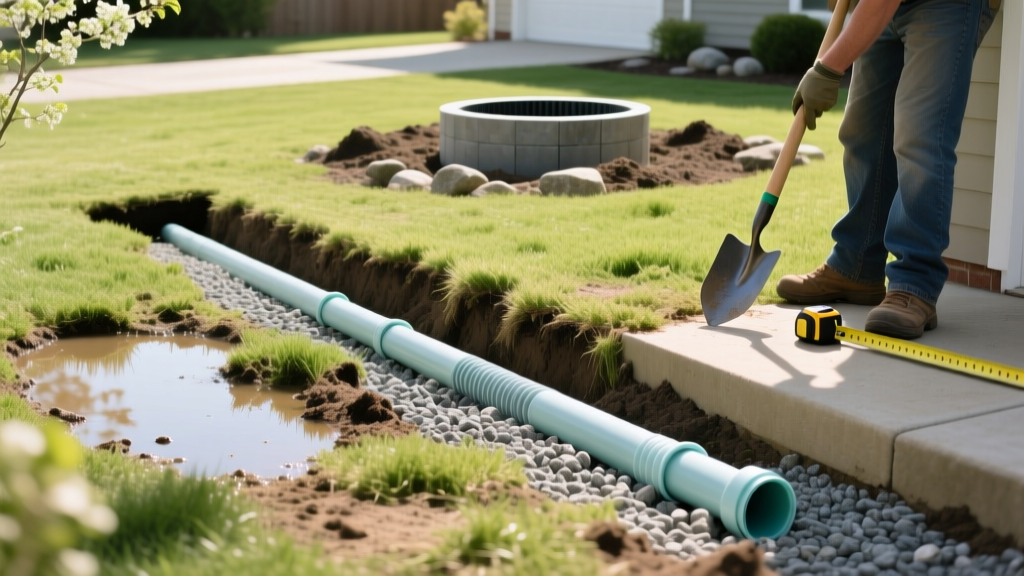
Diagnose and Fix Yard Drainage Problems: A Complete Guide
Robert HayesPublished
The Hidden Dangers of Poor Yard Drainage
Standing water in your yard is more than just a cosmetic nuisance or a breeding ground for mosquitoes; it is a critical threat to your property's structural integrity and the health of your landscape. When water fails to percolate through the soil or run off appropriately, it creates hydrostatic pressure against your home's foundation. Over time, this pressure can lead to cracked basement walls, flooded crawl spaces, and severe soil erosion. Furthermore, your carefully curated garden beds and turfgrass can suffer from root rot, fungal diseases, and nutrient leaching due to prolonged saturation. Diagnosing the exact cause of your drainage issues is the vital first step before investing time and money into hardscaping or subsurface drainage solutions.
Step 1: Diagnosing the Root Cause of Standing Water
Before purchasing pipes or digging trenches, you must understand how water behaves on your property. Water always follows the path of least resistance, and poor drainage is usually the result of three main culprits: improper grading, compacted clay soil, or a high water table. Start with a visual inspection during a heavy rainstorm. Note where water pools, how it flows from your downspouts, and whether it migrates toward or away from your foundation.
The Soil Percolation Test
To determine your soil's natural drainage capacity, conduct a simple percolation test. Dig a hole approximately 12 inches wide and 12 inches deep in the problem area. Fill the hole with water and let it drain completely to saturate the surrounding soil. Refill the hole to the top and place a ruler in the center. Measure the water level drop after one hour. If the water level drops less than 1 inch per hour, you have poorly draining soil, typically indicative of heavy clay composition. If it drops between 1 and 6 inches, your soil has moderate drainage. Anything over 6 inches indicates sandy, fast-draining soil. For yards with heavy clay, surface grading and subsurface drainage systems are mandatory.
Step 2: Comparing Drainage Solutions
Once you have identified the source and soil type, you can select the most appropriate drainage intervention. Below is a comparison chart of the most effective landscaping drainage solutions, including estimated DIY costs and maintenance requirements.
| Drainage Solution | Best Application | Average DIY Cost | Maintenance Level |
|---|---|---|---|
| French Drain | Subsurface water, soggy lawns, retaining wall weeping | $20 - $35 per linear ft | Low (flush annually) |
| Dry Well | Downspout runoff, low-lying areas without storm sewers | $150 - $400 per unit | Medium (clear debris) |
| Surface Swale | Surface runoff, gently sloped yards, large properties | $5 - $15 per linear ft | High (mow, re-seed) |
| Catch Basin | Localized pooling, hardscapes, driveway runoff | $100 - $250 per basin | High (clear leaves) |
Step 3: Installing a French Drain System
A French drain is a subsurface drainage system designed to intercept groundwater and channel it away from vulnerable areas. It consists of a perforated pipe surrounded by washed gravel and wrapped in geotextile fabric. This system is highly effective for relieving hydrostatic pressure and drying out chronically soggy lawns.
Materials and Tools Required
- 4-inch perforated PVC pipe (e.g., NDS Speed-D PVC) or rigid corrugated pipe
- Woven geotextile landscape fabric (e.g., Mirafi 140N) to prevent soil infiltration
- 3/4-inch washed crushed stone (avoid pea gravel, which shifts and lacks structural stability)
- Shovel, trenching spade, wheelbarrow, and a line level
- PVC primer and cement, end caps, and pop-up emitters
Excavation and Grading
Always call 811 a few days before digging to have underground utilities marked. Plan your trench route so that it slopes continuously toward a safe discharge point, such as a municipal storm drain, a dry well, or a daylighted pop-up emitter. The trench should be at least 12 inches wide and 18 to 24 inches deep. A minimum slope of 1% (a 1/8-inch drop per linear foot) is required for gravity to move the water effectively. Use a string line and a line level to verify your grade before proceeding.
Layering the System
Line the excavated trench with the geotextile fabric, allowing excess fabric to drape over the edges. Add a 2-to-3-inch base layer of washed crushed stone. Lay the perforated pipe on top of the gravel with the perforations facing downward. This counterintuitive placement forces water to rise through the gravel bed before entering the pipe, preventing sediment from washing directly into the pipe. Cover the pipe with another 3 to 5 inches of gravel, then fold the excess landscape fabric over the top to create a protective envelope. Finally, backfill the remaining trench with native topsoil and sod.
Step 4: Correcting Foundation Grading
Even the best French drain will fail if surface grading directs water straight into the system or against your home. The soil immediately surrounding your foundation must be pitched away from the house. According to the University of Minnesota Extension, proper grading is the first and most critical line of defense in yard drainage. They recommend that the ground should slope away from the foundation at a minimum grade of 1/4 inch per foot for at least 6 to 10 feet. This prevents hydrostatic pressure buildup against basement walls and keeps water from seeping into crawl spaces. To fix negative grading, add compactable fill dirt (not loose topsoil or mulch) against the foundation, tamping it down every few inches to achieve the proper slope, and then cap it with topsoil and grass seed.
Step 5: Managing Downspout Runoff
Roof runoff is a massive contributor to localized yard flooding. A standard 1,000-square-foot roof can shed over 600 gallons of water during a one-inch rainstorm. If your downspouts simply dump water at the foundation, you are overwhelming your soil's percolation rate. Extend all downspouts at least 10 feet away from the house using solid PVC or corrugated extensions. For a cleaner aesthetic and better functionality, tie these extensions directly into a solid-walled underground pipe that bypasses the yard entirely and routes the water to a dry well or storm sewer.
Alternative Solutions: Dry Wells and Rain Gardens
If your property lacks a suitable daylight discharge point for a French drain, a dry well is an excellent alternative. A dry well is an underground chamber, typically made of heavy-duty plastic or lined with gravel, that collects stormwater and allows it to slowly percolate into the surrounding subsoil. Install a dry well at least 10 feet away from your foundation in an area with moderately draining soil. For a more sustainable, eco-friendly approach, consider constructing a rain garden. By planting deep-rooted, water-tolerant native species like Swamp Milkweed, Blue Flag Iris, and Joe-Pye Weed in a shallow depression, you create a natural bio-retention area that filters pollutants and absorbs excess runoff.
Maintenance and Long-Term Care
Drainage systems are not entirely install-and-forget. To ensure longevity, perform annual maintenance. Flush French drains with a garden hose or pressure washer on a low setting to clear out silt and mineral buildup. Inspect catch basin grates and remove autumn leaves and debris that could cause surface damming. Monitor your swales and rain gardens to ensure that soil erosion hasn't altered the intended flow path, and re-seed bare patches in the spring to maintain the structural integrity of the soil via root networks.
Conclusion
Diagnosing and fixing yard drainage problems requires a methodical approach, combining careful observation, soil testing, and precise hardscaping techniques. By understanding the unique topography of your landscape and implementing targeted solutions like French drains, dry wells, and proper foundation grading, you can protect your home's foundation and cultivate a healthier, more resilient outdoor living space. Addressing these issues proactively not only saves you from exorbitant structural repair costs down the line but also transforms a muddy, unusable yard into a vibrant, functional landscape.

