Tree Care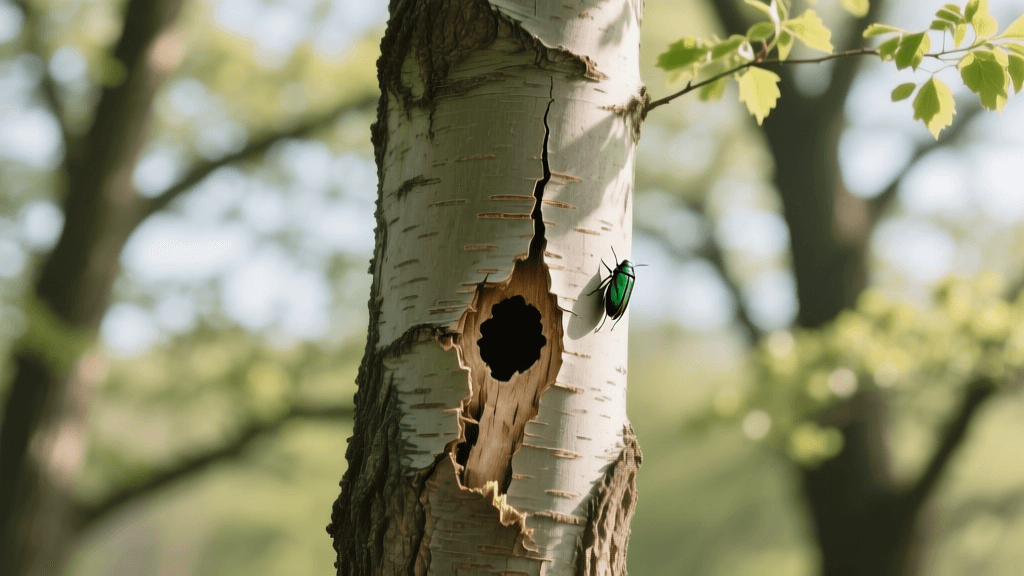
How to Diagnose and Treat Emerald Ash Borer Infestations
The Threat of the Emerald Ash Borer (EAB)
The Emerald Ash Borer (Agrilus planipennis) is a highly destructive, invasive wood-boring beetle native to Asia. Since its accidental introduction to North America in the early 2000s, it has killed hundreds of millions of ash trees (Fraxinus species). The larvae of this beetle feed on the inner bark (phloem and cambium) of ash trees, effectively girdling the tree and disrupting its ability to transport water and nutrients. For homeowners and property managers, early problem diagnosis and proactive troubleshooting are the only ways to save mature ash trees from inevitable death. According to the Emerald Ash Borer Information Network, untreated ash trees in infested areas have a mortality rate approaching 100% within three to five years of initial colonization.
Diagnosing an EAB Infestation: Key Symptoms
Troubleshooting tree health issues requires a keen eye, as EAB symptoms often mimic other environmental stresses like drought or soil compaction. To accurately diagnose an EAB infestation, look for the following primary indicators:
- Canopy Thinning and Dieback: The upper third of the tree crown is typically the first to show stress. Leaves become sparse, chlorotic (yellowing), and undersized.
- Epicormic Sprouting: Also known as "suckering," the tree will attempt to compensate for canopy loss by pushing out vigorous new shoots along the lower trunk and root flare.
- D-Shaped Exit Holes: Adult beetles emerge in late spring, leaving distinct, flat-sided "D-shaped" exit holes in the bark. These holes are small, measuring exactly 1/8 inch (3-4 mm) across.
- Serpentine Galleries: If you peel back the bark or if woodpeckers have been foraging, you will reveal S-shaped, winding larval galleries packed with fine, sawdust-like frass.
- Woodpecker Flecking: Woodpeckers are primary predators of EAB larvae. Heavy woodpecker feeding strips away the outer bark, leaving light-colored, "flecked" patches on the trunk.
EAB Infestation Staging: Is Your Tree Salvageable?
Before investing in chemical treatments, you must assess the tree's current health. Insecticides are preventive and early-intervention tools; they cannot resurrect dead tissue. Arborists use a crown dieback percentage to stage the infestation and determine the viability of treatment.
| Infestation Stage | Crown Dieback | Visible Symptoms | Treatment Viability |
|---|---|---|---|
| Stage 1 | < 10% | Canopy appears mostly healthy; minor woodpecker flecking. | Excellent. Highly recommended to begin treatments. |
| Stage 2 | 10% - 30% | Noticeable thinning at the top; epicormic shoots appearing. | Good. Tree can recover with aggressive trunk injection. |
| Stage 3 | 30% - 50% | Severe canopy loss; extensive bark splitting and exit holes. | Marginal. Treatment may fail; removal often recommended. |
| Stage 4 | > 50% | Tree is mostly dead; structural failure risk is high. | Poor. Do not treat. Schedule immediate removal. |
Troubleshooting Treatment Options
Once you have confirmed an EAB presence and determined the tree is in Stage 1 or 2, you must select the appropriate chemical control method. Research from Purdue University Extension highlights that systemic insecticides are the only proven method for protecting ash trees. The choice of active ingredient depends on the tree's size, the severity of the infestation, and your budget.
Comparison of Systemic Insecticides
| Active Ingredient | Application Method | Best Use Case | Residual Life | Est. Cost (per inch DBH) |
|---|---|---|---|---|
| Imidacloprid | Soil Drench / Injection | Small trees (< 22" DBH); preventative. | 1 Year | $5 - $10 |
| Emamectin Benzoate | Trunk Injection | Large trees; curative for Stage 2 dieback. | 2 - 3 Years | $15 - $25 |
| Dinotefuran | Basal Bark Spray | Rapid uptake needed; high pest pressure. | 1 Year | $10 - $15 |
Step-by-Step Trunk Injection Guide (Emamectin Benzoate)
For mature landscape ash trees, trunk injection using Emamectin benzoate (commonly sold under the professional brand name TREE-äge) is the gold standard. It provides multi-year protection and minimizes environmental exposure. Here is how to execute a proper trunk injection:
- Measure the DBH: Measure the Diameter at Breast Height (4.5 feet above the ground). Use a diameter tape or measure the circumference and divide by 3.14. A tree with a 15-inch DBH will require a specific dosage based on the product label (typically 0.2 to 0.4 grams of active ingredient per inch of DBH).
- Prepare the Drill: Use a cordless drill with a specialized arborist injection bit (usually 5/32 inch or 11/64 inch, depending on the injection plug system). Drill holes at a slight upward angle into the xylem (sapwood), about 1 to 1.5 inches deep.
- Spacing the Ports: Space the injection ports evenly around the base of the trunk, approximately 4 to 6 inches apart horizontally. For a 15-inch DBH tree, you will need roughly 8 to 10 injection sites.
- Inject the Product: Insert the proprietary plugs or capsules into the drilled holes. Attach the pressurized delivery system or tap the capsules according to the manufacturer's instructions. The tree's transpiration pull will draw the insecticide into the canopy within 2 to 4 weeks.
- Seal the Holes (Optional but Recommended): While modern plugs seal themselves, some arborists apply a biodegradable wound dressing over the drill sites to prevent secondary fungal infections.
Pro-Troubleshooting Tip: Never inject a tree that is experiencing severe drought stress. If the soil is dry, the tree's transpiration rate will be too low to pull the insecticide into the canopy. Deeply water the root zone 48 hours before scheduling a trunk injection to ensure optimal vascular uptake.
Timing and Environmental Considerations
Timing is everything when troubleshooting EAB treatments. Systemic insecticides must be applied when the tree is actively transpiring but before the EAB larval population explodes. The ideal application window is mid-May through late June, after the ash tree has fully leafed out but before peak summer heat induces dormancy or drought stress.
From an environmental standpoint, avoid soil drenches containing Imidacloprid if your ash tree is located near waterways, or if the tree is interplanted with flowering species that attract pollinators. Trunk injections bypass the soil ecosystem entirely, making them the safest choice for protecting local bee populations and preventing groundwater contamination.
When to Remove vs. When to Treat
Diagnosing the problem is only half the battle; economic troubleshooting is the other. You must weigh the long-term cost of treatment against the immediate cost of removal.
- Treatment Costs: Professional trunk injection averages $15 to $25 per inch of DBH. A 20-inch ash tree will cost roughly $400 per treatment. Because Emamectin benzoate lasts 2 to 3 years, the annualized cost is about $130 to $200 per year.
- Removal Costs: Removing a mature, 60-foot ash tree in a residential setting requires heavy rigging and crane work, typically costing between $1,200 and $2,500. Stump grinding adds another $250 to $500.
- Replacement Costs: Planting a new 15-gallon shade tree and maintaining it through its establishment phase will cost upwards of $600.
If your tree is a high-value landscape asset providing essential shade, structural integrity, and aesthetic appeal, investing in a biennial injection schedule is vastly more economical than removal and replacement. However, if the tree is in Stage 3 or 4 dieback, or if it poses a hazard to your home or driveway, cease troubleshooting and hire an ISA-Certified Arborist for safe removal immediately.