Lawn Care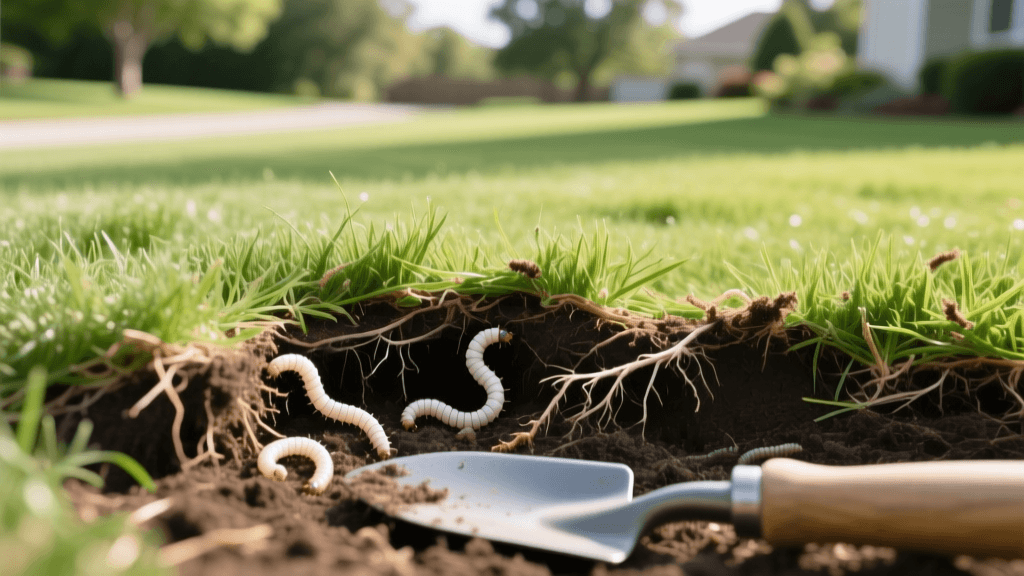
How to Diagnose and Eradicate Lawn Grub Infestations
Understanding the White Grub Threat
White grubs are the C-shaped, cream-colored larvae of various scarab beetles, including Japanese beetles, European chafers, June bugs, and Asiatic garden beetles. These subterranean pests feed aggressively on the roots of turfgrass, severing the plant's ability to uptake water and nutrients. Left unchecked, a severe grub infestation can destroy an entire lawn in a matter of weeks, leaving behind rolling carpets of dead, brown grass that detach from the soil as easily as a loose rug.
Diagnosing a Grub Infestation: Signs and Symptoms
Before reaching for chemical treatments, you must confirm that grubs are the actual culprits. Many lawn issues, such as drought stress, fungal diseases like brown patch, or shallow watering, can mimic grub damage.
Visual and Tactile Clues
- Spongy Turf: Walk across your lawn. If the ground feels unusually spongy or loose underfoot, grubs may have eaten the root structure anchoring the soil.
- Irregular Brown Patches: Unlike fungal rings, grub damage appears as irregular, expanding brown patches that worsen despite adequate irrigation.
- Animal Activity: Skunks, raccoons, armadillos, and flocks of crows or starlings tearing up your lawn are a massive red flag. These animals are foraging for the protein-rich grubs beneath the surface.
The Tug Test and Sod Peel Method
To definitively diagnose grubs, perform the 'Tug Test.' Grab a handful of brown grass and pull gently. If it rolls up like a carpet with no resistance, the roots are gone.
Next, perform the 'Sod Peel Test' to count the population. Using a sharp spade, cut three sides of a 1-foot by 1-foot square of turf, about 2 to 3 inches deep. Peel back the sod and inspect the soil and root zone. Count the number of C-shaped grubs you find. Replace the sod and water it immediately to save the sample. Repeat this in three different areas of the lawn to get an accurate average.
Grub Damage Thresholds: When to Treat
Not every grub requires eradication. A healthy lawn can tolerate a small number of grubs without showing visible damage. According to turfgrass entomologists at Purdue University and Michigan State University Extension, treatment is only economically and ecologically justified when grub populations exceed specific thresholds.
| Lawn Health Status | Grub Threshold (per sq. ft.) | Recommended Action |
|---|---|---|
| Highly Maintained / Stressed | 5 to 8 grubs | Treat immediately to prevent severe damage |
| Average Health | 8 to 12 grubs | Monitor closely; treat if damage appears |
| Extremely Healthy / Deep Roots | 15+ grubs | Treat only if visible browning occurs |
Curative vs. Preventative Grub Control Strategies
Once you have confirmed an active infestation that exceeds the threshold, you must choose between preventative and curative treatments. The timing of your application dictates the active ingredient you must use.
Preventative Treatments
Preventatives are applied in late spring to early summer (May through July) before grub eggs hatch or when they are newly hatched and highly susceptible.
- Active Ingredients: Chlorantraniliprole (e.g., Scotts GrubEx, Acelepryn) and Imidacloprid (e.g., Bayer Advanced, Merit).
- Pros: Long residual control, safer for the environment, lower toxicity to non-target organisms.
- Cons: Will not kill large, mature grubs in the fall.
Curative Treatments
Curatives are fast-acting 'rescue' treatments used in late summer or early fall (August through October) when grubs are large, actively feeding, and causing visible damage.
- Active Ingredients: Trichlorfon (e.g., Dylox, Bayer 24-Hour Grub Control) and Carbaryl (e.g., Sevin).
- Pros: Kills mature grubs rapidly within 24 to 48 hours.
- Cons: Short residual effect, higher toxicity, requires careful handling.
Organic and Biological Controls
Beneficial nematodes, specifically the Heterorhabditis bacteriophora (Hb) strain, are microscopic worms that hunt and parasitize grubs. They are an excellent organic alternative but require strict soil moisture management and must be applied when soil temperatures are above 60°F.
| Treatment Type | Active Ingredient | Best Application Window | Est. Cost per 1,000 sq. ft. |
|---|---|---|---|
| Preventative | Chlorantraniliprole | April - June | $12.00 - $18.00 |
| Preventative | Imidacloprid | May - July | $8.00 - $14.00 |
| Curative | Trichlorfon | August - October | $10.00 - $15.00 |
| Organic | Hb Nematodes | August - September | $25.00 - $40.00 |
Step-by-Step Application Guide for Maximum Efficacy
The number one reason grub control products fail is improper watering. Grub control granules must be washed off the grass blades and carried down into the thatch and root zone where the grubs are feeding.
- Mow the Lawn: Mow your turf slightly lower than usual and remove any excessive thatch buildup to ensure the product reaches the soil.
- Apply the Product: Use a broadcast or drop spreader calibrated to the manufacturer's specifications. Apply the granules evenly across the affected areas and a 5-foot buffer zone.
- Water Immediately: This is non-negotiable. Apply 0.25 to 0.5 inches of water immediately after application. Use a rain gauge or empty tuna cans placed around the yard to measure the water output. If you do not water the product in, the sun will degrade the active ingredient, and the grubs will never consume it.
- Keep Off the Grass: Allow the lawn to dry completely before allowing children or pets to re-enter the treated area.
Repairing Severe Grub Damage
If grubs have already destroyed sections of your lawn, killing the pests is only half the battle. You must rebuild the turf.
- Remove Dead Turf: Use a heavy-duty bow rake to vigorously rake out the dead, rootless grass and debris.
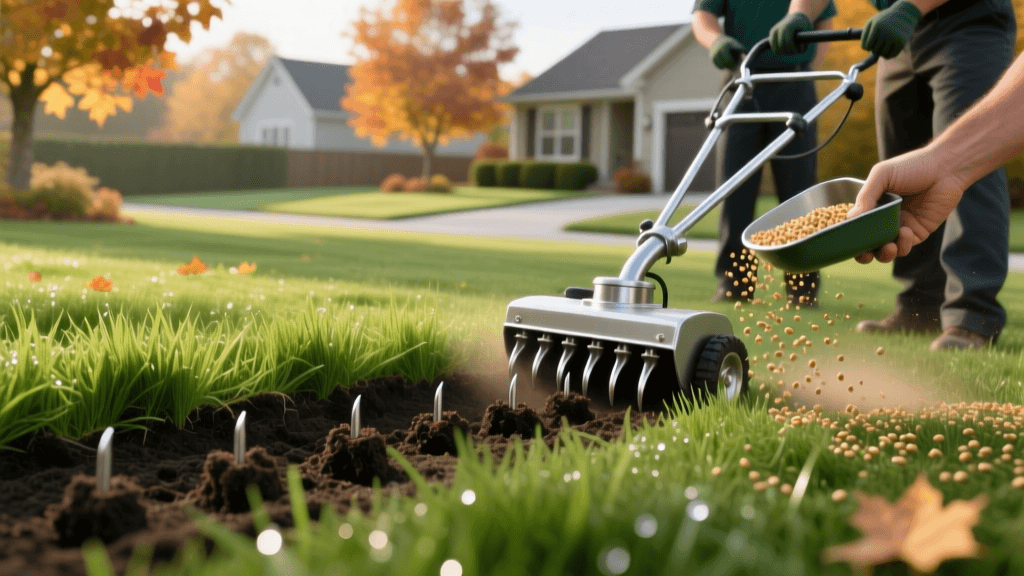
- Aerate and Topdress: Core aerate the compacted soil and apply a thin layer (1/4 inch) of compost to improve soil biology and seed-to-soil contact.
- Overseed: Select a high-quality grass seed that matches your existing lawn. For cool-season lawns, Tall Fescue or Kentucky Bluegrass blends offer good resilience. Spread seed at the recommended overseeding rate (e.g., 3-5 lbs per 1,000 sq ft for Tall Fescue).
- Starter Fertilizer: Apply a starter fertilizer high in phosphorus (such as a 10-18-10 blend) to promote rapid root development in the new seedlings.
- Maintain Moisture: Water the newly seeded areas lightly 2 to 3 times a day for the first two weeks to keep the top inch of soil consistently moist until germination occurs.
Expert Citations and Lawn Care Best Practices
Effective lawn care relies on science-backed data. The diagnostic thresholds and chemical efficacies outlined in this guide are supported by extensive research from leading agricultural institutions. According to the Michigan State University Extension's turfgrass entomology department, preventative applications of Chlorantraniliprole provide exceptional control of white grubs while posing minimal risk to pollinators and earthworms. Furthermore, Purdue University Extension emphasizes that curative applications of Trichlorfon must be heavily irrigated to penetrate the soil profile, noting that surface-level applications yield near-zero mortality rates in third-instar grubs. Always consult your local university extension office for region-specific grub lifecycle timelines, as emergence and hatching windows vary significantly between northern and southern climates.