Tree Care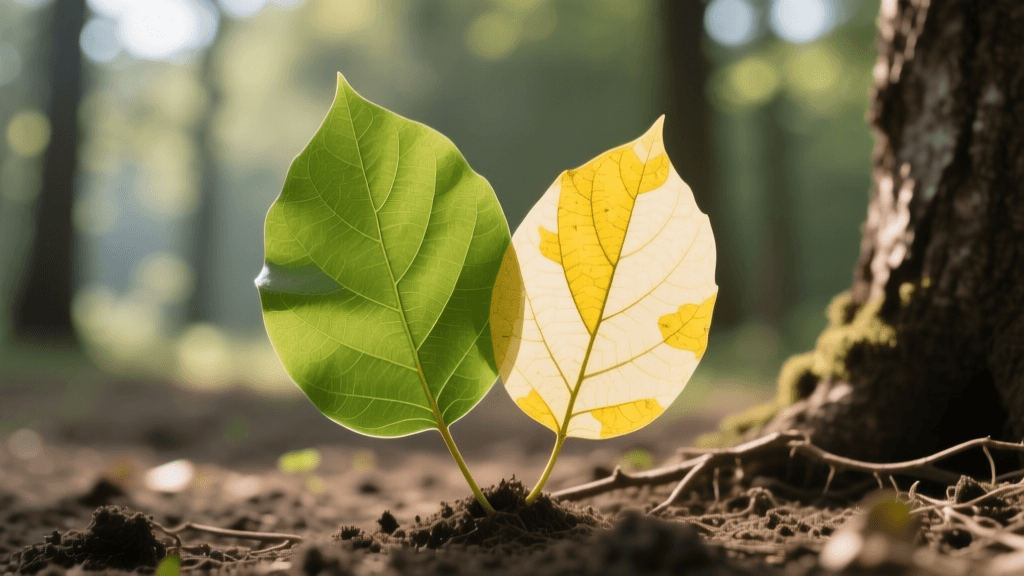
Diagnose and Fix Tree Leaf Chlorosis: A Complete Guide
When a vibrant, green landscape tree suddenly develops pale, yellowing leaves in the middle of the growing season, it is a glaring distress signal. Homeowners often mistake this for a watering issue or a fungal disease, but the culprit is frequently a physiological condition known as chlorosis. Left untreated, severe chlorosis can lead to stunted growth, branch dieback, and eventually the death of the tree. According to the University of Minnesota Extension, chlorosis is one of the most common and destructive nutritional disorders affecting landscape trees in North America, particularly in areas with heavy, alkaline soils.
This comprehensive troubleshooting guide will help you accurately diagnose tree leaf chlorosis, understand the underlying soil chemistry causing the problem, and implement a step-by-step treatment plan to restore your tree's health.
Understanding Interveinal Chlorosis
Chlorosis is defined by a lack of chlorophyll, the pigment responsible for photosynthesis and the green color in leaves. The most common form seen in landscape trees is interveinal chlorosis. This specific pattern manifests as yellowing leaf tissue while the veins remain distinctly green.
This visual symptom is the hallmark of an iron or manganese deficiency. However, the tree is rarely growing in soil that completely lacks iron. Instead, the iron is present but 'locked up' in a chemical form that the tree's roots cannot absorb. Species that are highly susceptible to iron chlorosis include:
- Pin Oak (Quercus palustris)
- Red Maple (Acer rubrum)
- River Birch (Betula nigra)
- Amur Maple (Acer ginnala)
- Eastern White Pine (Pinus strobus)
Diagnostic Table: Is it Chlorosis or Something Else?
Before purchasing treatments, it is critical to confirm that your tree is actually suffering from iron or manganese chlorosis. Misdiagnosing the problem can waste time and money while the tree continues to decline. Use the diagnostic table below to compare symptoms.
| Condition | Visual Symptoms | Primary Cause | Timing of Onset |
|---|---|---|---|
| Iron/Manganese Chlorosis | Yellow leaf tissue with distinct, dark green veins (interveinal). | High soil pH (alkaline) locking up micronutrients. | Early to mid-summer; worsens in hot, dry weather. |
| Nitrogen Deficiency | Uniform pale green or yellowing of the entire leaf, including veins. | Poor soil fertility, excessive leaching from heavy rain. | Early spring or late summer; affects older, lower leaves first. |
| Water Stress (Drought) | Wilting, curling, and browning of leaf margins (scorch). | Insufficient soil moisture or damaged root system. | Mid-to-late summer during dry spells. |
| Fungal Leaf Spot | Distinct brown or black necrotic spots, sometimes with yellow halos. | Pathogenic fungi thriving in wet, humid conditions. | Spring or early summer after prolonged leaf wetness. |
The Science of Soil pH and Nutrient Lockout
To troubleshoot chlorosis effectively, you must understand soil pH. The pH scale measures how acidic or alkaline your soil is, ranging from 0 to 14. A pH of 7.0 is neutral. Most landscape trees prefer a slightly acidic soil pH between 6.0 and 6.5.
When soil pH rises above 7.0 (alkaline), iron and manganese react with calcium and oxygen to form insoluble compounds. The roots simply cannot absorb these solid particles. Furthermore, compacted soils, poor drainage, and excessive phosphorus from heavy lawn fertilization can exacerbate the lockout effect. The Morton Arboretum emphasizes that simply adding more iron fertilizer to alkaline soil without addressing the pH or using a chelate is a futile effort, as the new iron will quickly become locked up as well.
Step-by-Step Treatment Plan for Chlorotic Trees
Once you have confirmed interveinal chlorosis, you must act quickly to replenish the tree's micronutrient reserves. The best approach depends on the size of the tree, the severity of the symptoms, and your budget.
Step 1: Soil Testing
Never guess your soil pH. Purchase a soil test kit from your local university extension office (typically costing $20 to $30). This will provide an exact pH reading and a buffer index, which tells you exactly how much elemental sulfur is required to lower the pH to a target of 6.5.
Step 2: Applying Chelated Iron (The Fast Fix)
Chelates are organic molecules that bind to iron ions, shielding them from reacting with calcium and keeping them soluble in the soil water so roots can absorb them. Not all chelates are created equal. You must read the active ingredient label carefully:
- EDTA Chelates: These are common and inexpensive but only remain stable in soils with a pH below 7.0. If your soil is highly alkaline, EDTA iron will fail.
- EDDHA Chelates: Products containing EDDHA (such as Sequestrene 138) are highly stable even in soils with a pH up to 9.0. This is the gold standard for soil drench applications in alkaline regions.
Application Rate: For soil drenches, apply EDDHA chelated iron in early spring just before bud break. The general rate is 1 to 2 ounces of product per inch of trunk diameter. Dissolve the powder in water and pour it evenly around the tree's drip line, where the feeder roots are most active.
Step 3: Foliar Sprays (For Immediate Relief)
If the tree is in severe distress mid-summer, a foliar spray of ferrous sulfate can green up the leaves within 7 to 10 days. Mix 1 to 2 tablespoons of ferrous sulfate per gallon of water and add a few drops of mild liquid dish soap as a surfactant. Spray the foliage thoroughly in the early morning. Note that this is a temporary band-aid; it only treats the existing leaves and will not carry over to next year's growth.
Step 4: Trunk Injection (For Large, Mature Trees)
For massive oaks or maples where soil drenching is impractical or where paving covers the root zone, professional trunk injection is the most reliable method. An arborist drills small holes into the xylem and injects liquid iron formulations directly into the tree's vascular system. This yields rapid, dramatic greening that lasts for 2 to 3 years. Expect to pay a certified arborist between $15 and $25 per inch of DBH (Diameter at Breast Height) for this service.
Long-Term Soil Amendment Strategy
While chelated iron treats the symptom, lowering the soil pH treats the root cause. To permanently correct alkaline soil, apply elemental sulfur. Soil bacteria oxidize the sulfur into sulfuric acid, slowly lowering the pH.
Because this is a biological process, it takes 6 to 12 months to see a change in pH, and it only affects the top 6 inches of soil. Apply elemental sulfur at a rate of 1 to 2 pounds per 100 square feet of root zone area in the fall. Avoid using aluminum sulfate, as it can lead to toxic aluminum accumulation in the soil, which damages tree roots.
Cultural Practices: Mulching and Watering
Troubleshooting tree health extends beyond chemical applications. Improper mulching and watering routines frequently induce root stress, which limits the tree's ability to uptake whatever nutrients are available.
'One of the most common mistakes homeowners make is volcano mulching. Piling mulch against the trunk smothering the root flare invites rot and girdling roots, severely compounding the stress of a chlorotic tree.' - Colorado State University Extension
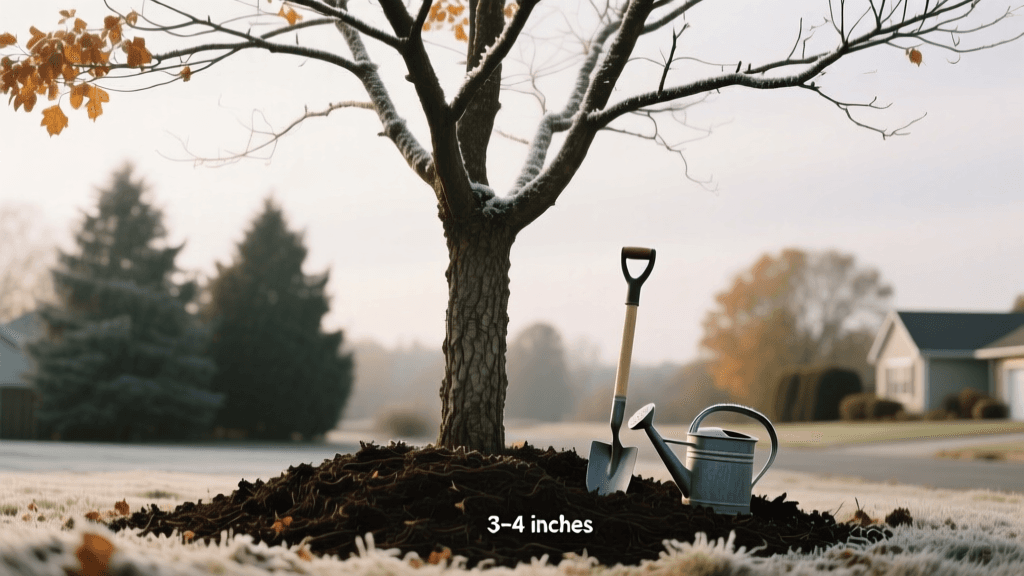
To support a recovering tree, apply a 2-to-4-inch layer of organic wood chip mulch in a wide 'donut' shape around the tree. Keep the mulch at least 3 inches away from the trunk bark. This conserves soil moisture, regulates soil temperature, and slowly adds organic acids to the soil as it decomposes, which naturally aids in lowering the pH over time.
Finally, ensure deep, infrequent watering. Use a soaker hose placed at the drip line and run it for 2 to 3 hours once a week during dry periods. This encourages deep root growth, giving the tree a larger soil volume from which to draw water and chelated nutrients. By combining accurate diagnosis, targeted EDDHA chelate therapy, and long-term sulfur amendments, you can successfully reverse chlorosis and restore your landscape trees to vibrant, photosynthesizing health.