Tree Care
How to Diagnose and Fix Yellowing Tree Leaves Quickly
The Panic of Yellowing Leaves: Understanding Tree Chlorosis
Seeing the vibrant green canopy of your prized oak, maple, or birch tree fade into a sickly yellow is a distressing sight for any homeowner. While seasonal autumn color changes are natural, premature yellowing during the spring and summer growing season is a glaring distress signal. In the arboriculture world, this condition is broadly known as chlorosis. However, simply labeling it as chlorosis is not enough to save your tree. To effectively treat the problem, you must first accurately diagnose the underlying trigger. Is it a micronutrient deficiency, a severe drainage issue, or a hidden root disease?
In this comprehensive diagnostic guide, we will break down the exact visual symptoms of the most common causes of yellowing tree leaves. We will then provide actionable, step-by-step solutions, including specific product recommendations, application measurements, and estimated costs, so you can restore your tree to vibrant health.
Step 1: Diagnosing the Root Cause of Yellow Leaves
Before purchasing any fertilizers or chemical treatments, you must play detective. The pattern of the yellowing, combined with the soil conditions in your yard, will point you toward the correct diagnosis.
Iron Chlorosis vs. Nitrogen Deficiency
The most common culprit in alkaline soils (pH above 7.0) is iron chlorosis. Iron is essential for chlorophyll production, but in high-pH soils, it becomes chemically locked up and unavailable to the tree roots. The hallmark symptom of iron chlorosis is interveinal chlorosis: the leaf tissue turns yellow, but the veins remain distinctly green. This typically starts on the newest growth at the outer edges of the canopy.
Conversely, a nitrogen deficiency causes a uniform, overall yellowing of the leaf, including the veins. Unlike iron chlorosis, nitrogen deficiency usually appears first on the older, interior leaves of the tree, as nitrogen is a mobile nutrient that the tree will relocate to support new growth.
Overwatering, Poor Drainage, and Root Rot
Trees suffocating in waterlogged soil cannot absorb nutrients, leading to yellowing leaves that often look wilted or droopy despite the abundance of moisture. If the yellowing is accompanied by leaf drop, a spongy trunk base, or a foul odor from the soil, you are likely dealing with root rot (such as Phytophthora) caused by chronic overwatering or heavy clay soil compaction.
Symptom Comparison Chart
| Condition | Leaf Pattern | Where it Starts | Primary Trigger |
|---|---|---|---|
| Iron Chlorosis | Interveinal (yellow leaf, green veins) | Newest leaves, outer canopy | High soil pH (alkaline) |
| Manganese Chlorosis | Interveinal, but veins may eventually yellow | Newer leaves | High soil pH, sandy soils |
| Nitrogen Deficiency | Uniform yellowing (including veins) | Older, interior leaves | Poor soil fertility, leaching |
| Root Rot / Waterlogging | Yellowing, wilting, premature leaf drop | Lower canopy, random branches | Poor drainage, compacted clay |
Step 2: Proven Solutions for Iron and Manganese Chlorosis
If your diagnostic points to iron or manganese chlorosis, you have three primary treatment routes. The best choice depends on the size of your tree, your budget, and how quickly you need results.
1. Soil Application of Chelated Iron (Best for Young to Medium Trees)
Chelated iron is iron bound to an organic molecule that prevents it from locking up in alkaline soils. For soils with a pH above 7.3, you must use a chelate containing EDDHA (such as Sequestrene 330 or Sprint 330), as standard EDTA chelates will fail in highly alkaline conditions.
- Application Rate: Mix 1 to 2 ounces of EDDHA chelated iron per inch of trunk diameter (measured at chest height) into a 5-gallon bucket of water.
- How to Apply: Pour the solution in a ring around the tree's drip line (the outer edge of the canopy where the feeder roots are most active). Do not dump it directly against the trunk.
- Timing: Early spring, just before bud break, is the most effective time. A second application can be made in early fall.
- Cost: Approximately $30 to $50 per pound of EDDHA chelate. Treats multiple trees.
2. Trunk Injections and Implants (Best for Large, Mature Trees)
For massive oaks or maples where soil drenching is impractical or ineffective due to extreme soil alkalinity, direct trunk injection is the gold standard. Products containing ferric ammonium citrate or manganese sulfate are injected directly into the tree's xylem.
- DIY vs. Professional: While DIY implant kits (like Mauget capsules) are available for $40 to $60, drilling into a mature tree requires precision to avoid girdling or introducing decay fungi. Hiring a certified arborist is highly recommended.
- Professional Cost: Expect to pay $100 to $250 per tree, depending on trunk diameter and regional labor rates.
- Longevity: Trunk injections typically provide 2 to 3 years of relief before re-treatment is necessary.
3. Foliar Sprays (The Quick, Temporary Fix)
Spraying a liquid iron solution (like Ironite or a liquid kelp/iron blend) directly onto the leaves will turn them green within 7 to 10 days. However, this only treats the existing leaves and does not address the root cause. It is best used as a cosmetic band-aid while you implement long-term soil amendments.
Step 3: Correcting Watering and Drainage Issues
If your tree is suffering from waterlogged roots, adding iron will not help. You must restore oxygen to the root zone.
Aeration and Vertical Mulching
Compacted soil prevents water from percolating and suffocates roots. Renting a core aerator ($70 to $100 per day) and pulling 3-inch plugs from the soil under the drip line can immediately improve gas exchange. For severe compaction, consider vertical mulching: using a 2-inch auger bit to drill holes 12 to 18 inches deep in a grid pattern under the canopy, and filling them with a mix of compost and expanded shale. This costs roughly $150 in materials and tool rentals but can save a dying tree.
Adjusting Irrigation Schedules
Mature trees rarely need frequent, shallow watering. Instead, they require deep, infrequent soakings. Use a soil probe to check moisture levels. If the top 6 to 8 inches of soil are soggy, turn off your sprinklers. Aim to provide 1 to 1.5 inches of water per week, applied all at once, allowing the top few inches of soil to dry out between waterings to prevent Phytophthora root rot.
Step 4: Long-Term Soil Amendment Strategies
To permanently resolve nutrient lockout, you must address the underlying soil chemistry.
Lowering Soil pH with Elemental Sulfur
Lowering the pH of established soil is a slow process, but applying elemental sulfur is the safest and most effective method. Soil bacteria convert the sulfur into sulfuric acid, gradually lowering the pH.
According to the Colorado State University Extension (Fact Sheet 2.914 on Iron Chlorosis), lowering soil pH is a long-term strategy that requires annual applications and can take several years to significantly alter the root zone environment.
- Application Rate: Apply 1 to 2 pounds of elemental sulfur per 100 square feet of soil area under the drip line to drop the pH by approximately one point.
- Incorporation: Since you cannot till around established tree roots, apply the sulfur and water it in heavily, or combine it with your vertical mulching holes.
- Cost: A 4-pound bag of elemental sulfur costs about $15 to $20.
Proper Mulching Techniques
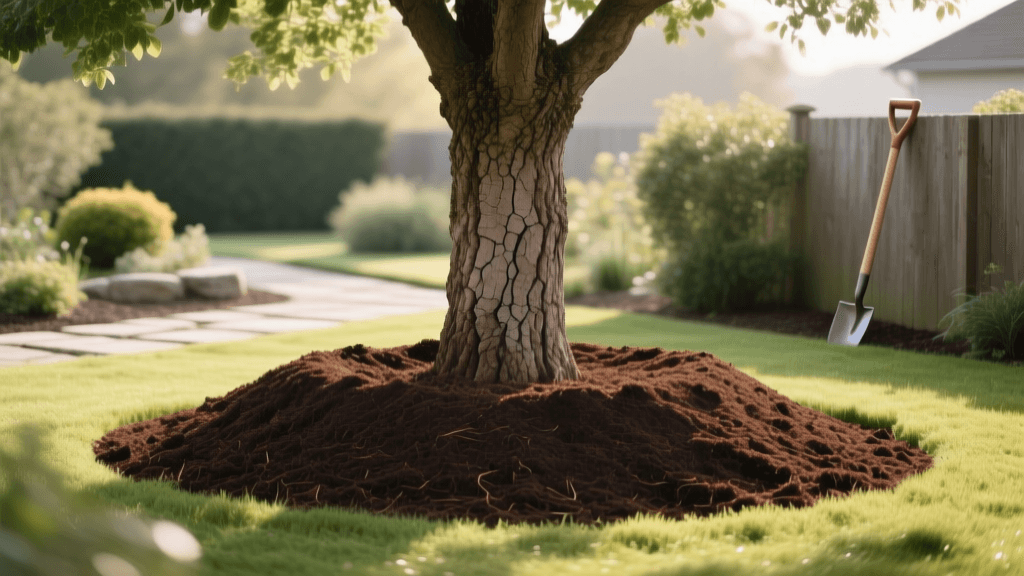
Applying a 2 to 3-inch layer of organic wood chip mulch out to the drip line helps regulate soil temperature, retain moisture, and slowly add organic acids to the soil as it decomposes. Never pile mulch against the trunk (known as 'volcano mulching'), as this traps moisture against the bark, inviting rot and boring insects. Keep the mulch 3 inches away from the trunk flare.
When to Call a Certified Arborist
While many cases of chlorosis and mild root stress can be managed by a diligent homeowner, certain situations require professional intervention. If your tree exhibits sudden, severe canopy dieback, oozing cankers on the trunk, or if the yellowing is accompanied by D-shaped exit holes (a sign of the Emerald Ash Borer or similar destructive borers), contact an ISA-Certified Arborist immediately. Professional diagnostic services typically cost $75 to $150, a small price to pay to accurately identify a fatal disease or pest before it spreads to the rest of your landscape.
By carefully observing your tree's symptoms, testing your soil, and applying targeted treatments, you can reverse yellowing leaves and ensure your landscape trees remain vibrant, healthy, and structurally sound for decades to come.