Lawn Care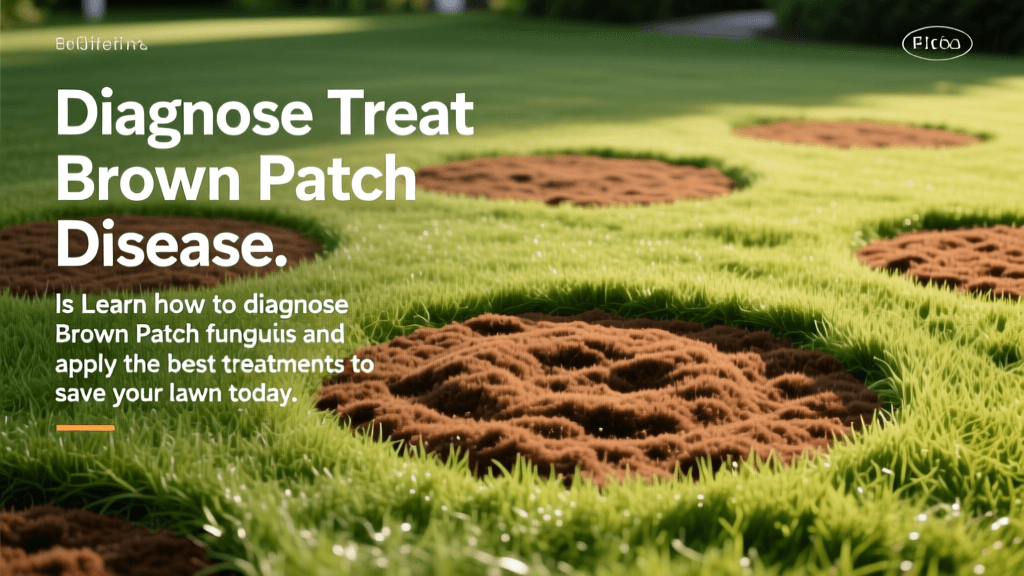
How to Diagnose and Treat Brown Patch Lawn Disease
Brown patch, scientifically known as Rhizoctonia solani, is one of the most destructive and frustrating fungal diseases that can invade residential lawns. Unlike drought stress, which uniformly affects your turf, brown patch manifests in distinct, irregular circular patterns that can rapidly expand from a few inches to several feet in diameter within a matter of days. For homeowners who invest significant time and money into their landscapes, watching their lush green carpet deteriorate into brown, necrotic rings is incredibly disheartening. However, with accurate diagnosis and a strategic, multi-pronged treatment plan, you can halt the spread of this disease and restore your lawn to its former glory.
Diagnosing Brown Patch vs. Drought Stress
Differentiating between drought stress and fungal infection is the most critical step in lawn care problem diagnosis. When grass turns brown during the heat of summer, the immediate instinct is to increase irrigation. However, if the culprit is brown patch, adding water will only accelerate the fungal growth and destroy the turf faster. Drought-stressed grass typically turns a dull, grayish-green before browning and will roll its leaves inward to conserve moisture. The soil will be hard, dry, and hydrophobic. In contrast, brown patch thrives in excessive moisture, and the soil beneath the affected area will often feel damp or spongy.
Key Visual Symptoms
To accurately diagnose brown patch, inspect the individual grass blades at the active margin of the affected circle. Look for hourglass-shaped lesions with tan or gray centers and dark brown borders. In tall fescue and perennial ryegrass, these lesions often appear on the lower leaf sheaths, causing the blade to girdle and collapse. Another hallmark symptom is the presence of a smoke ring. In the early morning, when dew is still present on the grass, you may notice a dark, purplish-gray ring at the outer edge of the brown patch. This smoke ring represents the active mycelium of the fungus advancing into healthy turf. If you pull gently on the grass blades within the ring and they slip easily out of the ground with dark, rotted roots, you are dealing with Rhizoctonia solani, not a simple lack of water.
Environmental Triggers for Brown Patch
Brown patch is an opportunistic pathogen that requires a specific microclimate to germinate and spread. Understanding these triggers allows you to manipulate your lawn environment to starve the fungus.
| Environmental Factor | High-Risk Threshold | Impact on Fungus |
|---|---|---|
| Daytime Temperature | 85°F to 95°F | Accelerates mycelial growth and spore production. |
| Nighttime Temperature | Above 68°F | Prevents the grass from recovering and keeps the fungus active overnight. |
| Relative Humidity | Greater than 85% | Provides the necessary moisture for spore germination. |
| Leaf Wetness Duration | 10+ continuous hours | Allows the fungal spores to penetrate the grass cuticle. |
| Thatch Depth | Greater than 0.5 inches | Traps moisture and provides a habitat for the pathogen to overwinter. |
Step-by-Step Chemical Treatment Solutions
When cultural practices are not enough to stop an active outbreak, fungicides are necessary to protect the remaining healthy tissue and stop the necrotic spread. Fungicides are broadly categorized into preventative and curative options. For brown patch, systemic fungicides belonging to the strobilurin (QoI) and demethylation inhibitor (DMI) classes are the most effective.
Product Recommendations and Application Rates
For residential lawn care, granular and liquid formulations are both viable, though liquids generally offer faster foliar absorption and better curative action.
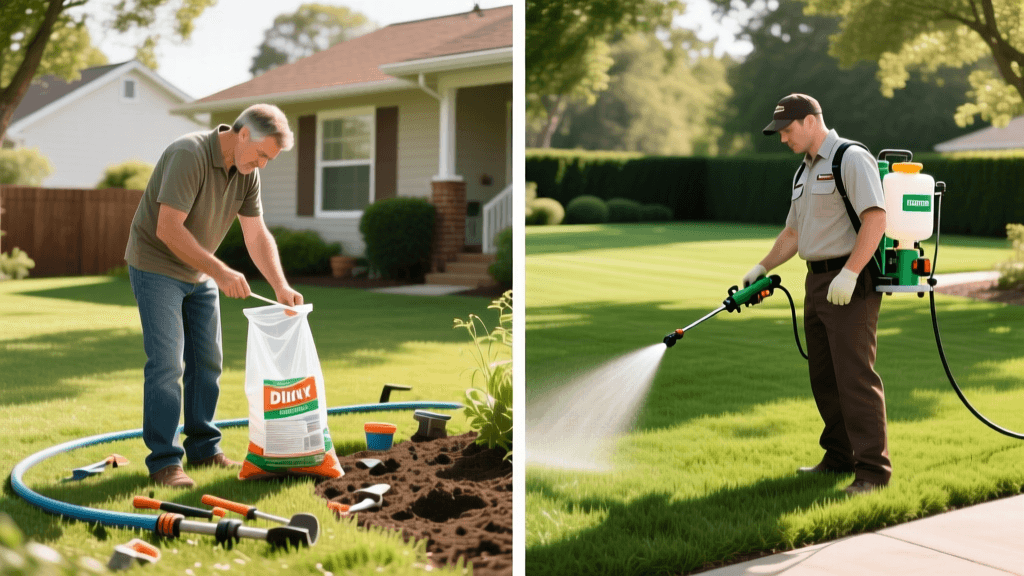
- Scotts DiseaseEX Lawn Fungicide (Granular): The active ingredient is Azoxystrobin (0.31%). This is an excellent preventative and early-curative option. Apply at a rate of 2.0 lbs per 1,000 square feet. Water it in lightly with 1/8 inch of irrigation immediately after application to move the active ingredient down to the soil surface and lower sheaths. Cost is approximately $25 to $30 per bag, covering up to 5,000 square feet.
- Generic Azoxystrobin 23% SC (Liquid): For severe, active outbreaks, liquid applications provide rapid uptake. Mix 1.5 to 2.0 fluid ounces of product per 1,000 square feet. It is crucial to use enough water to ensure complete coverage of the grass blades. Use 2 to 3 gallons of water per 1,000 square feet. Professional-grade products like Syngenta Heritage utilize this same active ingredient but are often more expensive for small-scale use.
- BioAdvanced Fungus Control for Lawns (Liquid/Granular): Contains Propiconazole, a DMI fungicide. This is an excellent rotational option to prevent the fungus from developing resistance to Azoxystrobin. Apply at the curative rate listed on the label, typically every 14 to 21 days during peak summer stress.
Crucial Timing Rule: Begin preventative applications in late spring (May or early June) when nighttime temperatures consistently stay above 65°F. If you wait until the brown rings are fully visible and the grass is dead, curative treatments will only protect new growth; the damaged tissue will not turn green again until the lawn recovers in the cooler fall weather.
Cultural Practices for Long-Term Prevention
Chemical treatments are only a temporary bandage if the underlying environmental conditions remain favorable to the pathogen. Implementing strict cultural practices is the most cost-effective and sustainable way to manage brown patch long-term.
- Precision Irrigation: Lawns need about 1 to 1.5 inches of water per week during the summer, but when you water matters more than how much. Always water deeply and infrequently between 4:00 AM and 8:00 AM. This washes off dew and guttation water (which contain fungal spores) and allows the grass blades to dry completely before the heat of the day. Never water in the evening, as this guarantees 10+ hours of leaf wetness, creating a perfect incubator for Rhizoctonia.
- Strategic Mowing Heights: Scalping your lawn stresses the root system and opens wounds for the fungus to enter. During the peak brown patch season (June through August), raise your mower deck to 3.5 or 4.0 inches for tall fescue and Kentucky bluegrass. Never remove more than one-third of the grass blade in a single mowing. Furthermore, if you have an active outbreak, do not mow the diseased patches and then immediately mow the healthy grass, as your mower deck will spread the mycelium across the entire yard. Bag your clippings during an outbreak to remove infected tissue.
- Nitrogen Management: Lush, rapid growth fueled by heavy applications of fast-release nitrogen in the late spring and summer creates soft, succulent grass tissue that is highly susceptible to fungal penetration. Switch to slow-release nitrogen sources and limit summer applications to 0.25 to 0.5 lbs of nitrogen per 1,000 square feet per month.
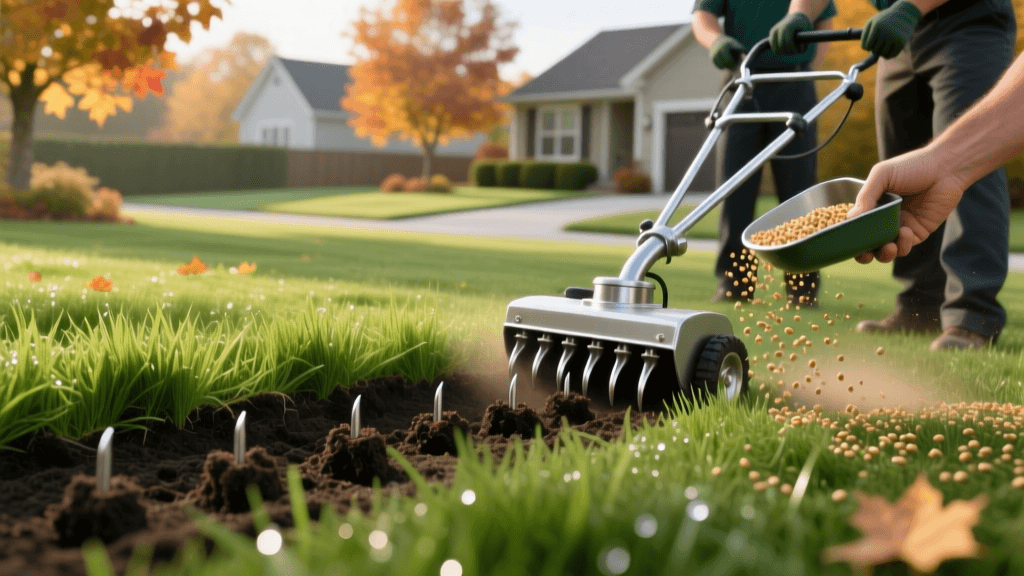
- Core Aeration and Dethatching: Perform core aeration in the fall (for cool-season grasses) or early spring (for warm-season grasses) to alleviate soil compaction. This improves drainage and reduces the thatch layer where fungal sclerotia survive the winter.
Expert Insights on Rhizoctonia Solani
Understanding the biology of the pathogen is key to outsmarting it. Turfgrass pathologists emphasize that the fungus is always present in the soil; the goal is management, not total eradication.
According to Penn State Extension, Rhizoctonia solani is a necrotrophic fungus that survives in the soil and thatch as sclerotia. It becomes highly aggressive when nighttime temperatures remain above 68°F coupled with high humidity and prolonged leaf wetness. Managing the microclimate at the soil surface through proper irrigation and thatch control is just as important as chemical intervention in breaking the disease cycle.
Conclusion
Brown patch lawn disease can rapidly transform a pristine landscape into a patchy, unsightly mess, but it is entirely manageable with the right knowledge. By learning to distinguish the telltale smoke rings and hourglass lesions from standard drought stress, you can avoid the fatal mistake of overwatering a fungal infection. Combine targeted, rotational fungicide applications with strict morning watering schedules, higher mowing heights, and careful nitrogen management. By altering the microclimate of your turf and utilizing proven chemical defenses, you will successfully protect your lawn from Rhizoctonia solani and maintain a thick, vibrant, and healthy landscape throughout the most stressful months of the year.