Lawn Care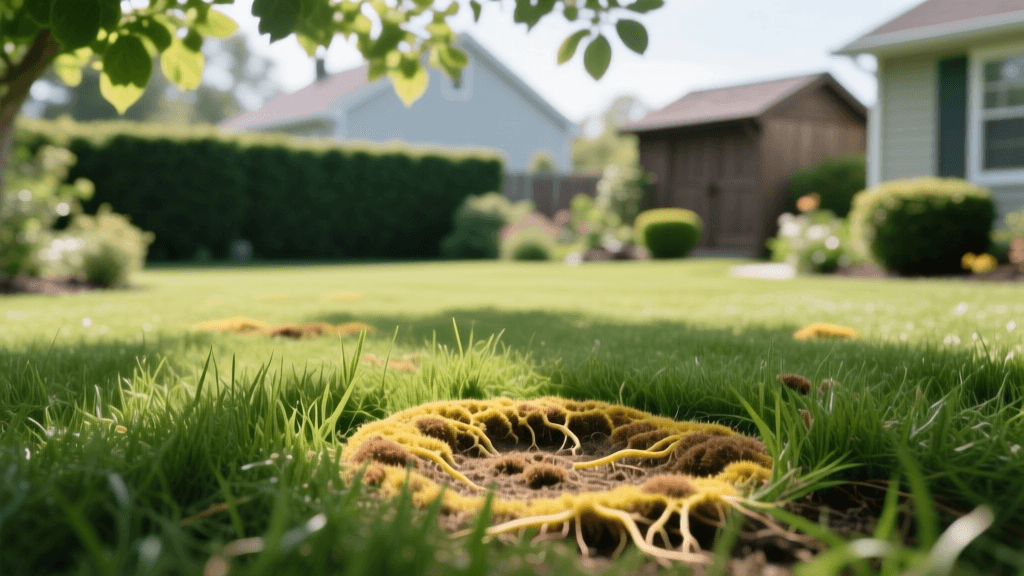
How to Diagnose and Treat Brown Patch Lawn Fungus
Understanding Brown Patch (Rhizoctonia solani)
Brown patch is one of the most destructive and common foliar diseases affecting cool-season turfgrasses, particularly Tall Fescue, Perennial Ryegrass, and Kentucky Bluegrass. Caused by the soil-borne fungal pathogen Rhizoctonia solani, this disease can rapidly transform a lush, green landscape into a patchy, blighted eyesore in a matter of days. Unlike some lawn diseases that merely discolor the leaf blade, severe brown patch infections can rot the leaf sheath and crown, leading to permanent turf death and requiring costly overseeding or sod replacement.
For homeowners and lawn care professionals alike, early diagnosis and rapid intervention are critical. Because the fungus thrives in specific microclimates, understanding the intersection of weather patterns, soil conditions, and turfgrass biology is the first step toward reclaiming a healthy yard. This comprehensive guide provides actionable, science-backed solutions for diagnosing, treating, and preventing brown patch fungus.
How to Accurately Diagnose Brown Patch
Accurate diagnosis is essential before applying any expensive chemical treatments. Misidentifying drought stress or insect damage as a fungal issue will not only waste money but can exacerbate the underlying problem. Brown patch presents several distinct visual indicators:
- Circular Patches: The disease typically manifests as circular or irregular patches of brown, dead, or dying grass ranging from a few inches to several feet in diameter.
- Smoke Rings: In the early morning when dew is present, you may observe a dark, purplish-black 'smoke ring' at the outer margin of the patch. This ring represents the active leading edge of the fungal mycelium.
- Leaf Lesions: Inspect individual grass blades at the edge of the patch. Infected blades will display tan or light brown lesions with distinct dark brown borders. The lesions often girdle the leaf, causing the tip to die back.
- Mycelium Growth: During periods of high humidity and heavy morning dew, white, cobweb-like fungal threads (mycelium) may be visible on the grass blades.
Differential Diagnosis: Brown Patch vs. Other Lawn Issues
Use the comparison chart below to differentiate brown patch from other common lawn ailments that cause browning.
| Lawn Problem | Visual Symptoms | Root and Crown Condition | Primary Environmental Trigger |
|---|---|---|---|
| Brown Patch (Fungus) | Circular patches, smoke rings, tan lesions with dark borders on leaves. | Roots generally remain healthy; crown and leaf sheaths may rot. | High humidity, night temps above 68F, wet foliage. |
| Dollar Spot | Small, silver-dollar-sized straw-colored spots that merge into large areas. | Roots are healthy; distinct hourglass-shaped lesions on leaf blades. | Low soil nitrogen, high humidity, heavy morning dew. |
| Drought Stress | Uniform graying or browning, footprinting remains on grass after walking. | Dry soil, roots may be deep but deprived of moisture. | High heat, lack of rainfall, poor irrigation coverage. |
| White Grub Damage | Irregular brown patches that feel spongy underfoot; turf rolls back like carpet. | Roots are severed and eaten; white C-shaped larvae visible in soil. | Late summer to early fall; presence of adult Japanese/June beetles. |
Environmental Triggers and Causes
Rhizoctonia solani is almost always present in the soil of established lawns. However, it remains dormant until environmental conditions favor rapid fungal growth. The primary triggers include:
- Temperature and Humidity: The pathogen becomes highly active when daytime temperatures exceed 80F and nighttime temperatures remain above 68F, coupled with high relative humidity.
- Excess Moisture: Grass blades that remain wet for 10 to 12 continuous hours provide the ideal breeding ground for spore germination. This is often caused by evening watering or poor drainage.
- Excess Nitrogen: Applying high-nitrogen, quick-release fertilizers in late spring or early summer creates a flush of lush, succulent growth that is highly susceptible to fungal penetration.
- Poor Air Circulation: Lawns surrounded by dense shrubbery, fences, or structures that block wind and trap morning dew are at a significantly higher risk.
Step-by-Step Treatment Solutions
Once brown patch is confirmed, an integrated approach combining cultural adjustments and targeted chemical controls is required to halt the spread.
1. Cultural Controls (Immediate Actions)
Modifying the lawn environment is the most cost-effective way to suppress fungal activity.
- Adjust Watering Schedules: Never water in the evening. Water deeply and infrequently between 4:00 AM and 8:00 AM. This ensures the grass receives the necessary 1 to 1.5 inches of water per week while allowing the sun and wind to dry the leaf blades quickly.
- Raise Mowing Heights: Scalping stresses the turf and opens wounds for the fungus to enter. Raise your mower deck to 3 to 4 inches for Tall Fescue, and 2.5 to 3.5 inches for Kentucky Bluegrass.
- Sanitize Equipment: The fungus spreads easily via mower wheels and blades. Wash your mower deck with a 10 percent bleach solution or a commercial disinfectant after mowing infected areas, and always mow healthy sections of the lawn before tackling diseased zones.
- Bag or Disperse Clippings: During an active outbreak, bag your clippings to remove fungal spores from the surface. If you choose to mulch, ensure the mower blades are razor-sharp to prevent shredding the leaf tips, which invites further infection.
2. Chemical Controls (Fungicide Application)
When cultural practices are not enough to stop an aggressive outbreak, systemic fungicides are required. Contact fungicides only protect the surface and are easily washed away, whereas systemic fungicides are absorbed into the plant tissue to stop the disease from within.
| Active Ingredient | Common Product Examples | Application Rate | Estimated Cost (per 5,000 sq ft) | FRAC Code |
|---|---|---|---|---|
| Azoxystrobin | Scotts DiseaseEx, Heritage SC | 2 to 4 lbs (granular) per 1,000 sq ft | $20 - $35 | 11 |
| Propiconazole | BioAdvanced Fungus Control, Banner Maxx | 0.5 to 1.0 oz (liquid) per 1,000 sq ft | $15 - $25 | 3 |
| Pyraclostrobin | Honor Guard, Insignia SC | 0.2 to 0.5 oz (liquid) per 1,000 sq ft | $30 - $50 | 11 |
Pro Tip for Resistance Management: Fungi can develop resistance to chemicals if the same mode of action is used repeatedly. Always rotate between different FRAC (Fungicide Resistance Action Committee) codes. For example, alternate between a Group 11 (Azoxystrobin) and a Group 3 (Propiconazole) every 14 to 28 days during peak summer months.
Long-Term Prevention Strategies
Preventing brown patch is vastly superior to treating it. Implement these annual lawn care routines to build a resilient turfgrass ecosystem:
- Shift Fertilization to Fall: Cool-season grasses should receive the majority of their nitrogen in the early fall (September to November). Avoid heavy nitrogen applications in May and June, as this promotes the soft, vulnerable growth that brown patch exploits.
- Core Aeration: Perform core aeration in the early fall to alleviate soil compaction, improve surface drainage, and allow the turf canopy to dry out faster after rainfall.
- Dethatching: If your thatch layer exceeds 0.5 inches, use a power rake or dethatcher to remove the organic barrier that traps moisture and harbors fungal spores.
- Prune Surrounding Landscaping: Trim lower branches of trees and shrubs to increase sunlight penetration and morning airflow across the lawn surface.
Authoritative Citations and Resources
The diagnostic criteria and treatment protocols outlined in this guide are supported by leading university turfgrass pathology programs. Proper identification and chemical rotation are paramount for long-term lawn health.
'Brown patch is most severe when nighttime temperatures remain above 68F and the leaf canopy is wet for extended periods. Preventative fungicide applications are highly recommended for lawns with a history of severe Rhizoctonia blight, utilizing FRAC rotation to preserve chemical efficacy.' - NC State University Cooperative Extension, Turfgrass Pathology Manual
'Cultural practices that reduce leaf wetness duration, such as morning irrigation and improved air movement, are the first line of defense. When chemical intervention is necessary, systemic fungicides containing QoI or DMI active ingredients provide the most reliable curative and preventative control.' - Purdue University Turfgrass Science Program
By combining vigilant monitoring, precise watering habits, and strategic fungicide applications, you can effectively eradicate brown patch and maintain a thick, vibrant lawn throughout the most stressful months of the summer season.