Pest Control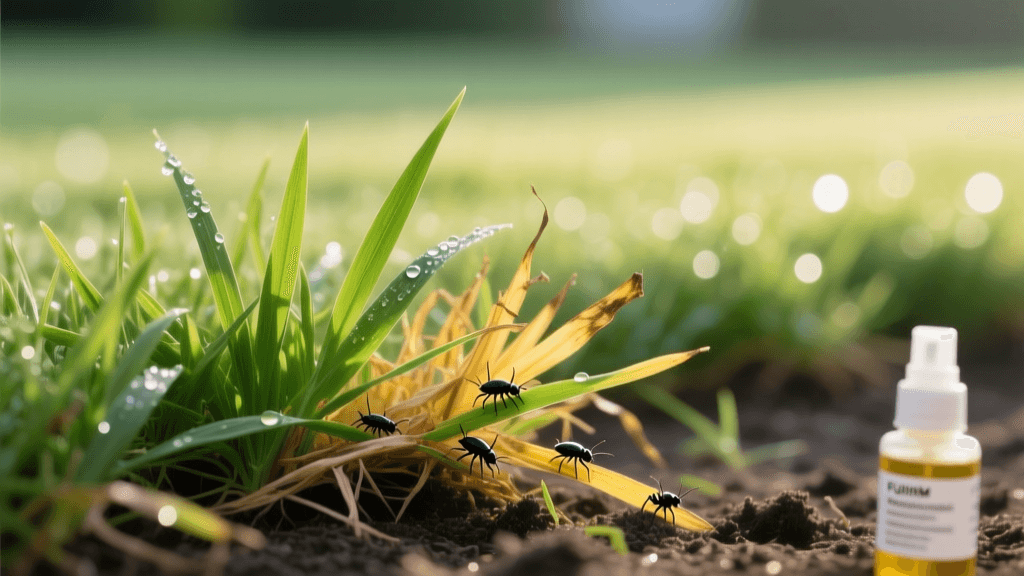
How to Diagnose and Treat Chinch Bugs in St. Augustine Grass
The Threat to St. Augustine Grass
St. Augustine grass (Stenotaphrum secundatum) is a staple of southern lawns, prized for its shade tolerance, lush texture, and rapid growth. However, its most notorious nemesis is the southern chinch bug (Blissus insularis). These tiny, sap-sucking insects can decimate a healthy lawn in a matter of weeks, leaving behind expansive patches of dead, yellowed turf. For homeowners and lawn care professionals alike, early problem diagnosis and rapid, targeted solutions are the only ways to prevent catastrophic lawn loss.
Unlike broad-spectrum pests that attack various plant species, the southern chinch bug feeds almost exclusively on St. Augustine grass. They use piercing-sucking mouthparts to extract plant sap from the crowns, stems, and stolons. As they feed, they inject a salivary toxin that disrupts the plant's vascular system, blocking water and nutrient transport. This results in the characteristic yellowing and eventual browning of the turf, often mistaken for drought stress or fungal disease.
Diagnosing Chinch Bug Damage vs. Drought Stress
The most common mistake homeowners make is misdiagnosing chinch bug damage as drought stress or a fungal infection like brown patch. Because both issues cause the grass to turn yellow and then brown, applying the wrong treatment (like excessive watering or fungicides) will only exacerbate a chinch bug infestation. To accurately diagnose the problem, you must look for specific visual cues and environmental patterns.
Visual Symptoms and the 'Halo' Effect
Chinch bug damage typically begins in small, irregular patches of yellowing grass that quickly turn brown and die. These patches often start in the hottest, sunniest areas of the lawn, particularly near driveways, sidewalks, and curbs where heat radiates from the concrete. As the insects exhaust the food supply in one area, they migrate outward. This creates a distinct 'halo' effect: a ring of yellowing, dying grass surrounding a completely dead, brown center. If you part the grass blades at the margin between the dead and green grass (the active feeding zone), you may spot the bugs scurrying near the soil line.
The Tin Can Float Test: Confirming the Infestation
Visual symptoms are a strong indicator, but the definitive diagnostic tool for chinch bugs is the 'Tin Can Float Test.' This simple, highly effective method forces the insects to the surface, allowing you to count them and determine if the population has reached the treatment threshold.
- Step 1: Take a standard metal coffee can or a large tin can and use a can opener to remove both the top and bottom lids, creating a hollow cylinder.
- Step 2: Identify the margin of an affected area where dying yellow grass meets healthy green grass. This is where the bugs are actively feeding.
- Step 3: Push the can about two to three inches deep into the soil, ensuring a tight seal so water doesn't leak out the bottom.
- Step 4: Fill the can with water and wait for three to five minutes. Chinch bugs cannot swim and will float to the surface.
- Step 5: Count the number of adults (black with white wings) and nymphs (small, red or orange with a white band). Skim them off and refill the water if necessary to ensure you've counted them all.
- Step 6: Repeat this test in three or four different areas of the lawn to get an accurate average.
The Treatment Threshold: According to turfgrass entomologists, a population of 20 to 25 chinch bugs per square foot (or roughly 15-20 bugs in a standard 6-inch diameter coffee can) warrants immediate chemical or biological intervention. If you find only a few bugs, cultural controls and natural predators may be sufficient to keep them in check.
Understanding the Chinch Bug Life Cycle
Effective treatment timing requires an understanding of the pest's life cycle. In warmer climates like Florida and Texas, southern chinch bugs can produce three to four overlapping generations per year. They overwinter as adults in the thatch layer and emerge in early spring when temperatures consistently reach 70°F. Females lay hundreds of eggs over their lifespan, which hatch into nymphs. The nymphs go through five instars (growth stages) over four to six weeks, feeding voraciously the entire time. Because generations overlap by mid-summer, you will often see eggs, nymphs, and adults simultaneously, making systemic treatments highly advantageous over short-lived contact sprays.
Treatment Solutions: Chemical vs. Organic
Once the threshold is exceeded, rapid action is required. Treatment strategies are generally divided into fast-acting contact insecticides, long-lasting systemic chemicals, and biological controls.
Chemical Controls and the Resistance Problem
For decades, pyrethroids (like bifenthrin and lambda-cyhalothrin) were the gold standard for chinch bug control. However, widespread and repeated use has led to severe pyrethroid resistance in many southern states. If you apply a pyrethroid and see no improvement within a week, resistance is likely the culprit. To combat this, modern integrated pest management (IPM) relies on rotating chemical classes and utilizing systemic neonicotinoids.
| Treatment Type | Active Ingredient / Product Example | Application Rate (per 1,000 sq ft) | Estimated Cost | Best Timing & Notes |
|---|---|---|---|---|
| Contact (Pyrethroid) | Bifenthrin (Talstar P) | 1.1 fl oz (liquid) or 1.8 lbs (0.115% granular) | $8 - $12 | Early spring/first generation. Water in granules immediately. High resistance risk. |
| Systemic (Neonicotinoid) | Imidacloprid (Merit / BioAdvanced) | 0.6 fl oz (liquid) or 1.4 lbs (granular) | $12 - $18 | Late spring to early summer. Excellent for nymph control; takes 1-2 weeks to translocate. |
| Anthranilic Diamide | Chlorantraniliprole (Acelepryn) | 0.15 fl oz | $25 - $35 | Preventative early spring. Extremely low toxicity to bees and beneficial insects. |
| Biological Fungus | Beauveria bassiana (BotaniGard) | 1 to 2 lbs (wettable powder) | $15 - $22 | Apply in high humidity/evening. Spores infect and kill the insect from the inside out. |
Note: Always read and follow the manufacturer's label instructions. The label is the law. When applying liquid treatments, use a hose-end or pump sprayer calibrated to deliver 1 to 2 gallons of finished spray per 1,000 square feet to ensure the product penetrates the thatch layer and reaches the soil surface where the bugs reside.
Organic and Biological Controls
For homeowners preferring organic lawn care, biological controls offer a viable, albeit slower, solution. Beneficial Nematodes (Steinernema carpocapsae) are microscopic worms that naturally hunt and kill chinch bug nymphs and adults in the soil and thatch. They must be applied via hose-end sprayer in the late afternoon or evening, as UV light and dry soil will kill them. Keep the lawn consistently moist for a week after application to ensure nematode survival.
Additionally, fostering natural predators is a cornerstone of IPM. The Big-eyed Bug (Geocoris species) is a native predator that looks remarkably similar to the chinch bug but possesses distinctly larger, protruding eyes. Big-eyed bugs are generalist predators and will aggressively consume chinch bug eggs and nymphs. Avoid broad-spectrum insecticide applications if you observe high populations of these beneficial insects.
Prevention and Cultural Controls
Chemical treatments are only a temporary fix if the underlying environmental conditions favor chinch bug proliferation. Implementing rigorous cultural controls is the most cost-effective long-term strategy.
Thatch Management
Chinch bugs thrive in thick thatch layers (the interwoven mat of dead and living stems and roots between the soil and the green canopy). Thatch provides an ideal microclimate that protects the bugs from predators, extreme weather, and contact insecticides. If your thatch layer exceeds half an inch, it is time to dethatch. Use a vertical mower (verticutter) or a heavy-duty power rake in the late spring when the grass is actively growing and can quickly recover. Core aeration also helps break down thatch by introducing soil microbes to the surface.
Irrigation and Mowing Strategies
Chinch bugs prefer hot, dry environments. Lawns that are drought-stressed or subjected to light, frequent watering are highly susceptible to severe damage. Transition your lawn to a deep and infrequent watering schedule. Aim for 1 inch of water per week, applied in one or two sessions, to encourage deep root growth and maintain surface humidity, which promotes the growth of the naturally occurring Beauveria bassiana fungus that attacks chinch bugs.
Furthermore, never scalp your St. Augustine grass. Mowing too low stresses the plant and exposes the soil to the sun, creating the exact conditions chinch bugs love. Maintain a mowing height of 3.5 to 4 inches. This shades the soil, retains moisture, and creates a less hospitable environment for the pests while promoting a deeper, more resilient root system.
Expert Insights on Resistance Management
'The southern chinch bug has a documented history of developing resistance to major classes of insecticides, including organochlorines, organophosphates, carbamates, and most recently, pyrethroids. To preserve the efficacy of our current chemical tools, turf managers must rotate insecticides with different modes of action (IRAC groups) and rely heavily on cultural practices and biological controls to keep populations below the economic injury level.'
— University of Florida IFAS Extension, Department of Entomology and Nematology
Conclusion
Diagnosing and treating chinch bugs in St. Augustine grass requires vigilance, accurate identification, and a multi-faceted approach. By utilizing the tin can float test to confirm infestations, rotating chemical classes to bypass resistance, and maintaining a thick thatch-free turf through proper mowing and watering, you can protect your lawn from these destructive pests. Remember that a healthy, vigorously growing St. Augustine lawn is your first and best line of defense against the southern chinch bug.