Tree Care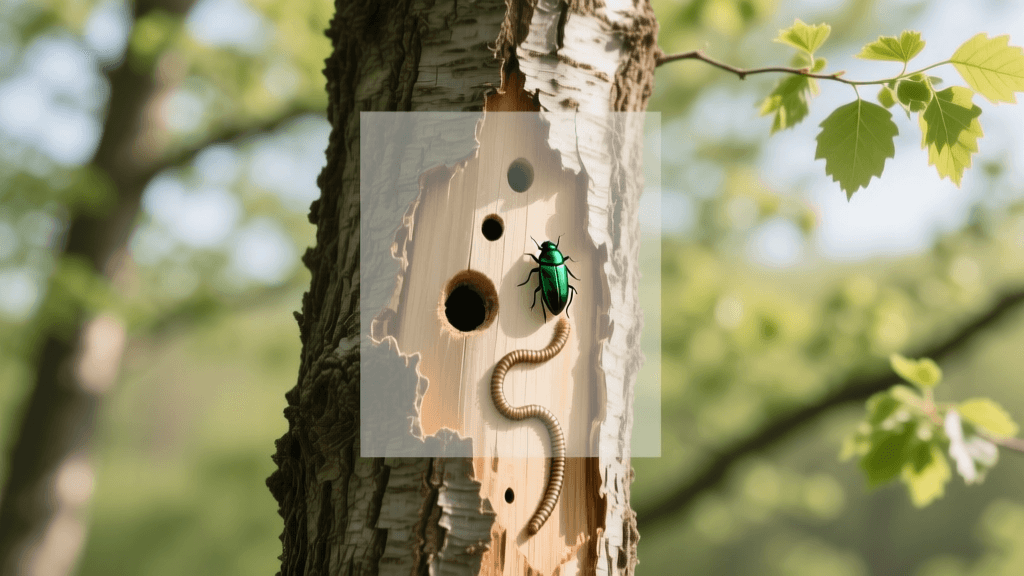
How to Diagnose and Treat Emerald Ash Borer Infestations
The Silent Killer: Understanding the Emerald Ash Borer
The Emerald Ash Borer (EAB), scientifically known as Agrilus planipennis, is a highly destructive invasive beetle native to Asia. Since its accidental introduction to North America in the early 2000s, it has killed hundreds of millions of ash trees across the United States and Canada. For homeowners and property managers, an EAB infestation presents a critical problem: act quickly to save the tree, or face the hazardous and expensive prospect of removing a dead, brittle giant. This comprehensive guide focuses on problem diagnosis, health assessment, and actionable, science-backed solutions to protect your ash trees.
Problem Diagnosis: Spotting the Early Signs of EAB
Diagnosing an EAB infestation early is the single most important factor in saving your tree. The larvae feed on the inner bark (phloem and cambium), effectively girdling the tree and cutting off its ability to transport water and nutrients. Because the damage happens beneath the bark, above-ground symptoms often do not appear until the tree has been infested for two to three years.
Key Diagnostic Symptoms
- Canopy Dieback: Thinning and dying leaves typically begin in the upper third of the tree canopy and progress downward. You may notice sparse foliage, undersized leaves, or dead branches at the crown.
- Epicormic Sprouting: Also known as suckering, the tree will attempt to compensate for canopy loss by pushing out new, vigorous shoots along the lower trunk or at the root flare.
- D-Shaped Exit Holes: Adult beetles emerge in late spring, leaving distinct, 1/8-inch D-shaped exit holes in the bark. This is a definitive sign of EAB, though they are often found higher up on the trunk.
- S-Shaped Larval Galleries: If you peel back the bark, you will find winding, S-shaped tunnels packed with fine, sawdust-like frass left by the feeding larvae.
- Woodpecker Flecking: Woodpeckers love EAB larvae. If you see patches of bark stripped away by birds, exposing the lighter inner wood, look closer for larval galleries beneath the surface.
Assessing Tree Health: Is Your Ash Tree Worth Saving?
Before investing time and money into chemical treatments, you must evaluate the current health of the tree. According to guidelines from Purdue University Extension, insecticide treatments are only effective and economically viable if the tree still has at least 70% of its canopy intact. Once a tree loses more than 30% to 50% of its crown, the vascular system is too damaged to transport systemic insecticides to the upper branches, and the tree should be removed.
| Canopy Condition | Dieback Percentage | Recommended Action | Estimated Cost |
|---|---|---|---|
| Healthy / Minor Thinning | Less than 10% | Preventative Treatment (Soil Drench or Injection) | $20 - $150 per tree |
| Moderate Decline | 10% - 30% | Curative Treatment (Trunk Injection required) | $150 - $300 per tree |
| Severe Decline | 30% - 50% | Monitor closely; treatment success is marginal | $150 - $300 (High risk of failure) |
| Critical / Dead | Greater than 50% | Safely remove and replace tree | $500 - $2,000+ (Removal) |
Proven Solutions: Treatment Options for EAB
If your tree falls into the treatable category, systemic insecticides are the only proven method for controlling EAB. These chemicals are absorbed by the tree and translocated through the vascular system, poisoning the larvae as they feed on the inner bark. The USDA Animal and Plant Health Inspection Service (APHIS) and university researchers recommend four primary active ingredients for EAB management.
Active Ingredient Comparison Chart
| Active Ingredient | Application Method | Timing | Treatment Interval | Best For |
|---|---|---|---|---|
| Imidacloprid | Soil Drench / Basal Trunk Spray | Early Spring (April-May) | Annually | Preventative care on small/medium trees (under 22 inches DBH) |
| Dinotefuran | Basal Trunk Spray | Spring to Early Summer | Annually | Trees where soil drench is not viable due to hardscaping |
| Emamectin Benzoate | Trunk Injection | Post-bloom (May-June) | Every 2 Years | Curative treatment and large trees (over 22 inches DBH) |
| Azadirachtin | Trunk Injection | Spring | Annually | Eco-sensitive areas; shorter residual control |
Step-by-Step Guide: DIY Soil Drench Application (Imidacloprid)
For smaller ash trees (less than 22 inches in Diameter at Breast Height, or DBH), a DIY soil drench using an over-the-counter Imidacloprid product (such as Bayer Advanced Tree and Shrub Insect Control) is a cost-effective, preventative solution. Always wear chemical-resistant gloves and safety goggles when handling concentrated insecticides.
- Measure the Tree: Measure the circumference of the trunk at 4.5 feet above the ground. Divide by 3.14 to get the diameter. Check the product label for the exact dosage per inch of diameter.
- Prepare the Soil: Clear away mulch, grass, and debris from the base of the tree out to the drip line. The soil should be moist but not waterlogged. If the ground is dry, water the area lightly a day before application.
- Mix the Solution: Mix the prescribed amount of Imidacloprid concentrate with water in a large watering can or bucket. Use enough water to ensure the chemical penetrates the soil, typically 1 gallon per inch of tree diameter.
- Apply the Drench: Pour the mixture evenly in a circle around the base of the tree, keeping it within 12 inches of the trunk. The goal is to target the active feeder roots. Avoid runoff into storm drains or waterways.
- Water it In: Lightly water the area after application to help the chemical move into the root zone, but avoid heavy irrigation that causes pooling or runoff.
Expert Tip: Soil drenching is highly dependent on soil moisture and root health. If your tree is in a drought-stressed state or surrounded by heavy clay or impermeable hardscaping, soil drenches will fail. In these cases, professional trunk injection is mandatory.
When to Call a Certified Arborist
While DIY soil drenches work for small, accessible trees, trunk injections utilizing Emamectin Benzoate (often sold under the brand name TREE-age) require specialized equipment, precise drilling techniques, and professional licensing. You should hire an ISA-Certified Arborist if:
- Your tree has a DBH greater than 22 inches.
- The tree is showing early signs of canopy dieback (10-30%) and requires a curative, fast-acting treatment.
- The tree is located near a water source, where soil-applied chemicals pose an environmental risk.
- The tree is in a high-traffic area where dead branches pose a severe safety hazard.
Professional trunk injections involve drilling small (1/4 to 5/16 inch) holes every 4 to 6 inches around the base of the trunk. Arborists drill at a slight upward angle to intersect the active sapwood, then use pressurized or vacuum systems to pull the insecticide directly into the xylem. Current arboriculture standards dictate leaving these holes unplugged to allow the tree to naturally compartmentalize the wound, avoiding trapped moisture that can lead to fungal decay. This method provides two full years of protection and is the gold standard for EAB management in urban forests.
Prevention and Long-Term Management
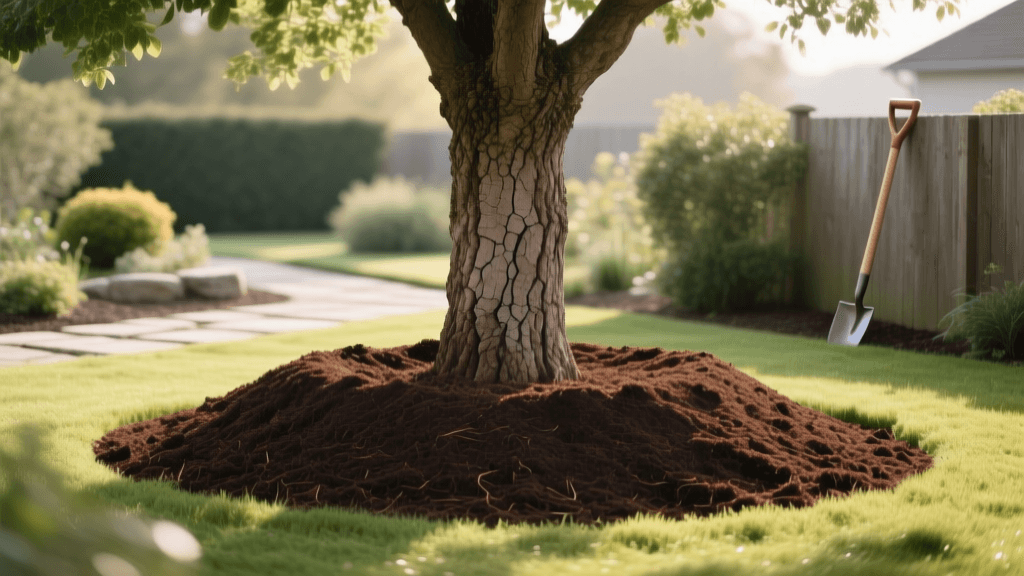
Beyond chemical treatments, cultural practices play a vital role in managing the EAB threat. The USDA APHIS strictly enforces quarantines on the movement of ash wood. Never move firewood from one location to another, as this remains the primary vector for human-assisted EAB spread. Keep your trees healthy by providing supplemental watering during summer droughts and applying a 2-to-3-inch layer of organic mulch around the root zone (keeping it away from the trunk flare) to retain moisture and regulate soil temperature.
By combining early diagnosis, accurate health assessment, and targeted systemic treatments, you can successfully defend your ash trees against the Emerald Ash Borer. Preserving mature trees not only maintains your property value but also sustains the local urban canopy, providing essential shade, air purification, and ecological habitat for decades to come.