Tree Care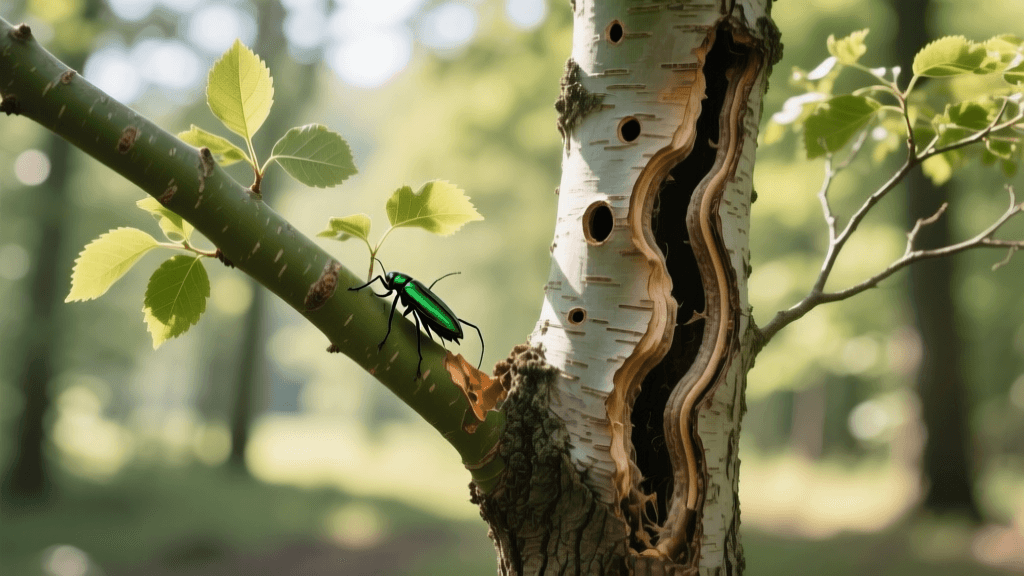
How to Diagnose and Treat Emerald Ash Borer Damage in Trees
The Emerald Ash Borer (EAB), scientifically known as Agrilus planipennis, is a highly destructive, invasive wood-boring beetle that has decimated millions of ash trees (Fraxinus spp.) across North America. First detected in Michigan in 2002, this devastating pest has since spread to over 35 states and several Canadian provinces. For homeowners, arborists, and landscape managers, early problem diagnosis and the implementation of correct, science-backed treatment solutions are the only ways to prevent the total loss of mature ash trees on your property. This comprehensive guide walks you through identifying EAB damage, assessing tree viability, and executing professional-grade treatment protocols to save your landscape.
Understanding the Threat: The EAB Life Cycle
To effectively diagnose and treat an infestation, it is crucial to understand the life cycle of the Emerald Ash Borer. Adult beetles are metallic green, roughly half an inch long, and emerge from trees in late spring to early summer. After mating, females lay eggs in the bark crevices of ash trees. When the eggs hatch, the larvae tunnel through the outer bark and feed on the inner bark and phloem. This larval feeding creates distinct, serpentine galleries that girdle the tree, effectively severing the vascular system and cutting off the flow of water and nutrients from the roots to the canopy. It is this larval stage that causes the fatal damage, making targeted systemic treatments essential for survival.
Identifying the Signs of Emerald Ash Borer (Diagnosis)
Early detection is the cornerstone of effective EAB management. Because the larvae feed beneath the bark, early signs of infestation are often subtle and occur high in the canopy. When diagnosing your ash trees, look for the following primary and secondary symptoms:
Primary Symptoms
- Canopy Thinning and Dieback: The earliest visible sign is usually thinning foliage and branch dieback starting in the upper third of the tree canopy. This occurs because the larval galleries disrupt nutrient flow to the highest branches first.
- Epicormic Sprouting: As the tree becomes stressed and the main canopy dies, it will attempt to survive by producing vigorous, leafy sprouts (suckers) at the base of the trunk, along the main stem, or on major roots.
- D-Shaped Exit Holes: When adult beetles emerge from the tree in the spring, they chew through the bark, leaving distinct, D-shaped exit holes that are approximately 1/8 inch wide. These are often found on the trunk and larger branches.
Secondary Symptoms
- Bark Splitting: Vertical fissures in the bark may appear, often revealing the serpentine larval galleries beneath. This is a reaction by the tree to the damage occurring underneath.
- Woodpecker Damage (Flecking): Woodpeckers feed heavily on EAB larvae. If you notice patches of the outer bark stripped away, revealing the lighter inner bark (a phenomenon known as flecking), it is a strong indicator of a heavy larval population beneath the surface.
Assessing Tree Health: Is Your Ash Tree Worth Saving?
Not all infested ash trees can or should be saved. Treating a severely compromised tree is a poor investment of time and money, as the vascular system may be too damaged to transport systemic insecticides to the canopy. According to guidelines established by Purdue University Extension and the USDA Animal and Plant Health Inspection Service (APHIS), the decision to treat or remove should be based on the percentage of canopy decline.
| Canopy Decline Percentage | Tree Health Status | Recommended Action |
|---|---|---|
| Less than 30% | Good to Fair | Highly treatable. Begin systemic insecticide applications immediately. |
| 30% to 50% | Fair to Poor | Marginally treatable. Treatment may save the tree, but recovery will take 1 to 2 years. |
| Greater than 50% | Poor to Dead | Untreatable. The vascular system is too damaged. Schedule safe removal and disposal. |
Expert Insight: 'Trees with more than 50 percent canopy decline are generally too far gone for systemic insecticides to be effective. The phloem and xylem tissues are so heavily damaged by larval galleries that the tree cannot translocate the chemical to the upper canopy where the active larvae are feeding.' — Purdue University Extension, Entomology Department
Effective Treatment Solutions for EAB
If your tree falls into the treatable category (under 50% canopy decline), you must utilize systemic insecticides. Contact sprays are entirely ineffective because the larvae are protected beneath the bark. Here are the three primary chemical treatment methods used by professionals and advanced DIYers:
1. Trunk Injections (Emamectin Benzoate)
Trunk injection is the gold standard for EAB treatment. The active ingredient Emamectin benzoate (commonly sold under professional trade names like Tree-Age or Arborjet) is injected directly into the xylem tissue at the base of the tree. It provides highly effective, multi-year control (typically 2 to 3 years per application) and works on trees of all sizes. Because it is injected, there is zero soil contamination or risk to non-target pollinators.
2. Soil Drenches (Imidacloprid)
Products containing Imidacloprid (such as Bayer Advanced 12 Month Tree and Shrub Insect Control) are applied as a liquid drench to the soil around the base of the tree. The roots absorb the chemical and translocate it to the canopy. Limitations: Soil drenches are only recommended for smaller ash trees with a Diameter at Breast Height (DBH) of less than 22 inches. They must be applied annually, and soil conditions (like heavy clay or extreme drought) can severely limit root uptake.
3. Basal Bark Sprays (Dinotefuran)
Dinotefuran (e.g., Safari) is a highly water-soluble systemic insecticide applied as a spray to the lower 5 to 6 feet of the trunk. It penetrates the bark rapidly. This method is faster than trunk injection and requires no drilling, but it must be applied annually and requires the use of a specialized surfactant to ensure bark penetration.
Step-by-Step Trunk Injection Guide (Actionable Advice)
For the most reliable, long-lasting results, trunk injection with Emamectin benzoate is the preferred method. If you are utilizing a DIY trunk injection kit, follow these precise steps to ensure proper dosage and tree health:
- Timing is Critical: Apply treatments in mid-May to late June. The tree must be fully leafed out to ensure active transpiration (water movement) is pulling the chemical into the canopy, but avoid injecting during peak summer heat or severe drought when the tree is stressed.
- Measure the DBH: Measure the Diameter at Breast Height (DBH) using a flexible measuring tape at exactly 4.5 feet off the ground. Calculate the circumference and divide by 3.14 to get the diameter. The DBH dictates your exact chemical dosage.
- Prepare the Drill Site: Clear away soil and mulch from the root flare at the base of the trunk. You will be drilling into the lower trunk and root flare area.
- Drill the Holes: Using a cordless drill and a 11/64-inch drill bit, drill holes at a slight upward angle (about 15 degrees) to prevent the chemical from pooling out. Drill to a depth of 1.5 to 2 inches, ensuring you penetrate the sapwood (xylem). Space the holes 4 to 6 inches apart horizontally around the entire circumference of the trunk base.
- Inject the Chemical: Attach the injection ports or capsules according to your specific kit's instructions. Allow the tree to absorb the chemical. Uptake can take anywhere from 30 minutes to several hours depending on the tree's hydration levels and ambient temperature.
- Seal and Clean: Once the chemical is fully absorbed, remove the ports. While trees can compartmentalize drill wounds, some arborists recommend sealing the holes with a biodegradable tree wound sealer to prevent secondary fungal infections.
Cost Analysis: DIY vs. Professional Treatment
Budgeting for EAB treatment is a necessary step in landscape management. The cost varies significantly based on the size of the tree and whether you hire a certified arborist or use a consumer-grade DIY kit.
- Professional Treatment: Certified arborists typically charge between $10 and $15 per inch of DBH for trunk injection. For a mature ash tree with a 20-inch DBH, expect to pay $200 to $300 per treatment, which lasts for 2 to 3 years.
- DIY Treatment: Consumer DIY trunk injection kits (containing the drill, reusable ports, and Emamectin benzoate chemical) cost between $150 and $250 upfront. The chemical refills for subsequent treatments cost around $75 to $120. While cheaper over time, DIY injection carries the risk of improper dosing or causing excessive mechanical damage to the trunk if holes are drilled incorrectly.
Preventative Care and Long-Term Monitoring
Chemical treatment is only one part of the solution. To help your ash tree recover from EAB damage and fight off secondary infections, you must optimize its growing environment. Implement the following cultural practices:
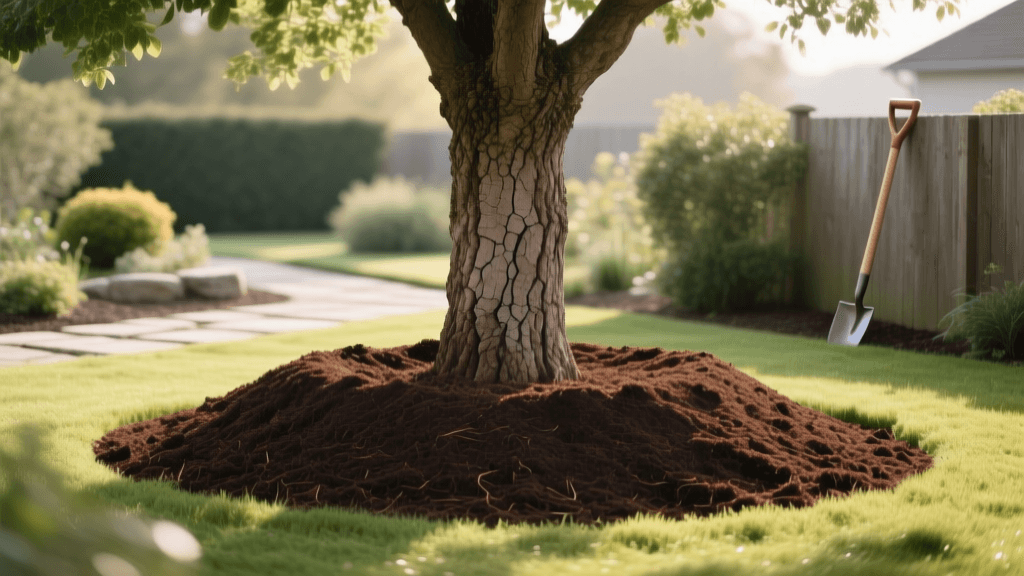
- Proper Mulching: Apply a 2 to 3-inch layer of organic hardwood mulch in a wide ring around the tree's drip line. Keep the mulch at least 3 inches away from the trunk to prevent 'volcano mulching,' which promotes trunk rot and suffocates the root flare.
- Deep Watering: During periods of drought, provide 1 inch of water per week using a soaker hose. Deep, infrequent watering encourages deep root growth, which is vital for the uptake of soil-applied treatments and overall tree vigor.
- Avoid Soil Compaction: Keep heavy machinery, vehicles, and high foot traffic away from the tree's root zone. Compacted soil restricts oxygen flow to the roots, severely weakening the tree's natural defense mechanisms.
- Annual Inspections: Even after successful treatment, inspect your ash trees every spring for signs of new canopy dieback or woodpecker flecking. If you used a 2-year trunk injection, set a calendar reminder for the third year to reapply the treatment before the chemical efficacy drops.
Conclusion
The Emerald Ash Borer is a formidable adversary, but it is not an automatic death sentence for your landscape ash trees. By accurately diagnosing the signs of infestation early, objectively assessing the tree's canopy health, and applying the correct systemic insecticides at the proper time of year, you can successfully preserve these valuable shade trees. Always consult with a local ISA-certified arborist or your state's university extension office to confirm EAB presence in your county and to ensure you are complying with local pesticide application regulations.