Tree Care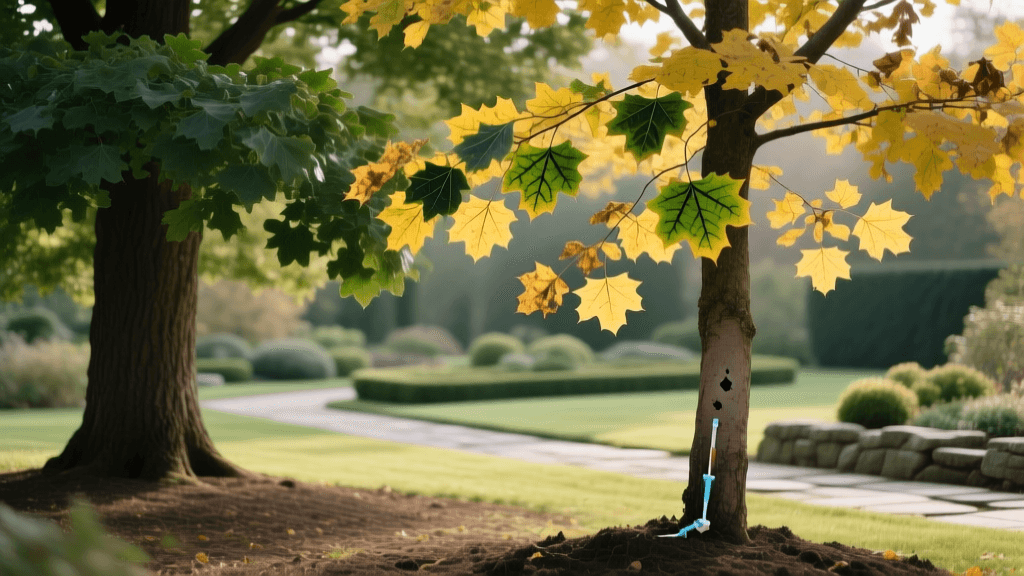
How to Diagnose and Treat Iron Chlorosis in Oak Trees
Understanding Iron Chlorosis in Landscape Trees
If you have a pin oak or silver maple in your yard that consistently turns pale yellow in mid-summer while its veins remain stubbornly green, you are likely dealing with iron chlorosis. This is one of the most common, yet misunderstood, nutritional disorders affecting landscape trees in North America. Left untreated, iron chlorosis weakens the tree's ability to photosynthesize, leading to stunted growth, severe leaf scorch, branch dieback, and eventually, the death of the tree.
As a homeowner or property manager, diagnosing the exact cause of the yellowing foliage is the first step toward saving your investment. This comprehensive guide will walk you through the science of iron chlorosis, how to accurately diagnose it, and the most effective, science-backed solutions to restore your tree's vibrant green canopy.
The Science: Why Trees Starve in Iron-Rich Soil
Iron chlorosis is rarely caused by a lack of iron in the soil. In fact, most soils contain abundant iron. The problem is availability. Iron is highly sensitive to soil pH. In alkaline soils (pH above 7.0), iron oxidizes into a form (ferric iron) that tree roots simply cannot absorb.
Compounding the issue, urban soils are often heavily compacted, poorly drained, and stripped of organic matter. When roots are suffocating in compacted, alkaline clay, they cannot uptake the micronutrients required for chlorophyll production. Without chlorophyll, the leaf tissue between the veins turns yellow, a condition botanists call interveinal chlorosis.
Diagnosing Iron Chlorosis vs. Other Tree Problems
Before purchasing treatments, you must confirm that iron deficiency is the culprit. Misdiagnosis can lead to wasted money and further tree stress. Here is how to differentiate iron chlorosis from other common tree ailments.
| Symptom | Iron Chlorosis | Nitrogen Deficiency | Drought Stress |
|---|---|---|---|
| Leaf Color | Yellow tissue, green veins | Uniform pale green or yellow | Dull gray-green, wilting |
| Location on Tree | Newest leaves at branch tips | Oldest leaves near the trunk | Uniform or sun-exposed edges |
| Leaf Margins | Brown, crispy margins (scorch) | No specific margin browning | Crispy, curling edges |
| Soil Condition | High pH (alkaline), compacted | Sandy, leached, low organic matter | Dry, cracked, hydrophobic |
Highly Susceptible Species
While any tree can suffer from nutrient lockout, certain species are notoriously sensitive to high-pH soils. If you have these trees, monitor them closely:
- Pin Oak (Quercus palustris): The most notorious victim of iron chlorosis in the Midwest and Northeast.
- Red Maple (Acer rubrum): Frequently misplanted in alkaline urban soils.
- Silver Maple (Acer saccharinum): Highly susceptible in compacted clay.
- Birch (Betula spp.): Particularly river birch in dry, alkaline sites.
Proven Treatment Solutions
Treating iron chlorosis requires a multi-pronged approach. There is no single magic bullet, but rather a spectrum of solutions ranging from quick cosmetic fixes to long-term soil remediation.
1. Short-Term Fix: Foliar Sprays
Foliar sprays involve applying liquid iron directly to the leaves. This bypasses the soil and roots entirely, providing a rapid greening effect.
- Product: Chelated iron or Ferrous Sulfate liquid sprays (e.g., Ironite Plus or Bonide Liquid Iron).
- Application: Mix 2 to 3 tablespoons per gallon of water. Spray early in the morning or late evening to prevent leaf burn. Apply until the point of runoff.
- Timing: Early summer, when leaves are fully expanded but before severe scorch sets in.
- Cost: $15 to $25 per bottle.
- Limitations: This is strictly a cosmetic band-aid. It only treats the leaves currently on the tree and will not help next year's growth. It is also impractical for trees taller than 20 feet.
2. Medium-Term Fix: Soil Drenches
Soil drenches are applied to the root zone and watered in. The key to success in alkaline soils is using the correct chelate. Standard EDTA chelates break down in soils with a pH above 7.0. You must use EDDHA chelated iron, which remains stable in soils up to a pH of 8.0.
- Product: Sequestrene 138 (EDDHA Iron Chelate) or equivalent professional-grade chelates.
- Application Rate: Generally 1 ounce of product per inch of trunk DBH (Diameter at Breast Height). Mix with water and pour into shallow trenches dug around the tree's drip line.
- Timing: Early spring, just before bud break, so the roots can absorb the iron as they push new growth.
- Cost: $40 to $70 per application, depending on tree size.
- Effectiveness: Lasts 1 to 2 years. Highly effective if the soil is not severely compacted.
3. Long-Term Fix: Trunk Injections
For large, mature, or severely declining trees where soil drenches cannot reach the root system effectively, direct trunk injection is the gold standard. This method delivers iron directly into the tree's xylem (vascular system).
- Product: Arborjet Iron TREE-iv or Mauget Ferramec.
- Application: This requires specialized equipment. Small holes are drilled into the root flare (the base of the trunk), and injection capsules are tapped in. The tree's natural transpiration pulls the iron up into the canopy.
- Timing: Mid-to-late spring, after the leaves have fully expanded and the tree is actively transpiring water.
- Cost: Professional application typically costs $12 to $18 per inch of DBH. A 20-inch oak will cost roughly $240 to $360.
- Effectiveness: Rapid results within 3 to 4 weeks. Lasts 2 to 3 years. Because it wounds the trunk, it should not be done annually to avoid girdling the tree with drill holes.
4. The Root Cause Solution: Soil Amendment
To permanently fix the problem, you must lower the soil pH and improve soil structure. This is a slow process but yields the best long-term results.
- Product: Elemental Sulfur and organic compost.
- Application: Apply 3 to 5 pounds of elemental sulfur per 100 square feet of soil area beneath the canopy to lower the pH by roughly one point. Top-dress with 2 inches of high-quality compost to improve microbial activity and reduce compaction.
- Timing: Fall or early spring. Soil bacteria need time to convert sulfur into sulfuric acid, which lowers pH.
- Limitations: It can take 1 to 3 years to see a significant shift in soil pH. In heavily buffered clay soils, lowering the pH permanently is nearly impossible, making trunk injections the only viable ongoing treatment.
Treatment Comparison Chart
| Method | Speed of Results | Duration of Effect | Estimated Cost | Best Used For |
|---|---|---|---|---|
| Foliar Spray | 1 to 2 weeks | Current season only | $15 - $25 (DIY) | Small trees, quick cosmetic fixes |
| EDDHA Soil Drench | 1 to 3 months | 1 to 2 years | $40 - $70 (DIY) | Young to medium trees, accessible root zones |
| Trunk Injection | 3 to 4 weeks | 2 to 3 years | $12 - $18 / DBH inch | Large, mature, or severely stressed trees |
| Elemental Sulfur | 1 to 3 years | Permanent (if maintained) | $30 - $50 (DIY) | Long-term soil remediation during planting |
How to Measure Your Tree's DBH
Many treatment dosages and professional quotes rely on the tree's Diameter at Breast Height (DBH). To measure this accurately:
- Take a flexible measuring tape and wrap it around the tree trunk exactly 4.5 feet (54 inches) above the ground.
- Record the circumference in inches.
- Divide the circumference by 3.14 (Pi). The resulting number is your DBH. For example, a tree with a 62-inch circumference has a DBH of roughly 20 inches.
Expert Insights and Prevention
Preventing iron chlorosis is vastly cheaper and easier than treating it. The best defense is proper species selection. According to Purdue University Extension, 'Pin oak and red maple are frequently planted in sites with high pH soils where they are doomed to fail. Selecting species adapted to local soil conditions, such as Bur oak, Swamp white oak, or Northern hackberry, eliminates the need for costly, lifelong iron treatments.'
'Iron chlorosis is a symptom of a broader soil health issue. While injecting iron saves the tree in the short term, addressing soil compaction through vertical mulching and radial trenching is vital for long-term root health and nutrient uptake.' — University of Minnesota Extension Forestry Program
When to Call a Certified Arborist
While DIY soil drenches and foliar sprays are manageable for smaller trees, you should hire an ISA Certified Arborist if:
- Your tree has a DBH larger than 15 inches.
- More than 30% of the canopy is exhibiting severe dieback and leaf scorch.
- You need professional trunk injections, which require specialized drill bits, sterile techniques, and precise pressure calibration to avoid blowing out the tree's vascular tissue.
- You require a comprehensive soil test to map exact pH and macronutrient levels before beginning a multi-year remediation plan.
By accurately diagnosing iron chlorosis and applying the correct, targeted treatment, you can rescue your declining oaks and maples, ensuring they remain a majestic, shade-providing anchor in your landscape for decades to come.