Tree Care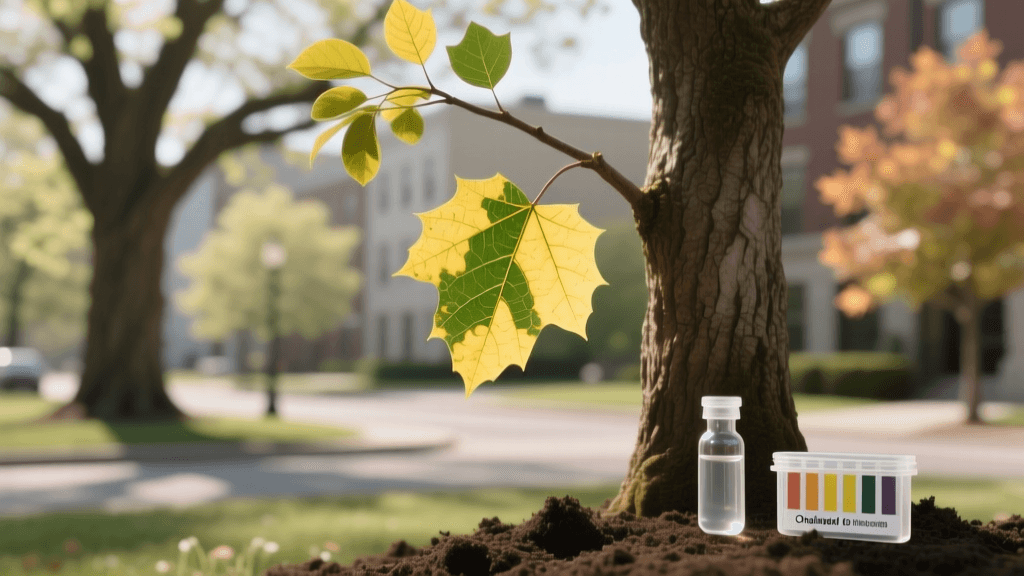
How to Diagnose and Treat Iron Chlorosis in Shade Trees
There are few things more frustrating for a homeowner than watching a beloved shade tree slowly turn sickly yellow in the middle of the growing season. While many assume this discoloration is caused by a lack of water or a fungal disease, the culprit is very often a nutrient deficiency known as iron chlorosis. If left untreated, iron chlorosis will weaken your tree, making it highly susceptible to secondary pests, severe storm damage, and eventually, premature death. Fortunately, with the right diagnostic approach and targeted treatment plan, you can restore your tree to vibrant health.
Understanding Iron Chlorosis in Trees
Iron is a crucial micronutrient that trees require for the synthesis of chlorophyll, the pigment responsible for photosynthesis and the green color of leaves. Unlike macronutrients such as nitrogen or phosphorus, iron is not mobile within the plant. This means that once a leaf has formed, the tree cannot relocate iron from older tissues to support new growth. When a tree cannot access sufficient iron from the soil, the newest leaves at the tips of the branches and the top of the canopy will emerge pale green or bright yellow.
The hallmark symptom of iron chlorosis is 'interveinal chlorosis.' This presents as yellowing of the leaf tissue between the veins, while the veins themselves remain distinctly dark green. As the deficiency worsens over the summer months, the yellowed tissue may turn stark white, develop brown necrotic spots along the margins, and eventually drop prematurely. Over several consecutive years, the tree will experience branch dieback, starting at the outer canopy and moving inward.
Diagnosing the Yellowing: A Comparison Chart
Before applying any treatments, it is critical to confirm that iron is actually the missing nutrient. Misdiagnosing the problem can lead to wasted money and further stress to the tree. Below is a diagnostic comparison chart to help you differentiate iron deficiency from other common nutritional issues.
| Nutrient Deficiency | Visual Symptoms | Leaf Location | Primary Soil Cause |
|---|---|---|---|
| Iron | Interveinal chlorosis; veins remain dark green | Newest leaves (top of canopy) | High pH (above 7.0) |
| Manganese | Interveinal chlorosis; veins slightly lighter green | Older and newer leaves mixed | High pH, poor drainage |
| Nitrogen | Uniform yellowing of the entire leaf blade | Older leaves (bottom of canopy) | Depleted soil organic matter |
| Magnesium | Interveinal chlorosis with reddish-purple tints | Older leaves first, moving upward | Acidic, sandy soils |
The Root Cause: Soil pH and Alkalinity
One of the most common misconceptions in tree care is that chlorotic trees are growing in soil that lacks iron. In most residential landscapes, especially in the Midwest, Great Plains, and Western United States, there is actually an abundance of iron in the soil. The problem is not a lack of iron, but a lack of available iron.
Iron availability is strictly dictated by soil pH. In alkaline soils (pH above 7.0), iron oxidizes into a solid, insoluble form that tree roots simply cannot absorb. Furthermore, compacted soils, poor drainage, and excessive phosphorus levels can exacerbate the issue by stifling root respiration and chemically binding with the iron.
According to the University of Minnesota Extension, certain tree species are inherently predisposed to iron chlorosis because their root systems lack the evolutionary ability to sufficiently acidify the rhizosphere (the immediate soil zone around the roots) to unlock iron in high-pH soils. The most susceptible species include Pin Oak, Silver Maple, River Birch, Amur Maple, and White Pine. If you have these species planted in alkaline, calcareous soils, chlorosis is almost inevitable without proactive intervention.
Actionable Solutions for Treating Chlorosis
Treating iron chlorosis requires a multi-tiered approach. Depending on the severity of the deficiency, the size of the tree, and your budget, you can utilize short-term foliar sprays, medium-term soil applications, or long-term trunk injections.
1. Short-Term Foliar Sprays
Foliar sprays provide a rapid, albeit temporary, visual fix. By applying iron directly to the leaves, you bypass the soil chemistry entirely.
- Product: Liquid Ferrous Sulfate or Chelated Iron spray.
- Measurement & Mixing: Mix 2 to 3 tablespoons of ferrous sulfate powder per gallon of water. Add a single drop of mild liquid dish soap to act as a surfactant, helping the solution adhere to the waxy leaf cuticle.
- Timing: Apply in the early morning or late evening to prevent leaf scorch from the sun. Repeat every 10 to 14 days during the growing season.
- Cost: $10 to $15 per bottle of concentrate.
- Limitations: This only treats the leaves that are sprayed. New growth that emerges a week later will still be yellow. It is best used for small, young trees or as a stop-gap measure while soil treatments take effect.
2. Medium-Term Soil Applications
Soil drenching is the most common DIY treatment for moderate chlorosis. However, you must use the correct type of chelated iron, or the soil pH will render it useless.
- Product: Iron chelated with EDDHA (e.g., Sequestrene 138). Avoid EDTA or DTPA chelates, as they break down and become ineffective in soils with a pH above 7.0.
- Measurement: Apply 2 to 4 ounces of EDDHA chelated iron per inch of trunk diameter. Dissolve the powder in water and pour it into holes drilled 12 inches deep and spaced 2 feet apart in a circle around the tree's drip line.
- Timing: Early spring, just before bud break, or late fall after leaf drop.
- Cost: $25 to $45 per pound of EDDHA chelate.
To address the root cause of the alkalinity, you must also lower the soil pH. Apply 90% Elemental Sulfur to the soil surface under the canopy. The standard application rate is 2 to 3 pounds per 100 square feet. Soil bacteria will slowly convert the sulfur into sulfuric acid, gradually lowering the pH. Be aware that this is a slow process; it can take 12 to 24 months to see a significant shift in soil pH.
3. Long-Term Trunk Injections and Micro-Implants
For large, mature, or severely declining shade trees, soil applications are often insufficient due to poor root uptake and the sheer volume of product required. Trunk injections deliver iron directly into the tree's xylem, distributing it to the canopy within days.
- Product: Ferric Ammonium Citrate or specialized proprietary iron formulations (e.g., ArborJet Iron). This should be performed by an ISA Certified Arborist.
- Measurement: Dosage is calculated based on the tree's Diameter at Breast Height (DBH), measured 4.5 feet off the ground. Small drill holes are made around the base of the trunk, and injection capsules are tapped in.
- Timing: Mid-to-late spring, after the leaves have fully expanded and the tree is actively transpiring, pulling the fluid up into the canopy.
- Cost: Professional injection typically costs $12 to $18 per inch of DBH. A 20-inch oak tree will cost between $240 and $360 per treatment.
- Longevity: A single professional trunk injection can protect the tree from chlorosis for 2 to 3 full growing seasons, making it highly cost-effective over time.
Prevention and Ongoing Tree Care
Once you have treated the immediate deficiency, implementing proper cultural practices will prevent the problem from recurring with the same severity.
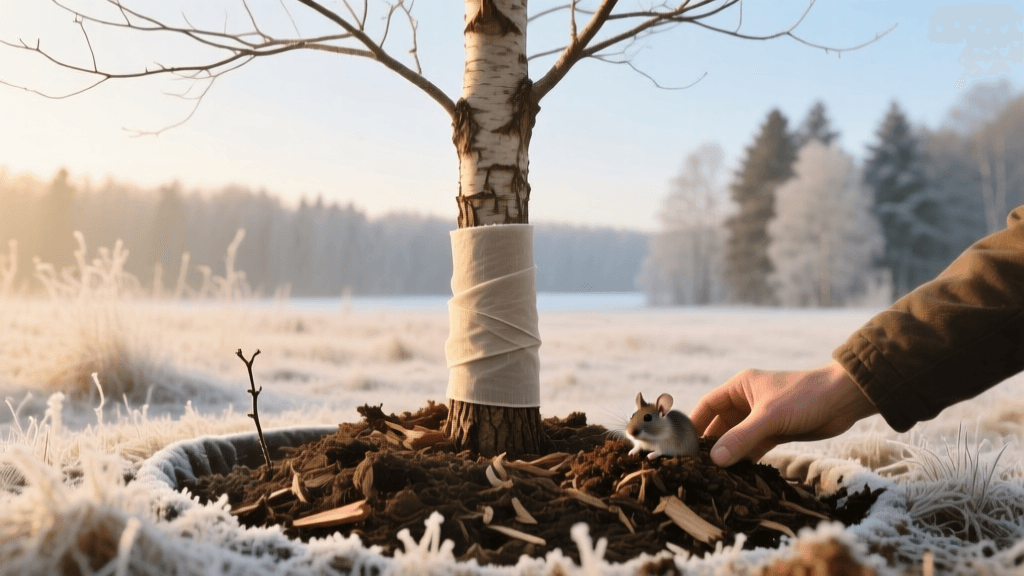
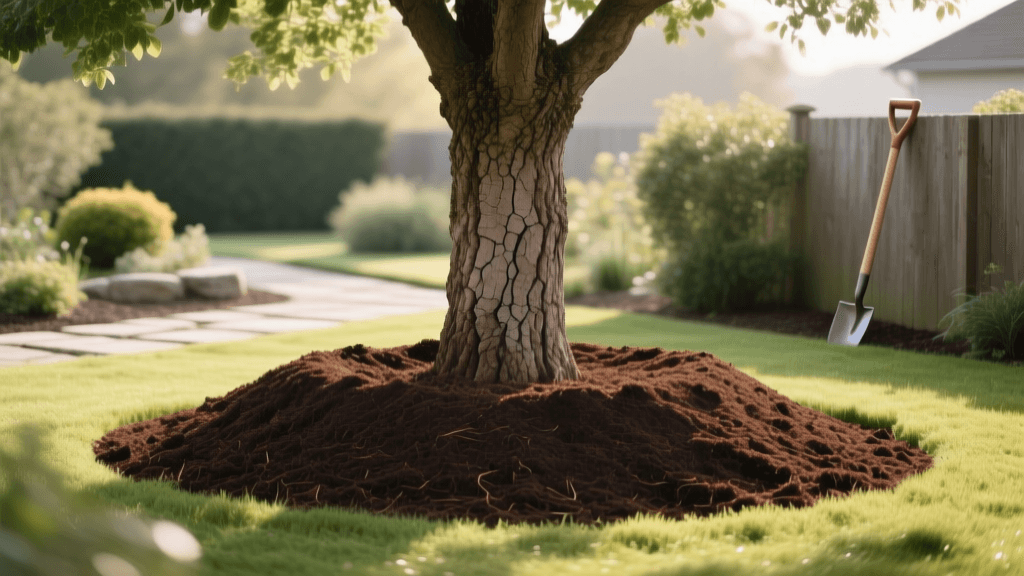
Mulching: Apply a 3-inch layer of organic mulch in a wide ring around the tree, extending out to the drip line if possible. Keep the mulch at least 4 inches away from the trunk flare to prevent rot and rodent damage. Use slightly acidic organic materials like pine bark, pine needles, or shredded oak leaves, which will mildly acidify the soil as they decompose.
Watering: Water deeply but infrequently. Alkaline soils are often heavy clays that retain water poorly in the root zone. Use a soaker hose for 2 to 3 hours once a week during dry spells to encourage deep root growth.
Avoid Alkaline Runoff: Do not plant susceptible trees near concrete foundations, sidewalks, or driveways. As concrete cures and weathers, it leaches calcium carbonate (lime) into the adjacent soil, drastically raising the pH and guaranteeing severe iron chlorosis.
When to Consult a Certified Arborist
While foliar sprays and soil sulfur applications are excellent DIY projects, you should hire an ISA Certified Arborist if your tree exhibits more than 25% branch dieback, if the tree is located near power lines or structures where failure poses a safety risk, or if the trunk diameter exceeds 15 inches. An arborist can perform a comprehensive soil and tissue analysis, utilize pneumatic air tools to alleviate soil compaction without damaging roots, and perform professional-grade trunk injections safely and effectively. By combining accurate diagnosis with targeted, science-backed treatments, you can preserve your shade trees for decades to come.