Lawn Care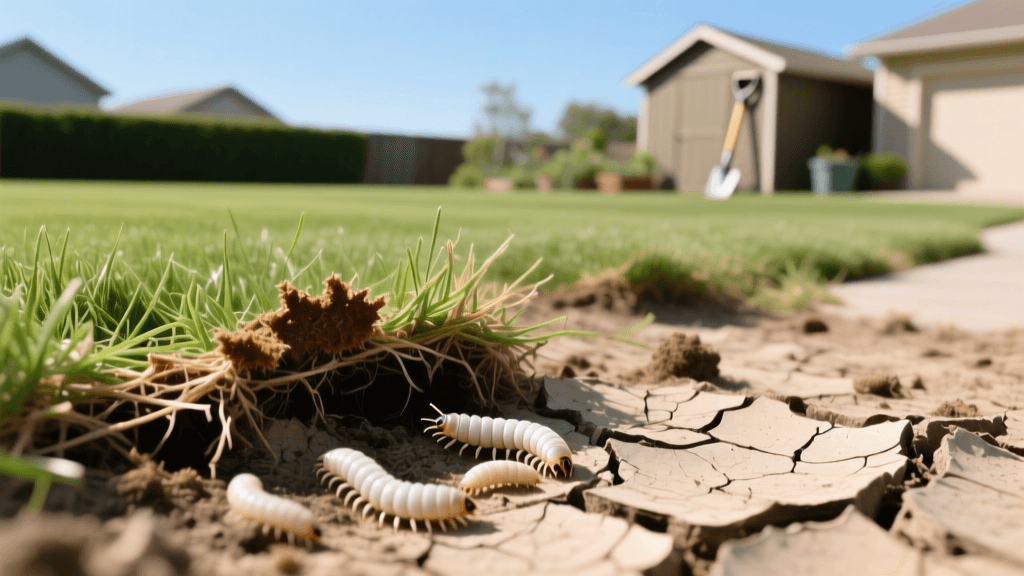
Diagnose and Treat Lawn Grub Damage: A Complete Guide
The Late-Summer Lawn Mystery: Grubs vs. Drought
As late summer transitions into early fall, many homeowners step outside to find unsightly brown patches spreading across their once-lush turf. The immediate assumption is often drought stress, leading to increased irrigation that fails to solve the problem. In reality, the true culprit is frequently hiding just beneath the soil surface: white grubs. Grubs are the larval stage of various beetles, including Japanese beetles, June bugs, and European chafers. They feed aggressively on grass roots, severing the turf from its water and nutrient supply.
Accurate problem diagnosis is the cornerstone of effective lawn care. Applying expensive curative insecticides to a drought-stressed lawn is a waste of resources, just as pumping thousands of gallons of water onto a grub-infested lawn will not save the dying grass. This comprehensive guide will walk you through the exact steps to diagnose grub damage, assess the severity of the infestation, and implement targeted curative and preventative solutions to restore your lawn to peak health.
Step 1: Diagnosing the Problem - Grubs vs. Drought Stress
Before purchasing any chemical or organic treatments, you must confirm that grubs are the root cause of your lawn's decline. Both grub damage and drought stress cause the grass to turn brown, wilt, and thin out. However, there are distinct physical indicators that separate the two.
The 'Tug Test'
The most reliable diagnostic tool for grub damage is the 'Tug Test'. Walk to the edge of a brown patch where the dying grass meets the green grass. Grab a handful of turf and pull upward gently. If grubs have destroyed the root system, the grass will pull up easily, rolling back like a freshly laid carpet or loose sod. If the turf resists and you have to pull hard to break the roots, the issue is likely drought stress, disease, or a different cultural problem.
Secondary Visual Indicators
Beyond the Tug Test, look for secondary signs of a grub infestation. The soil beneath the dead grass may feel unusually spongy or loose when you walk on it. Additionally, you may notice increased wildlife activity. Animals like raccoons, skunks, crows, and moles actively dig up grub-infested lawns to feast on the protein-rich larvae, leaving behind torn-up chunks of soil and turf.
Diagnostic Comparison Chart
| Diagnostic Feature | Grub Damage | Drought Stress |
|---|---|---|
| Turf Attachment | Rolls back easily like a carpet | Firmly rooted, difficult to pull |
| Soil Texture | Loose, spongy, and easily disturbed | Hard, compacted, and dry |
| Wildlife Activity | Digging by skunks, raccoons, or birds | No unusual animal digging |
| Response to Water | Turf remains brown and detached | Turf recovers and greens up |
| Visible Pests | C-shaped white larvae in topsoil | None visible in soil profile |
Step 2: Assessing the Severity of the Infestation
Finding one or two grubs in your lawn does not necessitate a chemical intervention. All lawns host a small, natural population of grubs that cause no measurable harm. To determine if your grub population has crossed the damage threshold, you must conduct a square-foot survey.
Using a flat-edged spade, cut three sides of a 12-inch by 12-inch square in the turf at the edge of a damaged area. Peel back the sod like a hinge and dig through the top 2 to 3 inches of soil. Count the number of C-shaped white grubs you find. Replace the sod and water it immediately. Repeat this process in three to four different areas of your lawn to get an accurate average.
According to the Michigan State University Extension, a healthy, well-maintained lawn can typically tolerate up to 5 to 10 grubs per square foot without showing significant damage. Treatment is only recommended when populations exceed this threshold, the turf is actively declining, and secondary animal damage is occurring.
If your survey reveals more than 10 grubs per square foot, it is time to implement a curative treatment plan.
Step 3: Curative Solutions for Active Grub Infestations
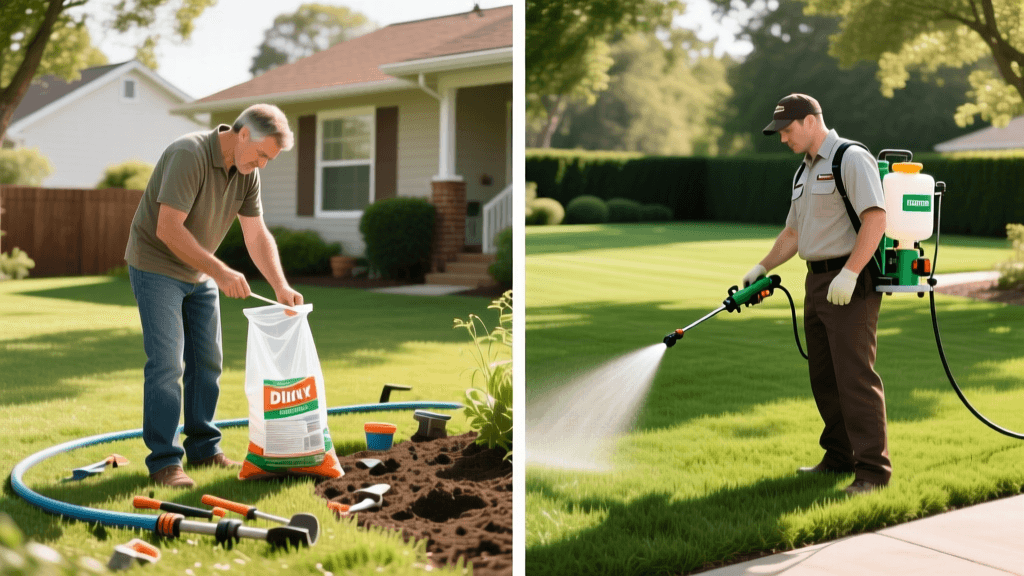
Curative treatments are designed to kill actively feeding grubs in late summer and early fall (typically August through October). Because the grubs are large and feeding heavily, you need a fast-acting insecticide that penetrates the soil quickly.
Trichlorfon (Brand Name: Dylox)
Trichlorfon is the gold standard for curative grub control. It is a fast-acting organophosphate that kills grubs within 1 to 3 days of contact. However, it has a very short residual life in the soil, breaking down completely within a week. This makes it highly effective for immediate rescue missions but useless for long-term prevention.
- Application Timing: Late August to early October, when grubs are near the surface.
- Cost: Approximately $25 to $35 per 5,000 square feet.
- Crucial Step: Trichlorfon degrades rapidly in high-pH soils (above 7.2) and must be watered in immediately. Apply at least 0.5 inches of irrigation right after spreading to move the active ingredient into the root zone before it breaks down.
Carbaryl (Brand Name: Sevin)
Carbaryl is an alternative curative option, though it is generally less effective on larger, mature grubs than Trichlorfon. It is highly toxic to earthworms and beneficial soil insects, so it should only be used when Trichlorfon is unavailable and grub populations are severely damaging the turf.
Step 4: Preventative Solutions for Long-Term Control
If your lawn has a history of grub damage, or if you live in an area with heavy Japanese beetle or European chafer populations, a preventative approach is far more cost-effective and environmentally sound than curative rescue treatments.
Chlorantraniliprole (Brand Name: Scotts GrubEx, Acelepryn)
Chlorantraniliprole is a modern, highly targeted preventative insecticide. It is exceptionally safe for pollinators, pets, and beneficial soil organisms like earthworms. It works by disrupting the muscle function of young grubs, preventing them from feeding and growing.
- Application Timing: April through early June. This product takes 60 to 90 days to fully activate in the soil, so early application is mandatory.
- Cost: Approximately $20 to $25 per 10,000 square feet.
- Best Practice: Apply before the summer heat sets in and water it in with 0.25 inches of irrigation to move the granules off the grass blades and into the soil.
Imidacloprid (Brand Name: Merit, Bayer Advanced)
Imidacloprid is a widely used systemic preventative. It is absorbed by the grass roots and kills grubs as they begin to feed in mid-summer. While highly effective, it carries a higher toxicity risk for bees and aquatic invertebrates compared to Chlorantraniliprole, so it must be applied carefully and never allowed to runoff into storm drains.
- Application Timing: Mid-June through July.
- Cost: Approximately $15 to $20 per 10,000 square feet.
Organic Control: Beneficial Nematodes
For homeowners committed to organic lawn care, beneficial nematodes are a highly effective biological control. Specifically, the species Heterorhabditis bacteriophora (Hb) actively hunts and infects white grubs. Nematodes must be purchased from specialized suppliers, kept refrigerated, and applied in the late afternoon or evening to avoid UV degradation. The soil must remain consistently moist for at least two weeks after application to ensure the nematodes survive and hunt effectively.
Step 5: Lawn Recovery and Repair
Eliminating the grubs is only half the battle. Once the pests are controlled, you must repair the damaged turf to prevent weeds from colonizing the bare soil.
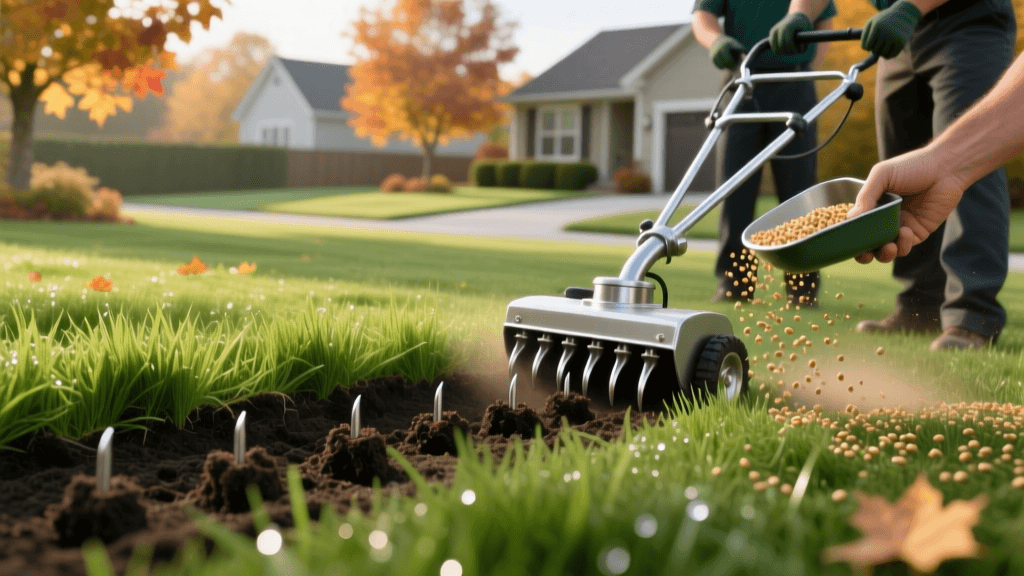
- Remove Dead Turf: Use a heavy-duty garden rake to aggressively rake out the dead, detached grass and loosen the exposed topsoil. This creates a vital seed-to-soil contact zone.
- Overseed Immediately: Choose a high-quality grass seed blend that matches your existing lawn. For cool-season lawns, early fall is the optimal time for overseeding. Apply seed at a rate of 4 to 6 pounds per 1,000 square feet for bare patch repair.
- Apply Starter Fertilizer: Use a starter fertilizer high in phosphorus (e.g., a 10-18-10 NPK ratio) to promote rapid root development in the new seedlings. Avoid using standard weed-and-feed products, as the herbicides will prevent your new grass seed from germinating.
- Maintain Moisture: Keep the top inch of soil consistently moist by watering lightly two to three times a day until the new grass reaches mowing height (approximately 3 inches).
By accurately diagnosing the problem, respecting university-established damage thresholds, and applying the correct chemical or organic treatments at the precise time of year, you can successfully eradicate grubs and restore your lawn to a thick, vibrant, and resilient state.