Lawn Care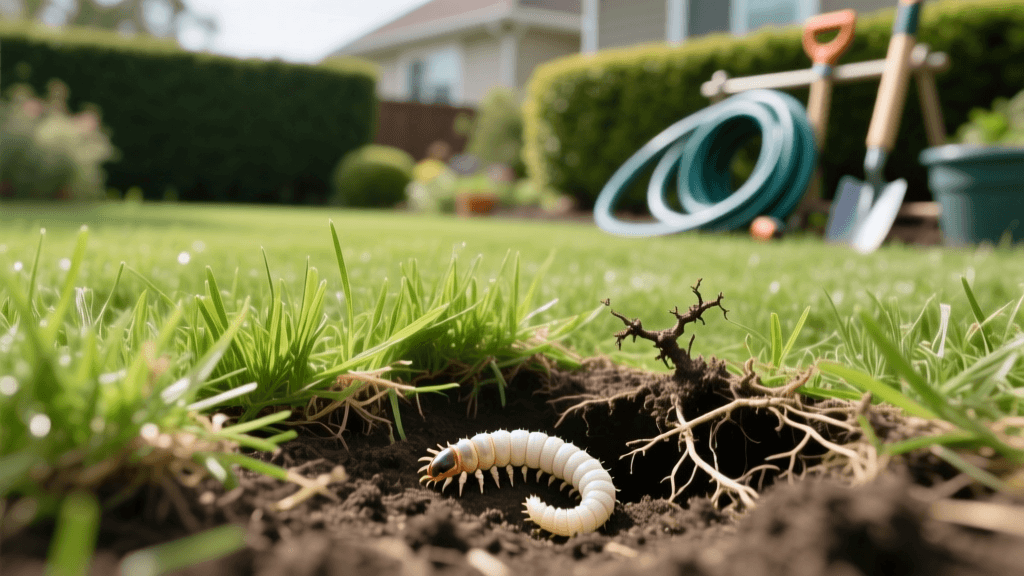
Diagnose and Treat Lawn Grub Infestations: Expert Guide
Understanding the Enemy: What Are Lawn Grubs?
White grubs are the C-shaped, creamy-white larvae of scarab beetles—like Japanese beetles, June bugs, and European chafers. They live underground and feed on grass roots. When they chew through those roots, the grass can’t take up water or nutrients well, and you start seeing uneven brown patches. Those patches often look like drought damage, compacted soil, or a fungal problem. Since the feeding happens below ground, many people don’t realize grubs are the cause until large sections of lawn lift up or die off completely.
Step 1: How to Accurately Diagnose a Grub Infestation
Don’t reach for chemicals yet. First, make sure grubs are actually behind the trouble. Treating for something that isn’t there wastes time, money, and adds unnecessary products to your yard. Try these three methods to check.
The 'Tug Test' for Root Damage
If your lawn feels spongy when you walk on it—or if patches pull up easily like loose carpet—you might have a grub problem. Grab a handful of thin or brown grass and give it a gentle tug. If it lifts right up with little resistance, the roots are likely gone. Flip back the sod and look in the top two inches of soil for C-shaped, whitish larvae with brown heads and six legs near the front.
The Soapy Water Flush Test
If the tug test doesn’t give clear results but your lawn still looks off, try the soap flush. Mix 2 tablespoons of liquid dish soap into 2 gallons of water. Pour it evenly over a 1-square-yard patch where healthy and damaged grass meet. Wait 10 to 15 minutes. The soap irritates grubs and pushes them to the surface. If several show up, you’ve got an active infestation.
Secondary Signs: Animal and Bird Damage
Sometimes the first clue isn’t the grass—it’s the animals digging in it. Skunks, raccoons, armadillos, and crows all go after grubs. If you wake up to small holes, flipped sod, or scattered dirt, they’re probably hunting. But keep in mind: they’ll also dig for earthworms or sod webworms. So even if animals are tearing up your yard, do the tug test or soap flush to confirm grubs are really there.
Step 2: Evaluating the Damage Threshold
Finding one or two grubs doesn’t mean you need to treat the whole yard. Grass can handle some grub activity before showing real signs of stress. According to Purdue University Extension entomologists, treatment usually only makes sense once numbers cross the economic threshold.
- Healthy, well-maintained lawns: Can handle up to 10 grubs per square foot.
- Stressed or poorly maintained lawns: May show damage with as few as 5 to 7 grubs per square foot.
To count accurately, use a flat spade to cut three sides of a 1-foot by 1-foot square in your turf. Lift the sod like a hinge and look through the top 3 inches of soil. Count the grubs, then lay the sod back down and water it well. Repeat this in three different spots to get an average.
Step 3: Selecting the Right Grub Treatment
Once you’ve confirmed more grubs than your lawn can handle, pick a treatment based on the time of year and what stage the grubs are in. There are three main types: preventive, curative, and organic.
| Treatment Type | Active Ingredient | Application Timing | Target Stage | Est. Cost per 1,000 sq ft |
|---|---|---|---|---|
| Preventive | Chlorantraniliprole | April to Early June | Newly hatched larvae | $12 - $16 |
| Preventive | Imidacloprid | June to Early August | Young larvae | $10 - $14 |
| Curative | Trichlorfon | Late August to October | Actively feeding grubs | $15 - $20 |
| Organic | Heterorhabditis bacteriophora (Nematodes) | Late Summer / Early Fall | Young to mid-stage grubs | $25 - $40 |
Preventive Treatments (Long-Term Control)
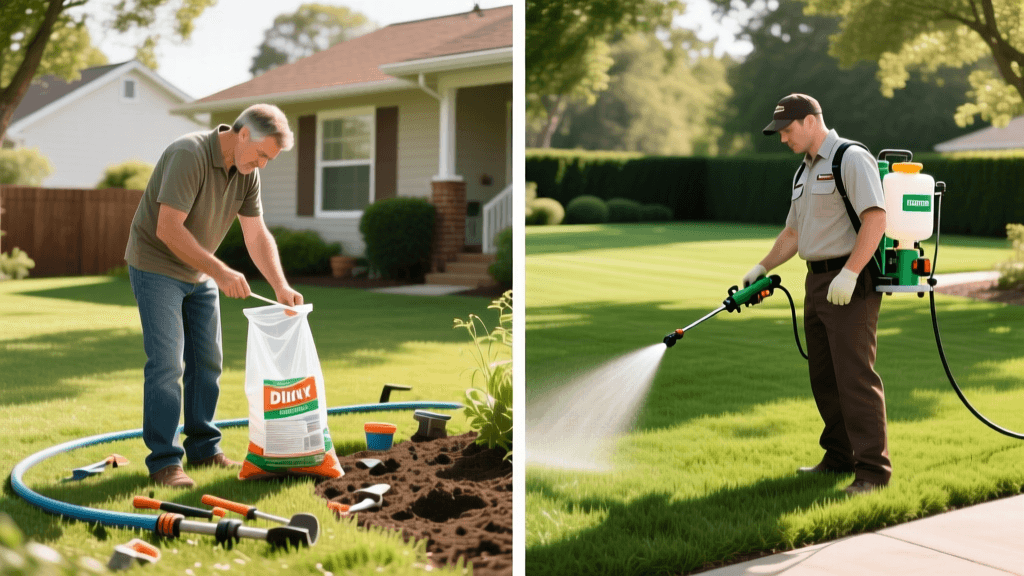
Preventives work best when applied before eggs hatch. Products with Chlorantraniliprole (like Scotts GrubEx) or Imidacloprid (like Bayer Advanced Season-Long Grub Control) fit that window. Chlorantraniliprole is popular with university extensions because it’s safer for bees and earthworms but still very effective against scarab larvae. Apply preventives between June and early August. These products need a few weeks to move down into the root zone, so their peak effect lines up with young grubs emerging in late summer.
Curative Treatments (Quick Knockdown)
If you spot grubs in September or October and missed the earlier window, go with a curative option. Trichlorfon (found in Dylox or Bayer Advanced 24-Hour Grub Killer) works fast—most grubs die within 24 to 48 hours. But Trichlorfon breaks down quickly in soil, usually within 3 to 5 days. It also won’t work well in spring. By April or May, grubs are mature and deep in the soil, getting ready to pupate. They aren’t feeding much and resist curative treatments. Skip spring applications entirely.
Organic Solutions: Beneficial Nematodes
If you’d rather skip synthetic chemicals, beneficial nematodes (Heterorhabditis bacteriophora) are a living option. These tiny worms seek out grubs and release bacteria that kill them. They work best on young to mid-stage grubs, so apply them in late summer or early fall to moist soil. Because they’re alive, they’re sensitive to heat and sun—apply them in the late afternoon or evening, and water the lawn well before and after. Keep the soil damp for at least two weeks afterward.
Step 4: The Golden Rule of Grub Control - Watering In
Most grub treatments fail because they’re not watered in properly. Grubs live in the soil and eat roots—not grass blades. If you spread or spray a product and leave it sitting on the surface, sunlight breaks it down and the grubs never touch it. Water your lawn with at least 0.5 inches right after applying. That moves the active ingredient into the top two inches of soil where the grubs feed. An empty tuna can placed on the lawn is a simple way to measure when you’ve hit 0.5 inches.
Step 5: Lawn Recovery and Overseeding
If big patches of grass are already dead, killing the grubs is just the first step. You’ll need to repair the lawn to keep weeds and erosion from taking over.
- Remove Dead Turf: Use a heavy-duty thatch rake or motorized dethatcher to pull out the dead, rootless grass and debris.
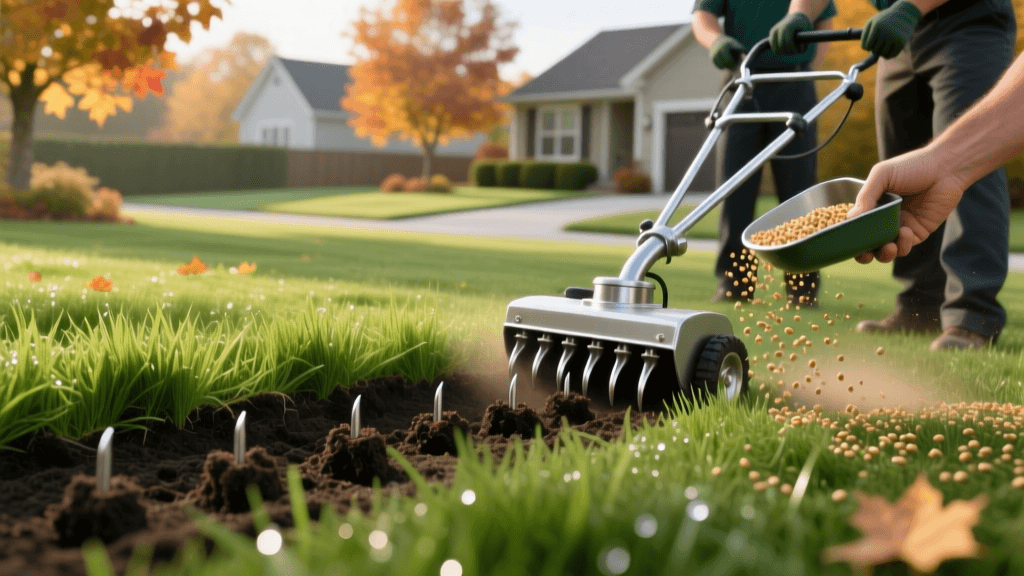
- Core Aeration: Grub damage often goes hand-in-hand with compacted soil. Rent a core aerator to pull 3-inch plugs—this helps air, water, and nutrients reach surviving roots.
- Overseed with Resistant Varieties: Kentucky Bluegrass tends to get hit hard by grubs. For damaged areas, choose Tall Fescue or Perennial Ryegrass instead—they grow deeper, sturdier roots that hold up better under light grub pressure.
- Apply Starter Fertilizer: Use a starter fertilizer high in phosphorus (like 10-18-10) to help new seedlings build strong roots quickly.
Expert Insights and Citations
'Many homeowners mistakenly apply grub control products in the spring when they see animal damage or mature grubs near the soil surface. Spring treatments are largely a waste of money. The grubs are nearing the end of their feeding cycle and will soon pupate into adult beetles. Effective management requires targeting the young larvae in mid-to-late summer using either preventive chemicals applied in early summer or curative chemicals applied as soon as damage is detected in the fall.'
Final Thoughts on Lawn Maintenance
A thick, healthy lawn holds up better against grubs. Cool-season grasses mowed at 3 to 4 inches develop deeper roots that tolerate more grub activity before showing stress. Also, avoid heavy doses of high-nitrogen fertilizer in early summer—lush, shallow growth attracts egg-laying beetles. Pair good mowing and feeding habits with well-timed treatments, and you’ll keep your lawn looking solid year after year.