Tree Care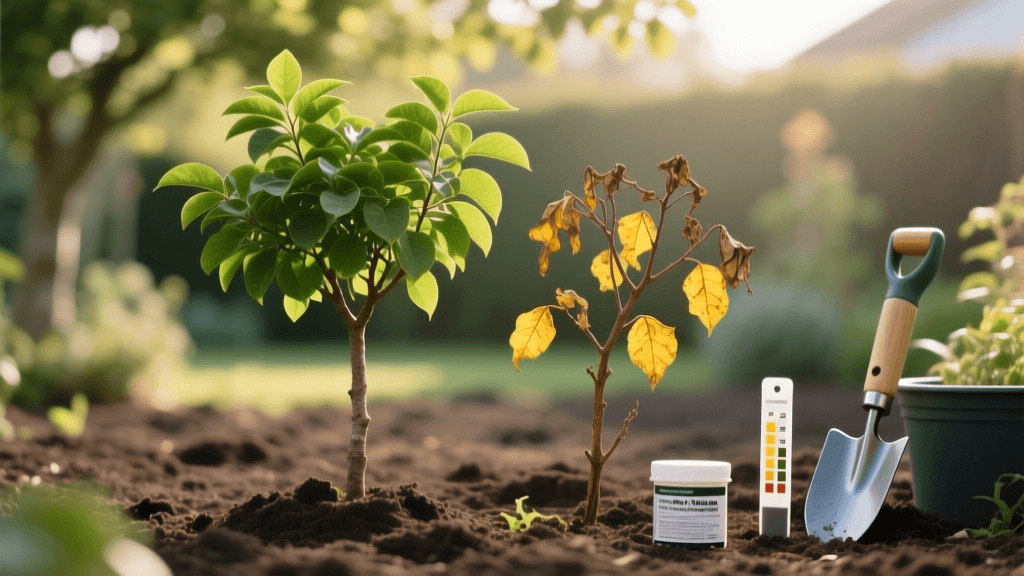
Diagnose and Treat Tree Chlorosis: Yellow Leaves Fix
Understanding Tree Chlorosis: Why Leaves Turn Yellow
Discovering yellowing leaves on your prized landscape trees can be a distressing experience for any homeowner. While seasonal autumn color changes are natural, premature yellowing during the spring or summer growing season is a primary indicator of a physiological disorder known as chlorosis. According to the Morton Arboretum, chlorosis is not a disease itself, but rather a symptom of an underlying problem that prevents the tree from producing adequate amounts of chlorophyll, the green pigment essential for photosynthesis.
When troubleshooting tree health, it is critical to distinguish between true nutrient-deficiency chlorosis and yellowing caused by environmental stressors like poor drainage, root rot, or drought. Misdiagnosing the problem can lead to wasted money on ineffective fertilizers and, worse, the eventual decline and death of the tree. This comprehensive diagnostic guide will walk you through identifying the root causes of chlorosis and provide actionable, step-by-step treatment protocols to restore your trees to vibrant health.
Diagnosing the Root Cause: Deficiency vs. Environmental Stress
Before purchasing any treatments, you must accurately diagnose the type of yellowing your tree is exhibiting. The two most common nutritional causes of chlorosis are iron deficiency and manganese deficiency. However, the visual symptoms differ slightly depending on the age of the affected leaves.
Identifying Interveinal Chlorosis
Iron and manganese deficiencies typically present as interveinal chlorosis. This means the leaf tissue between the veins turns yellow, while the veins themselves remain distinctly green.
- Iron Deficiency: Symptoms usually appear first on the newest, youngest leaves at the tips of the branches. If left untreated, the leaves may turn entirely white, develop brown necrotic spots, and drop prematurely.
- Manganese Deficiency: Symptoms often appear on older, inner leaves first, with a somewhat mottled yellow-green appearance.
Ruling Out Waterlogging and Root Rot
Yellowing leaves can also be caused by suffocated roots. If your soil is heavy clay or poorly drained, excess water displaces oxygen in the root zone. Without oxygen, roots cannot absorb nutrients, leading to a generalized, uniform yellowing of the entire leaf (veins included), often starting on the lower, older branches. To troubleshoot this, dig a small test hole about 12 inches deep near the tree's drip line. If the soil is soggy or smells like sulfur (rotten eggs) 48 hours after a rainstorm, you are dealing with a drainage issue, not a simple nutrient deficiency.
Highly Susceptible Tree Species
Certain tree species are genetically predisposed to iron chlorosis, especially when planted in alkaline soils (pH above 7.0) where iron becomes chemically 'locked up' and unavailable to roots. The University of Minnesota Extension notes that the most vulnerable species include:
- Pin Oak (Quercus palustris)
- Red Maple (Acer rubrum)
- Sweetgum (Liquidambar styraciflua)
- River Birch (Betula nigra)
- Eastern White Pine (Pinus strobus)
Step-by-Step Troubleshooting and Treatment Guide
Once you have confirmed that your tree is suffering from nutrient-lockout chlorosis (typically iron deficiency in high-pH soils), follow this targeted treatment regimen.
Step 1: Test Your Soil pH and Moisture
Do not guess your soil chemistry. Purchase a reliable home testing kit, such as the Luster Leaf Rapitest Soil Test Kit (approx. $15-$20), or send a sample to your local university cooperative extension for a professional analysis.
- Target pH: Most trees prefer a slightly acidic soil pH between 6.0 and 6.5.
- The Problem Zone: If your pH reads 7.2 or higher, iron is present in the soil but bound in an insoluble form that roots cannot absorb.
Step 2: Apply Chelated Iron Treatments (Short-Term Fix)
To provide immediate relief to a struggling tree, you must apply iron in a 'chelated' form. Chelates are organic molecules that wrap around the iron ion, protecting it from binding with soil particles.
Product Selection: For alkaline soils (pH > 7.0), you must use an EDDHA chelated iron product, such as Sequestrene 138 or Miller's Ferriplus. Standard EDTA chelates (often found in cheap garden center liquid feeds) will break down and become useless in high-pH soils. EDDHA products typically cost between $30 and $50 for a 5-pound container.
Application Method: Mix the EDDHA granules with water according to the label (usually 1 to 2 ounces per inch of trunk diameter) and apply it as a soil drench. Use a soil probe or pick to punch holes 6 to 8 inches deep in concentric circles around the tree's drip line, and pour the solution into these holes to bypass surface thatch and reach the active feeder roots.
Step 3: Long-Term Soil Acidification
Chelated iron is a temporary bandage. To solve the problem permanently, you must lower the soil pH. Apply elemental sulfur (such as Espoma Soil Acidifier, approx. $20 for 4 lbs).
- Measurement: Apply 2 to 4 pounds of elemental sulfur per 100 square feet of soil area beneath the tree canopy.
- Timing: Apply in late fall or early spring. Soil bacteria require warmth and moisture to convert sulfur into sulfuric acid, which lowers the pH. This is a slow process and may take 1 to 2 years to fully alter the soil chemistry.
Comparison Chart: Chlorosis Treatment Options
Choosing the right intervention depends on your budget, the severity of the chlorosis, and the size of the tree. Refer to the table below to select the optimal treatment pathway.
| Treatment Method | Active Ingredient | Estimated Cost | Time to Results | Application Timing |
|---|---|---|---|---|
| Soil Drench (High pH) | EDDHA Chelated Iron | $30 - $50 (DIY) | 2 - 4 Weeks | Early Spring / Early Summer |
| Granular Soil Amendment | Elemental Sulfur | $15 - $25 (DIY) | 12 - 24 Months | Late Fall or Early Spring |
| Foliar Spray | Ferrous Sulfate Liquid | $10 - $20 (DIY) | 3 - 7 Days | Spring (Avoid hot summer days) |
| Trunk Injection | Ferric Ammonium Citrate | $150 - $350 (Pro) | 1 - 3 Weeks | Late Spring (Post-leaf out) |
When to Call a Certified Arborist
While soil drenches and sulfur applications are excellent DIY solutions for small to medium-sized trees, large, mature oaks or maples may require professional intervention. If your tree has a trunk diameter greater than 15 inches and is showing severe canopy dieback, contact an ISA-Certified Arborist to perform macro-infusion trunk injections (e.g., using the ArborJet system).
Trunk injections bypass the soil entirely, delivering chelated iron directly into the tree's xylem. While more expensive (typically $15 to $25 per inch of trunk diameter), a single professional injection can provide up to two full years of green, healthy foliage while you work on amending the soil beneath the canopy. According to Utah State University Extension, trunk injections are highly effective but should not be performed on trees already suffering from severe drought stress or advanced root rot, as the tree lacks the internal water pressure necessary to pull the treatment up into the canopy.
Preventative Maintenance and Seasonal Care
Once you have treated the immediate chlorosis, implement these cultural practices to prevent recurrence and protect the root zone:
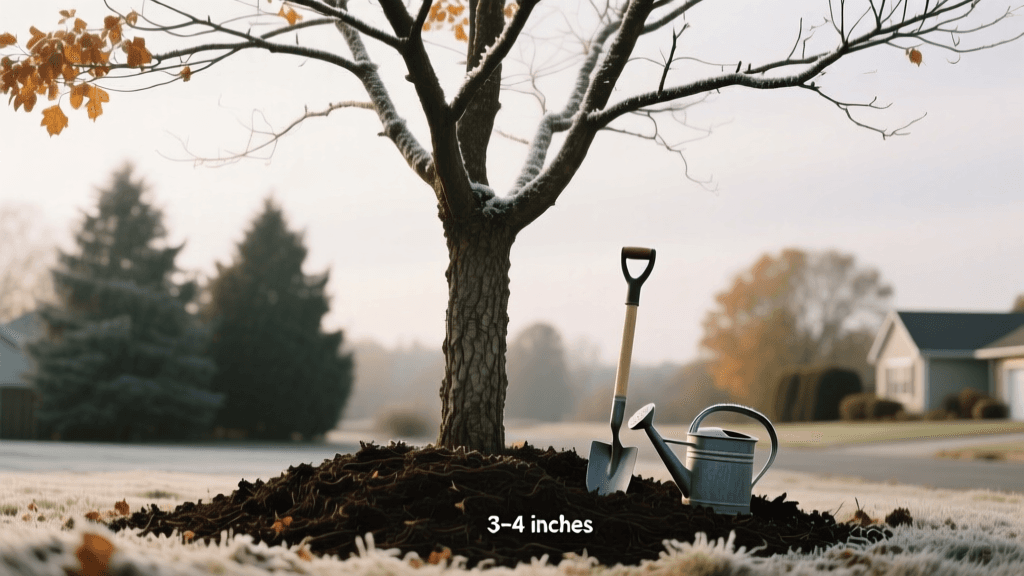
- Proper Mulching: Apply a 2-to-3-inch layer of organic wood chip mulch in a wide ring around the tree, keeping it 3 inches away from the trunk bark. As the mulch decomposes, it naturally releases mild organic acids that help maintain a lower soil pH and improve soil structure.
- Avoid Soil Compaction: Never park vehicles or store heavy construction materials under the tree's drip line. Compacted soil destroys the macropores necessary for oxygen exchange, leading to root suffocation and secondary chlorosis.
- Smart Watering: During drought periods, provide deep, infrequent watering using a soaker hose placed at the drip line. Aim for 1 inch of water per week. Avoid frequent, shallow sprinkling, which encourages weak surface roots that are highly susceptible to heat stress and nutrient lockout.
- Careful Fertilization: Avoid using high-phosphorus synthetic fertilizers (the middle number in the N-P-K ratio). Excess phosphorus chemically binds with iron in the soil, exacerbating iron deficiency even if the soil pH is acceptable.
By systematically diagnosing the underlying cause of yellowing leaves and applying targeted, science-backed treatments, you can reverse chlorosis and ensure your landscape trees remain vigorous, structurally sound, and beautifully green for decades to come.