Tree Care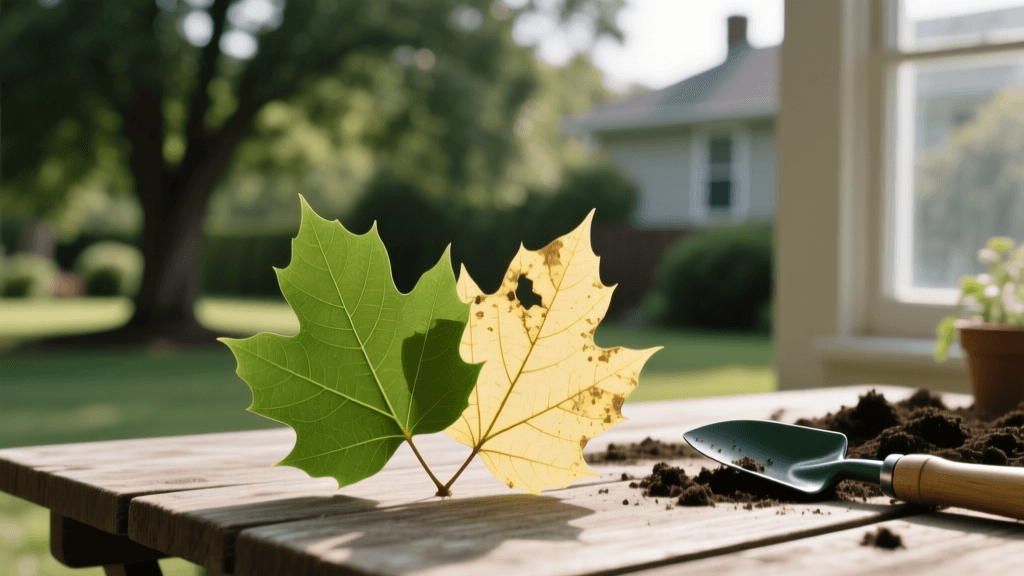
Guide to Diagnosing and Treating Tree Leaf Chlorosis
Understanding Tree Leaf Chlorosis: More Than Just Yellow Leaves
When you notice the leaves on your prized shade trees turning yellow, it is easy to assume the tree needs more water or fertilizer. However, yellowing leaves are often a symptom of a complex physiological issue known as chlorosis. Chlorosis is not a disease itself; rather, it is a visible indicator that the tree is failing to produce sufficient chlorophyll, the green pigment essential for photosynthesis. Without adequate chlorophyll, a tree cannot generate the carbohydrates it needs to sustain growth, defend against pests, or survive harsh winters.
Diagnosing the exact cause of chlorosis requires a systematic approach to problem diagnosis and solutions. The most common culprits are nutrient deficiencies—specifically iron and manganese—often triggered by alkaline soil conditions rather than an actual lack of nutrients in the ground. In this comprehensive guide, we will break down how to accurately diagnose the root cause of yellowing leaves, provide actionable treatment plans with specific product recommendations, and outline long-term cultural practices to restore your trees to vibrant health.
Diagnosing the Root Cause: Nutrient Deficiency vs. Environmental Stress
Before purchasing any treatments, you must accurately diagnose the type of chlorosis affecting your tree. Applying the wrong treatment can waste money and potentially harm the tree. The visual pattern of the yellowing, combined with the age of the affected leaves, provides critical clues.
Diagnostic Chart for Yellowing Leaves
Use the following diagnostic table to differentiate between the most common causes of tree chlorosis based on visual symptoms and soil conditions.
| Cause | Visual Symptoms | Leaf Location | Primary Soil Condition | Initial Action |
|---|---|---|---|---|
| Iron Deficiency | Interveinal chlorosis (yellow tissue, green veins) | Newest growth (branch tips) | High pH (alkaline > 7.0) | Apply Fe-EDDHA chelates |
| Manganese Deficiency | Interveinal chlorosis, smaller leaf size | Older, inner canopy leaves | High pH, poor drainage | Manganese sulfate drench |
| Nitrogen Deficiency | Uniform pale green or solid yellowing | Older, lower canopy leaves | Sandy, highly leached soils | Balanced NPK fertilizer |
| Overwatering / Root Rot | Yellowing, wilting, premature leaf drop | Entire canopy, starting lower | Compacted, heavy clay soils | Reduce irrigation, aerate |
| Girdling Roots | Yellowing, dieback on one side of canopy | Localized to affected side | Improper planting depth | Root collar excavation |
The Science of Soil pH and Nutrient Lockout
A common misconception is that if a tree has iron chlorosis, the soil must be devoid of iron. In most urban and suburban landscapes, iron is abundantly present in the soil. The problem is nutrient lockout. Iron is highly soluble and easily absorbed by tree roots in acidic soils (pH 5.0 to 6.5). However, as soil pH rises above 7.0 (alkaline), iron oxidizes and binds with hydroxyl ions, forming solid compounds that tree roots cannot absorb.
Species like pin oaks, red maples, and river birches are particularly susceptible to iron chlorosis because they evolved in acidic forest environments and lack the specialized root exudates needed to extract iron from alkaline soils. Therefore, the solution is rarely just adding more raw iron; it requires altering the soil chemistry or using specialized chelated molecules that protect the iron from binding to the soil.
Step-by-Step Solutions for Nutrient Chlorosis
Once you have confirmed iron or manganese chlorosis, you must select the appropriate delivery method. The best method depends on the severity of the deficiency, the size of the tree, and your budget.
1. Soil Drench with Chelated Iron (Best for Long-Term Soil Health)
For soil applications, standard iron sulfate will not work in alkaline soils. You must use a chelated iron product, specifically one containing Fe-EDDHA (Ethylene diamine-N,N'-bis(2-hydroxyphenylacetic acid)). Unlike cheaper Fe-EDTA chelates, which break down and become ineffective at pH levels above 7.0, Fe-EDDHA remains stable and available to tree roots in soils with a pH up to 9.0.
- Timing: Apply in early spring, just before bud break, or in late fall after leaf drop.
- Measurement: Measure the tree's Diameter at Breast Height (DBH), which is the trunk diameter at 4.5 feet above the ground. Apply 1 to 2 ounces of Fe-EDDHA per inch of DBH.
- Application: Dissolve the chelate in water and drench the soil in a band around the drip line (the outer edge of the tree's canopy), where the most active feeder roots are located.
- Cost: Approximately $30 to $50 per treatment for an average-sized yard tree.
2. Trunk Injection (Best for Severe, Immediate Correction)
If a tree is in severe decline and needs immediate intervention, trunk macro-injection is the most effective solution. This method bypasses the soil entirely, delivering iron directly into the tree's xylem (vascular system).
- Timing: Early spring, when the tree is actively pulling water up from the roots but before leaves fully expand.
- Products: Professional-grade formulations like ferric ammonium citrate or specialized proprietary blends (e.g., ArborJet's QUIK-jet or TREE-age systems).
- Cost: Hiring an ISA Certified Arborist to perform trunk injections typically costs between $15 and $25 per inch of DBH. A 20-inch oak tree would cost $300 to $500, but the results can last for 2 to 4 years.
- Warning: Improper drilling can introduce decay fungi. Always hire a professional with specialized, low-pressure injection equipment to minimize trunk wounding.
3. Foliar Sprays (Best for Quick, Temporary Cosmetic Fixes)
Spraying a liquid iron solution directly onto the leaves can green them up in a matter of days. However, this is strictly a cosmetic band-aid. The iron does not translocate well within the tree, meaning new growth will still emerge yellow, and the spray can stain nearby concrete or stonework.
- Product: Ferrous sulfate liquid spray (1 to 2 ounces per gallon of water).
- Timing: Early morning or late evening to prevent leaf burn from the sun.
- Cost: Under $15 for a hose-end sprayer attachment.
Long-Term Prevention and Tree Health Assessment
Treating the symptoms of chlorosis without addressing the underlying environmental stressors will result in a recurring, expensive cycle. Implement these cultural practices to improve overall tree health and soil biology.
Lowering Soil pH Over Time
While you cannot change the fundamental geology of your region's soil, you can create localized acidic zones around your trees. Apply elemental sulfur to the soil surface at a rate of 1 to 2 pounds per 100 square feet in the fall. Soil bacteria will slowly convert the sulfur into sulfuric acid, gradually lowering the pH over the course of 12 to 18 months.
Proper Mulching and Root Zone Management
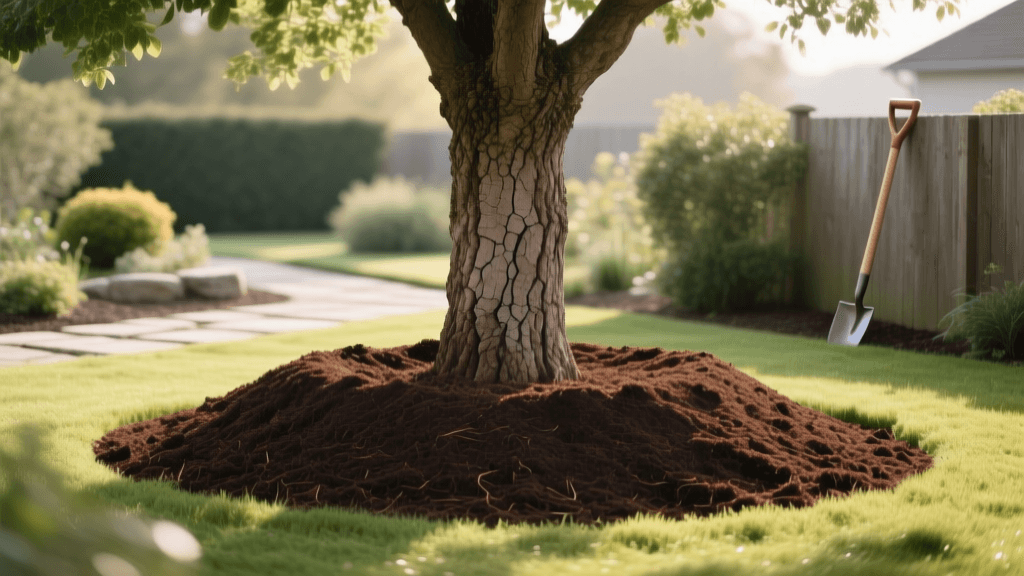
Soil compaction and poor drainage exacerbate chlorosis by suffocating feeder roots and creating anaerobic conditions that lock up nutrients. Apply a 2 to 4-inch layer of organic wood chip mulch over the entire root zone, extending out to the drip line. Crucial rule: Keep the mulch at least 4 inches away from the tree trunk to prevent 'volcano mulching,' which invites trunk rot and encourages girdling roots.
Radial Trenching for Compacted Soils
If your tree is surrounded by compacted clay or heavy foot traffic, use an air spade or a manual trenching shovel to dig narrow trenches radiating outward from the trunk (like spokes on a wheel). Fill these trenches with a mix of compost and expanded shale to permanently improve soil aeration, drainage, and root growth.
Expert Insight on Regional Chlorosis Challenges
Understanding the local environment is critical for accurate problem diagnosis. Urban soils are often heavily altered by construction debris, concrete runoff, and topsoil removal, all of which drive pH levels upward.
'Iron chlorosis is a common problem in the upper Midwest, particularly on pin oak, silver maple, and river birch. High soil pH is the primary culprit, but poor drainage, compacted soils, and girdling roots can also induce or worsen the condition. Correcting the underlying site issues is just as important as applying iron treatments.' — University of Minnesota Extension, Department of Forest Resources
Conclusion: When to Call a Professional
Mild cases of interveinal chlorosis in smaller trees can often be managed by homeowners using Fe-EDDHA soil drenches and elemental sulfur. However, if your tree is larger than 20 inches in DBH, shows signs of severe branch dieback, or fails to respond to soil treatments after one full growing season, it is time to consult an ISA Certified Arborist. A professional can perform a comprehensive soil and tissue analysis, utilize pneumatic tools for safe root collar excavation, and administer precise trunk injections to save your canopy. By accurately diagnosing the problem and applying targeted, science-backed solutions, you can ensure your shade trees remain healthy, vibrant, and structurally sound for decades to come.