Pest Control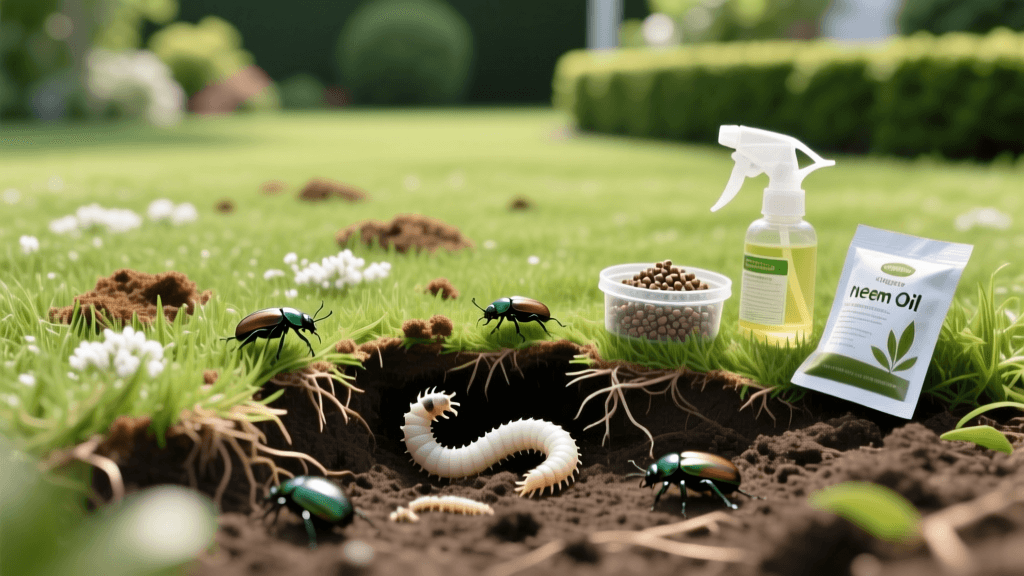
How to Diagnose and Treat White Grubs in Your Lawn
Understanding the White Grub Threat
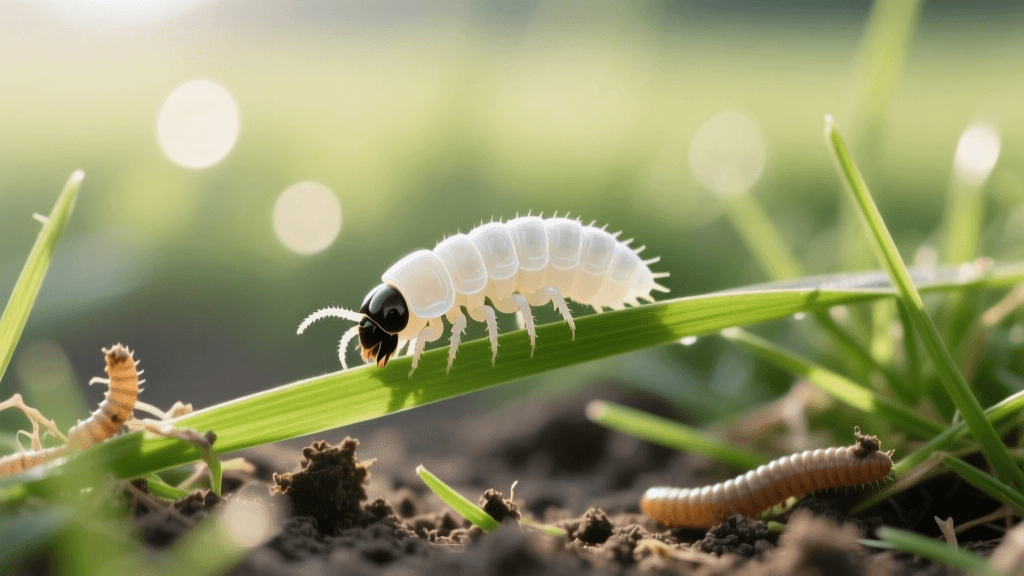
White grubs are the C-shaped, soil-dwelling larvae of scarab beetles, including Japanese beetles, masked chafers, and June bugs. While a few grubs in your soil are a normal part of the lawn ecosystem, a population explosion can devastate your turfgrass. These voracious feeders chew through the root systems of cool-season and warm-season grasses alike, severing the plant's ability to absorb water and nutrients. The result is widespread turf decline that often mimics drought stress or fungal disease, leading to misdiagnosis and ineffective treatments.
Diagnosing White Grub Damage in Your Lawn
Because grubs live beneath the soil surface, their damage is often mistaken for other lawn issues. However, there are distinct diagnostic signs that point directly to a grub infestation.
Visual Symptoms
- Spongy Turf: The grass feels loose and rolls back like a carpet because the root structure has been destroyed.
- Irregular Brown Patches: These patches appear in late summer or early fall and do not respond to deep watering.
- Animal Digging: Skunks, raccoons, armadillos, and crows will tear up your lawn to feast on the protein-rich grubs beneath the surface.
The Dig Test: Confirming the Infestation
Visual symptoms are not enough to confirm a grub problem. You must perform a physical inspection. Using a flat-edged spade, cut three sides of a 1-foot by 1-foot square in your lawn, about 3 inches deep. Peel back the turf like a hinge and count the grubs in the soil and on the roots. Replace the turf and water it immediately.
According to Purdue University Extension, the economic threshold for treatment is generally 5 to 10 grubs per square foot for healthy lawns, and as few as 3 to 5 grubs per square foot for stressed or newly established turf.
The Grub Life Cycle: Why Timing is Everything
To successfully treat grubs, you must understand their life cycle. Adult beetles emerge from the soil in early summer to mate and lay eggs in the turf. By mid-to-late summer, these eggs hatch into first-instar larvae. These young grubs are small, actively feeding near the soil surface, and highly susceptible to preventative insecticides. As autumn approaches and soil temperatures drop, the grubs molt into larger second and third instars, feeding voraciously on roots before burrowing deep into the soil to overwinter. In the spring, they return to the surface to feed briefly before pupating and emerging as adults. Applying a curative insecticide in the spring is largely ineffective and environmentally irresponsible, as the grubs are mature, difficult to kill, and will soon pupate regardless of treatment.
Treatment Solutions: Preventative vs. Curative
Preventative Chemical Controls
Preventative insecticides are designed to kill young grubs shortly after they hatch. These products must be applied in late spring or early summer, before the eggs are laid or just as they hatch.
- Chlorantraniliprole (e.g., Acelepryn, GrubEx): This is a highly effective, low-toxicity option that is safe for pollinators and earthworms. Apply between April and early June. It takes 60 to 90 days to fully move into the root zone, providing long-lasting residual control.
- Imidacloprid (e.g., Merit): A traditional neonicotinoid that targets the nervous system of young grubs. Apply in June or July. Note that imidacloprid can be toxic to bees, so avoid applying to lawns with flowering weeds like clover.
Curative Chemical Controls
If you missed the preventative window and discover an active infestation in late summer or early fall, you need a fast-acting curative product.
- Trichlorfon (e.g., Dylox): This is the gold standard for rapid grub elimination. It works within 24 to 48 hours and breaks down quickly in the soil. Apply at a rate of 1.5 to 2 lbs per 1,000 square feet, and water in heavily (at least 0.5 inches of water) to drive the chemical into the root zone.
- Carbaryl (e.g., Sevin): An alternative curative option, though generally less effective on larger, mature grubs than Trichlorfon.
Organic and Biological Controls
For homeowners seeking organic IPM (Integrated Pest Management) strategies, biological controls offer a sustainable, albeit slower, approach.
- Beneficial Nematodes (Heterorhabditis bacteriophora): These microscopic worms seek out and infect grubs, releasing bacteria that kill the host within 48 hours. Apply in late summer when soil temperatures are between 60°F and 85°F. Nematodes require moist soil and must be watered in immediately. Cost is approximately $30 to $45 per 10 million nematodes (covers roughly 2,500 sq ft).
- Milky Spore (Paenibacillus popilliae): A naturally occurring bacterium that specifically targets Japanese beetle grubs. It takes 2 to 5 years to establish in the soil but can provide control for up to 15 years once established. Apply using a grid pattern at a rate of 1 teaspoon per 4 square feet.
Comparison Chart: Grub Control Products
| Treatment Type | Active Ingredient / Organism | Application Timing | Target Stage | Est. Cost per 1,000 sq ft |
|---|---|---|---|---|
| Preventative | Chlorantraniliprole | April - Early June | Eggs / 1st Instar | $0.05 - $0.10 |
| Preventative | Imidacloprid | June - July | 1st / 2nd Instar | $0.04 - $0.08 |
| Curative | Trichlorfon | August - October | 2nd / 3rd Instar | $0.10 - $0.15 |
| Biological | H. bacteriophora Nematodes | August - September | All Larval Stages | $0.12 - $0.18 |
| Biological | Milky Spore | Spring or Fall | Japanese Beetle Larvae | $0.15 - $0.25 |
Cultural Practices to Minimize Grub Damage
Chemical and biological treatments are most effective when paired with sound cultural practices. A robust, deeply rooted lawn can tolerate a higher grub threshold without showing visual damage.
- Deep, Infrequent Watering: Grub eggs and young larvae require consistent moisture to survive. By watering deeply but infrequently (e.g., 1 inch per week in a single session), you allow the top layer of soil to dry out, which can desiccate eggs and early-stage grubs while encouraging deep turf roots.
- Proper Mowing Height: Keep your mower blade set to 3 or 3.5 inches. Taller grass shades the soil, reducing moisture evaporation and promoting a massive root system that can outgrow minor grub feeding.
- Core Aeration: Compacted soil stresses turf roots and creates a favorable environment for certain beetle species to lay eggs. Aerating in the fall relieves compaction and improves the efficacy of curative insecticides and nematode applications.
Expert Insights and Citations
Integrated Pest Management (IPM) dictates that we should only apply pesticides when a population reaches an economic threshold. As noted by entomologists at the University of Kentucky College of Agriculture, treating a lawn preventatively every year without first scouting for grubs is an unnecessary use of chemicals and a waste of resources. Always perform the dig test in late summer to assess your lawn's specific risk profile before committing to a multi-year chemical regimen.
By combining accurate diagnosis, precise timing, and a mix of cultural and targeted chemical or organic controls, you can effectively manage white grubs and maintain a pristine, healthy lawn year after year.