Pest Control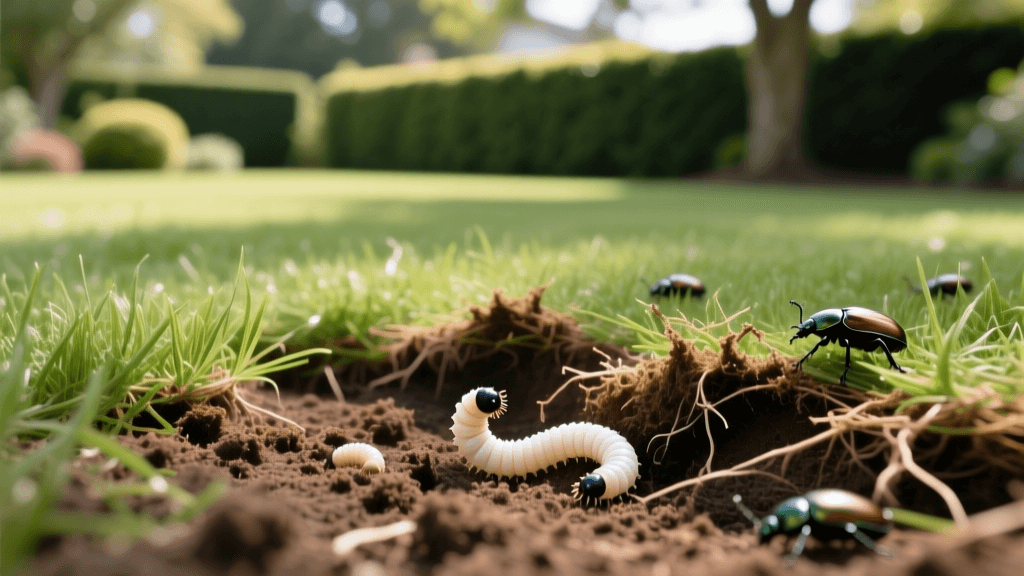
Diagnose and Treat White Grub Infestations in Lawns
Understanding the White Grub Threat in Lawns
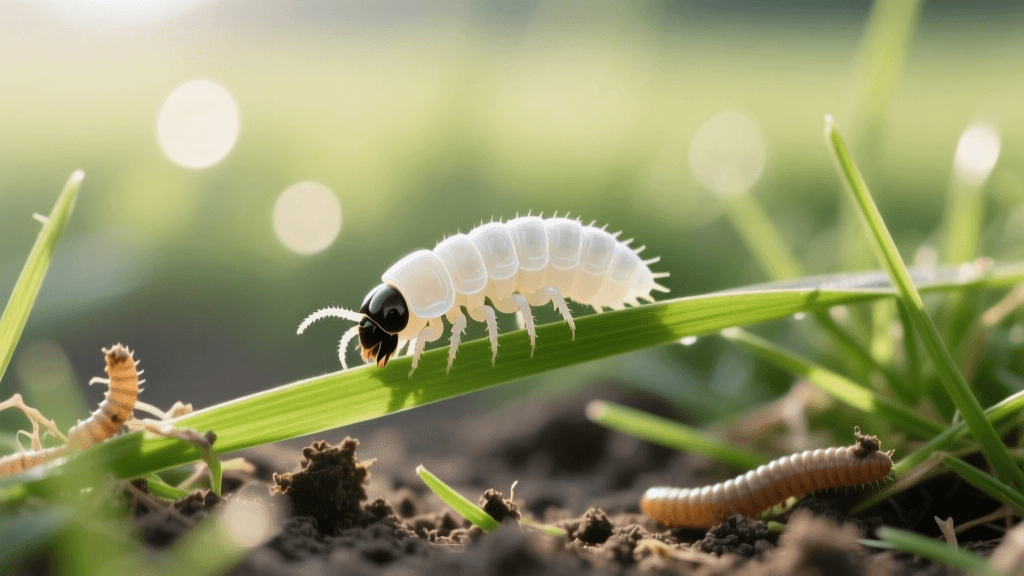
White grubs are the soil-dwelling larval stage of various scarab beetles, including Japanese beetles, June bugs, and masked chafers. These C-shaped, cream-colored larvae feed aggressively on the roots of turfgrass, severing the plant from its water and nutrient supply. As a result, the grass above ground wilts, turns brown, and eventually dies. Understanding the life cycle of these pests is crucial for accurate problem diagnosis and effective treatment timing.
Most scarab beetles have a one-year life cycle. Adults emerge in early summer, mate, and lay eggs in the soil. These eggs hatch in mid-to-late summer, releasing young grubs that feed voraciously on grassroots before burrowing deeper into the soil to overwinter. In the spring, they move back to the root zone to feed briefly before pupating into adults. This cycle dictates when your treatment solutions will be most effective.
Accurate Problem Diagnosis: Is It Really Grubs?
Diagnosing grub damage can be tricky because the symptoms closely resemble other common lawn issues, such as drought stress, chinch bug damage, or fungal diseases like brown patch. Before investing time and money into grub control, you must confirm their presence.
The Tug Test
The simplest diagnostic method is the Tug Test. Grubs destroy the root system, effectively detaching the grass from the soil. Walk to the edge of a brown, damaged patch where it meets green grass. Grab a handful of turf and pull gently. If the grass rolls up like a loose carpet with little to no resistance and no visible roots, you likely have a severe grub infestation. Healthy grass will resist pulling and remain firmly anchored in the soil.
Soil Sampling and Inspection
To confirm the presence and population density of grubs, you need to perform a soil sample. Using a sharp spade or a specialized sod cutter, cut three sides of a 12-inch by 12-inch square of turf. Peel back the sod like a hinge. Examine the top 2 to 4 inches of the exposed soil and the underside of the peeled sod. Look for the plump, C-shaped larvae. Count the number of grubs found in this one-square-foot area, then replace the sod and water it thoroughly to help it recover.
Secondary Symptoms: Animal Damage
Often, the first sign of a grub problem is not the brown grass itself, but the destruction caused by local wildlife. Skunks, raccoons, armadillos, and flocks of crows or starlings will actively tear up lawns in search of grubs. If your lawn looks like it has been tilled by a miniature rototiller, you have a secondary animal problem driven by a primary grub infestation.
Integrated Pest Management (IPM) Thresholds
Not every grub in your lawn requires chemical intervention. A healthy, well-maintained lawn can tolerate a certain number of grubs without showing visible damage. According to Integrated Pest Management (IPM) guidelines, treatment is only recommended when grub populations exceed specific thresholds:
- Low Maintenance Lawns: 8 to 10 grubs per square foot.
- High Maintenance Lawns: 5 to 8 grubs per square foot.
If your soil sample reveals fewer grubs than these thresholds, focus on cultural controls like proper irrigation and fertilization to help the grass outgrow the minor root damage.
Comprehensive Treatment Solutions
Once you have diagnosed a grub infestation that exceeds the IPM threshold, you must choose a treatment strategy. Solutions are generally divided into organic/biological controls and synthetic chemical controls, as well as preventative versus curative applications.
Organic and Biological Controls
For homeowners seeking environmentally friendly solutions, biological controls offer excellent efficacy when timed correctly.
- Beneficial Nematodes (Heterorhabditis bacteriophora): These microscopic worms naturally parasitize and kill grubs. They are most effective when applied in late summer or early fall when grubs are small and actively feeding near the surface. Cost: Approximately $35 to $50 per 3,000 square feet. Application tip: Apply in the early evening to avoid UV degradation, and irrigate the lawn immediately before and after application to help the nematodes move into the soil.
- Bacillus thuringiensis galleriae (Btg): A naturally occurring soil bacterium that targets the digestive system of scarab beetle larvae. Products containing Btg can be applied as a liquid or granular treatment. It is highly specific to beetles and safe for earthworms and beneficial insects. Cost: Roughly $25 to $40 per 5,000 square feet.
- Milky Spore (Paenibacillus popilliae): Best known for targeting Japanese beetle grubs specifically. It is a long-term solution that builds up in the soil over 2 to 3 years, providing control for up to a decade. However, it is slow-acting and not effective against other grub species like masked chafers.
Synthetic Chemical Controls
Chemical controls are divided into preventatives, which stop grubs before they cause damage, and curatives, which kill active infestations.
- Preventative Treatments (Imidacloprid, Chlorantraniliprole, Thiamethoxam): These products are applied in early summer (June to early July) before the eggs hatch. They remain in the soil and root zone, killing the young grubs as they begin to feed. Chlorantraniliprole (often sold under the brand name Acelepryn or Scotts GrubEx) is highly favored in IPM programs because it is exceptionally effective against grubs but has a very low toxicity profile for bees and earthworms. Cost: $15 to $25 per 5,000 square feet.
- Curative Treatments (Trichlorfon, Carbaryl): If you missed the preventative window and discover an active, damaging infestation in late August or September, you need a fast-acting curative. Trichlorfon (often found in 24-Hour Grub Killer products) penetrates the soil quickly and kills large grubs within 24 to 48 hours. However, it degrades rapidly in the soil and has a shorter residual effect. Cost: $20 to $30 per 5,000 square feet.
Grub Control Strategy Comparison
| Treatment Type | Active Agent / Ingredient | Application Timing | Target Life Stage | Estimated Cost (per 5k sq ft) |
|---|---|---|---|---|
| Biological | Hb Nematodes | Late Summer / Early Fall | Young Grubs | $40 - $60 |
| Biological | Btg (Bacillus thuringiensis) | Mid to Late Summer | Young Grubs | $25 - $40 |
| Preventative Chemical | Chlorantraniliprole | April to Early June | Eggs / Hatchlings | $15 - $25 |
| Preventative Chemical | Imidacloprid | June to Mid-July | Hatchlings | $15 - $20 |
| Curative Chemical | Trichlorfon | August to October | Active Mature Grubs | $20 - $30 |
Post-Treatment Lawn Recovery
Treating the grubs is only half the battle; you must also repair the damage left behind. After confirming that the grub population has been neutralized, rake away the dead, detached turf. Loosen the top layer of soil with a garden rake or core aerator to prepare the seedbed. Apply a high-quality, drought-tolerant grass seed blend appropriate for your region, and top-dress with a thin layer of compost. Keep the area consistently moist for the first two weeks to ensure proper germination. Applying a starter fertilizer will give the new grass the phosphorus it needs to establish a deep, resilient root system capable of withstanding future pest pressure.
Authoritative Guidelines and Citations
When implementing an IPM strategy for lawn grubs, it is vital to rely on scientifically backed research. According to Penn State Extension, monitoring grub populations via soil sampling in late summer is the most reliable way to determine if curative action is necessary, as preventative treatments are not always justified in low-maintenance turf. Furthermore, Purdue University Extension emphasizes that maintaining a healthy turf canopy through proper mowing heights (3 to 4 inches) and deep, infrequent watering encourages robust root systems that can tolerate minor grub feeding without exhibiting visible surface damage. By combining cultural resilience with targeted, threshold-based treatments, homeowners can effectively manage white grubs while minimizing environmental impact.