Pest Control
How to Diagnose and Treat White Grubs in Your Lawn
Problem Diagnosis: Identifying White Grub Damage
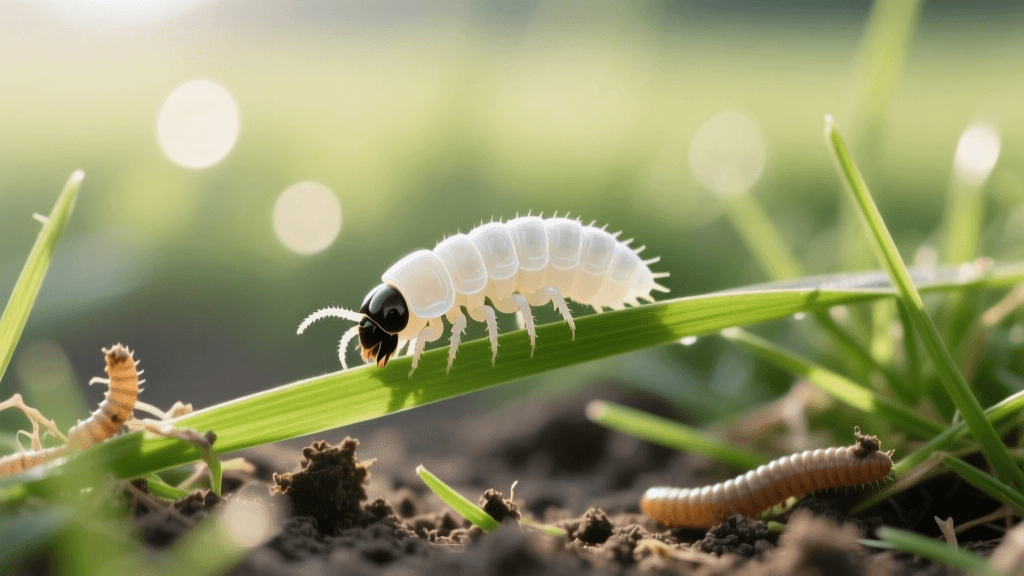
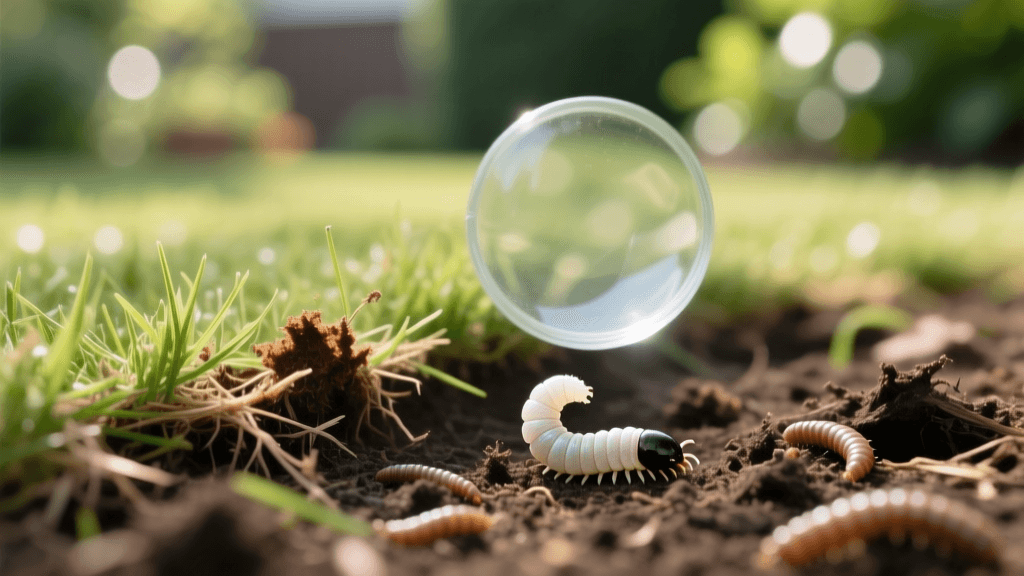
White grubs are the immature, larval stage of various scarab beetles, including Japanese beetles, June bugs, masked chafers, and European chafers. These C-shaped, cream-colored pests live just beneath the soil surface and feed aggressively on the roots of turfgrass. If left unchecked, a severe grub infestation can destroy an entire lawn in a matter of weeks, leaving behind vast expanses of dead, brown turf. However, not all brown patches are caused by grubs, and not all grub populations require chemical intervention. This guide focuses on precise problem diagnosis and targeted solutions to help you restore your lawn using Integrated Pest Management (IPM) principles.
The Tug Test
Before purchasing any treatments, you must confirm that white grubs are the actual culprit. Grub damage typically appears in late summer or early fall as irregular, brown, dying patches of grass. Because the grubs sever the roots, the turf loses its ability to take up water, making the damage look remarkably like drought stress. Walk to the edge of a damaged brown patch where it meets the green, healthy grass. Grab a handful of the turf and pull gently. If the grass pulls up easily like a loose carpet, and you notice missing roots or severed white root tips, you likely have a grub problem.
The Square Foot Dig Test
To determine if the population warrants treatment, you need to count them. Using a sharp spade or a half-moon edger, cut three sides of a 12-inch by 12-inch square of turf, about 2 to 3 inches deep. Peel back the sod like a flap and inspect the exposed soil and the roots on the underside of the turf. Look for plump, C-shaped, cream-colored larvae with distinct brown heads. Count the number of grubs in that single square foot, then replace the sod and water it to help it recover.
According to Penn State Extension, a healthy, vigorously growing lawn can tolerate up to 5 to 10 grubs per square foot without showing visible damage. Treatment is only economically and ecologically justified when populations exceed 10 grubs per square foot.
Additionally, look for secondary signs of an infestation. If you notice skunks, raccoons, armadillos, or flocks of starlings and crows tearing up your lawn, they are likely foraging for a high-protein grub buffet.
Understanding the Grub Life Cycle
Timing your treatment correctly is the single most important factor in grub control. Most common lawn grubs follow a one-year life cycle:
- Early Summer (June - July): Adult beetles emerge, mate, and lay eggs in the soil.
- Late Summer (August - September): Eggs hatch into young grubs. These young larvae are small, ravenous, and feeding heavily near the surface, causing the most severe turf damage.
- Late Fall (October - November): As soil temperatures drop, grubs stop feeding and burrow deep into the soil to overwinter.
- Spring (April - May): Grubs move back toward the surface to feed briefly on roots before pupating into adult beetles.
Because grubs are most vulnerable and closest to the surface in late summer, this is the optimal window for curative treatments. Preventative treatments must be applied earlier in the season before the eggs hatch.
Solutions: Preventative Chemical Controls
Preventative grub control products are designed to kill young grubs as they hatch or shortly after. They are highly effective but must be applied before the damage occurs.
Chlorantraniliprole
Sold under brand names like Scotts GrubEx and Acelepryn, chlorantraniliprole is a highly effective, low-toxicity preventative insecticide. It belongs to the anthranilic diamide class and is exceptionally safe for pollinators and beneficial insects when applied as directed.
- Timing: Apply between early April and late May.
- How it works: It must be watered into the soil where it persists for several months, killing grubs as they hatch in mid-summer.
- Estimated Cost: $15 to $25 per 5,000 square feet.
Imidacloprid and Clothianidin
These neonicotinoid insecticides (found in products like Merit and Bayer Advanced 24-Hour Grub Killer) have been the industry standard for years. They are systemic, meaning the grass roots absorb the chemical, poisoning the grubs when they feed.
- Timing: Apply in mid-June to late July.
- Caution: Neonicotinoids can be toxic to bees if applied while weeds in the lawn are blooming. Always mow and remove flowering weeds before application.
- Estimated Cost: $20 to $30 per 5,000 square feet.
Solutions: Curative Chemical Controls
If you missed the preventative window and are seeing active damage in late August or September, you need a fast-acting curative insecticide.
Trichlorfon
Commonly sold as Dylox, trichlorfon is a fast-acting, short-residual organophosphate. It is the go-to solution for emergency grub control.
- Timing: Late August through September, or early spring (April) if grubs are actively feeding near the surface.
- How it works: It kills large, mature grubs within 24 to 48 hours but breaks down in the soil quickly, leaving no long-term residue.
- Estimated Cost: $25 to $35 per 5,000 square feet.
Solutions: Organic and Biological Controls
For homeowners preferring an organic approach, biological controls offer a natural way to manage grub populations without synthetic chemicals.
Beneficial Nematodes
Microscopic, soil-dwelling worms like Heterorhabditis bacteriophora (Hb nematodes) actively hunt and infect white grubs, releasing bacteria that kill the host within 48 hours.
- Timing: Apply in late summer when soil temperatures are consistently above 60°F (15°C).
- Application: Nematodes are living organisms. They must be mixed with water and applied immediately using a hose-end sprayer. The soil must be kept moist for at least 10 days post-application.
- Estimated Cost: $30 to $50 for a pack covering 3,000 to 5,000 square feet.
Milky Spore Disease
Milky Spore (Paenibacillus popilliae) is a naturally occurring bacterium that specifically targets Japanese beetle grubs. When grubs ingest the spores, they die and release billions of new spores into the soil.
- Timing: Can be applied in spring or fall.
- Limitations: It only works on Japanese beetle grubs, not June bugs or European chafers. Furthermore, it takes 2 to 5 years for the spores to build up to effective levels in the soil.
- Estimated Cost: $40 to $60 for 4,000 square feet.
Grub Control Treatment Comparison Chart
| Treatment Type | Active Ingredient / Agent | Best Application Window | Speed of Control | Avg. Cost (per 5k sq ft) |
|---|---|---|---|---|
| Preventative | Chlorantraniliprole | April - May | Slow (Months) | $15 - $25 |
| Preventative | Imidacloprid | June - July | Moderate (Weeks) | $20 - $30 |
| Curative | Trichlorfon (Dylox) | August - September | Fast (24-48 Hours) | $25 - $35 |
| Organic | Hb Beneficial Nematodes | August - September | Moderate (3-7 Days) | $40 - $60 |
| Organic | Milky Spore | Spring or Fall | Very Slow (Years) | $50 - $75 |
Step-by-Step Application and Lawn Recovery
Regardless of the product you choose, proper application is vital for success. Follow these steps to ensure the treatment reaches the root zone where the grubs are feeding:
- Mow the Lawn: Mow your grass to a height of 2.5 to 3 inches. If using a granular product, this ensures the granules fall through the thatch layer and reach the soil.
- Apply the Product: Use a calibrated rotary or drop spreader for granular products, or a hose-end sprayer for liquids and nematodes, ensuring even coverage.
- Water Immediately: This is the most critical step. Apply 0.5 to 1 inch of water immediately after application to wash the active ingredient off the grass blades and into the top 2 inches of soil. If you do not water it in, the product will degrade in the sun and fail to kill the grubs.
- Repair the Damage: Once the grubs are eliminated, rake out the dead, loose turf in the damaged areas. Loosen the topsoil with a garden rake, apply a thin layer of compost topdressing, and overseed with a grub-resistant turfgrass variety, such as tall fescue, which has a deep, robust root system that can tolerate minor feeding.
Long-Term Prevention Strategies
According to Cornell University Cooperative Extension, lawns that are stressed by drought, compaction, or excessive thatch are far more susceptible to severe grub damage. Implementing strong cultural practices is your best long-term defense. Maintain a soil pH between 6.0 and 7.0, aerate compacted soils annually, and never remove more than one-third of the grass blade when mowing. By fostering a deep, resilient root system, your lawn will naturally withstand minor grub pressure without the need for annual chemical interventions.