Tree Care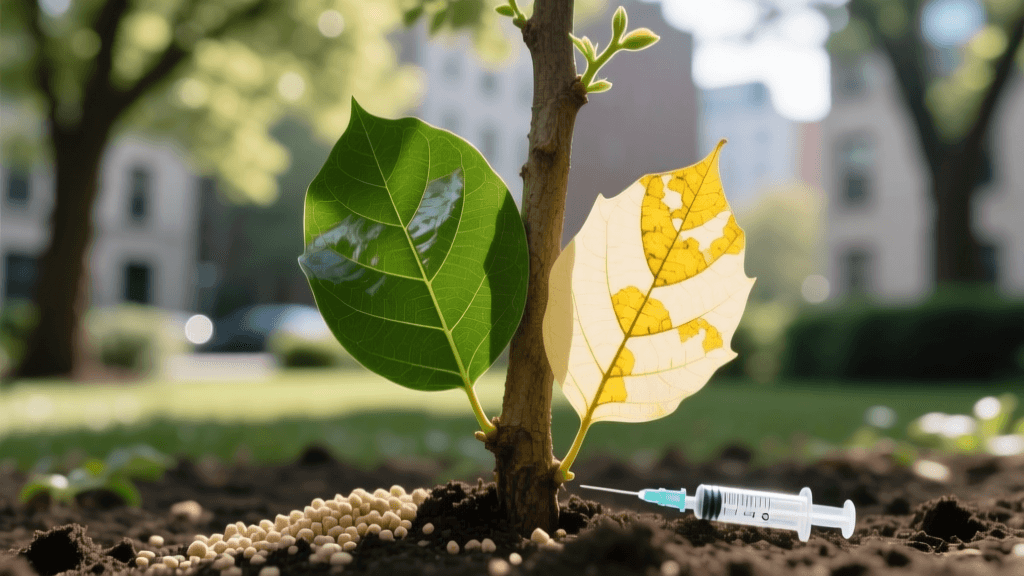
Diagnosing and Treating Iron Chlorosis in Landscape Trees
Understanding Iron Chlorosis in Landscape Trees
Iron chlorosis is a common nutritional problem for landscape trees—especially in areas with alkaline soils. You’ll notice it first as yellowing between the leaf veins while the veins themselves stay green. It’s more than just a look: the tree can’t make enough chlorophyll, so photosynthesis drops, growth slows, branches start dying back, and over time, the tree may die if nothing changes. If you’re a homeowner or manage property with valuable trees, spotting this early—and knowing what to do—makes a real difference.
Pin Oak, Red Maple, River Birch, and Sweetgum are especially prone. These trees evolved in acidic forest soils, where iron stays soluble and easy to absorb. In urban or suburban yards, though, soils are often compacted and high-pH, which locks up the iron even when it’s present. This guide walks through how to tell iron chlorosis apart from other issues, and what treatments actually work—short term and long term.
Problem Diagnosis: Is it Iron Chlorosis or Something Else?
Don’t buy anything yet—first, make sure it’s really iron deficiency. Treating the wrong thing wastes time and money, and can hurt the tree more. Iron chlorosis usually shows up as interveinal chlorosis: yellow or pale green tissue between the veins, with dark green veins still visible. In bad cases, leaves turn nearly white, get brown, crispy edges, and drop early.
Where it shows up matters too. Iron doesn’t move around much once it’s in the tree, so new growth gets hit first—especially the youngest leaves at the tips of branches. That’s different from many other problems, which often start on older, inner leaves.
Symptom Comparison Matrix
| Condition | Primary Symptom | Location on Tree | Environmental Trigger |
|---|---|---|---|
| Iron Chlorosis | Interveinal yellowing; veins stay green | New growth / branch tips | High soil pH (>7.0), compacted soil |
| Nitrogen Deficiency | Uniform yellowing or pale green leaves | Older, inner leaves first | Poor soil fertility, excessive leaching |
| Verticillium Wilt | Sudden wilting, browning, branch flagging | Random, isolated branches | Soil-borne fungus, root wounds |
| Oak Wilt | Rapid browning and defoliation | Starts at top of canopy | Beetle vectors, root graft transmission |
The Root Causes: Why Trees Cannot Access Iron
A lot of people assume chlorotic soils don’t have enough iron. But most alkaline soils actually contain plenty—it’s just not in a form roots can use. The main issue is pH. Iron dissolves best in acidic soils (pH 5.0–6.5). Above pH 7.0, it binds into insoluble forms that roots can’t pull in.
Other things make it worse. Urban soils are often packed down, limiting root spread and oxygen flow—both needed for nutrient uptake. Poor drainage or too much water drowns the fine roots that do the absorbing. And high levels of calcium, phosphorus, or manganese can crowd out iron at the root surface.
Proven Solutions and Treatments
How you treat iron chlorosis depends on how bad it is, the tree’s size, and your budget. Here are the options that gardeners and arborists rely on—from quick fixes to longer-term fixes.
1. Short-Term Fix: Foliar Sprays
Foliar sprays give a fast green-up, but only for a little while. Mix ferrous sulfate or chelated iron at 1–2 ounces per gallon of water. A few drops of liquid dish soap helps the spray stick to waxy leaves.
- Timing: Spray early morning or late evening to avoid burning leaves in full sun.
- Longevity: Works for a few weeks up to one season. Doesn’t fix the soil problem.
- Best For: Small trees, shrubs, or when you need a quick visual lift—like before selling a house.
2. Medium-Term Fix: Soil Drenches and Chelates
Soil-applied iron chelates are effective because they wrap around iron ions, keeping them available to roots even in alkaline soil. Not all chelates work the same way. DTPA works well up to about pH 7.2. For soils above pH 7.5—especially those near 9.0—you’ll need EDDHA chelates (like Sequestrene 138), since DTPA breaks down too fast.
- Application Rate: Use 1–2 ounces of EDDHA chelate per inch of trunk diameter.
- Method: Dissolve in water and pour it evenly over the soil within the tree’s drip line—ideally after aerating.
- Cost: EDDHA is pricey ($40–$60 per pound), but a pound goes a long way—even across several medium-sized trees.
3. Long-Term Fix: Trunk Injections and Implants
For big, mature shade trees with serious chlorosis, trunk injection skips the soil entirely. It puts iron directly into the xylem, where the tree moves water and nutrients. Pros use systems like Arborjet or Mauget to inject ferric ammonium citrate or iron-manganese blends under pressure.
- Timing: Best done in early spring as sap starts moving—or early fall. Avoid summer, especially during drought.
- Longevity: One treatment usually keeps the tree green and healthy for 2–4 years.
- Cost: Professional services run $12–$18 per inch of trunk diameter (DBH).
Treatment Options Comparison Chart
| Treatment Method | Active Ingredient | Est. Cost per Tree | Longevity |
|---|---|---|---|
| Foliar Spray | Ferrous Sulfate | $5 - $15 (DIY) | 1 - 3 Months |
| Soil Drench | EDDHA Iron Chelate | $30 - $80 | 1 - 2 Years |
| Trunk Injection | Ferric Ammonium Citrate | $150 - $400 (Pro) | 2 - 4 Years |
| Soil Acidification | Elemental Sulfur | $20 - $50 | Permanent (Slow) |
Preventative Care and Soil Management
Treatments help, but preventing chlorosis in the first place saves time and money. Start by measuring your tree’s DBH—diameter at breast height, taken 4.5 feet up the trunk—to get dosing right. Then try these steps:
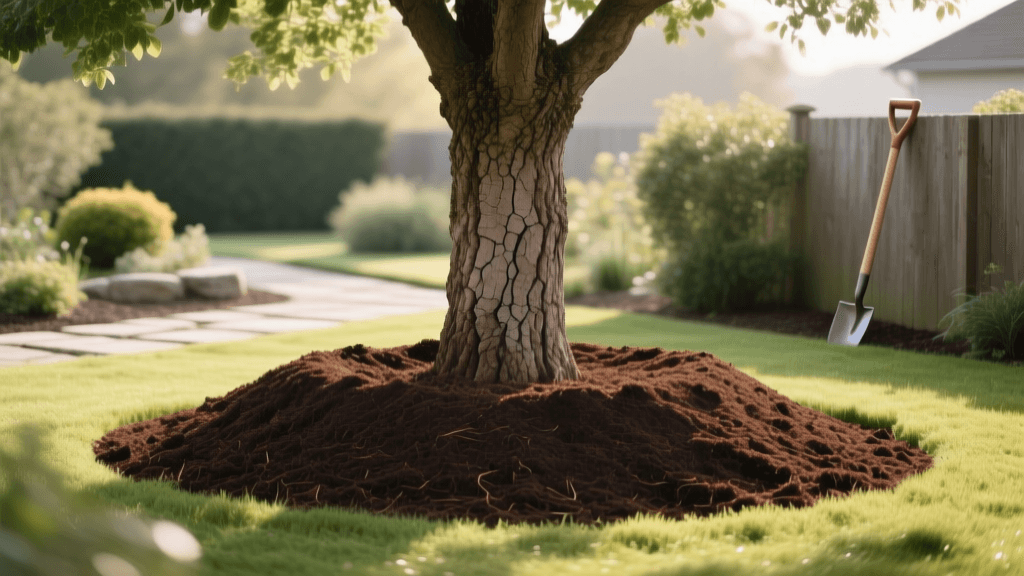
- Proper Mulching: Spread 3–4 inches of organic wood mulch in a wide ring around the tree, reaching out to the drip line if possible. Keep it 3 inches away from the trunk to avoid rot. Mulch cools the soil, holds moisture, and slowly lowers pH as it breaks down.
- Soil Acidification: Work elemental sulfur into the soil to gradually lower pH. Apply 3–5 pounds per 100 square feet in fall. It’s slow—especially in heavy clay—and may take years to shift pH significantly.
- Avoid Overwatering: Make sure the site drains well. Soggy soil kills the fine feeder roots that pull in nutrients.
- Smart Fertilization: Skip high-phosphorus fertilizers. Too much phosphorus ties up iron in the soil, making it harder for roots to grab.
Authoritative Insights and Citations
These approaches are backed by research from land-grant universities. Purdue University Extension (FNR-111-W) notes that trunk injections and implants “are the most effective and environmentally sound methods for treating severe iron chlorosis in large landscape trees, as they prevent the leaching of chemicals into the surrounding soil and groundwater.” The University of Minnesota Extension also stresses matching trees to site conditions: “Planting susceptible species like Pin Oak in naturally alkaline soils guarantees a lifetime of expensive treatments; selecting native or adapted species like Bur Oak or Hackberry is the ultimate preventative cure.”
With careful observation and the right treatment—whether adjusting the soil or working with a certified arborist—you can keep your landscape trees healthy and green for years.