Tree Care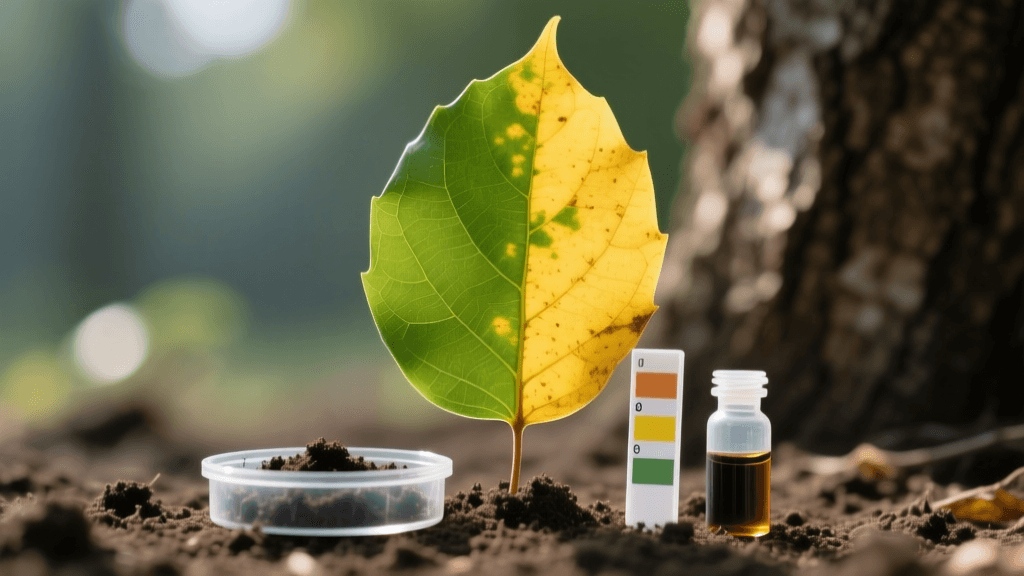
Diagnosing and Treating Tree Chlorosis: Expert Solutions
Understanding Tree Chlorosis: More Than Just Yellow Leaves
Trees are the majestic anchors of our home landscapes, providing essential shade, improving air quality, and boosting property value. However, when the vibrant green canopy of your favorite oak or maple begins to fade into a sickly, pale yellow, it is a glaring distress signal. This condition, known as tree chlorosis, is one of the most common and frustrating problems diagnosed by arborists and home gardeners alike. Chlorosis is not a disease itself, but rather a symptom of an underlying nutritional deficiency or environmental stressor that prevents the tree from producing adequate chlorophyll. Without chlorophyll, the tree cannot photosynthesize effectively, leading to stunted growth, branch dieback, and eventually, the death of the tree if left untreated. In this comprehensive guide, we will explore the root causes of tree chlorosis, how to accurately diagnose the specific nutrient deficiency, and the most effective, actionable solutions to restore your tree to vibrant health.
Diagnosing the Problem: Iron vs. Manganese vs. Nitrogen
The hallmark symptom of chlorosis is interveinal chlorosis, a condition where the leaf tissue turns yellow while the veins remain distinctly green. However, not all yellowing leaves point to the same problem. To apply the correct treatment, you must first identify which specific nutrient is lacking. The three most common culprits are iron, manganese, and nitrogen. Iron and manganese are micronutrients, meaning the tree needs them in very small quantities, but they are frequently locked up in alkaline soils. Nitrogen is a macronutrient, and its deficiency presents differently.
| Nutrient Deficiency | Visual Symptoms | Location on Tree | Commonly Affected Species |
|---|---|---|---|
| Iron | Bright yellow leaves with dark green, sharply defined veins. Severe cases show white leaves with brown, scorched edges. | Appears first on the newest growth (branch tips). | Pin Oak, Red Maple, Sweetgum, River Birch, Amur Maple. |
| Manganese | Yellowish-green leaves with green veins, but the contrast is less sharp than iron deficiency. Leaves may appear uniformly pale. | Appears on newer growth, but can affect the entire canopy more evenly. | Norway Maple, Red Maple, Birch, Cherry. |
| Nitrogen | Uniform pale green or yellowing of the entire leaf, including the veins. No interveinal pattern. | Appears first on the oldest leaves (lower, interior branches) as the tree mobilizes nitrogen to new growth. | All species, especially those in sandy, heavily leached soils. |
The Root Cause: Soil pH and Nutrient Lockout
If your soil is rich in iron, why is your tree starving for it? The answer almost always lies in soil pH. Iron and manganese are highly sensitive to alkaline conditions. When soil pH rises above 7.0, these micronutrients undergo a chemical transformation, converting into solid compounds that tree roots simply cannot absorb. This phenomenon is known as nutrient lockout. Furthermore, compacted soils, poor drainage, and excessive phosphorus levels can exacerbate the problem by suffocating roots and binding with iron to form insoluble iron phosphate.
According to the University of Nebraska-Lincoln Extension, "Iron chlorosis is a major problem in Nebraska and surrounding states due to high soil pH. The iron is present in the soil, but it is in a form that plants cannot use. Lowering the soil pH or applying iron in a chelated form are the primary methods of correction."
Testing your soil pH is the critical first step before spending money on treatments. You can purchase a reliable digital soil pH meter or a chemical test kit from a garden center for under twenty dollars, or send a soil sample to your local university extension office for a comprehensive analysis, which typically costs between fifteen and thirty dollars.
Actionable Solutions for Tree Chlorosis
Once you have confirmed that your tree is suffering from iron or manganese chlorosis due to high soil pH, you must implement a targeted treatment plan. The best approach often combines a short-term rescue treatment with a long-term soil management strategy.
1. Soil Acidification (The Long-Term Fix)
Lowering the soil pH is the most permanent solution, but it is a slow process that can take months or even years to fully impact a mature tree's root zone. The most effective and cost-efficient material for this is elemental sulfur (90% sulfur).
- Application Rate: Apply 1 to 2 pounds of elemental sulfur per 100 square feet of soil area beneath the tree's drip line.
- Method: Broadcast the sulfur evenly over the soil surface. Water it in deeply. Soil bacteria will slowly convert the sulfur into sulfuric acid, gradually lowering the pH.
- Cost: Approximately $15 to $20 for a 4-pound bag, making it highly economical for large trees.
- Timing: Apply in the fall or early spring. Avoid applying during extreme summer heat to prevent root stress.
2. Chelated Iron Applications (The Reliable Short-Term Fix)
Because elemental sulfur takes so long to work, applying chelated iron provides a much faster rescue. A chelate is a chemical compound that wraps around the iron molecule, protecting it from binding with soil particles and keeping it available for root absorption even in alkaline conditions.
- Choosing the Right Chelate: Not all chelates are created equal. Fe-DTPA works well in soils with a pH up to 7.5. However, if your soil pH is above 7.5, you must use Fe-EDDHA (such as Sequestar Iron or Miller's FerriPlus), which remains stable and effective in highly alkaline soils up to a pH of 9.0.
- Application Rate: Follow the manufacturer's label, but generally, apply 1 to 2 ounces of Fe-EDDHA per inch of trunk diameter.
- Method: Dissolve the chelate in water and apply it as a soil drench. Drill or punch holes 6 to 12 inches deep in a grid pattern under the drip line to ensure the solution reaches the active root zone, bypassing surface thatch.
- Cost: Fe-EDDHA is more expensive, costing around $40 to $60 per pound, but a single application can green up a tree within 3 to 6 weeks.
- Timing: Apply in early spring just as buds are breaking, or in late fall after the tree goes dormant.
3. Trunk Injections (For Severe or Immediate Relief)
For massive, mature trees or situations where soil treatments are impractical (such as near concrete foundations that continuously leach lime into the soil), trunk injection is the gold standard. This involves a certified arborist drilling small holes into the tree's xylem and using pressurized capsules to deliver ferric ammonium citrate or iron sulfate directly into the tree's vascular system.
- Efficacy: Results are visible in as little as 2 to 4 weeks. The treatment typically lasts for 1 to 3 years.
- Cost: This is a professional service. Expect to pay between $150 and $350 per tree, depending on the trunk diameter and the specific injection system used (e.g., Arborjet or TREE-age).
- Caution: DIY trunk injection kits are available, but improper drilling can introduce decay fungi or girdle the tree. It is highly recommended to hire an ISA Certified Arborist for this procedure.
4. Foliar Sprays (Cosmetic and Temporary)
Spraying a liquid iron sulfate solution directly onto the leaves can provide a rapid green-up, often within a week. However, this is strictly a cosmetic, short-term fix. It does not address the root deficiency, and the newly emerged leaves later in the season will still be yellow. Furthermore, foliar sprays can stain nearby concrete, stone, or brick patios a stubborn rust color. Use this only as a supplementary measure for small trees or shrubs while waiting for soil treatments to take effect.
Preventative Care: Mulching and Watering Best Practices
Correcting chlorosis is only half the battle; maintaining a healthy root environment prevents recurrence. Environmental stress severely limits a tree's ability to uptake nutrients, even if they are readily available in the soil.
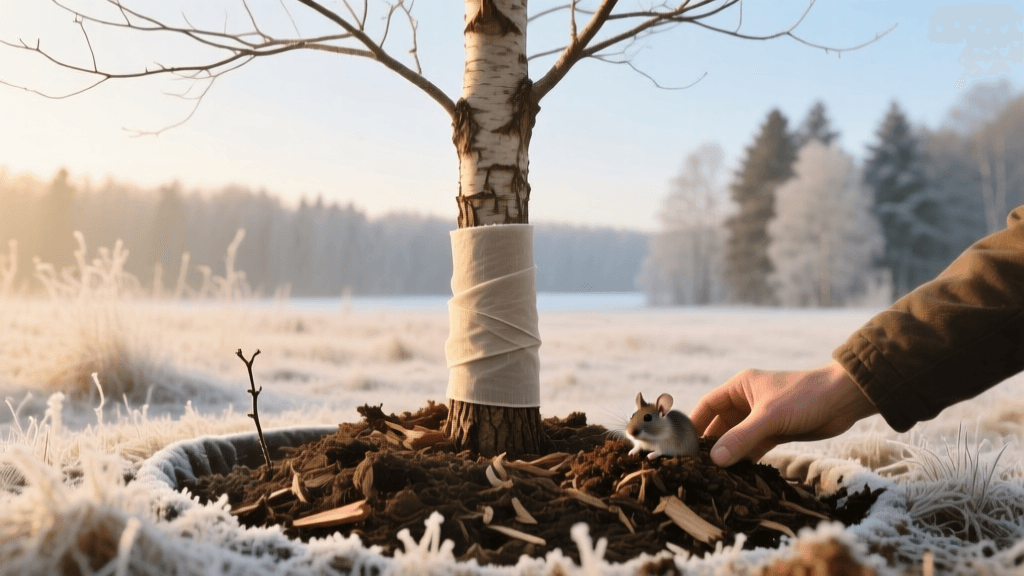
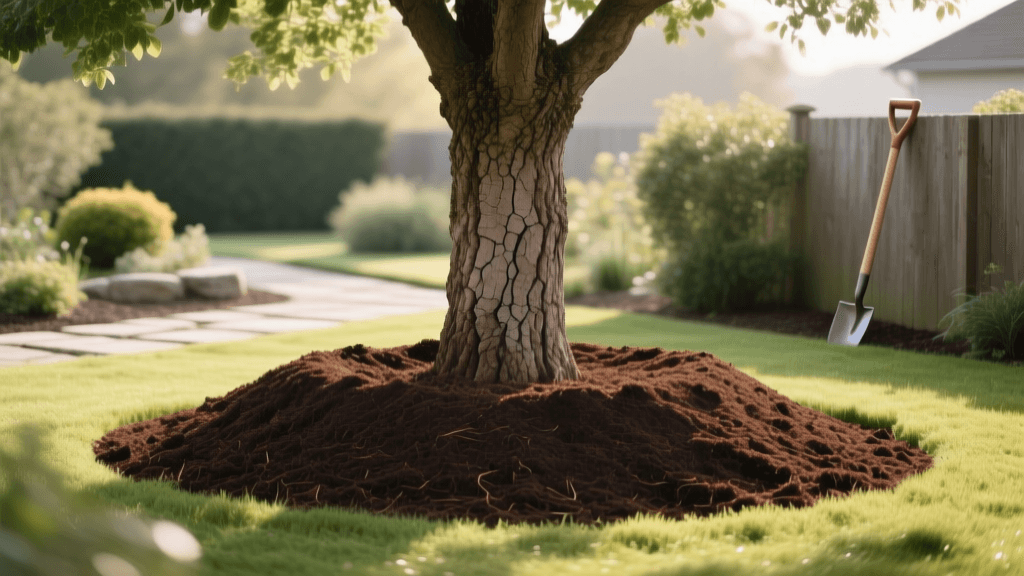
- Proper Mulching: Apply a 2 to 4-inch layer of organic mulch (such as shredded hardwood or pine bark) in a wide ring around the tree, extending to the drip line if possible. Keep the mulch at least 3 inches away from the trunk flare to prevent rot and rodent damage. Pine bark is particularly beneficial as it naturally acidifies the soil slightly as it decomposes.
- Smart Watering: Overwatering is a hidden trigger for chlorosis. Soggy soils deplete oxygen, causing root hairs to die and halting nutrient uptake. Water deeply but infrequently. Use a soil probe to check moisture levels; only water when the top 4 to 6 inches of soil are dry. Avoid using alkaline municipal water if possible, or collect rainwater for your most susceptible specimens.
- Fertilizer Selection: Avoid high-phosphorus fertilizers (the middle number in the N-P-K ratio). Excess phosphorus binds tightly with iron in the soil, creating an insoluble compound that roots cannot absorb. Opt for a balanced, slow-release fertilizer with micronutrients, or rely solely on your targeted chelated iron treatments.
When to Call a Certified Arborist
While home gardeners can successfully manage mild cases of chlorosis on smaller trees using soil drenches and sulfur applications, severe cases require professional intervention. If your tree is experiencing significant branch dieback, if the trunk diameter exceeds 20 inches, or if your soil pH is stubbornly above 8.0, contact an International Society of Arboriculture (ISA) Certified Arborist. They possess the specialized equipment for macro-injections and can perform advanced soil remediation techniques, such as vertical mulching and air-spading, to alleviate compaction and permanently improve the root zone environment. By accurately diagnosing the problem and applying the right chemical and cultural solutions, you can save your yellowing trees and ensure they remain a vibrant, healthy cornerstone of your landscape for decades to come.