Lawn Care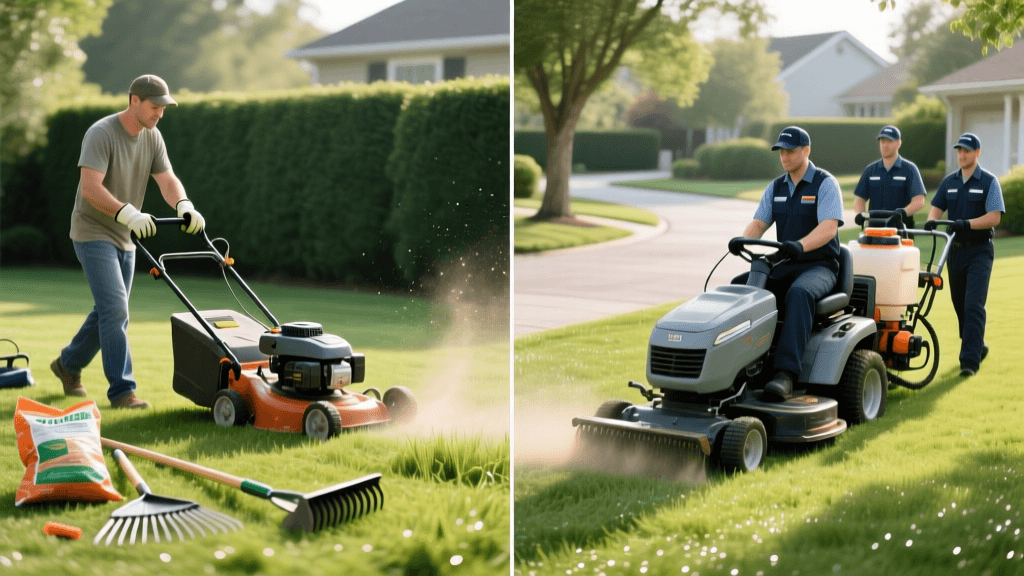
DIY vs. Pro Lawn Care: The Ultimate Cost Breakdown
The Financial Reality of Lawn Ownership
A pristine, emerald-green lawn is the hallmark of neighborhood pride, but achieving that golf-course aesthetic requires a significant investment of either time or money. For homeowners debating between rolling up their sleeves or hiring a professional turf management company, the decision ultimately comes down to a strict cost-benefit analysis. According to industry data from HomeAdvisor, the national average cost for professional lawn care ranges from $1,500 to $3,000 annually for a standard suburban lot. But does doing it yourself really save you thousands, or do hidden equipment and material costs eat away at your budget?
In this comprehensive budgeting guide, we will break down the exact costs of DIY lawn care versus hiring professionals. We will analyze pricing for mowing, fertilization, weed control, core aeration, and irrigation for a standard 5,000-square-foot lawn, providing you with the actionable data needed to build a realistic annual lawn care budget.
Breaking Down the Big Three: Mowing, Feeding, and Aerating
1. Lawn Mowing and Edging
Mowing is the most frequent and time-consuming lawn care task. During the peak growing season (May through September), cool-season grasses like Kentucky Bluegrass and Tall Fescue require weekly mowing, while warm-season grasses like Bermuda may need mowing twice a week.
The DIY Cost: To mow a 5,000 sq. ft. lawn, you need a reliable walk-behind mower, a string trimmer, and an edger. A high-quality gas-powered mower like the Toro Recycler 22-inch costs around $450, while a premium battery-operated option like the EGO 56V Lithium-Ion mower costs about $600. Add $150 for a Ryobi string trimmer and $50 for replacement line and fuel. Over a 30-week mowing season, fuel and maintenance add another $120. Total Year-One DIY Investment: $720 to $1,070. In subsequent years, the cost drops to roughly $150 for fuel, oil, and blade sharpening.
The Professional Cost: Lawn care services typically charge between $45 and $75 per visit for a 5,000 sq. ft. lot, which includes mowing, edging, and blowing off hard surfaces. Over a 30-week season, this equates to $1,350 to $2,250 annually.
2. Fertilization and Weed Control
A robust fertilization schedule requires 4 to 6 applications per year, timed to the grass's active growth cycles. This includes pre-emergent crabgrass preventers in early spring, nitrogen-heavy feeds in late spring and fall, and broadleaf weed control as needed.
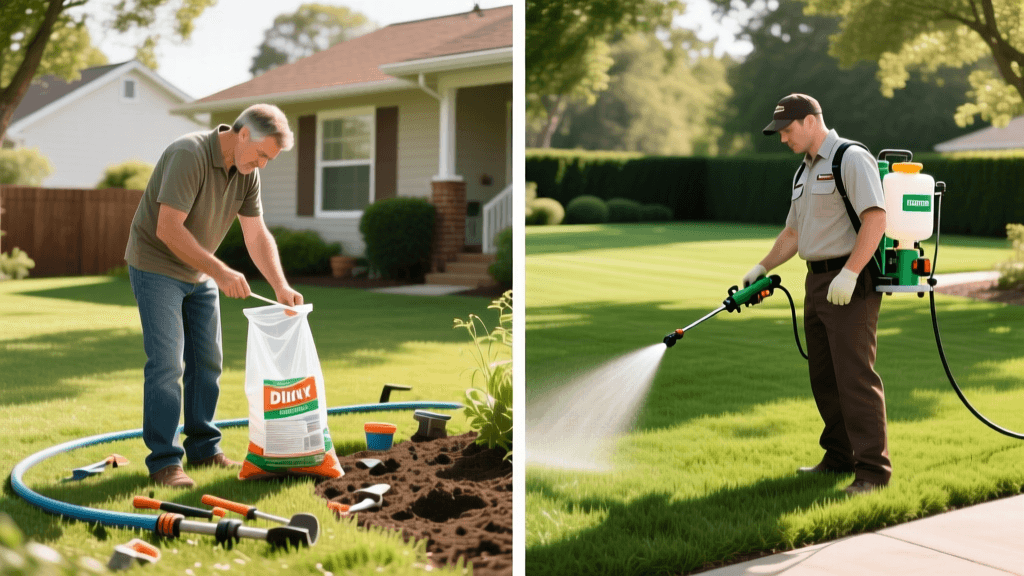
The DIY Cost: A popular DIY route is the Scotts Turf Builder 4-Step Program, which costs approximately $130 per year for a 5,000 sq. ft. coverage area. If you prefer organic or slow-release options, Milorganite costs about $25 per 32-lb bag (covering 2,500 sq. ft.), meaning you will need roughly $100 worth of product annually. For weed control, a 32-ounce bottle of Ortho WeedClear concentrate costs $15 and attaches directly to your garden hose. Total Annual DIY Cost: $145 to $200.
The Professional Cost: National franchises like TruGreen or local boutique turf companies charge based on square footage. For a 5,000 sq. ft. lawn, a 6-to-8 visit annual fertilization and weed control program typically costs between $500 and $850 per year. The advantage here is access to commercial-grade, restricted-use herbicides that are vastly superior to consumer-grade options.
3. Core Aeration and Overseeding
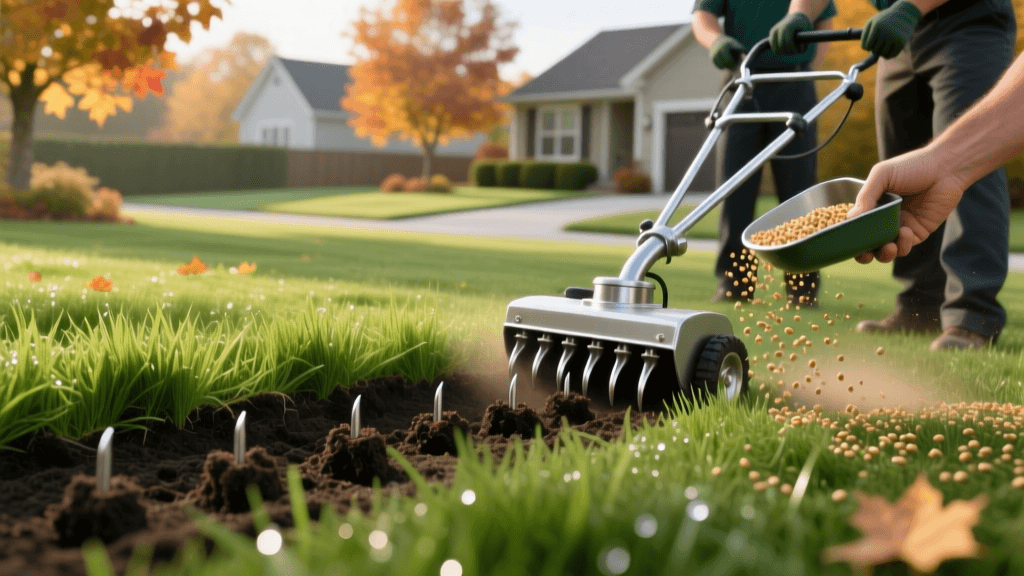
Core aeration relieves soil compaction and allows oxygen, water, and nutrients to reach the root zone. It is best performed in the early fall for cool-season grasses, immediately followed by overseeding.
The DIY Cost: Renting a walk-behind core aerator from a big-box hardware store costs about $90 for a 4-hour block. However, these machines are incredibly heavy (often over 250 lbs) and require a truck or trailer to transport, potentially adding $40 for a U-Haul pickup rental. High-quality Tall Fescue seed (like the Scotts Turf Builder Grass Seed) costs about $80 for a 20-lb bag suitable for overseeding. Total DIY Cost: $210.
The Professional Cost: Professionals use commercial-grade, stand-on aerators that pull deeper, cleaner cores. Bundled aeration and overseeding services for a 5,000 sq. ft. lawn generally range from $250 to $400, and the crew handles all the heavy lifting, transport, and cleanup.
Annual Cost Comparison Table (5,000 Sq. Ft. Lawn)
The table below illustrates the estimated annual costs for maintaining a 5,000-square-foot lawn. Note that DIY Year-One costs are significantly higher due to equipment purchases, but drop substantially in subsequent years.
| Service Category | DIY Annual Cost (Year 2+) | Pro Annual Cost | DIY Time Investment |
|---|---|---|---|
| Mowing & Edging (30 weeks) | $150 (Fuel/Maint.) | $1,650 | 45 mins/week |
| Fertilization & Weed Control | $175 | $650 | 4 hours/year |
| Core Aeration & Overseeding | $210 | $325 | 6 hours/year |
| Irrigation (Water Bill Est.) | $350 | $350 | 2 hours/month |
| Total Estimated Annual Cost | $885 | $2,975 | ~75 hours/year |
The Hidden Costs of the DIY Route
While the spreadsheet math heavily favors DIY, budget-conscious homeowners must account for hidden variables that rarely appear on a store receipt:
- Equipment Depreciation and Repair: Gas mowers require annual spark plug changes, air filter replacements, and oil changes. Carburetors frequently clog if fuel is left sitting over the winter, leading to $75 repair bills or the need for a replacement.
- Storage Space: Storing a mower, aerator, spreader, and chemical inventory requires a dry, secure garage or shed. If you lack space, off-site storage unit rentals can add $50 to $150 a month to your overhead.
- The Cost of Mistakes: Misinterpreting fertilizer N-P-K ratios or miscalculating square footage can lead to fertilizer burn, killing large swaths of your lawn. The cost of topsoil, sod replacement, and water to fix a DIY chemical burn can easily wipe out a year's worth of savings.
Irrigation Budgeting: Smart Tech vs. Standard Timers
Watering is often the most expensive ongoing utility cost associated with lawn care. A standard 5,000 sq. ft. lawn requires about 1 to 1.5 inches of water per week during the summer, which equates to roughly 3,000 to 4,500 gallons per week. Depending on your local municipal water rates, this can spike your summer water bill by $100 to $200 a month.
Budgeting Tip: Invest in an EPA WaterSense-certified smart irrigation controller, such as the Rachio 3 or Orbit B-hyve (ranging from $150 to $230). These devices connect to your Wi-Fi and use hyper-local weather data to automatically skip watering when rain is in the forecast. According to the EPA, smart controllers can save the average home nearly 7,600 gallons of water annually, effectively paying for themselves within a single summer season through reduced utility bills.
The Hybrid Approach: Maximizing Your Budget
You do not have to choose strictly between 100% DIY and 100% professional. The most financially savvy homeowners utilize a Hybrid Lawn Care Model to balance their budget and their weekends.
Consider taking over the weekly mowing and routine irrigation management yourself. These tasks require minimal technical expertise and offer a great opportunity for outdoor exercise. However, outsource the highly technical, labor-intensive, or chemically complex tasks. Hiring a professional to perform a commercial-grade pre-emergent application in early spring and handling the heavy core aeration in the fall ensures your lawn gets professional-grade results exactly when it needs them, while keeping your overall annual spend under $1,200.
Expert Insights: Stop Guessing, Start Testing
One of the most common budgeting mistakes homeowners make is blindly applying fertilizers without knowing what their soil actually lacks. This leads to wasted money and environmental runoff.
'A comprehensive soil test is the most cost-effective investment a homeowner can make. By identifying exact pH levels and nutrient deficiencies, homeowners can eliminate unnecessary applications of phosphorus and potassium, often reducing their annual fertilizer budget by 20% to 30% while simultaneously improving turf health and reducing environmental impact.'
— University of Minnesota Extension, Turfgrass Science Department
Before budgeting for your spring fertilizer purchases, order a mail-in soil test kit from your local university cooperative extension office or a private lab like Waypoint Analytical. These tests typically cost between $15 and $30 and provide a customized, mathematically precise fertilizer prescription that prevents you from wasting money on chemicals your lawn does not need.
Final Verdict: Which Route Should You Take?
If your primary goal is strict financial savings and you enjoy spending 2 to 3 hours a week outdoors, the DIY route is the undisputed winner, saving you upwards of $2,000 annually once your initial equipment is paid off. However, if you value your time over marginal dollar savings, or if you struggle with stubborn weeds like nutsedge and invasive grasses that require commercial herbicides, hiring a professional service is a worthwhile luxury. For the ultimate balance, adopt the hybrid model: buy the mower, but hire the chemist.