Lawn Care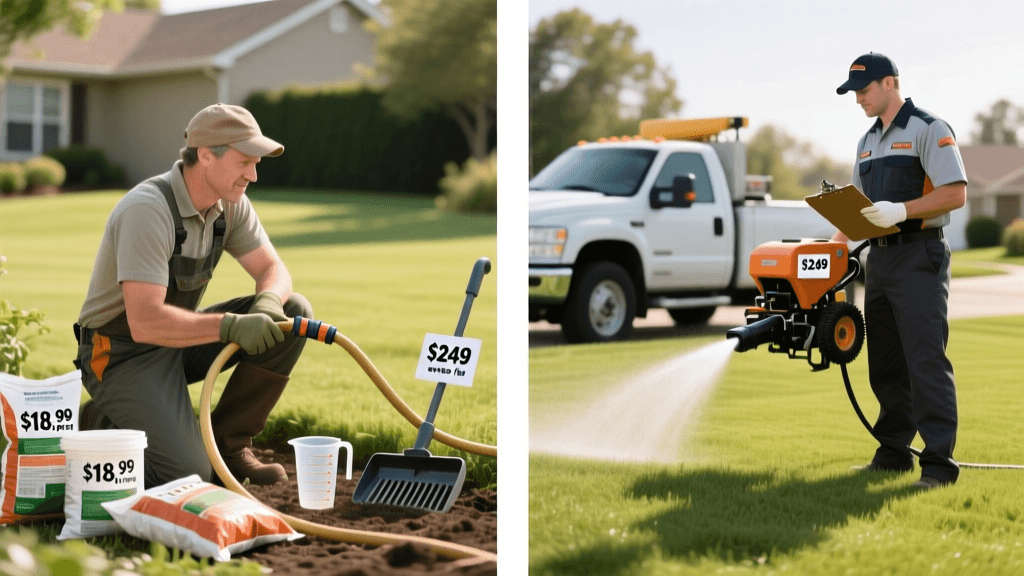
DIY vs Professional Lawn Fertilization Costs: A Budget Guide
The Foundation of Lawn Care Budgeting: Accurate Measurement
Before you can accurately budget for lawn fertilization and weed control, you must know the exact square footage of your turf. Many homeowners overestimate their lawn size, leading to the purchase of excess fertilizer, wasted money, and potential environmental runoff. To calculate your true turf area, measure the total perimeter of your property and subtract the square footage of your home, driveway, patios, garden beds, and walkways. You can use free online tools like Google Earth or specialized lawn measurement apps to trace your property lines and get a precise number. Once you have your true turf square footage, you can accurately compare the cost per thousand square feet of DIY products versus professional lawn care services.
Understanding Fertilizer N-P-K Ratios and Unit Pricing
When shopping for fertilizer, you will notice three numbers on every bag, such as 32-0-4 or 18-24-12. This is the N-P-K ratio, representing the percentage by weight of Nitrogen (N), Phosphorus (P), and Potassium (K). Nitrogen is the primary nutrient responsible for lush, green, top-growth, and it is the most expensive component of the fertilizer blend. To budget effectively, industry professionals calculate the cost per pound of actual Nitrogen rather than just looking at the price of the bag. For example, a 40-pound bag of 32-0-4 fertilizer contains 12.8 pounds of Nitrogen. If the bag costs $45, you are paying roughly $3.51 per pound of Nitrogen. Comparing products based on this metric will help you find the most cost-effective solutions for your lawn care budget, whether you are buying synthetic granulars or organic alternatives like Milorganite.
The True Cost of DIY Lawn Fertilization
Taking the DIY route is often perceived as the most budget-friendly option, but it requires an upfront investment in equipment and a solid understanding of seasonal timing. Here is a breakdown of the typical costs associated with a DIY lawn fertilization and weed control program for an average 5,000 square foot lawn.
Soil Testing
A comprehensive soil test is the cornerstone of any budget-conscious lawn care plan. Sending a soil sample to your local university cooperative extension or a private lab like Waypoint Analytical typically costs between $15 and $30. This test reveals your soil pH and exact nutrient deficiencies, preventing you from wasting money on unnecessary phosphorus or potassium applications.
Equipment and Spreader Costs
To apply granular fertilizer evenly, you need a quality broadcast spreader. Entry-level models from brands like Scotts cost around $40 to $60, while heavy-duty, commercial-grade spreaders from Lesco or Earthway can range from $120 to $250. If you also plan to apply liquid herbicides for weed control, a 1-to-2-gallon pump sprayer will cost an additional $25 to $50.
Fertilizer and Herbicide Materials
For a 5,000 square foot lawn, you will need approximately four to five applications of fertilizer per year. A standard 15,000 square foot coverage bag of premium synthetic fertilizer (like Scotts Turf Builder or Lesco Professional) costs between $45 and $65. Since you only need one-third of the bag per application, your annual fertilizer material cost will be roughly $75 to $110. For weed control, a concentrate bottle of a selective broadleaf herbicide (such as Ortho WeedClear or Trimec) costs about $20 to $35 and will easily last an entire season for a small to medium lawn. Total annual material costs for a DIY 5,000 square foot lawn generally range from $100 to $160.
The True Cost of Professional Lawn Fertilization
Hiring a professional lawn care service shifts the burden of product storage, equipment maintenance, and application timing to the experts. Professional companies purchase commercial-grade fertilizers and restricted-use herbicides in bulk, allowing them to offer customized blends based on your region and soil type. The national average cost for professional lawn fertilization and weed control ranges from $50 to $100 per visit, depending on your lawn size, geographic location, and the specific company you hire. National chains like TruGreen and Weed Man often utilize a 6-to-8 visit annual program. For a 5,000 square foot lawn, an annual professional contract typically costs between $350 and $600. For larger properties spanning 10,000 to 15,000 square feet, annual professional costs can range from $600 to $1,200. While this is significantly higher than DIY material costs, it includes labor, commercial equipment, professional liability, and often a satisfaction guarantee that covers free re-treatments if weeds persist or the lawn shows signs of nutrient deficiency.
Cost Comparison Chart: DIY vs. Professional Services
The following table illustrates the estimated annual costs for a standard fertilization and weed control program based on lawn size. These estimates include materials, basic equipment amortization, and labor considerations.
| Cost Factor | DIY (5,000 Sq Ft) | DIY (10,000 Sq Ft) | Pro (5,000 Sq Ft) | Pro (10,000 Sq Ft) |
|---|---|---|---|---|
| Initial Equipment | $60 - $150 | $60 - $150 | $0 | $0 |
| Annual Soil Test | $15 - $30 | $15 - $30 | Included | Included |
| Annual Fertilizer | $75 - $110 | $150 - $220 | Included | Included |
| Annual Herbicide | $25 - $40 | $40 - $75 | Included | Included |
| Labor / Service Fee | $0 (Your Time) | $0 (Your Time) | $350 - $600 | $600 - $1,000 |
| Total Year 1 Cost | $175 - $330 | $265 - $475 | $350 - $600 | $600 - $1,000 |
| Total Year 2+ Cost | $115 - $180 | $205 - $325 | $350 - $600 | $600 - $1,000 |
Hidden Costs That Destroy Lawn Care Budgets
When creating your annual landscaping budget, it is crucial to account for the hidden costs that frequently derail DIY lawn care plans. The most common budget-killer is fertilizer burn. Over-applying synthetic nitrogen, especially during the heat of summer or without adequate irrigation, can scorch your turf, turning it yellow or brown. Remedying a burned lawn requires extensive watering, potential reseeding, and the purchase of soil amendments like gypsum or biochar to flush excess salts from the soil profile. Another hidden cost is the misidentification of weeds. Applying the wrong herbicide not only wastes $20 to $30 on ineffective chemicals but also allows invasive species like Crabgrass, Nutsedge, or Poa Annua to spread, eventually requiring expensive professional intervention or total lawn renovation. Furthermore, DIYers must factor in the cost of proper storage. Fertilizers and liquid herbicides must be kept in a climate-controlled, secure environment to prevent freezing, clumping, or chemical degradation, which might require purchasing specialized storage bins or shelving.
Expert Budgeting Strategies for Homeowners
If you want to maximize your lawn care budget without sacrificing turf health, consider implementing these strategic purchasing and application habits. First, buy your fertilizer in the off-season. Late winter and late summer are prime times for retailers to discount bulk lawn care products. Purchasing a full pallet or buying from local agricultural supply stores rather than big-box garden centers can save you up to 30 percent on commercial-grade brands like Lesco or Andersons. Second, if you opt for professional services, always sign an annual contract rather than paying per visit. Most reputable lawn care companies offer a 10 to 15 percent discount for pre-paying or committing to a full seasonal program upfront. Finally, embrace grasscycling. By leaving your grass clippings on the lawn after mowing, you naturally return up to 25 percent of your lawn's required nitrogen back into the soil, potentially allowing you to eliminate one synthetic fertilizer application per year.
Authoritative Guidance on Nutrient Management
Budgeting for lawn care is not just about saving money; it is about applying the right nutrients at the right time to prevent environmental harm. According to the University of Minnesota Extension, 'over-application of nitrogen is a primary cause of turf burn, budget waste, and groundwater contamination.' Their research emphasizes that homeowners should never apply more than one pound of nitrogen per 1,000 square feet in a single application. By adhering to university-backed nutrient management guidelines, homeowners can stretch their fertilizer budget further while maintaining a dense, drought-resistant turf that naturally crowds out expensive-to-treat weeds. Whether you choose the hands-on approach of DIY or the convenience of a professional service, a well-planned budget rooted in accurate measurements and scientific best practices is the key to a thriving, cost-effective lawn.