Lawn Care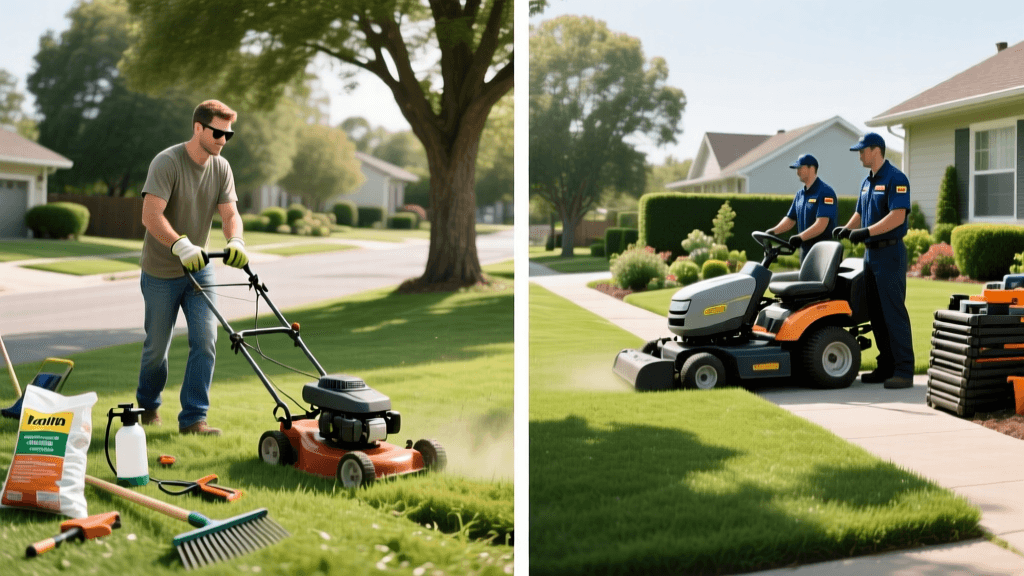
DIY vs Professional Lawn Care: Annual Cost Breakdown
The Great Debate: DIY vs. Professional Lawn Care
Every spring, homeowners with cool-season and warm-season turf face a familiar financial crossroads: should I maintain the lawn myself, or hire a professional landscaping service? The decision is rarely just about time; it is fundamentally about budget, long-term equipment investments, and the hidden costs of turf management. Whether you are nurturing a sprawling Kentucky Bluegrass estate in the Midwest or a compact Zoysia lawn in the South, understanding the true financial footprint of lawn care is essential for smart home budgeting.
In this comprehensive cost and budgeting guide, we break down the exact expenses associated with both DIY lawn care and professional turf management. By analyzing equipment amortization, material costs, and service premiums for a standard 10,000-square-foot lawn, you will be equipped to make the most financially sound decision for your property.
Breaking Down the Costs of DIY Lawn Care
The DIY approach is often championed as the ultimate money-saver, but many homeowners fail to account for the upfront capital required for commercial-grade equipment and the recurring costs of professional-grade materials. To accurately budget for a DIY lawn, we must look beyond the price tag of a single bag of fertilizer and consider equipment lifespan, fuel or battery depreciation, and seasonal maintenance.
Essential DIY Equipment and Materials
For a 10,000-square-foot lawn, you need reliable mowing, edging, and application equipment. Let us assume you are purchasing mid-to-high-tier residential gear:
- Mower: Honda HRX217VKA Gas Mower (approx. $750). With proper winterization and oil changes, a premium mower lasts 10 years.
- String Trimmer: EGO Power+ 56V Lithium-Ion Trimmer (approx. $200). Battery degradation limits lifespan to about 5 years.
- Spreader: Scotts Elite Spreader (approx. $80). Lasts 5-7 years with proper cleaning.
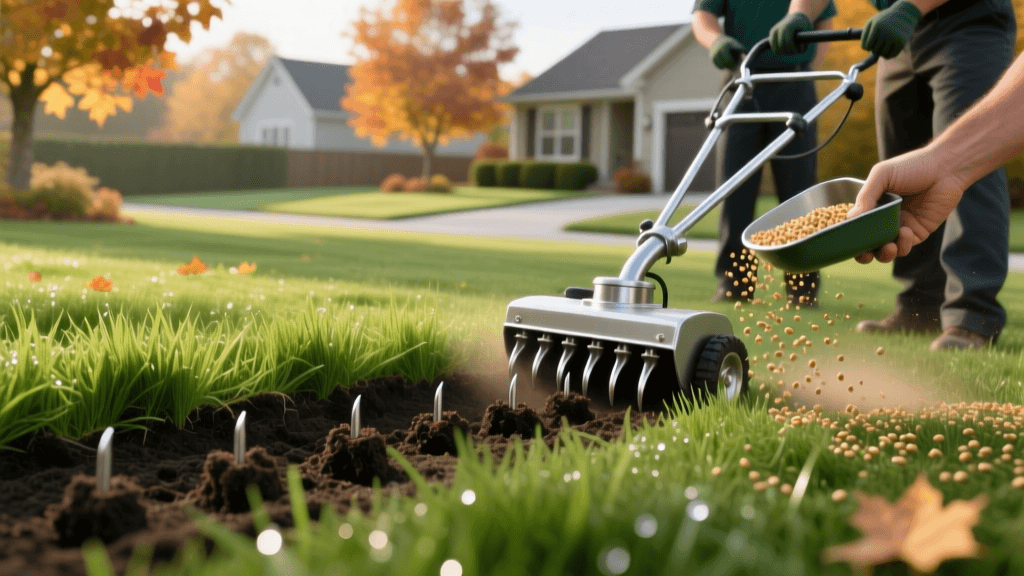
- Aerator: Renting a walk-behind core aerator from a local hardware store for fall overseeding (approx. $85 per day).
On the materials side, professional results require professional products. Skip the big-box store generic brands and opt for commercial-grade fertilizers like Lesco or Andersons. A standard 4-step fertilization and weed control program using Lesco 18-24-12 with Dimension pre-emergent will cost roughly $55 per 50-lb bag. You will need four bags per year for a 10,000-square-foot lot, totaling $220. Add $40 for a bottle of Ortho WeedClear for spot-treating broadleaf weeds, and $75 for premium tall fescue or bluegrass seed for fall overseeding.
DIY Annual Cost Breakdown (10,000 Sq. Ft. Lawn)
| Category | Item / Service | Upfront Cost | Amortized Annual Cost |
|---|---|---|---|
| Equipment | Honda Gas Mower | $750.00 | $75.00 |
| Equipment | EGO 56V String Trimmer | $200.00 | $40.00 |
| Equipment | Scotts Elite Spreader | $80.00 | $16.00 |
| Materials | Lesco Fertilizer (4 Apps) | - | $220.00 |
| Materials | Weed Control Herbicides | - | $40.00 |
| Materials | Overseeding Grass Seed | - | $75.00 |
| Services | Core Aerator Rental | - | $85.00 |
| Utilities | Fuel / Battery Charging | - | $60.00 |
| Total | Estimated DIY Annual Budget | $611.00 | |
Note: This calculation excludes the value of your own labor. If you spend 1.5 hours per week on mowing and edging for 30 weeks, that is 45 hours of labor. If your time is valued at $30/hour, the hidden labor cost of DIY is $1,350 annually.
The Price of Professional Lawn Care Services
Hiring a professional lawn care company transfers the physical labor, equipment maintenance, and chemical storage risks away from the homeowner. Companies like TruGreen, BrightView, or premium local operators offer tiered service packages. However, the convenience of professional care comes with a significant premium, largely driven by commercial insurance, employee wages, and vehicle overhead.
Professional Service Tiers
- Basic Mowing & Edging: Local crews typically charge $45 to $65 per visit for a 10,000-square-foot lot. Assuming a 30-week mowing season, this totals $1,350 to $1,950.
- Fertilization & Weed Control Programs: National chains and local agronomists usually charge between $500 and $750 annually for a 6-to-8 application chemical program.
- Core Aeration & Overseeding: Professional aeration and seeding services are highly labor-intensive and usually cost between $300 and $450 as an add-on service.
Professional Annual Cost Breakdown (10,000 Sq. Ft. Lawn)
| Service Category | Provider Type | Frequency | Annual Cost |
|---|---|---|---|
| Mowing & Edging | Local Landscaper | Weekly (30 weeks) | $1,500.00 |
| Fertilization & Weeds | National / Local Pro | 6-8 Applications | $650.00 |
| Aeration & Seeding | Specialty Turf Company | Annually (Fall) | $375.00 |
| Total | Estimated Professional Annual Budget | $2,525.00 | |
Head-to-Head Comparison: Where is the Value?
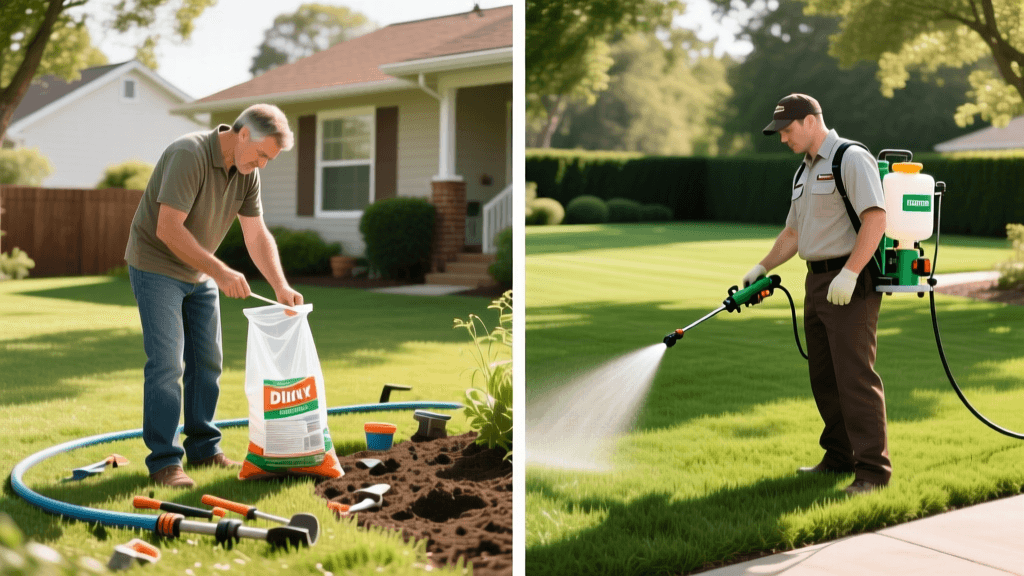
When comparing the $611 DIY out-of-pocket cost to the $2,525 professional invoice, the DIY route appears vastly superior. However, budgeting requires looking at risk, expertise, and time.
- Chemical Application Risks: Misapplying pre-emergents like Prodiamine can burn your turf or fail to prevent crabgrass, wasting $200 in materials and requiring expensive curative herbicides. Professionals carry the liability for chemical burns.
- Equipment Maintenance: DIYers must budget for mower blade sharpening, spark plug replacements, and winterization. Professionals absorb these costs in their overhead.
- Property Value ROI: A consistently flawless lawn maintained by professionals can yield a higher return on investment when selling a home, as curb appeal is heavily scrutinized by appraisers.
The Hybrid Approach: Maximizing Your Lawn Care Budget
For homeowners seeking the perfect balance between budget conservation and turf quality, the hybrid approach is the ultimate financial strategy. This involves handling the high-frequency, low-risk tasks yourself while outsourcing the high-liability, specialized applications.
The Optimal Hybrid Budget
- DIY Mowing and Trimming: You control the mowing height (keeping cool-season grasses at 3-4 inches to shade out weeds) and save $1,500 a year on weekly labor.
- Outsource Chemical Applications: Hire a professional service strictly for fertilization, pre-emergent crabgrass control, and grub prevention. This costs roughly $500 to $650 annually but guarantees professional-grade products like Scotts Professional or SiteOne formulations are applied at the exact right soil temperatures.
- DIY Aeration, Outsource Seeding: Rent the aerator yourself and run it over the lawn, then have a professional hydroseed or slit-seed the lawn for a fraction of the full-service cost.
This hybrid model typically caps your annual out-of-pocket expenses at around $1,200 while ensuring your lawn receives agronomic expertise.
Expert Insights: The Financial Danger of Skipping Soil Tests
One of the most common budgeting mistakes in lawn care is blind fertilization. Applying phosphorus or potassium when your soil already has sufficient levels is literally throwing money into the wind. Furthermore, if your soil pH is too acidic, your turfgrass cannot absorb the nitrogen you are paying for.
According to the Penn State Extension turfgrass management program, routine soil testing is the cornerstone of economical lawn care. Penn State experts note that a comprehensive soil test, which typically costs between $15 and $30, can save homeowners hundreds of dollars by eliminating unnecessary fertilizer applications and targeting specific pH amendments like pelletized lime.
'Soil testing removes the guesswork from lawn care budgeting. By tailoring your nutrient applications to the exact deficiencies of your soil profile, you prevent over-application, reduce environmental runoff, and maximize the financial efficiency of every bag of fertilizer purchased.' - Adapted from Penn State Extension Turfgrass Management Guidelines.
Always allocate $30 in your annual lawn care budget for a university extension soil test every two to three years. It is the highest ROI investment you can make in your turf.
Final Verdict on Lawn Care Budgeting
Ultimately, your lawn care budget should reflect your lifestyle, your hourly wage, and your passion for outdoor work. If you view mowing as a therapeutic weekend ritual, the $611 DIY route is an exceptional investment in your home. If your weekends are consumed by family and career, allocating $2,500 to professional services buys you time and peace of mind. Whichever path you choose, armed with these cost breakdowns and expert agronomic strategies, you can maintain a lush, vibrant lawn without breaking the bank.